
August 21, 2026
The Sanlorenzo SX76: Where the Crossover Line Starts
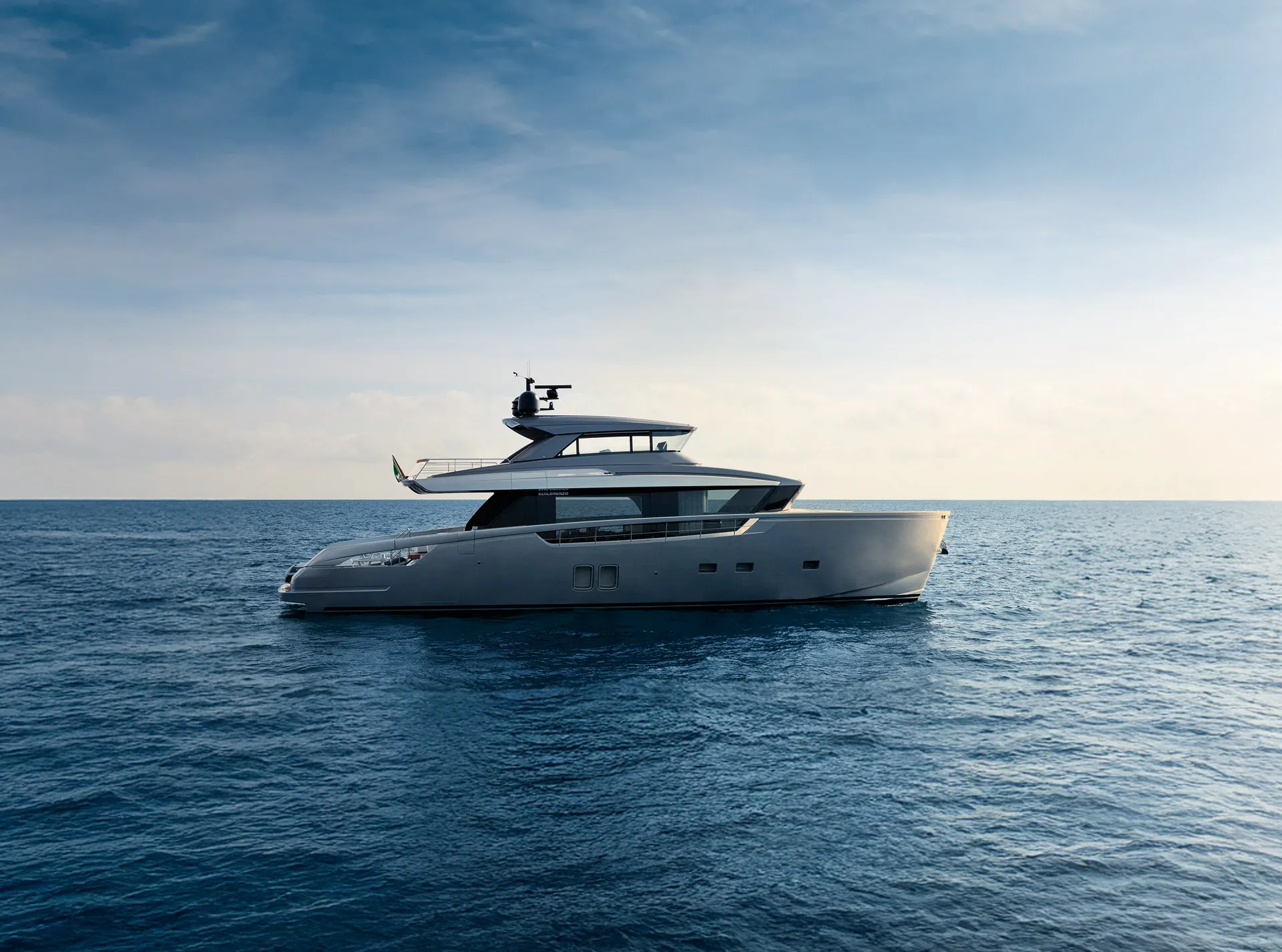
The smallest SX: 77'9", twin Volvo Penta IPS3 1200 pods for a published 22 knots, and eight guests against two crew — the lightest crew brie…
Read the articleExpert Review, Technical Specifications & Market Analysis
| Feature | Specifications |
|---|---|
| Overall Length | 77' 9" (23.7 m) |
| Beam | 21' 8" (6.6 m) |
| Engines | 2 × Volvo Penta IPS3 1200, 900 HP each |
| Fuel Capacity | 1,149 US gal (4,350 L) |
| Water Capacity | 330 US gal (1,250 L) |
| Cabins / Heads | 8 guests / 2 crew |
| Max Speed | 22 knots |
Source: Spec & Photos courtesy of Sanlorenzo. Specs verified by Tony Smith, USCG 100 Ton Master, on August 20, 2026.
Part of the Sanlorenzo SX series — see how owners step up through the lineup.

The SX76 is the crossover concept shrunk to the size where it stops being a small hotel. Everything that made the SX88 interesting — the stern treated as living space, the continuous interior, the pods that free the aft end — is here on a 77-foot-9 hull with two crew instead of three. That last number is the real story. Eight guests against two crew is the lightest crew brief in the SX line, and it puts this boat in a different ownership category from the rest of the line. If the reason you have not bought an SX is that you did not want to run a five-person operation to enjoy one, this is the boat that removes the objection.
The engineering that makes it possible is the pod package: twin Volvo Penta IPS3 1200s at 900 horsepower each for a published 22 knots, with joystick control. Pods put the drives where the designer wants them instead of where a shaft line dictates, and that is precisely what buys the stern arrangement. The trade shows up in the speed — 22 knots is the slowest number in the SX line, with the SX88 and SX100 at 23 and the SX120 at 24 — and I would not spend a minute worrying about it. Nobody buys an SX for the top end. Watch the fuel instead: 4,350 litres is the smallest tankage in the line by a wide margin, and it is the figure that will shape your itinerary more than the speed ever will.
Two honest limits. The first is that two crew is a constraint, not a feature you can wave away — fill all eight berths for a week and you will find the edges of it quickly, and the SX88 exists precisely for the people who do. The second is draft. Shallow-water access is a large part of why anyone buys an SX, and draft is the number that decides it — so make it a written line in the build specification. Then take fuel burn from a sea trial at the speed you intend to hold and divide 4,350 litres by it yourself. Numbers generated on the boat in front of you are the ones to buy on.
Video courtesy of Sanlorenzo.
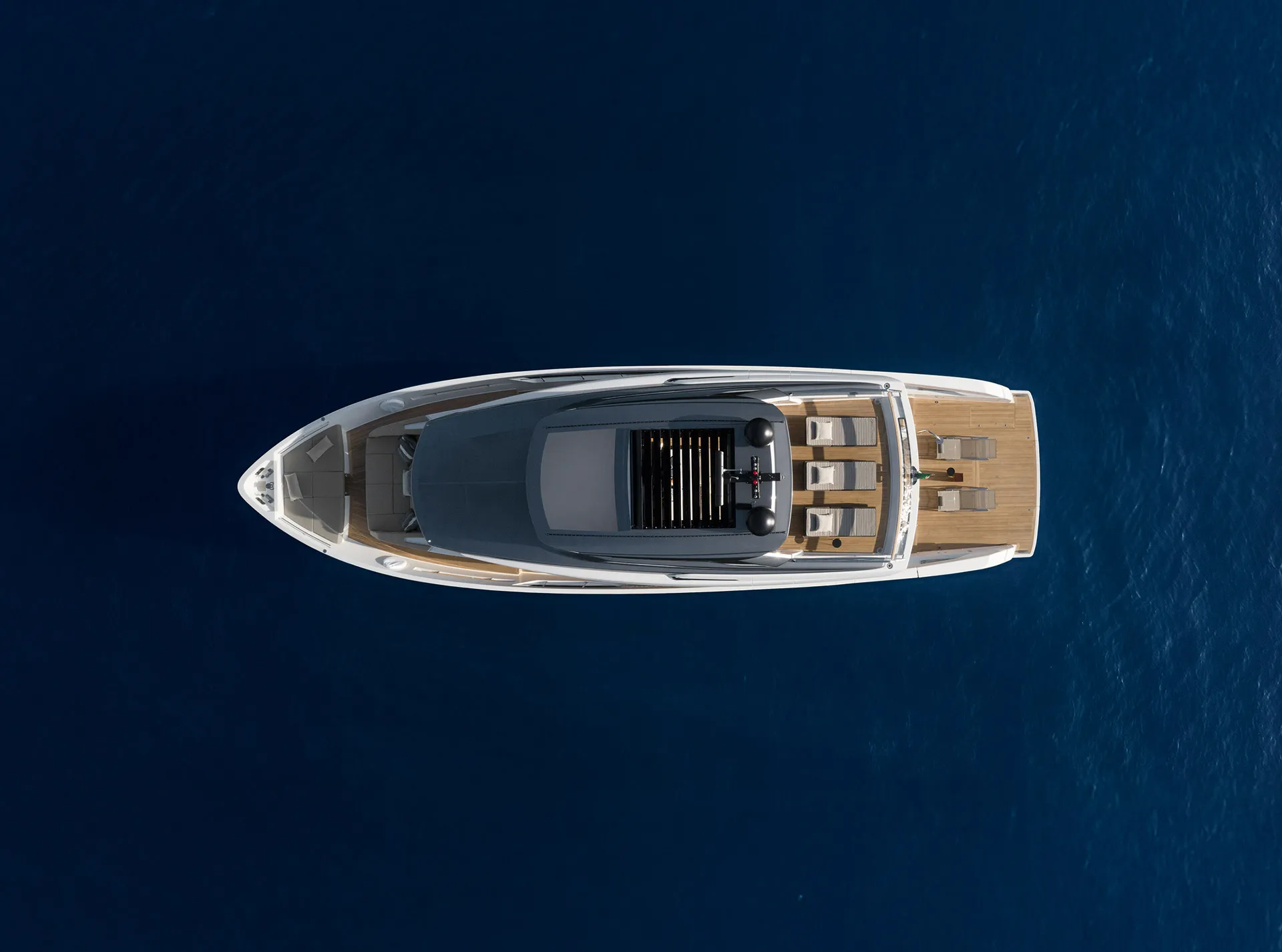
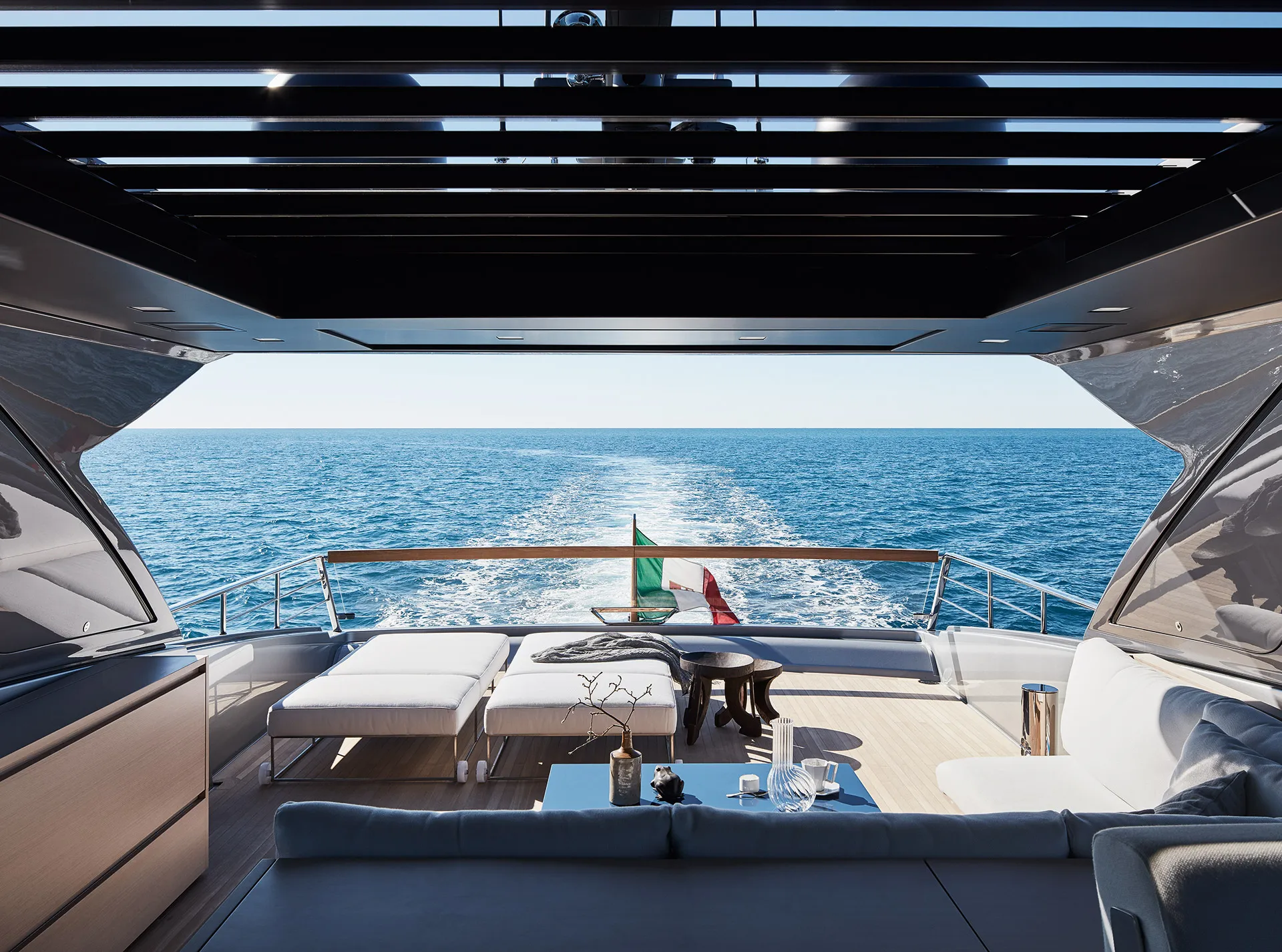
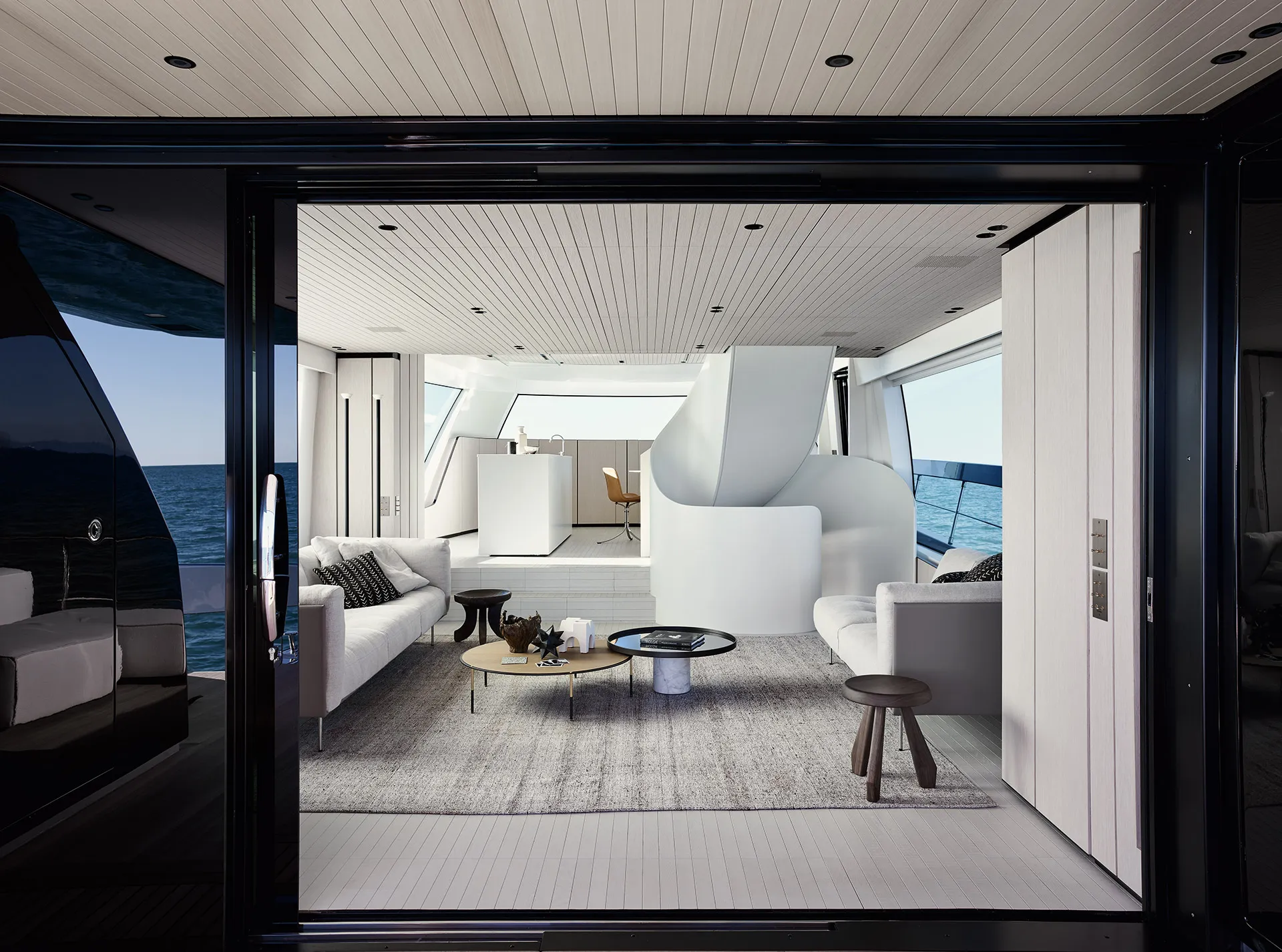
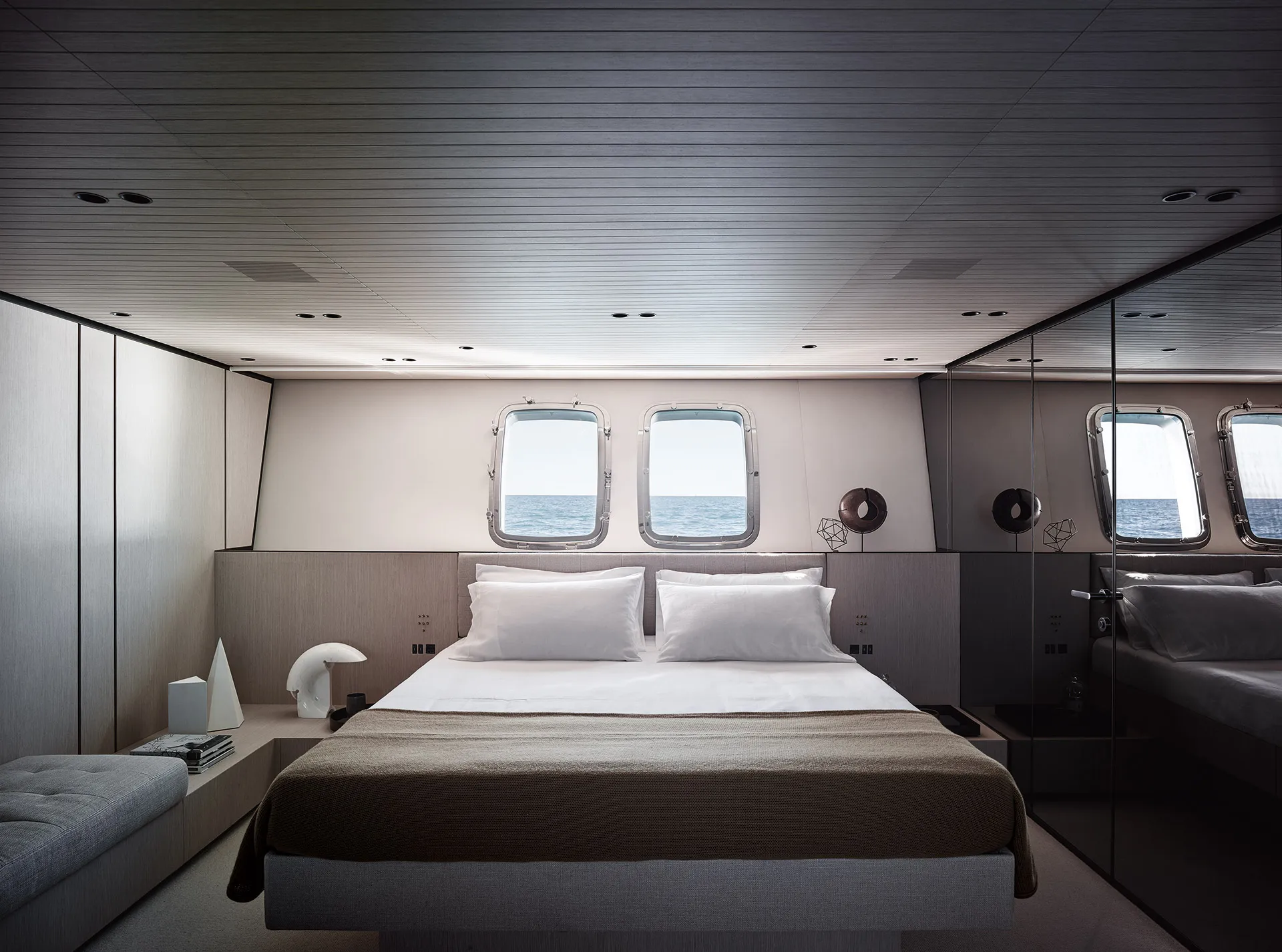
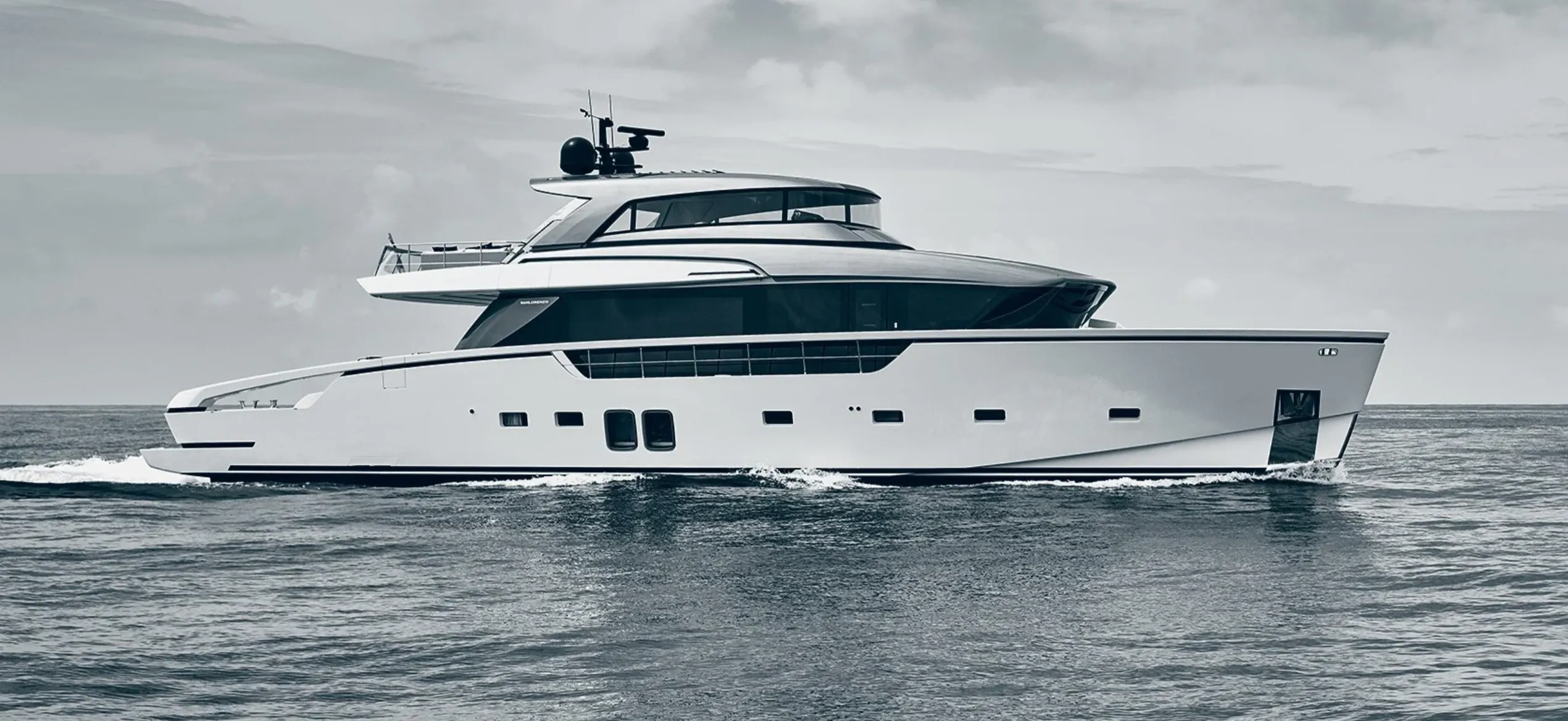
Photos courtesy of Sanlorenzo.
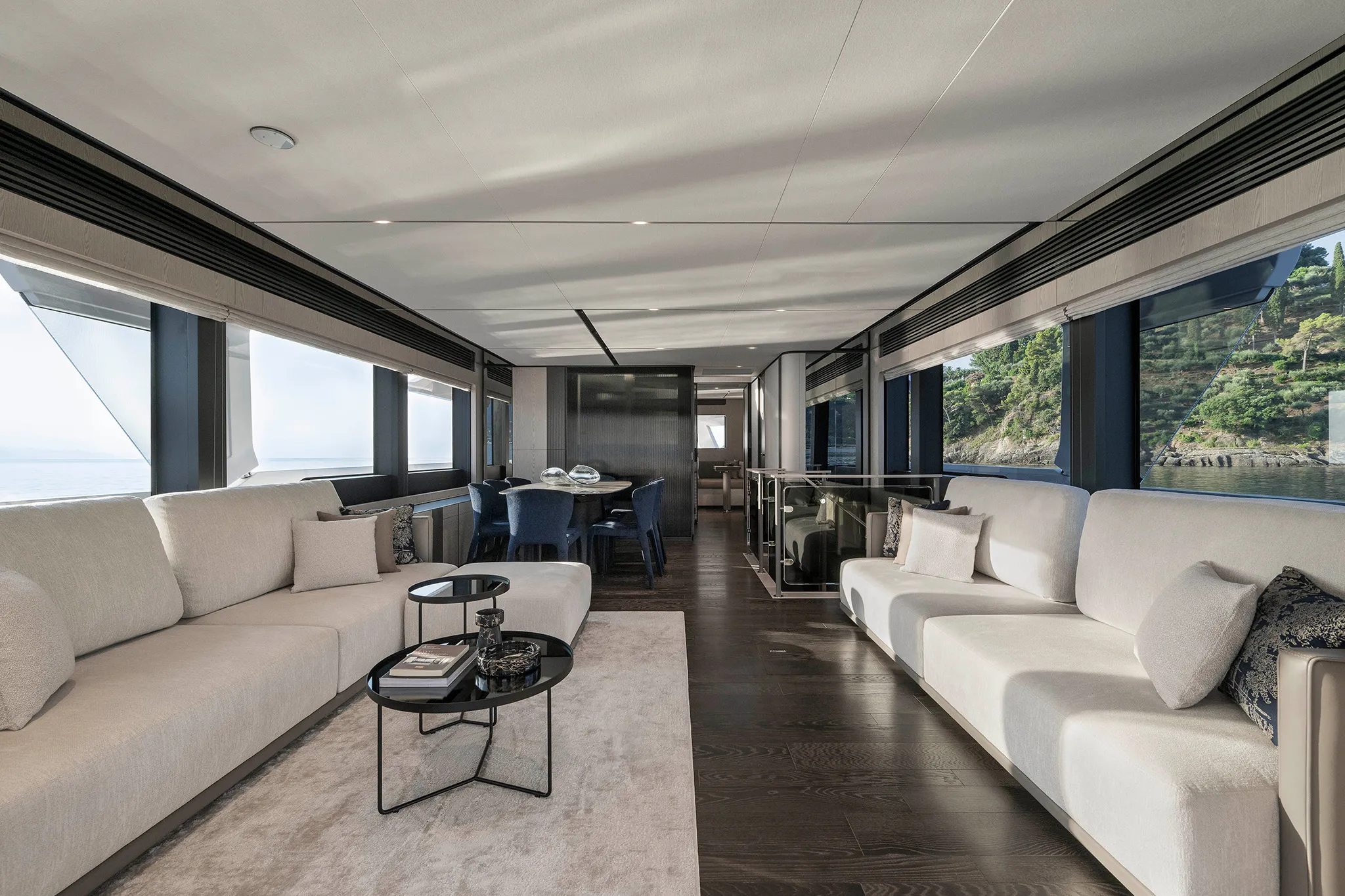
Continuous — Sanlorenzo describes the interior as unfolding as one open space rather than a sequence of separate rooms, wrapped in expansive glazing so all eight guests stay in sight of the water. That is the SX crossover idea applied to the smallest hull in the range.
Bernardo Zuccon's exterior does the enabling work: sculpted volumes, a high bow, a slim stern profile and an indoor-outdoor flow that carries the same open feeling onto the decks. With eight guests and two crew on a 23.7-metre (77 feet 9 inches) hull and a 6.6-metre (21 feet 8 inches) beam, the SX76 keeps the arrangement democratic rather than hierarchical. Sanlorenzo publishes guest and crew numbers rather than cabin counts.
As far as observed consumption says it will — range on the SX76 is built, not quoted. Fuel capacity is 4,350 litres (1,149 US gallons) against a published maximum of 22 knots, and how that converts into distance depends on the speed you hold and the load you carry. Fresh water is 1,250 litres (330 US gallons).
If range decides your purchase, ask for the sea trial report for the specific hull: it records observed fuel burn at each rpm step, and that is the document a range figure should be built from.
Crew and volume, because the guest count is the same. Both carry eight guests. The SX76 does it at 23.7 metres (77 feet 9 inches) with two crew; the SX88 at 26.7 metres (87 feet 7 inches) with three, and on three Volvo Penta IPS pods rather than two.
The SX76 is therefore the SX layout at its most manageable — a smaller permanent crew, less machinery, 4,350 litres of fuel against 9,300. The SX88 is the model that established the crossover idea, and it buys you three metres of length, a third crew berth and the deck scale that comes with them. If your programme is family cruising with occasional guests, the SX76 is the right end of the line. If you entertain at scale, the step up is real rather than cosmetic.
Twenty-two knots on twin Volvo Penta IPS3 1200 pod drives at 900 hp each. The SX88 publishes 23 knots on three IPS3 1050 pods at 800 hp each — one knot apart, from 1,800 hp against 2,400.
So the SX76 gets within a knot of its larger sister on two thirds of the machinery, which is the practical argument for it: fewer pods to service and a simpler installation, for a difference you would struggle to notice. Fuel is 4,350 litres (1,149 US gallons) on a 23.7-metre (77 feet 9 inches) hull.