
March 18, 2026
The Pursuit D 326 Denali: South Florida's Most Honest Dual Console
The Pursuit D 326 Denali is a 34-ft dual console engineered for owner-operators: fishes offshore and cruises the Keys or Bahamas, docks like…
Read the articleExpert Review, Technical Specifications & Market Analysis
| Feature | Specifications |
|---|---|
| Overall Length | 34' 6" |
| Beam | 10' 10" |
| Draft | 2' 0" (motors up) / 2' 11" (motors down) |
| Displacement | 12,900 lbs (with twin Yamaha F300 engines) |
| Engines | Twin Yamaha F300 or F350 V6 Offshore |
| Fuel Capacity | 300 US gallons |
| Water Capacity | 30 US gallons |
| Cabins / Heads | Port side convertible berthing; Enclosed head with vacuum flush, 10-gallon holding tank, Corian countertop |
| Max Speed | 55.1 mph @ 5,950 RPM (twin Yamaha F350) |
| Cruise Speed | 34.4 mph @ 4,000 RPM (twin Yamaha F350) |
Source: Spec & Photos courtesy of Pursuit. Specs verified by Tony Smith, USCG 100 Ton Master, on August 11, 2026.
Part of the Pursuit Denali series — see how owners step up through the lineup.
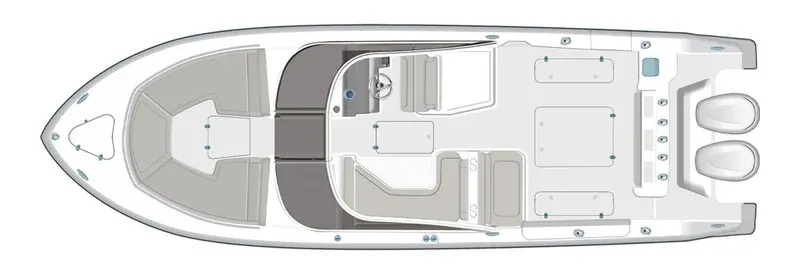

The D 326 represents Pursuit's best work in the dual console category. The fully integrated hardtop isn't just cosmetic—it's structural fiberglass that won't delaminate or leak like canvas-over-frame alternatives. The hull-side door and extended swim platforms are thoughtful additions that change how you use the boat daily. Build quality is consistent with Pursuit's reputation: hand-laid hull with vinyl ester resin, five-ply composite transom, and bronze through-hulls below the waterline. The twin F300s are adequate, but the F350 upgrade is worth the premium if you're running with a full load or heading offshore regularly.
This boat makes sense for the experienced owner who has outgrown a 28-footer but doesn't want the operational complexity of a 40-foot express. It's ideal for the angler who needs a boat the family will actually use, or the cruiser who wants fishing capability without turning the cockpit into a tackle shop. It's not the right choice if you need a dedicated tournament fishing platform or if you're looking for overnight accommodations for four adults. The 26-gallon livewell is undersized for serious live-bait fishing, and the port-side berth is tight for anyone over six feet tall.
Resale on the D 326 is strong, typically holding 75-80% of original value over five years in normal market conditions. Maintenance costs are predictable—budget $3,500-$5,000 annually for routine service on the Yamahas, plus bottom paint and canvas replacement every 3-5 years depending on use. Slip fees will vary by market, but the 34-foot 6-inch LOA keeps you under the 35-foot threshold that triggers premium rates at most marinas. Insurance runs $2,500-$4,000 annually depending on location and coverage. Total cost of ownership over five years, assuming 100 hours per year of use, will be roughly 40-50% of purchase price.
Video courtesy of Pursuit.
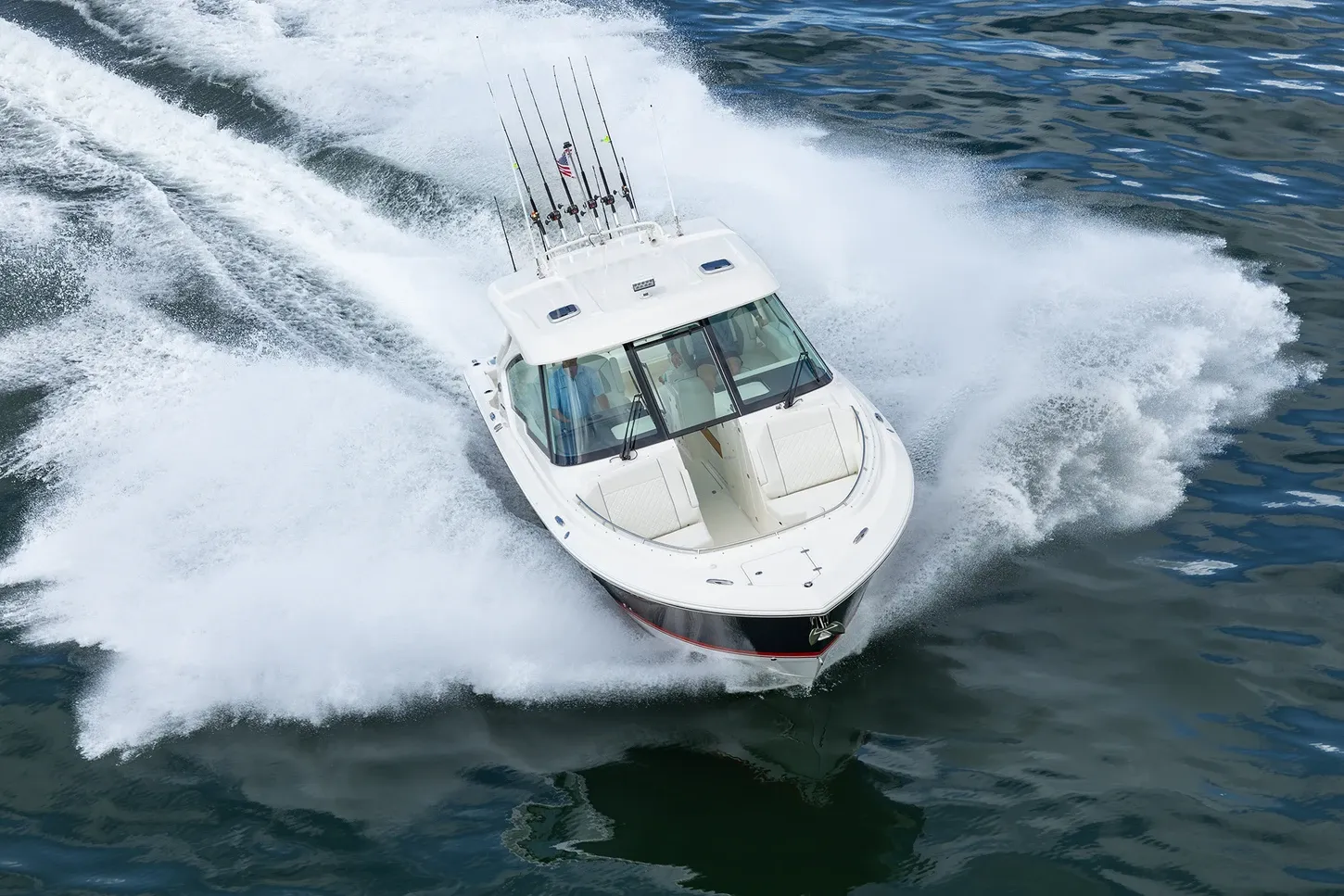
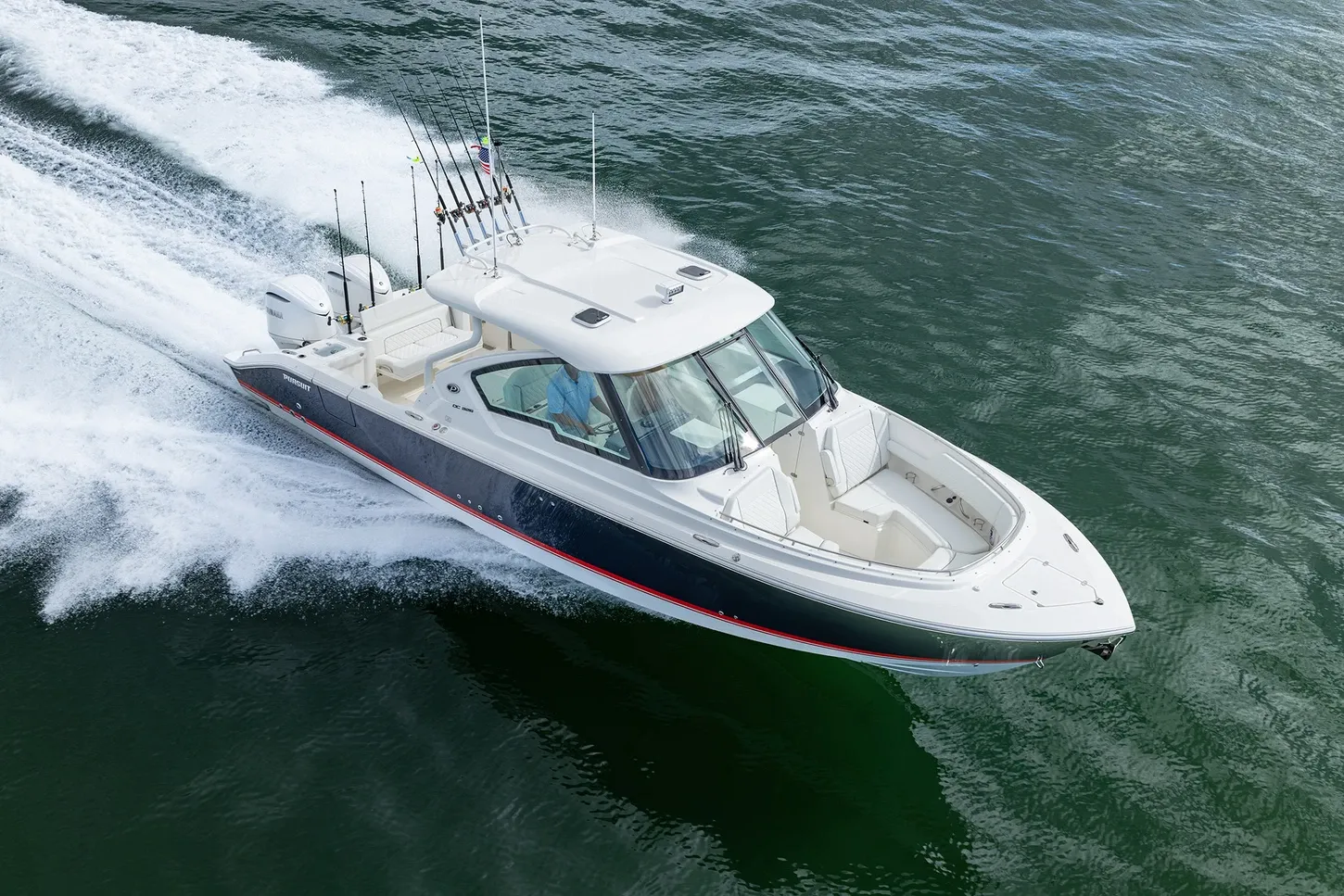
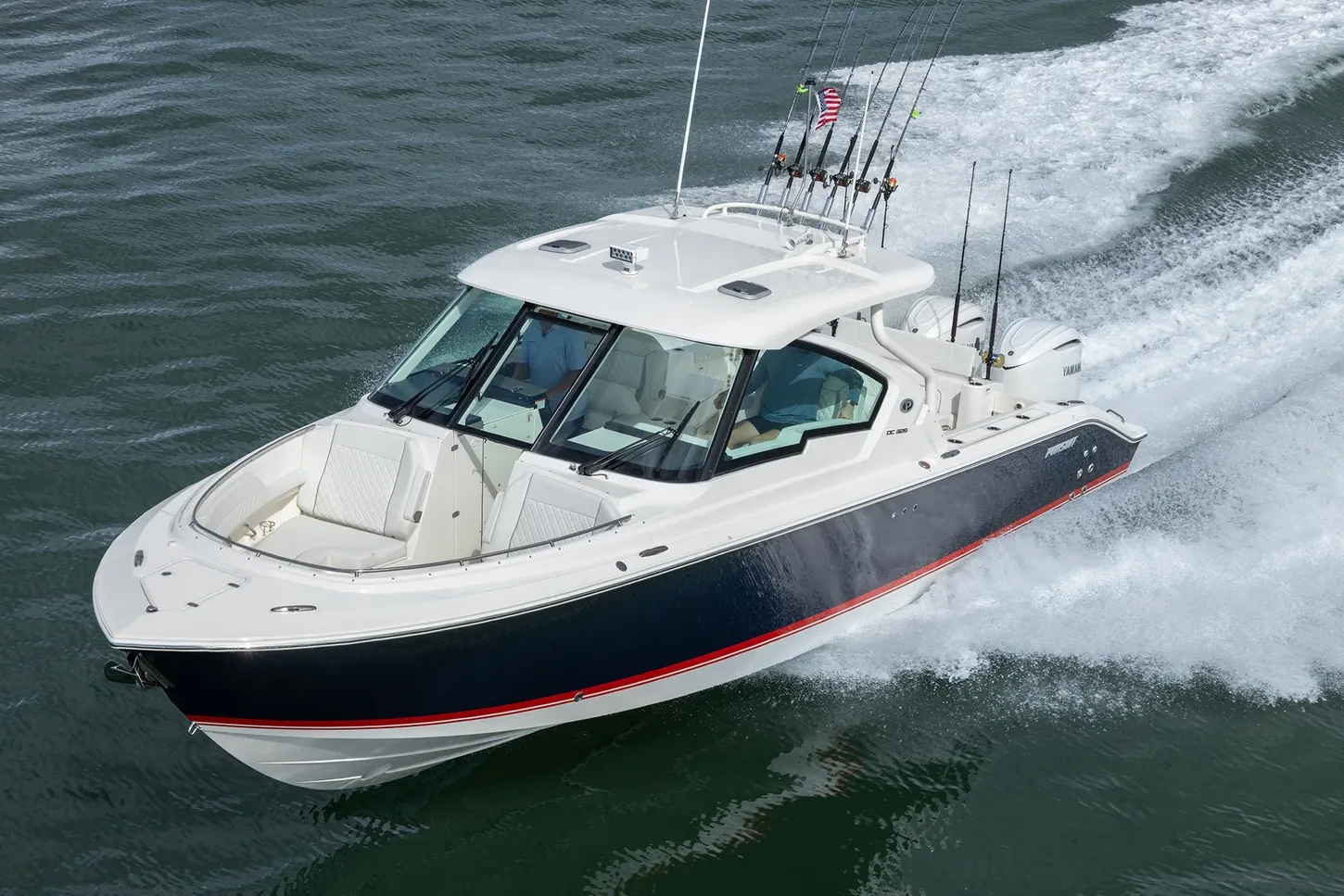
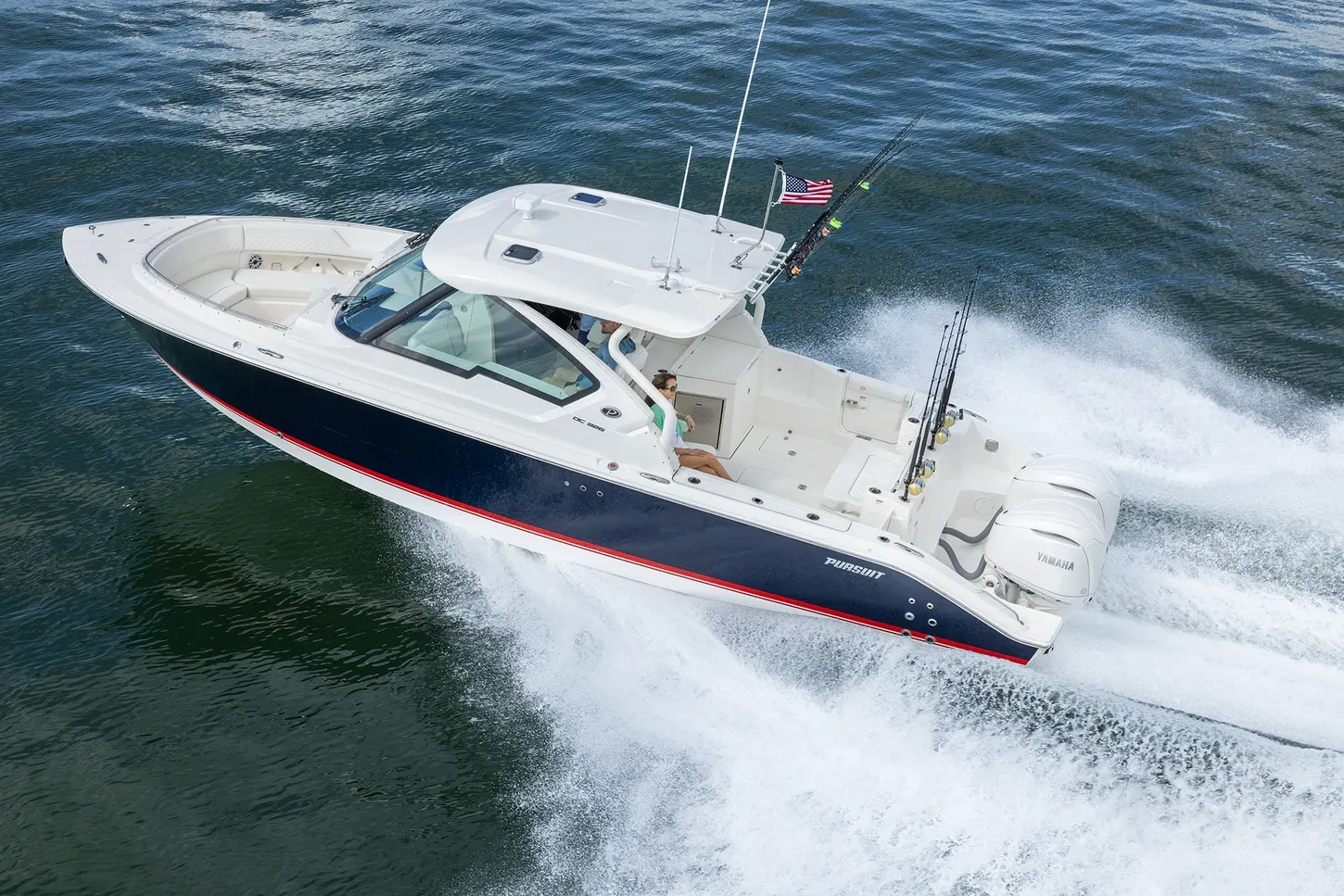
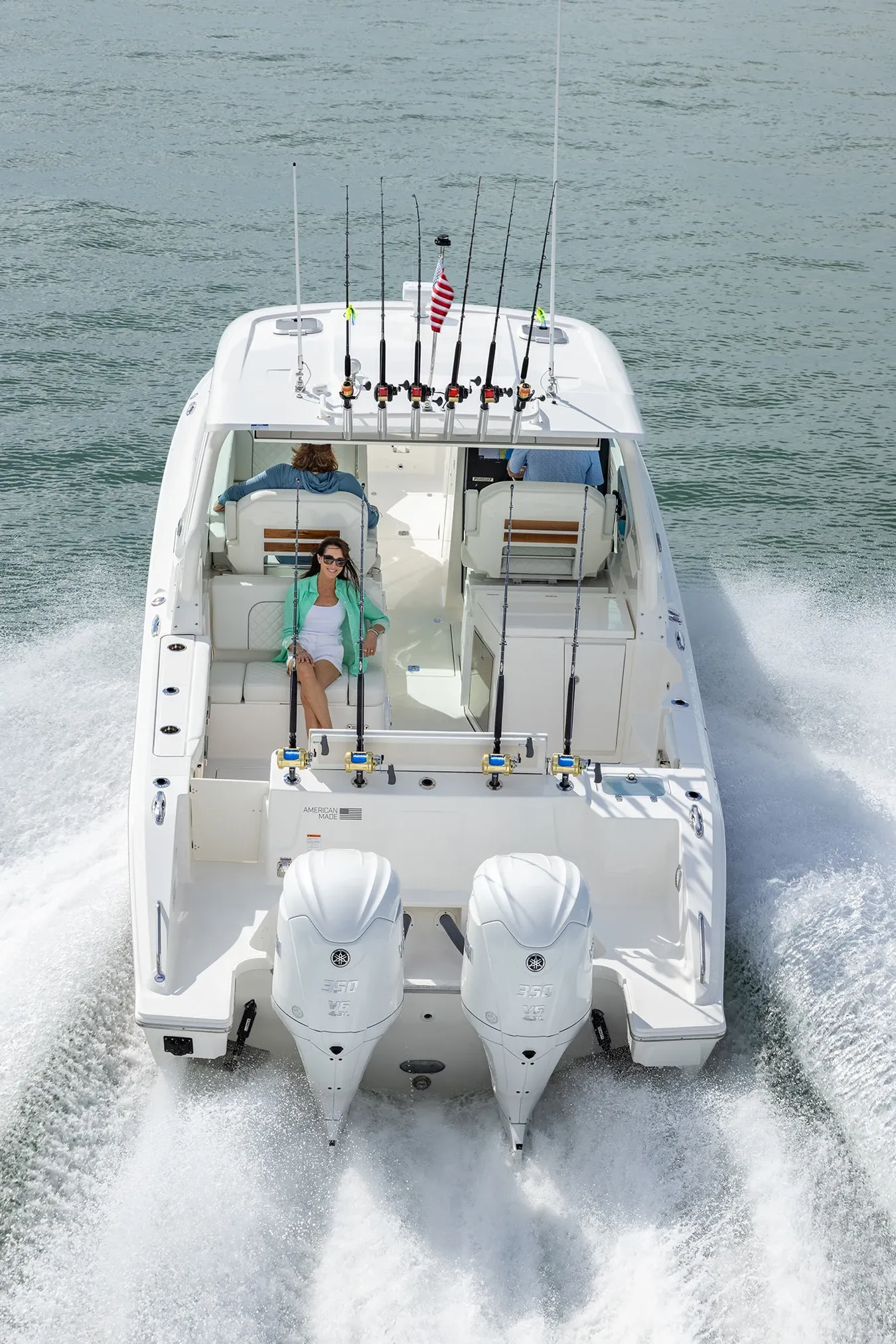
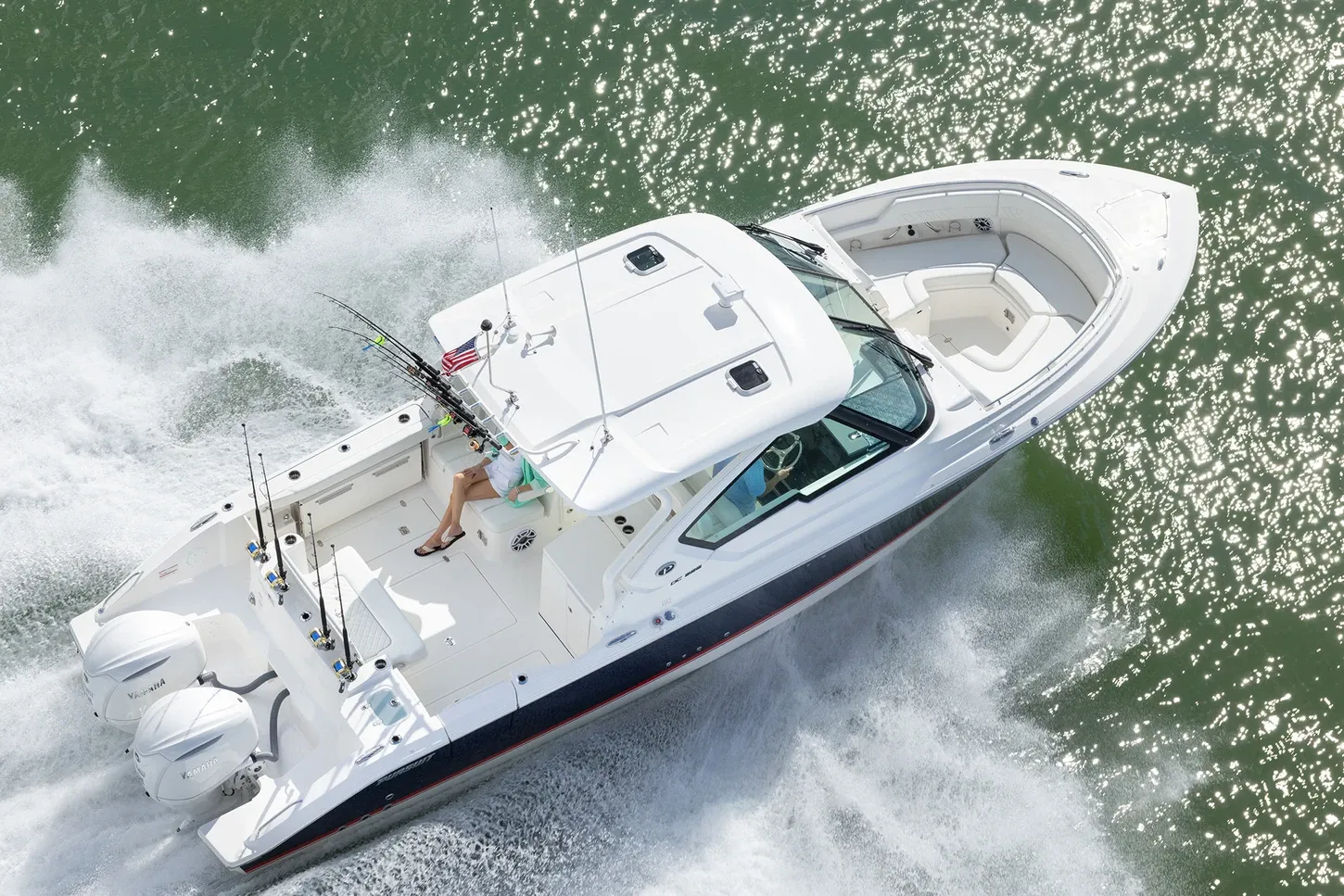
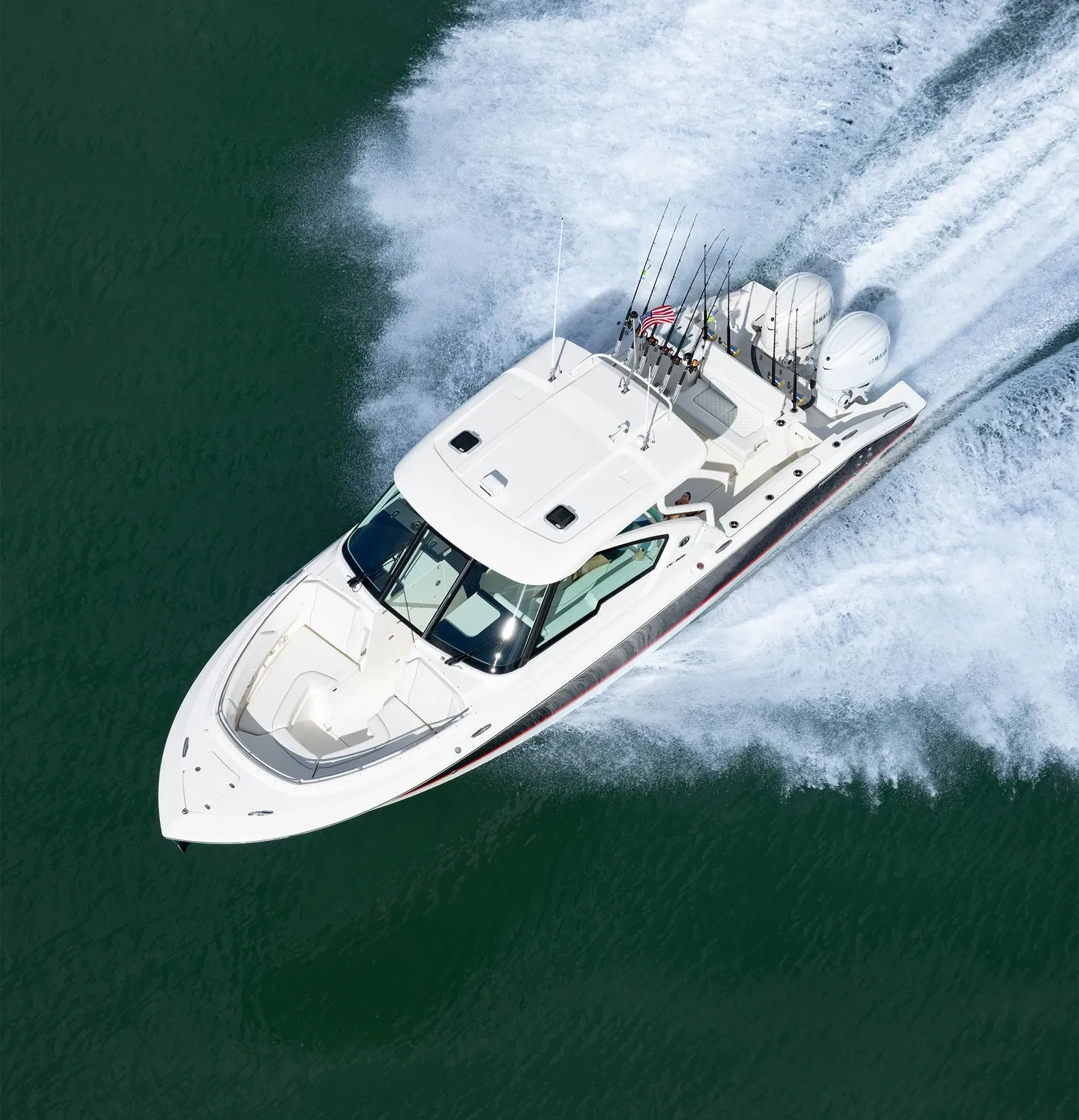
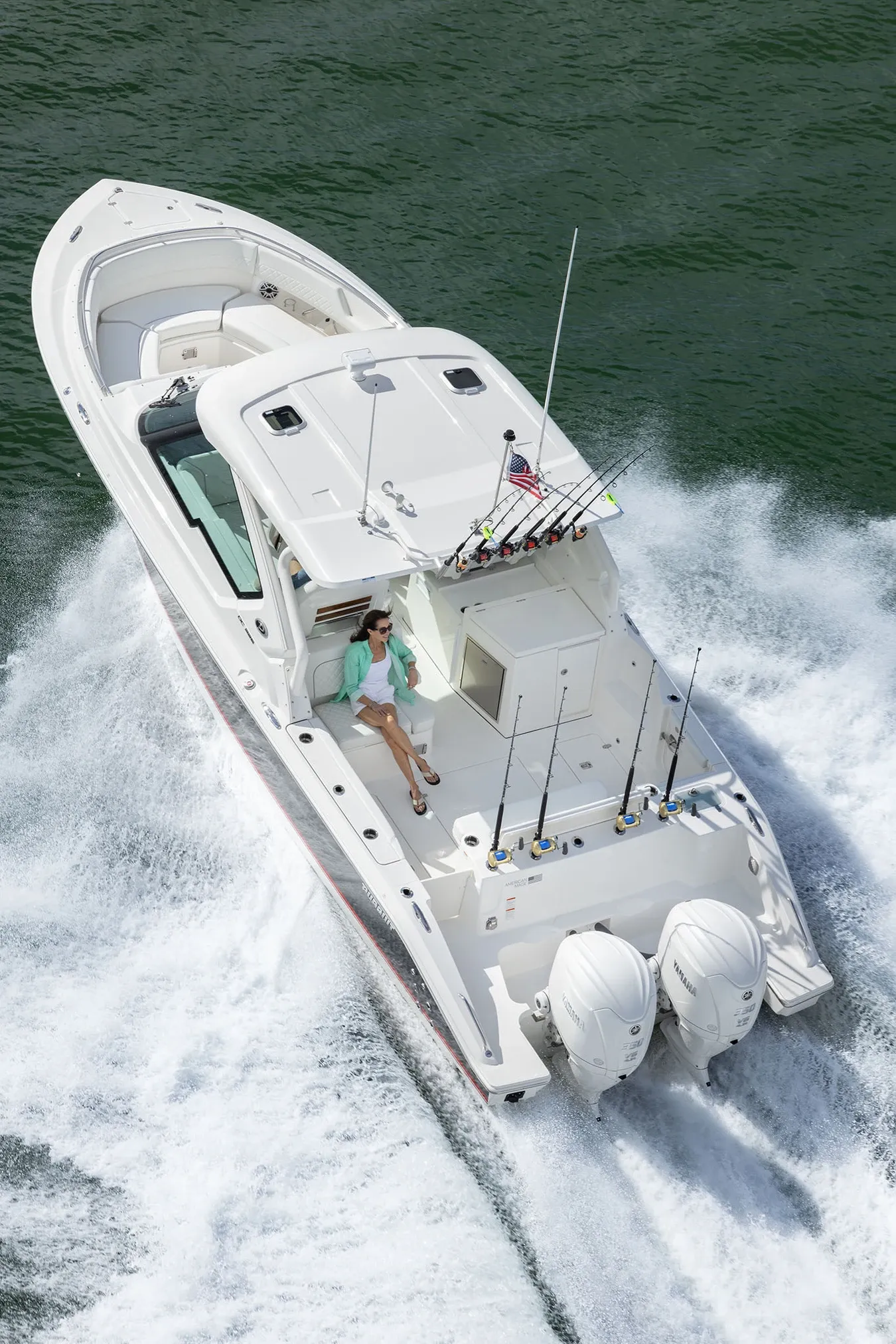
Photos courtesy of Pursuit.
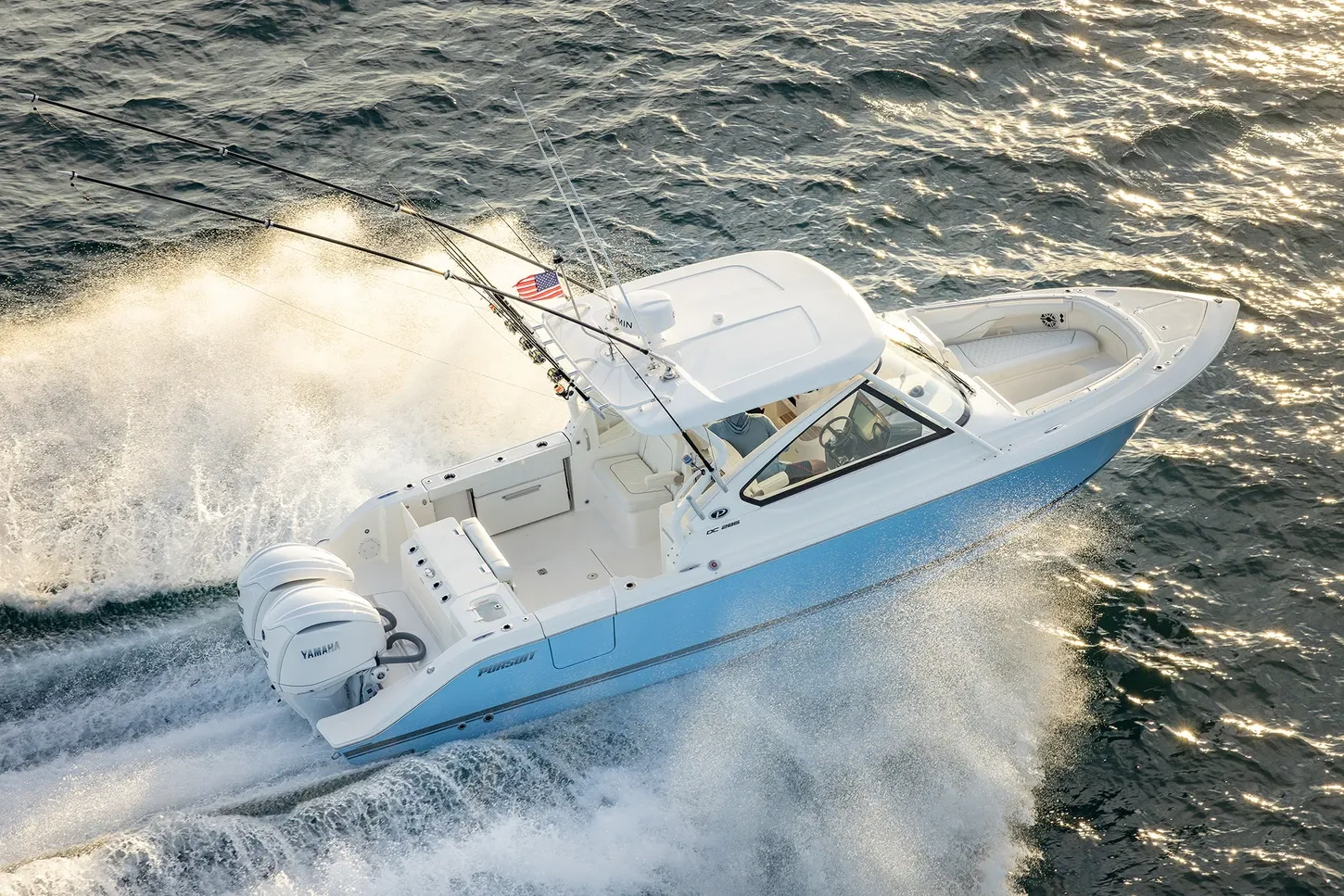
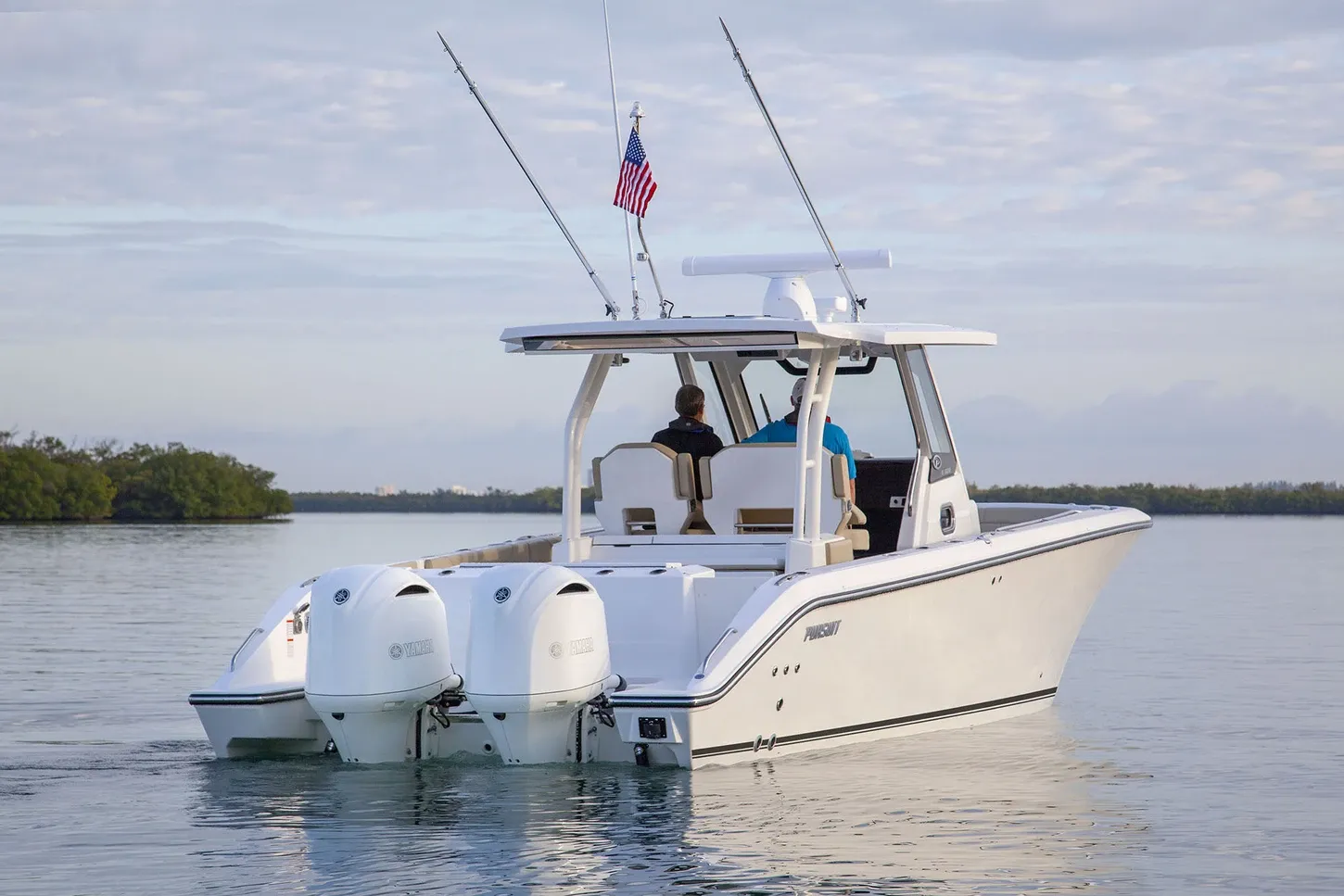
394 miles at best cruise, which is the longest range of any Pursuit reviewed on this site. Pursuit's own test sheet puts best cruise at 34.4 mph at 4,000 RPM on twin Yamaha F350s, burning 24.6 gallons an hour at 1.40 miles per gallon, calculated on 90 percent of the 300-gallon fuel capacity. Top speed is 55.1 mph at 5,950 RPM and the boat goes from a standstill to 30 mph in 10.7 seconds.
Because Pursuit brought back a name it had used before. The dual-console range used to carry a DC prefix for dual console, and it now carries a D for Denali — a name Pursuit ran through the 1990s and 2000s on models including the Denali 2460 in 1994 and the 2860 Denali in 1996. The yard describes the name as having returned rather than arrived. The boat is the same dual console; only the badge changed, and older listings and reviews will still call it the DC 326.
Yes, as standard, which is unusual in this class. It is an integrally molded thru-stem unit rated at 3.0 horsepower with its own Group 31 AGM battery, switch and fuse, and a joystick control at the helm. Yamaha Helm Master EX with full-maneuverability joystick control is a separate engine option on top of that. Between the two, a 12,900-pound boat is genuinely single-handed at the dock, which is the point.