

Aquila 54 Yacht 54' 2"
View Specs & ReviewTwo travelifts, and the wide-body one takes catamarans to 32 ft of beam
Yachting in Tortola
A Minted Location · Tortola, British Virgin Islands
If you own a catamaran, the figure that decides where you refit in the Caribbean is beam — and Tortola publishes it.
Nanny Cay publishes two travelifts on its own boatyard page: a "50-tonne Travelift capable of lifting monohulls up to 68 feet long, 10 feet draft and weighing up to 50 tons", and a "wide-body 70-tonne Travelift capable of lifting and moving catamarans up to 32′ beam and 70 tons in weight." Most visiting boats here are catamarans, and that second figure is the story: thirty-two feet of beam covers most cruising catamarans built.
The marina behind the yard is real inventory too — around 300 berths, split between an outer marina taking "110 Monohulls" and "3 large motor yachts under 100ft", and an inner marina with "190 Monohulls of various sizes", "8 Motor Yachts over 100ft" and "1 Motor Yacht at 150 feet maximum." Two fuel docks, a pump-out, water and power in every slip, and 100% site-wide backup power — which in this hurricane belt is not a luxury feature.
Then the fee structure, which is priced by the head: the BVI cruising permit is charged per person per day, not per vessel. $6 for home-based charter boats, $16 for foreign-based ones. On a crewed boat with guests it dominates the arithmetic in a way a per-foot rate never does.
So treat Tortola as what it is: the working island of the Virgins — the yard, the fuel, the berths and the paperwork, with the cruising ground next door.
Where to keep a yacht in Tortola
Nanny Cay is the market's published marina, and it publishes the detail.
Its own page gives "berths for 300 yachts" and describes the total as "320 yachts." Plan on around 300 and settle the berth itself on the radio.
| Outer marina | "110 Monohulls, including the concrete Peninsula (Catamarans would be less.)" · "3 large motor yachts under 100ft" |
| Inner marina | "190 Monohulls of various sizes" · "8 Motor Yachts over 100ft" · "1 Motor Yacht at 150 feet maximum" |
| Fuel | Two fuel docks |
| Utilities | Pump-out station · 120/220 V · "Water and power is available in every slip" · water and ice from the marina's own R/O plant |
| Resilience | "100% site-wide backup power" |
| VHF | 16 for reservations and arrival · 16/68 for the dockmaster |
| Office | 07:00–23:00, 365 days a year |
The parenthesis in the outer-marina line is worth reading twice. "Catamarans would be less" — the operator is telling you, in writing, that the published monohull count does not translate to multihulls. In a market where most visiting boats are catamarans, that is the line to plan against.
The single 150-foot berth is the market's ceiling, and it is one berth. Eight more take motor yachts over 100 feet. Above 150 feet the published answer in the Virgin Islands is St Thomas — Yacht Haven Grande, 46 megayacht berths to 656 feet — which is a forty-minute run and a customs report away.
House rules are published and enforced: a 5-knot speed limit, no generators after 19:00, and propane barbecues only.
Depth here is a conversation rather than a published figure — give the dockmaster your draft on VHF 16/68 before you commit, and do the same for Road Harbour. Road Town and Soper's Hole are the island's other well-known marinas, and they work the same way: slips, maximum length and depth are settled on the telephone, so ring ahead rather than plan around a figure.
Marinas
| Name | Where | Max yacht | Slips | Fuel |
|---|---|---|---|---|
| Nanny Cay Resort & MarinaIts own page gives "berths for 300 yachts" and describes the total as "320 yachts" — plan on around 300. Outer marina: "110 Monohulls, including the concrete Peninsula (Catamarans would be less.)" plus "3 large motor yachts under 100ft." Inner marina: "190 Monohulls of various sizes", "8 Motor Yachts over 100ft" and "1 Motor Yacht at 150 feet maximum" — one berth, and the market's ceiling. Pump-out, 120/220 V, water and power in every slip, water and ice from the marina's own R/O plant, and "100% site-wide backup power." House rules: 5-knot limit, no generators after 19:00, propane barbecues only. Depth is a conversation rather than a published figure — give the dockmaster your draft on 16/68 before you commit. | South coast, west of Road Town | 150 ft | 300 | Two fuel docks |
| Road Town and Soper's HoleTortola's other well-known marinas, and both work by telephone rather than by published terms: slips, maximum length and controlling depth are all settled on the call. Ring ahead before you plan a passage around either. | Road Harbour and the west end | — | — | — |
Figures are as each facility publishes them on its own site; blank cells mean the facility doesn't state a number. Confirm slip availability and current rates directly — or ask us to make the calls.
Cruising from Tortola
The BVI prices entry by heads, not by feet, and that changes how you plan a trip.
Under the amended Cruising Permit Ordinance (Cap. 203), passed by the House of Assembly on 6 June and gazetted on 16 June, the Government of the Virgin Islands publishes:
- Home-based charter boats: $6.00 per person per day, year-round.
- Foreign-based boats: $16.00 per person per day, year-round.
A home-based charter boat is defined as "a boat operated in the Virgin Islands, generally maintained in the Virgin Islands and managed by a company or any other legal entity incorporated, registered or licensed in the Virgin Islands for a period of five (5) months or more in any 12-month period."
⚠️ Work the arithmetic before you commit. A foreign-based boat with eight aboard for a fortnight is $16 × 8 × 14 = $1,792 in cruising permit alone. The same boat under a home-based structure is $672. No other line on this page turns an ownership structure into a four-figure difference. The rates carry a published effective date of 1 August — confirm the current figures with HM Customs on (284) 468-6800 or bvicustoms@gov.vg before you budget.
Arrival is handled through SailClear, and Nanny Cay publishes the mechanics: registration at sailclear.com, with submission to the BVI Customs & Immigration portal up to 72 hours prior to arrival. That is a long window by regional standards — file early rather than late.
⚠️ Coming from the US Virgin Islands is a genuine international border, and going back is a US customs event. CBP treats St Thomas, St John and St Croix as foreign ports under United States customs law, so a boat returning from the BVI to the USVI must report, and one continuing to Puerto Rico must report again. Fines typically begin at $5,000. CBP ROAM covers most cases but not an I-94, a cruising licence, or duties owed.
The yard is the reason to base a boat here rather than visit. Nanny Cay's own figures:
| Monohull lift | 50-tonne — up to 68 ft, 10 ft draft, 50 tons |
| Catamaran lift | Wide-body 70-tonne — up to 32′ beam, 70 tons |
| Yard capacity | "approximately 320 boats of various sizes" |
| Also | two hydraulic trailers · a dedicated no-mast storage area |
| Hours | Monday–Friday, 07:00–16:00 |
Ten feet of draft on the monohull lift is the constraint most people miss. A 65-foot performance monohull drawing eleven feet does not fit a 68-foot lift rating — the draft governs, not the length. Check both numbers against your boat, in that order.
- The BVI cruising permit — priced per person, per day — British Virgin Islands watersCharged on heads rather than feet, under the amended Cruising Permit Ordinance (Cap. 203), passed 6 June and gazetted 16 June. A home-based charter boat is "a boat operated in the Virgin Islands, generally maintained in the Virgin Islands and managed by a company or any other legal entity incorporated, registered or licensed in the Virgin Islands for a period of five (5) months or more in any 12-month period." Eight aboard for a fortnight is $1,792 foreign-based against $672 home-based. The rates carry a published effective date of 1 August — confirm the current figures with HM Customs on (284) 468-6800 or bvicustoms@gov.vg before you budget.
Service, refit & supplies
Shipyards & refit
| Name | Where | Max yacht | Dockage |
|---|---|---|---|
| Nanny Cay BoatyardThe yard that gives Tortola its reputation, and the one whose second lift is written specifically for catamarans. A "50-tonne Travelift capable of lifting monohulls up to 68 feet long, 10 feet draft and weighing up to 50 tons", and a "wide-body 70-tonne Travelift capable of lifting and moving catamarans up to 32′ beam and 70 tons in weight" — thirty-two feet of beam covers most cruising catamarans built. Yard capacity "approximately 320 boats of various sizes", two hydraulic trailers, and a dedicated no-mast storage area. Monday–Friday 07:00–16:00. Ten feet of draft governs the monohull lift, not the 68-foot length — check both, in that order. | Nanny Cay | — | — |
On the Tortola calendar
Tortola runs year-round, and the clocks that matter are the marina's and the government's.
- Nanny Cay marina office: 07:00–23:00, 365 days a year. A very long day by regional standards, and it makes a dusk arrival workable.
- Nanny Cay boatyard: Monday–Friday, 07:00–16:00. Yard work is a weekday business here.
- SailClear submission: up to 72 hours before arrival through the BVI Customs & Immigration portal — a long window by regional standards, so file early.
- Cruising permit: charged per person per day, year-round — $6 home-based, $16 foreign-based, with a published effective date of 1 August. Confirm the current figures with HM Customs on (284) 468-6800 before budgeting.
- Returning to the USVI is a US customs event, and CBP reporting is per movement rather than per season.
- Dock rules run on a clock too: no generators after 19:00.
Regatta dates are set by the organising clubs — confirm them directly with the organiser. The hours above are the dates that actually change a trip.
Yachts we'd shortlist for Tortola
Reviewed the same way as everything on this site — specifications verified against the builder's own numbers.
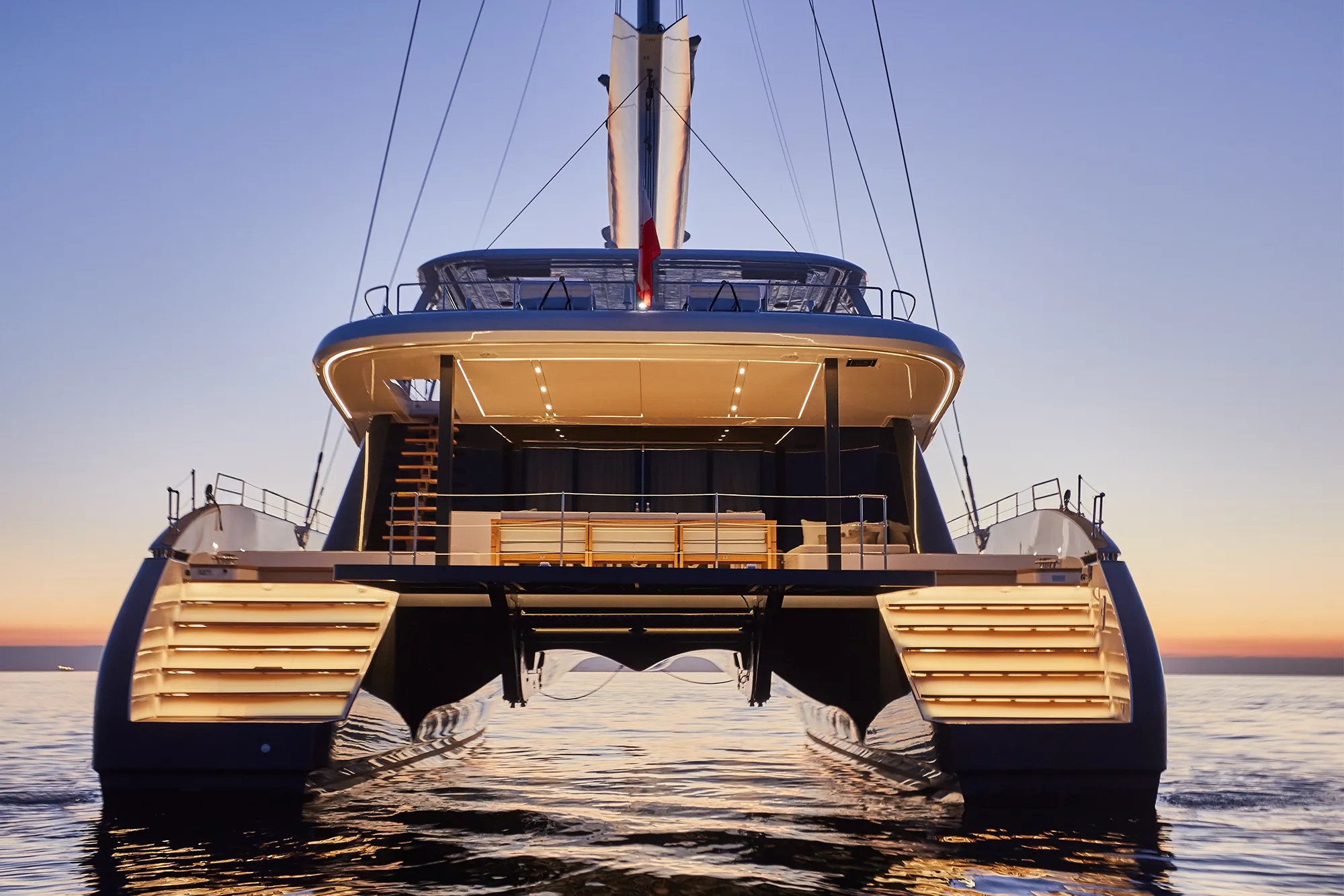
Sunreef 80 Sail NEXT ( Eco-Option )23.87 m (78 ft 4 in)
View Specs & Review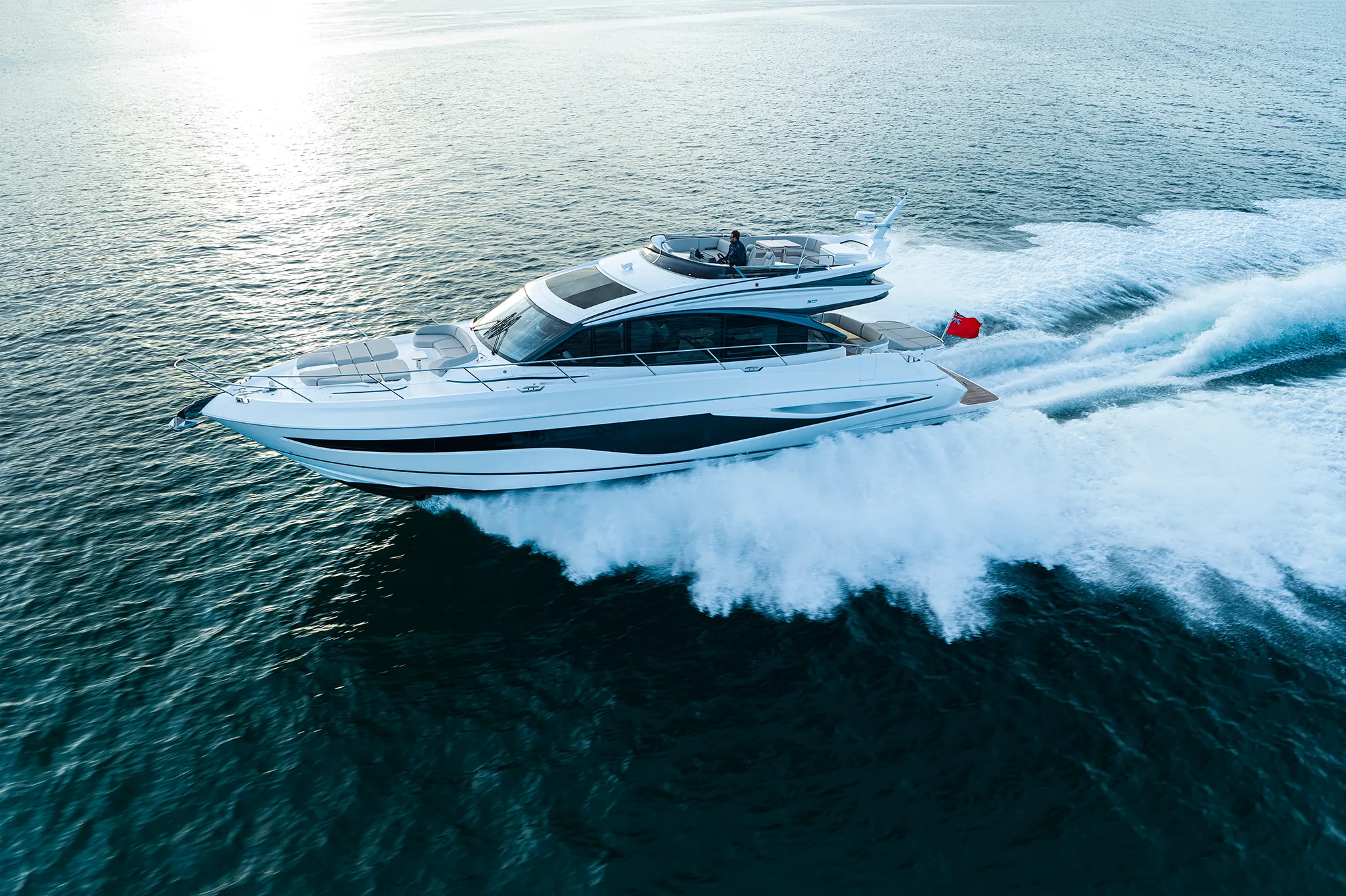
Princess S6567'7"
View Specs & ReviewFrequently Asked Questions
How much is a BVI cruising permit?
The British Virgin Islands charge per person per day rather than per vessel — $6.00 for home-based charter boats and $16.00 for foreign-based ones, year-round, under the amended Cruising Permit Ordinance. A home-based boat is one operated and generally maintained in the Virgin Islands and managed by a locally incorporated, registered or licensed entity for five months or more in any twelve. The arithmetic matters: a foreign-based boat with eight aboard for a fortnight is $1,792 in permit alone against $672 home-based. Confirm current figures with HM Customs on (284) 468-6800 before budgeting.
What is the largest yacht that can berth at Nanny Cay?
One hundred and fifty feet, and it is a single berth. Nanny Cay's inner marina publishes 190 monohulls of various sizes, 8 motor yachts over 100 feet, and 1 motor yacht at 150 feet maximum. The outer marina takes 110 monohulls plus 3 large motor yachts under 100 feet — and the operator adds, in writing, that catamarans would be fewer. Above 150 feet the published answer in the Virgin Islands is St Thomas, where Yacht Haven Grande states 46 megayacht berths to 656 feet, a forty-minute run and a customs report away.
How far in advance do you file SailClear for the BVI?
Nanny Cay publishes registration at sailclear.com with submission to the BVI Customs & Immigration portal up to 72 hours prior to arrival — a long window by regional standards, so file early rather than late. Coming from the US Virgin Islands is a genuine international border in both directions, and returning is a US customs event: CBP treats St Thomas, St John and St Croix as foreign ports, with fines for failure to report typically starting at $5,000.
Is there dock and dine in the British Virgin Islands?
The mechanism is a mooring and a dinghy rather than a guest dock. Venues across the British Virgin Islands do not publish patron moorage or tie-up terms, and the mooring you take is usually a commercial field rather than a restaurant's courtesy. Nanny Cay is the marina answer: water and power in every slip, two fuel docks, and an office open 07:00 to 23:00, 365 days a year, so a dusk arrival is workable.
Where can a catamaran be hauled out in the Caribbean?
Tortola, on published figures. Nanny Cay's boatyard states a wide-body 70-tonne travelift capable of lifting and moving catamarans up to 32 feet of beam and 70 tons in weight — which covers most cruising catamarans built. The same yard runs a 50-tonne travelift for monohulls up to 68 feet long, 10 feet of draft and 50 tons. Other yards in the region take multihulls too: Virgin Gorda publishes a 350-tonne hoist to 39 feet of beam, Antigua Slipway a 200-ton railway to 40 feet, and Martinique's Carenantilles lifts to 440 tonnes into pits 45 feet wide. Nanny Cay's is the lift written specifically for catamarans.