
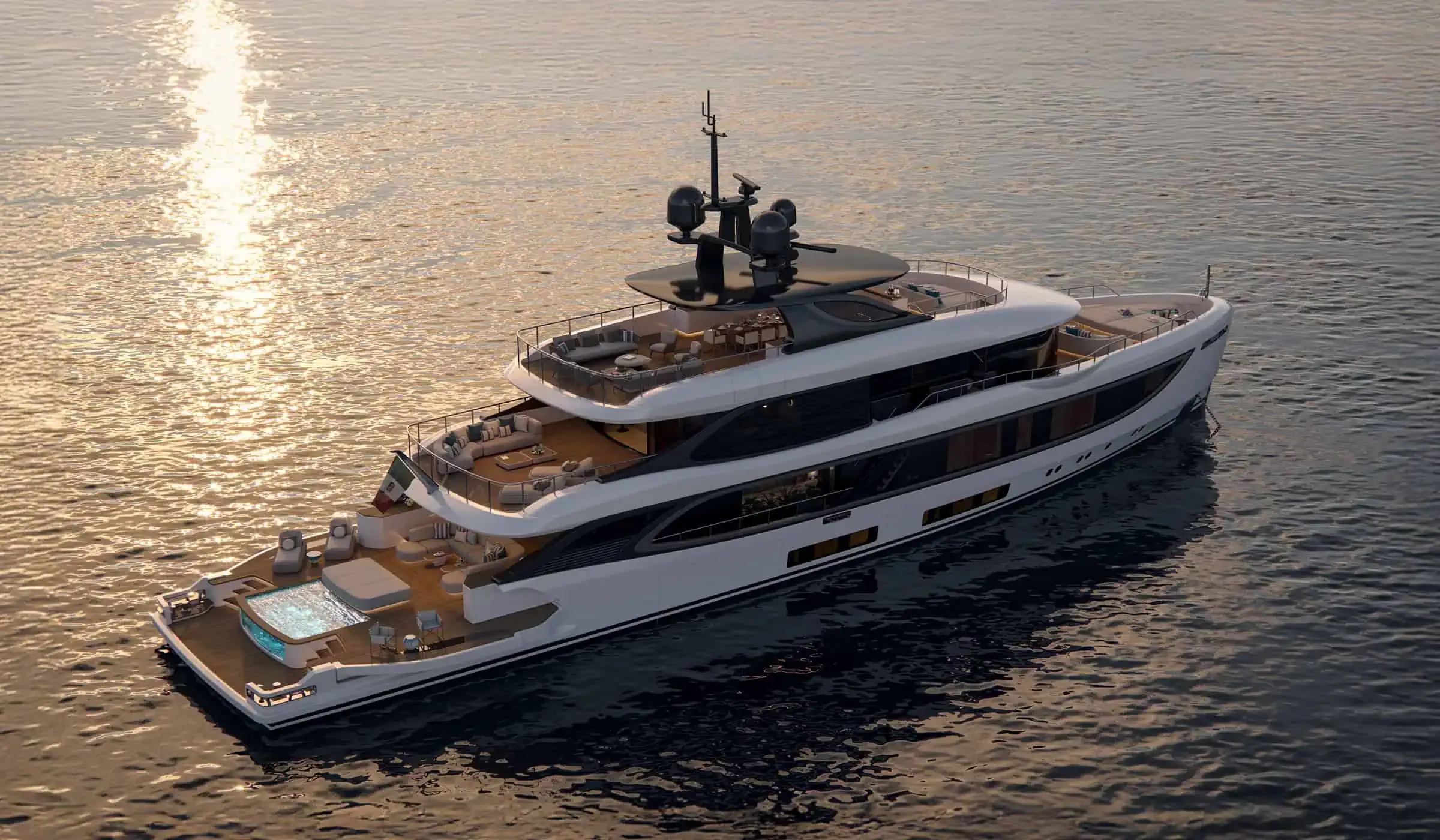
Benetti Oasis 42M139' 5"
View Specs & ReviewA 5,000-ton lift at the end of a road from Anchorage
Yachting in Seward
A Minted Location · Seward, Alaska
If your boat needs serious work done north of Seattle, this is the answer. Seward's shipyard runs a 5,000 long-ton Syncrolift taking vessels up to 350 feet and 80 feet of beam, holds four large vessels on the rail system at once, and backs it with a 330-ton Travelift rated to 130 by 29 feet, a 300-foot main pier and cranes to 100 tonnes. There is a second 50-ton Travelift in the small boat harbour.
The thing that makes it work is the road. NOAA records scheduled highway transportation to Anchorage, year-round Alaska Railroad service to Anchorage and Fairbanks, and ferries to Valdez, Cordova, Kodiak, Seldovia and Homer. Crew fly into Anchorage and drive down the same day. Parts and provisions arrive by truck rather than barge. An owner can walk a yard period without chartering an aircraft. No Southeast Alaska yard sits on a road system, which is why the heavy lift is here.
What Seward is not is a cruising destination, and the state says so itself. Alaska State Parks: "BOATERS BEWARE: There are no public mooring buoys and few good all-weather anchorages. Weather conditions can change quickly and dramatically." NOAA agrees — Resurrection Bay's anchorages are "few and indifferent because of the great depths, are subject to strong williwaws." Come for the yard, the road and the fjords rather than for the anchorages.
Where to keep a yacht in Seward
Seward runs year-round. The City accepts applications for year-round monthly moorage, the tariff publishes annual, semi-annual and monthly reserved rates, and SMIC is open 365 days a year. NOAA records an ice-free port with year-round rail.
The Small Boat Harbor takes reserved floats to 100 feet — the float class runs 95 to 104 — and above that the City states "105 feet or longer, side tie only, up to 150 feet." NOAA adds the instruction for anything larger: "Vessels over 150 feet long are requested to contact the harbormaster on VHF-FM channel 17 before entering."
NOAA records roughly 550 berths with 2,500 feet of transient moorage. Transient rates are $1.62 per foot per day up to 80 ft, $2.77 from 81 to 150 ft, and $4.14 above 150 ft; monthly permits run $27.75 per foot to 150 ft and $41.60 per foot at 151 feet and up.
Above 150 feet the answer is the city docks rather than the harbour. The tariff prices dockage in two brackets — "Up to 500 ft." and "501+ ft.", both at $0.91 per foot per day. That is where a genuinely large vessel goes, and it comes with real operating rules: sufficient tugs must be used, and berthing speed must not exceed 16 feet per minute.
SMIC, six road miles from town on the east side of the bay, is where the yard is. ⚠️ Plan the basin on 17 feet. The City gives it as dredged to approximately −21 feet MLLW with −25 feet alongside the North Dock; NOAA records 17 feet in 2019 and recommends larger vessels seek local knowledge. Both figures are published — take the shallower one, and confirm your draft with the harbormaster on VHF-FM 17 before you commit to the basin.
A detail worth costing before you book a lift: the small boat harbour's own 50-ton Travelift charges a minimum $300 for the first hour, and for all vessels over 55 feet an additional $30 per foot over 55.
Marinas
| Name | Where | Max yacht | Slips | Fuel |
|---|---|---|---|---|
| Seward Small Boat HarborA certified Alaska Clean Harbor established in 1964 and home port of a Coast Guard cutter. NOAA instructs vessels over 150 feet to contact the harbormaster on VHF-FM 17 before entering. Transient rates run $1.62 per foot per day to 80 ft, $2.77 from 81 to 150, and $4.14 above 150. | Head of Resurrection Bay, 1300 4th Avenue | 150 ft | 550 | Fuel dock and fuel float shown on the City's own harbour map |
| City docks (outside the boat harbour)Where anything genuinely large goes. The City tariff prices dockage in two brackets — up to 500 ft and 501 ft and over — both at $0.91 per foot per day, with no stated upper limit. Vessels berthing or departing must use sufficient tugs, and berthing speed must not exceed 16 feet per minute. | Northwest corner of Resurrection Bay | — | — | — |
Yacht clubs
| Name | Where | Max yacht | Slips | Fuel |
|---|---|---|---|---|
| William H. Seward Yacht ClubFounded 1975 and describing itself as a gathering place for racers, cruisers and taggers-on in the Last Frontier. Guest berthing and reciprocal courtesies are arranged with the club directly rather than published — call ahead, and take moorage in the small boat harbour meanwhile. | Clubhouse at 1400 4th Avenue, on the harbour waterfront | — | — | No |
Fuel docks
| Name | Where | Max yacht | Slips | Fuel |
|---|---|---|---|---|
| Seward harbour fuel dock and fuel floatThe City's own harbour map labels both a fuel dock and a fuel float at the small boat harbour, and NOAA records gasoline and diesel. Hail the harbormaster on VHF-FM 17 to confirm hours before you plan a fill around it. | Northeast side of the small boat harbour | — | — | The City's own harbour map labels both a fuel dock and a fuel float; NOAA records gasoline and diesel |
Figures are as each facility publishes them on its own site; blank cells mean the facility doesn't state a number. Confirm slip availability and current rates directly — or ask us to make the calls.
Cruising from Seward
Resurrection Bay runs about 16 miles inland and is deep throughout — NOAA notes there are no dangers in the usual track and that the approach carries over 50 fathoms. What it does not have is shelter you can rely on:
"Anchorages, few and indifferent because of the great depths, are subject to strong williwaws."
Alaska State Parks says the same thing in plainer language: "There are no public mooring buoys and few good all-weather anchorages." At Thumb Cove the state states outright that "there are no public mooring bouys," and at Bechers Bay the buoys are reserved for the Park Service, the Coast Guard and the concessionaire.
The best of what there is: Sunny Cove on Fox Island, which NOAA calls "the best anchorage in Resurrection Bay… No ocean swell makes into the cove, and it is sheltered from all but west winds" — with the warning that "the williwaws are bad with east winds" — in 90 to 150 feet over mud. Humpy Cove is the winter option: "In the winter this bay affords better protection than Sunny Cove," in 42 to 48 feet over sand. Thumb Cove is 0.8 mile wide and "subject to strong williwaws in east weather," with anchorage in 150 to 210 feet. Over in Day Harbor, Bowen Anchorage is "suitable for a vessel up to about 400 feet long" in 84 feet of sticky mud, though a reef in the entrance is cleared to only 25½ feet.
The weather, in NOAA's words: "Winter gales strike suddenly and considerable sea makes into the bay with south winds. At Seward the prevailing wind is from the south from April to September and north during the remainder of the year. The high mountain ranges give some protection, but the region is subject to violent williwaws. The annual snowfall averages 78 inches."
Getting in and out: Harding Gateway between Cheval and Rugged Islands is the south entrance. The inshore passage between Barwell Island and Cape Resurrection carries 43 to 48 fathoms midchannel but NOAA describes it as "dangerous for small craft in east weather because of tide rips, confused seas and seas bouncing back off the cliffs of Cape Resurrection." The Chiswell Islands have strong tidal currents between them. Pilotage is compulsory in Alaska state waters except for exempted vessels; call SEWARD PILOT BOAT on VHF-FM 16.
Round Cape Resurrection and you are in open ocean. Alaska State Parks puts the rounding at 13 miles of exposed seas, small craft only with the weather firmly on your side. NOAA puts Seward 1,234 miles from Seattle by the outside route and 1,398 by the inside passage to Cape Spencer. Everything south of the cape is unprotected North Pacific.
Tide: NOAA station 9455090 gives a mean range of 8.33 feet and a Great Diurnal Range of 10.62 feet.
Kenai Fjords — the Park Service rules
- Stay at least half a mile from the glacier terminus. Land or camp at least two miles from the glacier.
- Remain twice the height or width away from icebergs, and do not attempt to pass between two large ones.
- Stay at least 100 yards from marine mammals.
- "Summer storms often push an ocean swell of three feet or more into the fjords."
- The lagoons — Northwestern, James, McCarty, Bear Glacier and Pederson — should be entered at high, slack tide only.
- Rangers and the Coast Guard are on Marine Channel 16; tour boats monitor 16 or 72. File a float plan.
- NPS states plainly that paddling to the park directly from Seward is not recommended, and warns of long stretches of exposed coastline with no landing sites between Callisto Head and the Aialik Cape.
- Public-use cabins at Aialik and Holgate are water-access only and open roughly Memorial Day to Labor Day — anchor off and go in by tender, and check any tie-up with the park first.
Aialik Bay runs 16 miles inland. A bar crosses off Pedersen Glacier with a least midchannel depth of 30.6 feet, and NOAA warns it is "likely to have boulders and less water than charted." The best anchorage is 180 feet at the head of Paradise Cove in Three Hole Bay. On ice: "There are discharging glaciers at the heads of Aialik Bay and Holgate Arm, and ice is frequently driven to Harbor Island by north winds. Holgate Arm and the entire bay above the bar are frequently filled with ice."
- Sunny Cove, Fox Island — West side of Fox Island, about 12 miles from SewardNOAA calls it the best anchorage in Resurrection Bay: no ocean swell makes into the cove and it is sheltered from all but west winds, in 90 to 150 feet over mud. The qualifier matters though — the williwaws are bad with east winds.
- Humpy Cove — East shore, 1.7 miles north-northeast of Fox IslandThe winter option. NOAA states that in winter this bay affords better protection than Sunny Cove, with anchorage in 42 to 48 feet over sand.
- Thumb Cove State Marine Park — East shore, about nine miles south of SewardThe cove is 0.8 mile wide and NOAA describes it as subject to strong williwaws in east weather, with anchorage 0.4 to 0.5 mile from its head in 150 to 210 feet over soft bottom. Two public-use cabins and a beach toilet ashore.
- Caines Head State Recreation Area (North Beach) — West shore, about 4.5 miles south of Seward by coastal trailThe WWII-era dock at North Beach is unsafe — Alaska State Parks says so plainly, so anchor off and go ashore by dinghy. The Tonsina to North Beach walk is passable only at a tide of 3.0 feet or lower. Three cabins ashore.
- Bowen Anchorage, Day Harbor — Day Harbor, immediately east of Resurrection BayThe best anchorage in Day Harbor, and NOAA sizes it: suitable for a vessel up to about 400 feet long, roughly 500 yards wide at the entrance, in 84 feet over sticky mud. A reef in the entrance is cleared to 25½ feet.
- Aialik Bay, Kenai Fjords National Park — Sixteen miles inland from the north end of Harbor IslandA bar crosses off Pedersen Glacier with a least midchannel depth of 30.6 feet, which NOAA warns is likely to have boulders and less water than charted. Best anchorage is 180 feet near the head of Paradise Cove in Three Hole Bay. Ice is the constraint: Holgate Arm and the entire bay above the bar are frequently filled with it.
Service, refit & supplies
Shipyards & refit
| Name | Where | Max yacht | Dockage |
|---|---|---|---|
| Seward Marine Industrial Center (SMIC)Open 365 days a year, six road miles from town on the east side of the bay. The City gives the basin as dredged to approximately −21 ft MLLW with −25 ft alongside the North Dock; NOAA records a basin depth of 17 feet in 2019 and recommends local knowledge for larger vessels. Both are published — plan on 17 ft and confirm your draft with the harbormaster on VHF-FM 17. | East side of Resurrection Bay, about six road miles from town | — | — |
| JAG Alaska — Seward ShipyardThe yard the whole market is built around. A 5,000 long-ton Syncrolift taking 350 ft LOA and 80 ft of beam, plus a 330-ton Travelift rated to 130 by 29 ft. The yard holds up to four large vessels at a time on its marine rail system, with a 300 ft main pier, a 181 ft north rail berth, a 500 ft south rail berth and cranes to 100 tonnes. | SMIC, Fourth of July Creek | 350 ft | — |
| 50-ton Travelift, Small Boat HarborCity-run. Minimum lift fee $300 for the first hour, and for all vessels over 55 feet an additional $30 is charged for each foot over 55 — worth costing before booking. | Northeast corner of the small boat harbour | — | Boat Lift Agreement required; fees by overall length |
Chandleries & specialty suppliers
- UAF Seward Marine Center Wharf — South side of the City of SewardA 150-foot institutional berth with 40 feet alongside and an 18-foot deck height. ⚠️ A submerged sheet-metal section extends 10 feet southwest of the wharf, and a deepwater intake pipe runs 900 feet seaward — NOAA advises local knowledge before approaching.
On the Seward calendar
The City's own operating calendar is the clearest guide to the season. The harbour office keeps summer hours, 08:30–16:30 seven days a week — confirm winter hours with the office. SMIC is open 365 days a year, and NOAA records an ice-free port with year-round rail service. The visitor season is much shorter — tour boats publish a 2026 season of 12 March to 27 September, one waterfront restaurant runs April to September, and the brewery closes in winter.
Mount Marathon Race — 4 July 2026, the 98th running. The organisers describe it as one of the oldest foot races in the country, first organised in 1915; the course climbs to 3,022 feet over 3.1 miles, an average slope of 34 degrees and 60 degrees at its steepest. Entry is by lottery.
Seward Silver Salmon Derby — 8–15 August 2026, plus a half day on the 16th, the 71st annual. Weigh-in is at derby headquarters in the Seward Boat Harbor, 06:00–20:00 through the 15th and 06:00–12:00 on the 16th. Tagged-fish prizes run to $20,000, $10,000 and $5,000 plus seven more, with values assigned by a double-blind method. Vessels must depart from and return to Resurrection Bay on the same voyage, though multi-day trips qualify provided they start and end in the bay.
Polar Bear Jump — 17 January 2026 (festival 16–18 January), the 41st, plunging into Resurrection Bay at the Small Boat Harbor for the American Cancer Society. Seward Farmers Market, Saturdays 14 June to 6 September.
Racing and tournament dates are set by the organising clubs — confirm those directly with the organiser. The harbour's hours and the dates above are the ones that actually change a trip.
Yachts we'd shortlist for Seward
Reviewed the same way as everything on this site — specifications verified against the builder's own numbers.
Frequently Asked Questions
What is the largest yacht that can be hauled out in Seward?
Three hundred and fifty feet. The shipyard at the Seward Marine Industrial Center runs a 5,000 long-ton Syncrolift taking 350 ft LOA and 80 ft of beam, and holds up to four large vessels at a time on its marine rail system. Below it sits a 330-ton Travelift rated to 130 by 29 feet, a 300-foot main pier, a 500-foot south rail berth and cranes to 100 tonnes, plus a separate 50-ton Travelift in the small boat harbour.
What are the rules for taking your own boat into Kenai Fjords?
The National Park Service asks vessels to stay at least half a mile from any glacier terminus, to land or camp at least two miles from the glacier, to remain twice the height or width away from icebergs and never to pass between two large ones, and to stay at least 100 yards from marine mammals. The lagoons — Northwestern, James, McCarty, Bear Glacier and Pederson — should be entered at high, slack tide only. NPS notes that summer storms often push an ocean swell of three feet or more into the fjords, and that paddling to the park directly from Seward is not recommended. Rangers and the Coast Guard monitor Marine Channel 16.
Why is there a 5,000-ton shipyard in a town this size?
The road. NOAA records scheduled highway transportation to Anchorage, year-round Alaska Railroad service to Anchorage and Fairbanks, and ferries to Valdez, Cordova, Kodiak, Seldovia and Homer. Crew fly into Anchorage and drive down the same day, parts and provisions arrive by truck rather than barge, and an owner can inspect a yard period without chartering an aircraft. No Southeast Alaska yard sits on a road system, which is why the heavy lift capacity is here.
Where can you anchor in Resurrection Bay?
Few places, and Alaska State Parks says so directly: there are no public mooring buoys and few good all-weather anchorages, and weather conditions can change quickly and dramatically. NOAA describes the bay's anchorages as few and indifferent because of the great depths, and subject to strong williwaws. The best is Sunny Cove on Fox Island, which NOAA calls the best anchorage in the bay — no ocean swell makes in and it is sheltered from all but west winds, in 90 to 150 feet over mud, though the williwaws are bad with east winds. Humpy Cove offers better winter protection in 42 to 48 feet.
What is the largest yacht that can berth in Seward?
In the small boat harbour, 150 feet on a side tie — the City states that reserved floats take up to 100 ft and that 105 feet or longer is side tie only, up to 150 ft. NOAA asks vessels over 150 feet to contact the harbormaster on VHF-FM 17 before entering. Above that the answer is the city docks outside the harbour, where the tariff prices dockage in brackets of up to 500 ft and 501 ft and over, both at $0.91 per foot per day, with no stated upper limit.