
August 19, 2026
Lagoon Eighty 2 Review: Inside the New 82-Foot Flagship Sailing Catamaran
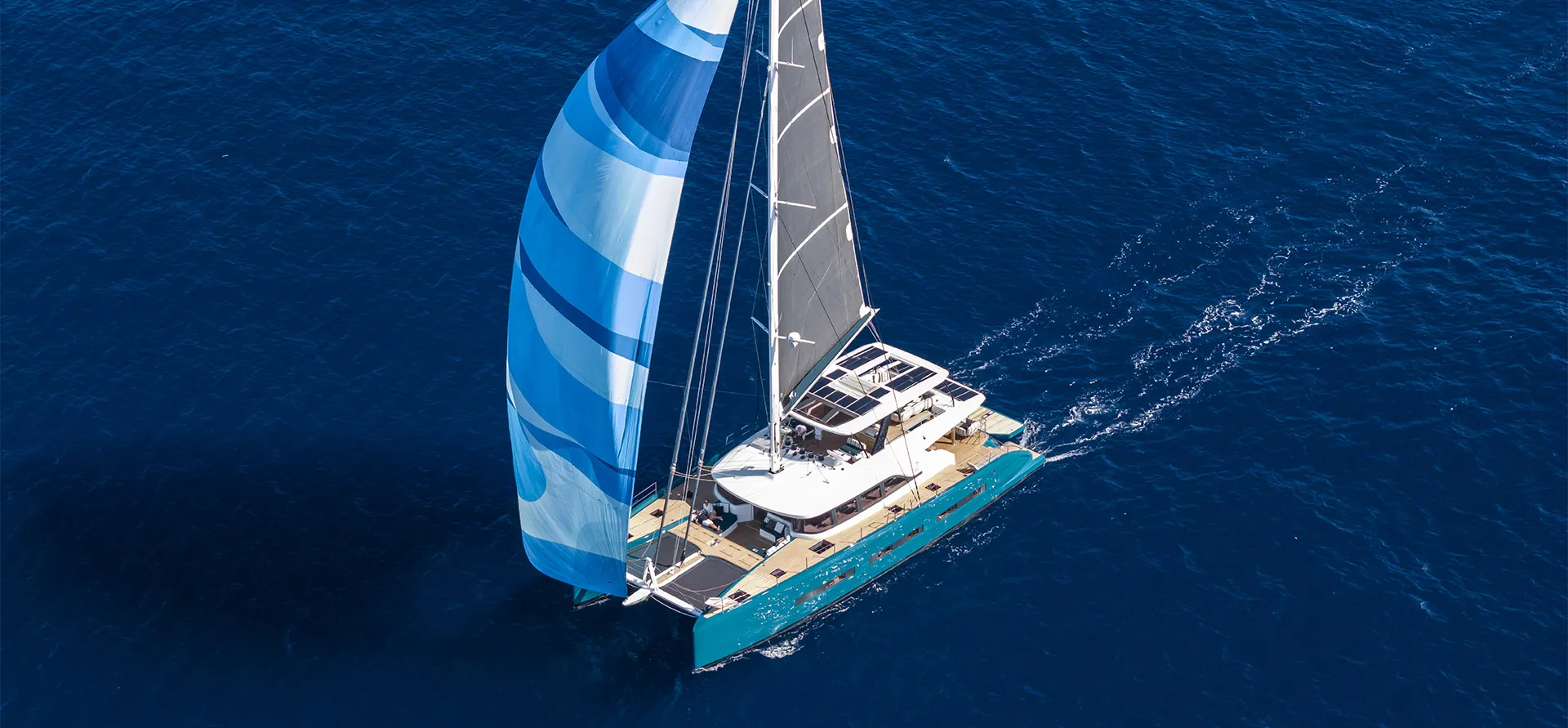
The Lagoon Eighty 2 is the new flagship of the yard's sailing range: 81'9" overall, roughly 338 m² of upwind sail area, a flybridge of more …
Read the articleExpert Review, Technical Specifications & Market Analysis
| Feature | Specifications |
|---|---|
| Overall Length | 81'9" (24.97 m) |
| Beam | 36'1" (11.00 m) |
| Draft | 6'3" (1.90 m) |
| Displacement | 136,911 lbs (62,100 kg) |
| Engines | Twin John Deere N5-230 (2 x 230 HP) |
| Fuel Capacity | 740 gal (2,800 L) |
| Water Capacity | 422 gal (1,600 L) |
| Cabins / Heads | 4-6 Cabins / 4-6 Heads + Crew |
| Max Speed | 11 knots (under power) |
| Cruise Speed | 9-10 knots (under sail/power) |
Source: Spec & Photos courtesy of Lagoon. Specs verified by Tony Smith, USCG 100 Ton Master, on August 18, 2026.
Crossing oceans under sail and hosting eight to sixteen people in flagship comfort have always pulled against each other. The Lagoon Eighty 2 puts both on one 81'9" platform: roughly 338 m² of upwind sail area, a flybridge of more than 50 m² with twin helms, and four to six cabins with crew accommodation of their own.
Part of the Lagoon Sailing Catamarans series — see how owners step up through the lineup.

I have been watching this boat since Lagoon pulled the cover off her at Cannes, and what strikes me is how little the yard is trying to prove. There is no chase for a headline speed number, no exotic hardware you would need a specialist flown in to service. What there is instead is 338 square meters of upwind sail area, VPLP under the waterline, Patrick Le Quément and Nauta above it, and a layout book that lets you decide before the mould opens whether this is a crewed yacht or one you run yourself. That last part is the whole game at this size, and most builders make you find out after delivery.
My honest advice: pick the galley before you pick the fabric. Galley down and the main deck stays entirely yours while crew work out of sight — that is the right call if you will always have a captain and a stew aboard. Galley up gives up a cabin and puts the cooking in the middle of everything, which is what I would choose if I were running her with my family and the occasional hired hand. I have watched owners agonise over upholstery for months and then regret the galley decision for years.
The two things I want you clear-eyed about: she draws 6'3" and her air draft is 120'1". If your cruising plan runs up the Intracoastal or into the skinniest Exuma cuts, her power sister the Eighty 3 is the boat for that job, and I would say so to your face rather than sell you the wrong hull. And she is brand new — no fleet of five-year-old boats to survey, no owner group with a decade of fixes catalogued. Being early on a flagship is a genuine advantage if you want your specification heard, and a genuine risk if you wanted someone else to find the wrinkles first. Go in knowing which of those you are.
Video courtesy of Lagoon.
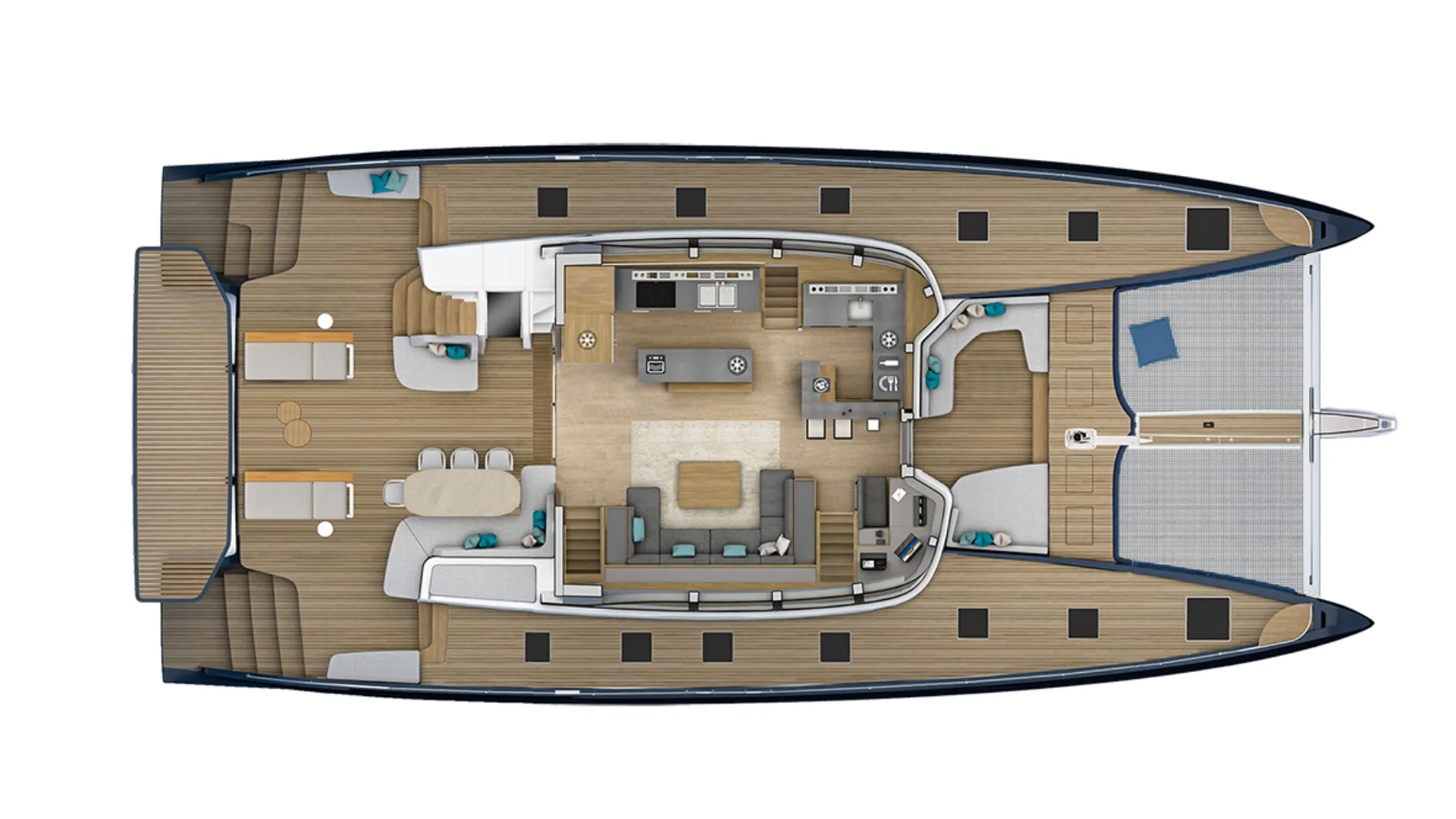
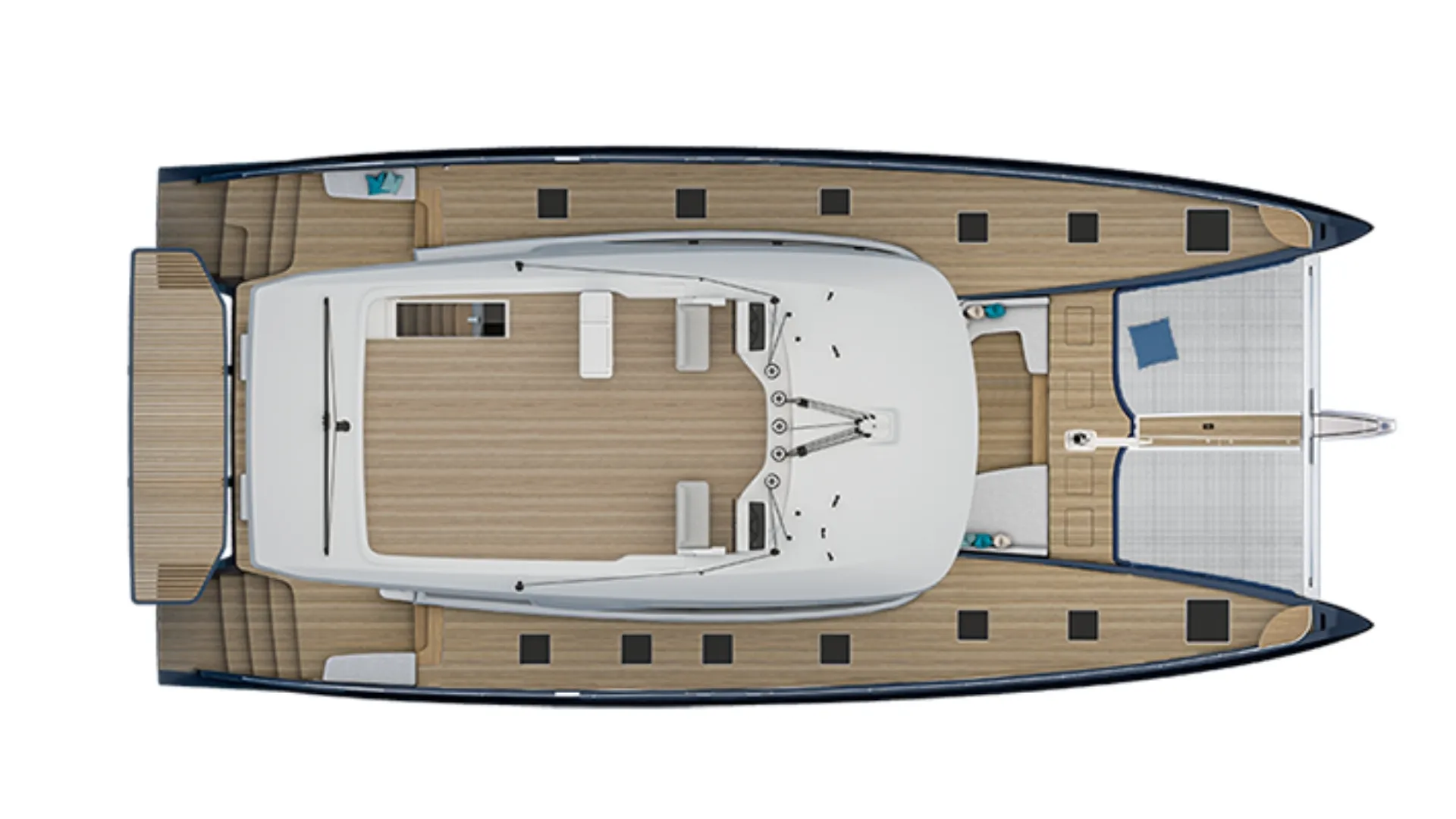
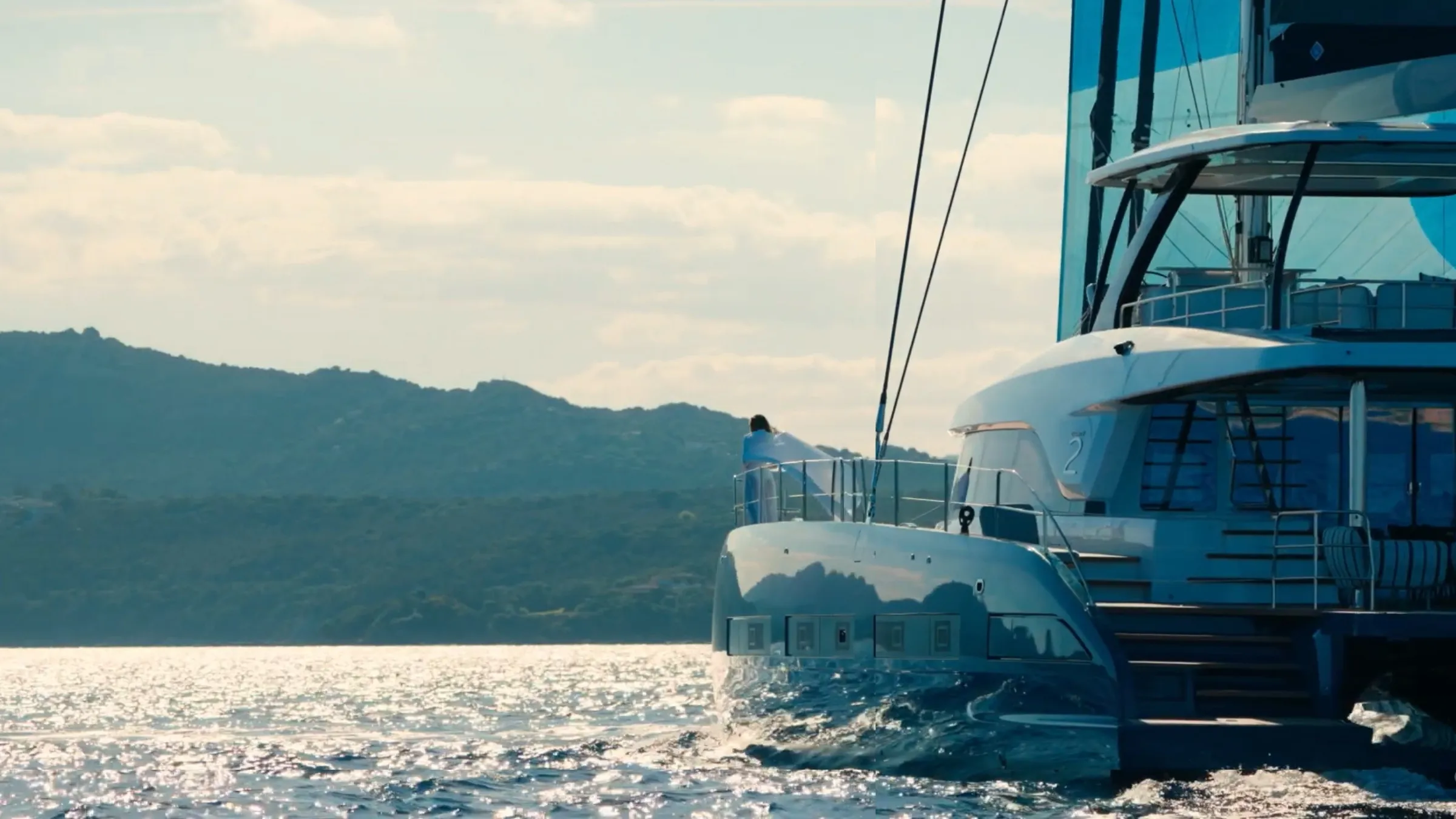
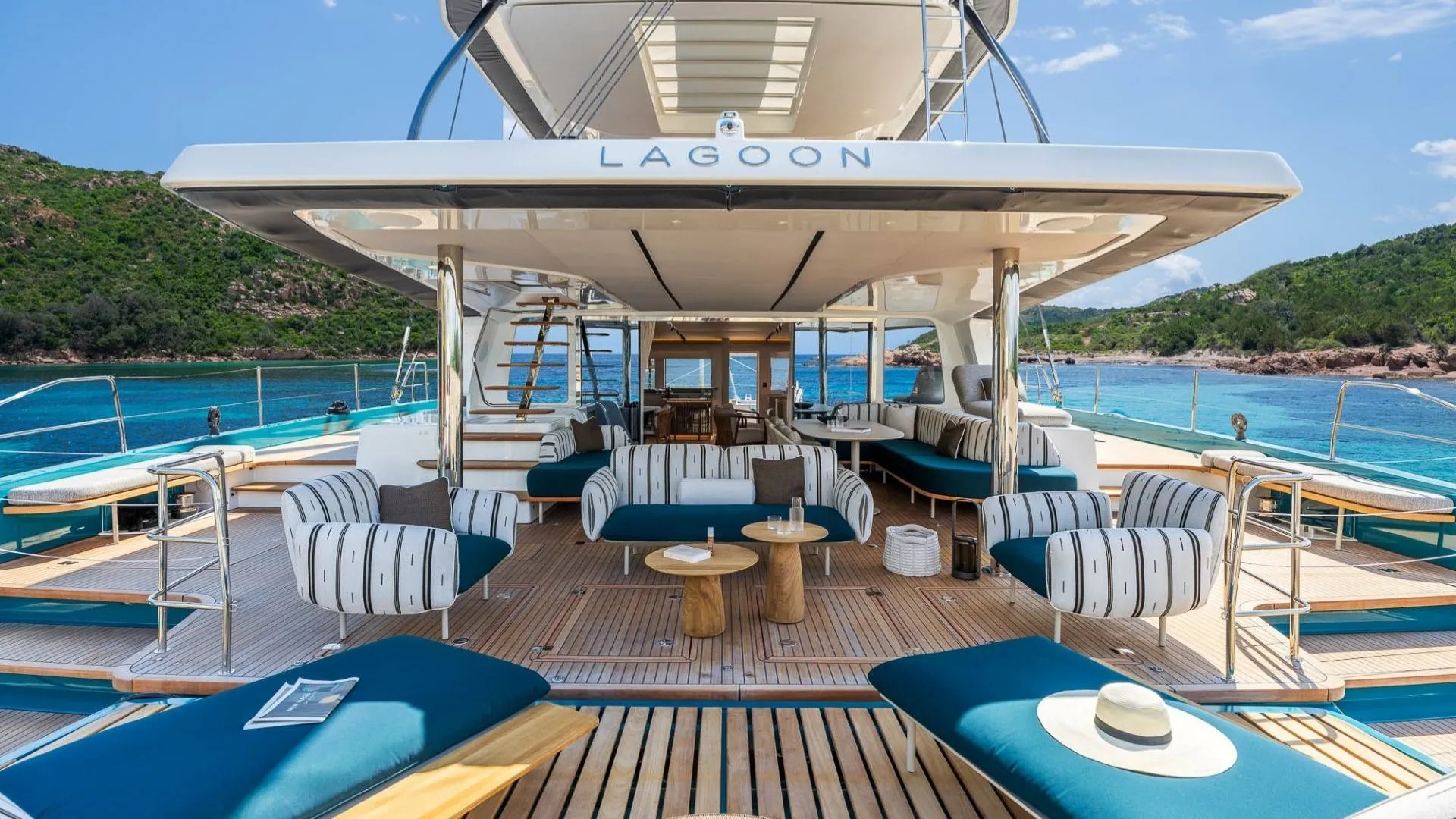
Photos courtesy of Lagoon.
The Eighty 2 is the new flagship of Lagoon's sailing range, revealed at the 2025 Cannes Boat Show. She measures 81'9" (24.97 m) overall on a 36'1" (11.00 m) beam, draws 6'3" (1.90 m), and comes in at 136,911 lbs (62,100 kg) unladen. Lagoon publishes three interior configurations — four cabins with the galley down, five cabins with the galley down, and five cabins with the galley up — which the yard summarises as 4-6 Cabins / 4-6 Heads + Crew, sleeping 8 to 16. Crew accommodation is separate from that count, so hiring a captain and a stew does not take a guest cabin away from you.
Everything about the way she is drawn points at long passages with people aboard rather than day sailing. CE certification is A: 14 / B: 18 / C: 24 / D: 40 — category A ocean certification for fourteen people. Tankage is split across both hulls for redundancy: 740 gal (2,800 L) of fuel in two tanks and 422 gal (1,600 L) of fresh water. Naval architecture is by VPLP Design, exterior design is credited to VPLP Design and Patrick Le Quément, and the interior is by Nauta Design. Because she is brand new, what is available to study today is Lagoon's own renders and general-arrangement drawings rather than a fleet of delivered hulls.
The rig is the reason to choose her over her power sister. Lagoon quotes roughly 338 m² (about 3,638 sq ft) of upwind sail area — a genuine sail plan for a catamaran this size, not a token one — carried on an air draft of 120'1" (36.6 m). Both helms sit on the flybridge, which puts whoever is driving above the coachroof with a clear view over both bows and the full sail plan overhead, and puts the driver in the same space as the guests instead of alone in a cockpit corner. The flybridge also carries solar panels, which take some of the hotel load off the engines at anchor.
Under power, Twin John Deere N5-230 (2 x 230 HP) diesels do the work. Lagoon publishes a maximum of 11 knots (under power) and a cruise of 9-10 knots (under sail/power). Fuel capacity is 740 gal (2,800 L), a substantial reserve on a boat designed to make its miles with the engines off. At 136,911 lbs (62,100 kg) unladen she is a stable, forgiving, load-carrying passagemaker rather than a performance multihull, and she should be judged on how she carries a fully provisioned boat across a passage.
The single biggest decision you make is the galley. Galley down moves food preparation and service traffic into a hull and leaves the entire main deck as guest space — the right answer with crew aboard. Galley up gives up a cabin and puts the cook in the middle of the conversation, which is what many owner-operators actually want. Either way the owner's cabin is the centrepiece: a king-sized berth with a view of the sea, a private terrace, and dedicated space to relax rather than a bed pushed into the end of a hull. The interior is by Nauta Design.
The saloon has flush floorboards, so there is no step between cockpit and interior and no threshold to catch a foot on when the boat is moving. Lagoon glazed it for a 360-degree view and describes the design language as borrowed from seaside villas — horizontal, open, turned outward. Above, the flybridge runs to more than 50 m² and is deliberately left largely unfurnished at the design stage so the owner specifies how it is used: dining, sunbathing, a shaded lounge, or some combination. Aft, the swim platform deploys to as much as 22 m² and is designed to carry a tender or a jet ski, then serve as the swimming and diving deck once they are away. That platform, more than any other feature, is what changes the boat at anchor.
Within Lagoon's own range the Eighty 2 sits at the top of the sailing line, above the Sixty 5, and takes over the flagship position previously held by the Seventy 7. Her direct counterpart is the Eighty 3, the power catamaran launched alongside her — same architects, same Bordeaux yard, same interior designer, no mast. Against the wider market she lines up with the Sunreef 80 Eco and the Privilège Euphorie 5 among large cruising sailing catamarans, and she is often cross-shopped against solar-electric power cats such as the Silent 80 by buyers who have not yet settled the sail-or-power question. At 81'9" with 8 to 16 berths and dedicated crew quarters, she is drawn around having professional help aboard: an experienced couple can handle her in settled conditions, but the layout assumes a captain and a stew, which is the practical line between her and the 60-foot cats below.
Buy the Eighty 2 if sailing is the point — if you want to shut the engines down, cross real distance under 338 m² of sail, and have the boat still work as a floating home for a dozen people when you arrive. She rewards the owner stepping up from a 50- to 60-foot cruising cat who has run out of boat rather than out of enthusiasm, and the three published layouts let you decide before the mould opens whether this is a crewed yacht or one you mostly run yourself. Be honest about two numbers, though: 6'3" of draft and 120'1" of air draft. The thinnest Bahamian and Exuma anchorages and any route with fixed bridges are closed to you, and her 36'1" beam means booking multihull berths well ahead. If those constraints describe your cruising ground more than your ambitions do, buy her power sister the Eighty 3 instead — 4'2" of draft, no rig to plan around, and the same interior and outdoor living.
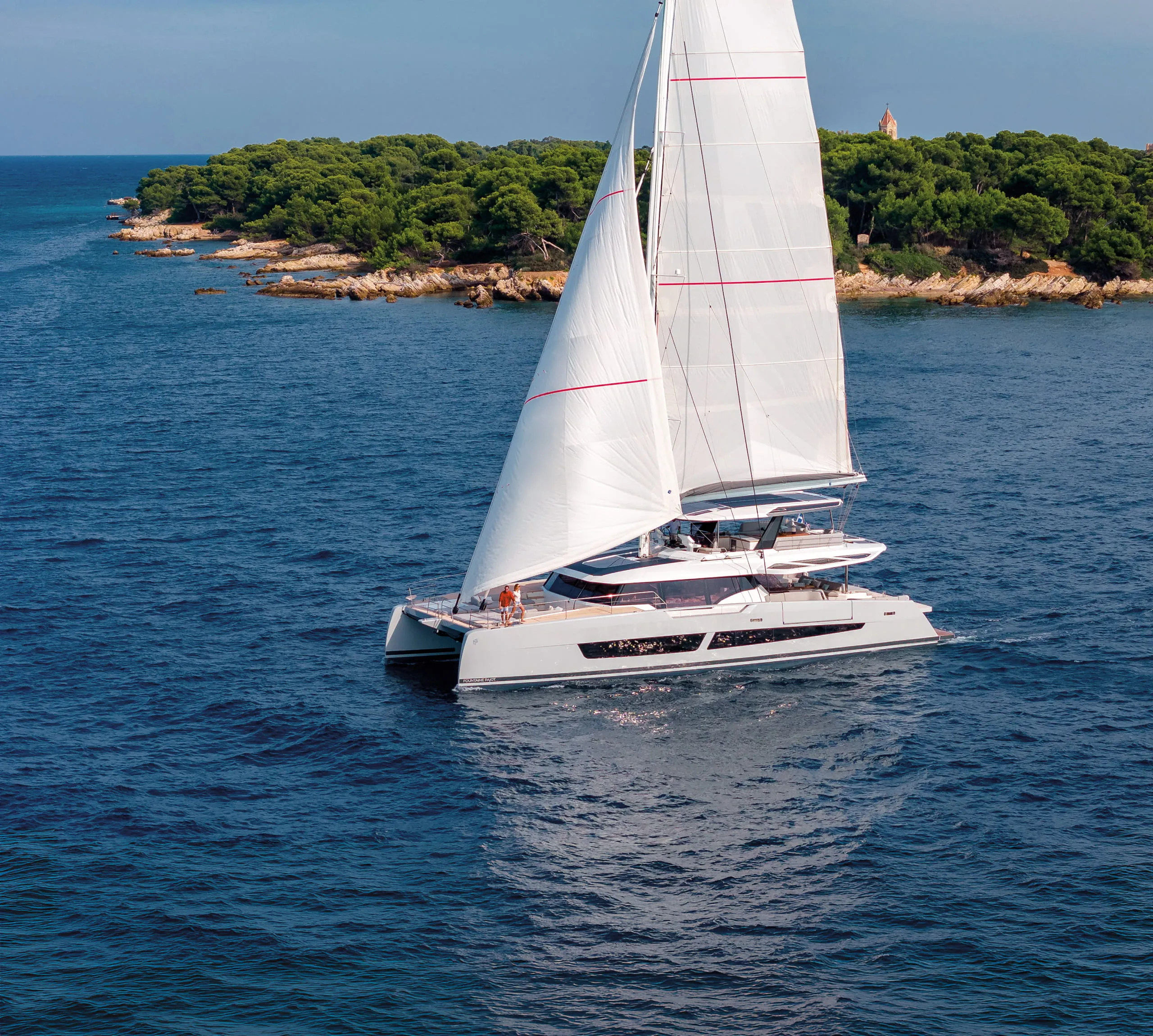
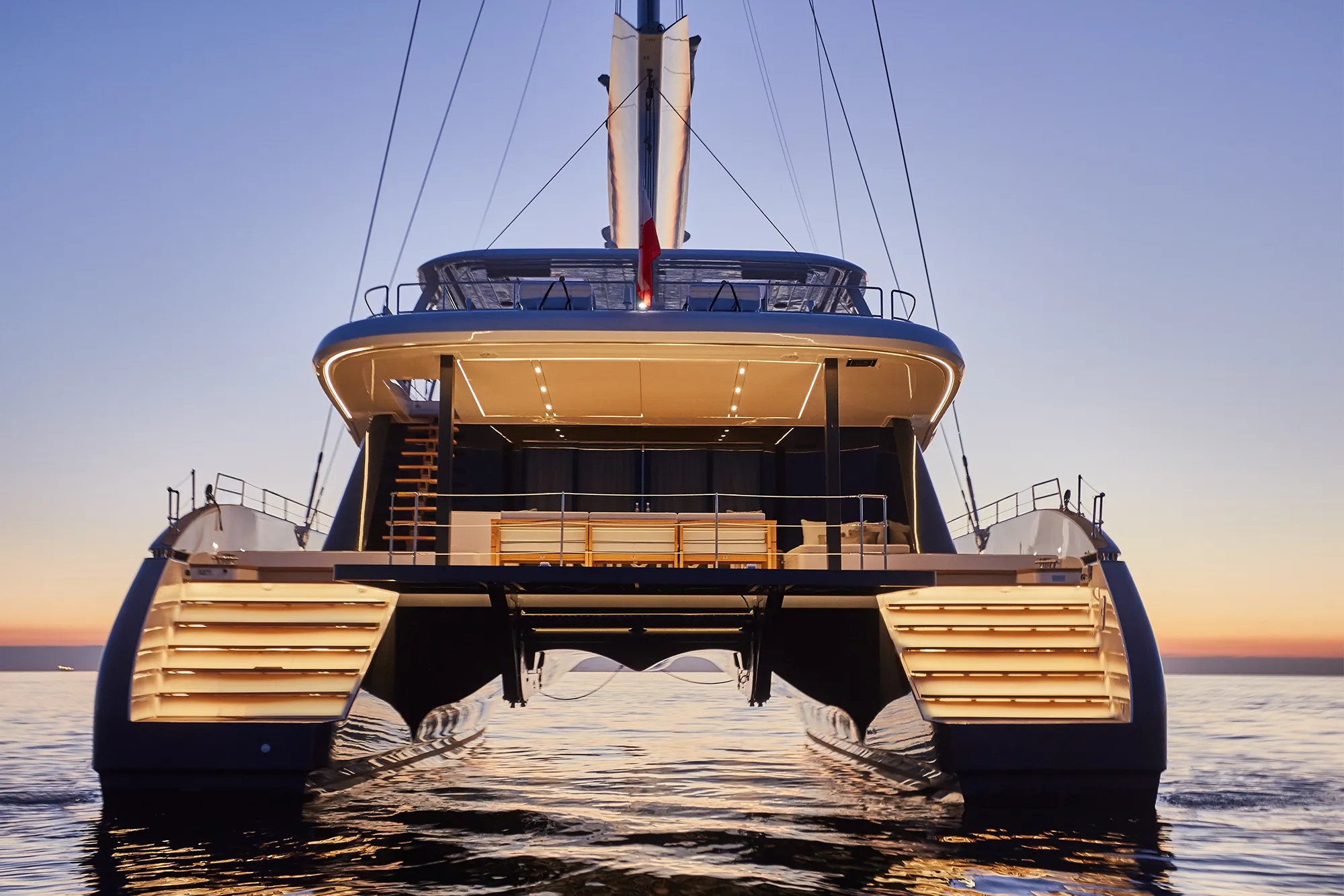
Lagoon quotes roughly 338 m² (about 3,638 sq ft) of upwind sail area on an air draft of 120'1" (36.6 m) — a genuine sail plan for an 81-foot catamaran rather than a token one. Under power she carries Twin John Deere N5-230 (2 x 230 HP), with a published maximum of 11 knots (under power) and a cruise of 9-10 knots (under sail/power).
Those engine figures tell you the intent: the diesels are auxiliaries on a boat designed to make its miles with them switched off. Both helms sit on the flybridge, which puts whoever is driving above the coachroof with a clear view over both bows and the whole rig — and in the same space as everyone else instead of alone in a cockpit corner. The flybridge, over 50 m² of it, also carries solar panels that take some hotel load off the engines at anchor. Tankage is 740 gal (2,800 L) of fuel and 422 gal (1,600 L) of fresh water, split between the hulls for redundancy.
Three numbers: 6'3" (1.90 m) of draft, 120'1" (36.6 m) of air draft and 36'1" (11.00 m) of beam. The draft closes the thinnest Bahamian and Exuma anchorages, the rig rules out any route with fixed bridges, and the beam means multihull berths booked well in advance and some older harbours not at all.
None of that is a defect — it is the trade-off a real sailing flagship asks for, and every large cruising catamaran under rig asks the same trade. Her capability is not in question: she is CE Category A certified for 14 people at 136,911 lbs (62,100 kg) unladen, with naval architecture by VPLP Design, exterior design credited to VPLP Design and Patrick Le Quément, and an interior by Nauta Design. The constraints are about where you keep her and which cuts you can take, not what she can cross. If they describe your home cruising ground rather than your ambitions, her power sister the Eighty 3 draws 4'2" (1.27 m) and has no rig to plan around.
Lagoon publishes three interior configurations: four cabins with the galley down, five cabins with the galley down, and five cabins with the galley up. Galley down keeps the entire main deck as guest space; galley up costs you a cabin but puts the cook in the middle of the conversation. That is the whole trade.
With crew aboard, galley down is usually right — it moves food preparation and service traffic into a hull and leaves the saloon and cockpit purely social. Owner-operators who cook for themselves more often want the galley up. The yard summarises the range as 4-6 Cabins / 4-6 Heads + Crew, sleeping 8 to 16, and crew accommodation sits outside that count, so a captain and stew never take a guest cabin. Decide early: of everything you specify on this boat, the galley position is the hardest thing to undo later.