Lagoon 60

Expert Review, Technical Specifications & Market Analysis

The Essentials

FeatureSpecifications
Overall Length64'10" (19.77 m)
Beam32'5" (9.87 m)
Draft5'5" (1.65 m)
Displacement77,616 lbs (35,200 kg)
EnginesTwin Yanmar (2 x 150 HP)
Fuel Capacity343 gal (1,300 L)
Water Capacity254 gal (960 L)
Cabins / Heads4-5 Cabins / 4-5 Heads
Max Speed10 knots (under power)
Cruise Speed8-9 knots (under sail/power)

Source: Spec & Photos courtesy of Lagoon. Specs verified by Tony Smith, USCG 100 Ton Master, on August 18, 2026.

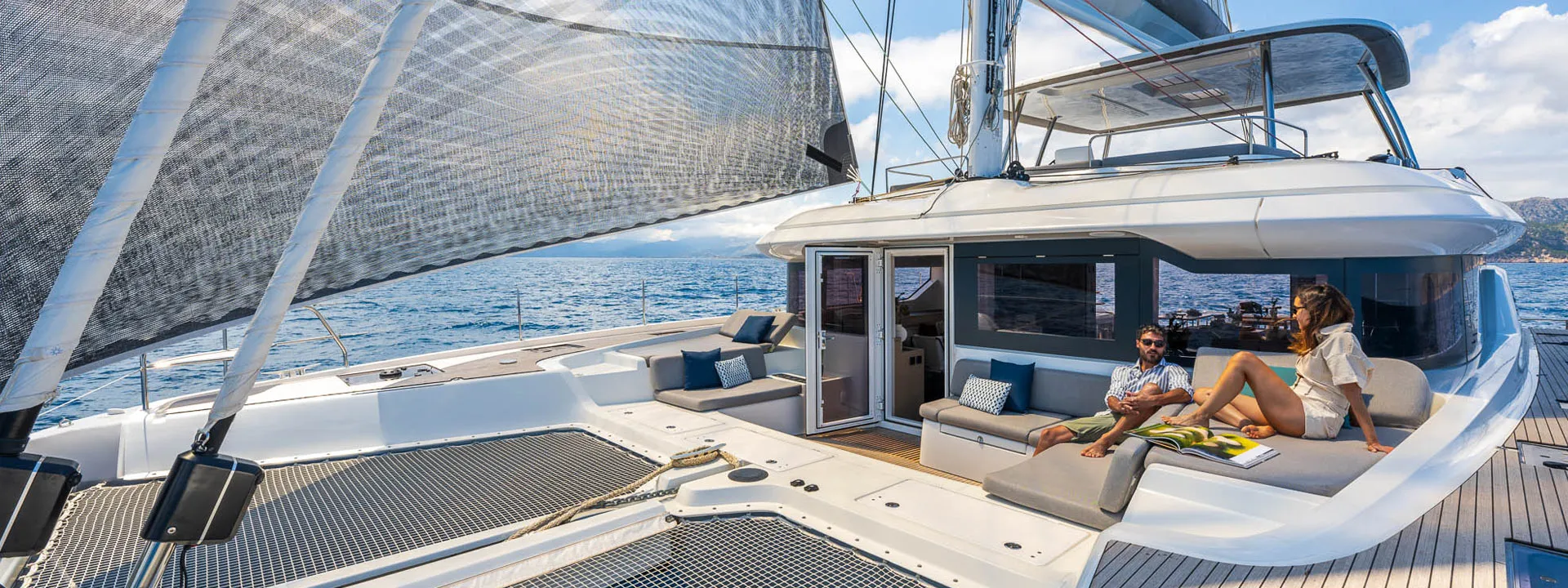
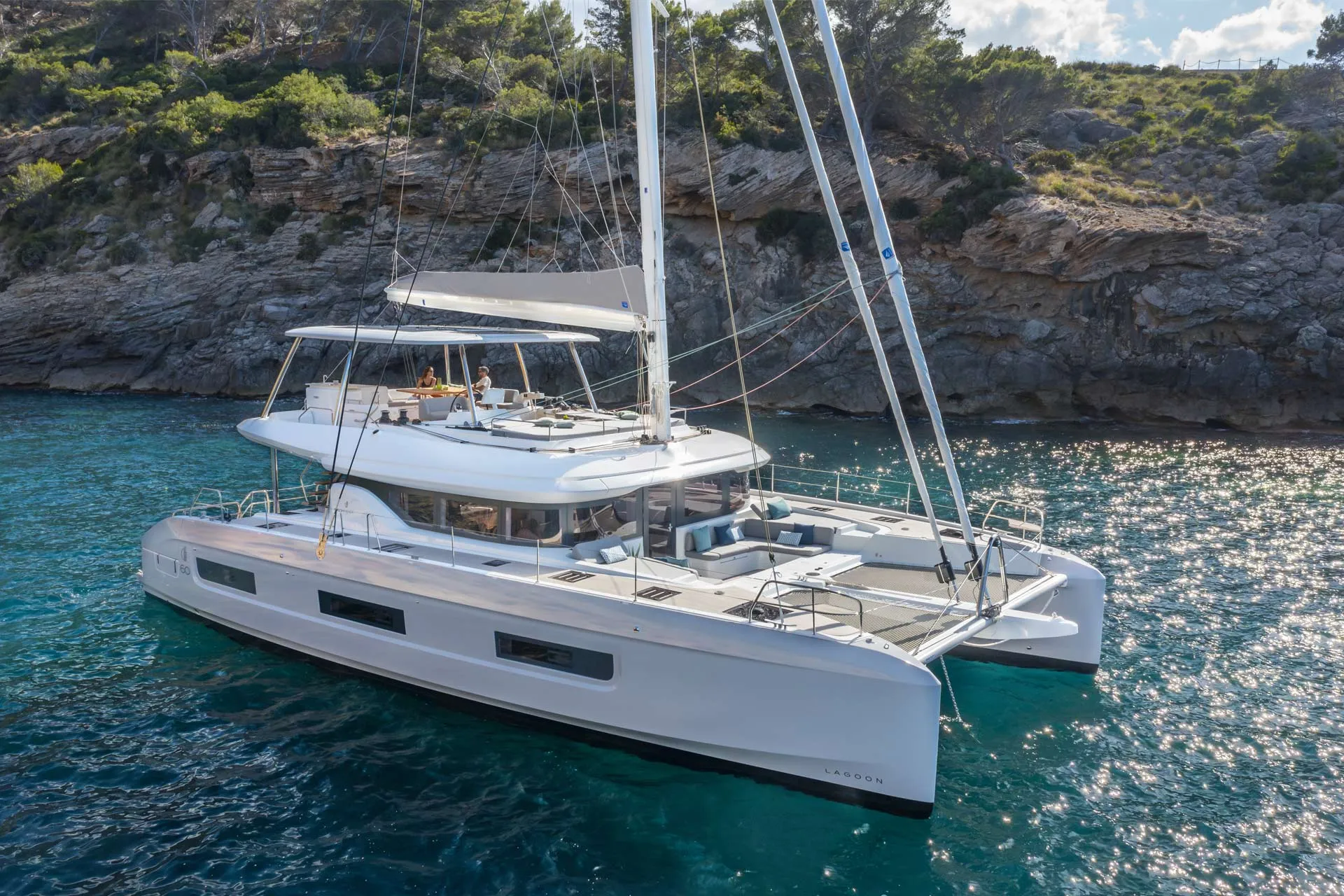
You want the saloon, the cockpits and the water to feel like one continuous space you can walk between with a tray in your hands. The Lagoon 60 does exactly that — a vast forward cockpit flush with the saloon floor, and an aft cockpit whose terraces open straight to the sea.

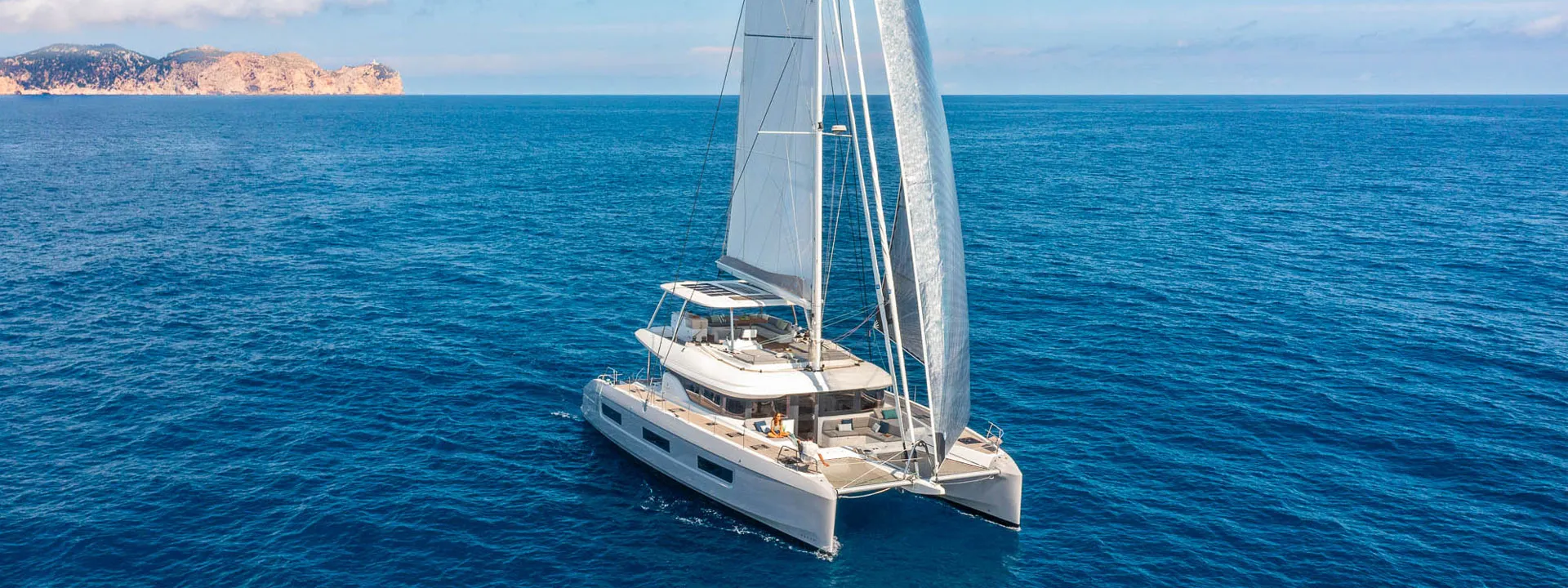
Lagoon 60 exterior

Quick Verdict

  • Forward cockpit flush with the saloon floor and reached through a saloon door — a second outdoor living room you can actually carry a tray into
  • Opening aft terraces with gently angled steps give immediate, safe access to the water from the main cockpit
  • 230 m² (2,475 sq ft) upwind sail plan split between an 87 m² genoa and a 58 m² staysail, so you reef down to a small inboard headsail instead of a badly rolled big one
  • Naval architecture by VPLP Design, exterior by Patrick le Quément, interior by Nauta Design — all credited on Lagoon's own specification sheet
  • Four- and five-cabin layouts, galley up or galley down, with a crew-cabin version available; 8 to 14 berths
  • Trade-off: 32'5" (9.87 m) beam and 77,616 lbs unladen make berth and travel-lift availability something to confirm before you buy
Tony Smith, Founder of Minted Yachts

Our Take

The Lagoon 60 is the boat I point experienced catamaran owners toward when they tell me the 50-foot class stopped fitting. What sells it, for me, is not the size — it is the forward cockpit being flush with the saloon. It sounds like a small thing on paper. Aboard, it is the difference between a forward space you visit twice a season and one you use every single morning, because you can walk out with coffee and a laptop instead of climbing through a hatch. VPLP said the flush forward cockpit reinforces the harmony between inside and outside, and for once the design language matches what you actually feel standing there.

The rig is the other thing I respect. Splitting the headsails into a genoa and a staysail is a proper offshore decision. When it comes on to blow at night with two of you awake, you roll away the genoa and sail on a small, inboard, well-shaped sail instead of a big one reefed into a bag. That single choice tells me VPLP and Lagoon were thinking about the couple who will actually cross an ocean on her, not about the boat show.

Two practical notes from me. First, decide galley up versus galley down early, because it reorganizes the whole boat — galley up if you are owner-operators who want the cook in the conversation, galley down if you will run her with crew or want the saloon purely for living. Second, put the opening terrace seals and hinges on your annual haul-out list from day one. They are a terrific feature and they are mechanical, and the owners who inspect them every season are the ones who never think about them again.

Watch Our Lagoon 60 Reviews

Official Lagoon Premiere: Inside the Lagoon 60

Video courtesy of Lagoon.

Lagoon 60 Overview

The Lagoon 60 is a 64'10" (19.77 m) sailing catamaran with a 32'5" (9.87 m) beam and a 5'5" (1.65 m) draft, with naval architecture by VPLP Design, exterior design by Patrick le Quément and interior design by Nauta Design — all credited on Lagoon's own specification sheet. Light displacement is 77,616 lbs (35,200 kg), tankage is 343 gal (1,300 L) of fuel and 254 gal (960 L) of water, air draft is 30 m (98'5"), and CE certification is A:14 / B:14 / C:20 / D:20.

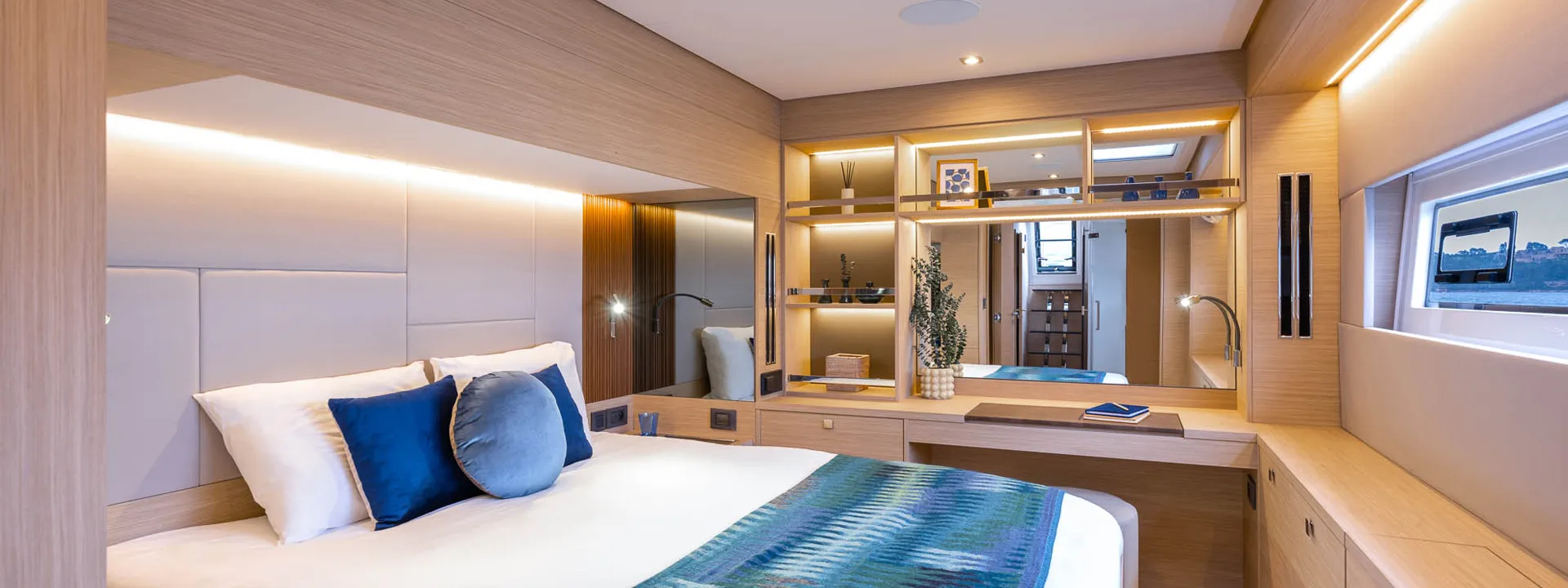
Accommodation is 4-5 Cabins / 4-5 Heads with berths from 8 to 14, in four arrangements: four cabins with galley down, five cabins with galley down, five cabins with galley down plus a crew cabin, or five cabins with galley up. She is built around long-distance cruising for an owner who wants genuine separation between their own cabin and their guests', and who wants crew as an option rather than a requirement.

Performance & Handling

The 60 carries 230 m² (2,475 sq ft) of upwind sail area: a 135 m² (1,453 sq ft) high-roach mainsail with a 143 m² square-top available, an 87 m² (936 sq ft) genoa and a 58 m² (624 sq ft) staysail, plus a 160 m² Code 0 and a 310 m² asymmetric spinnaker for light air and downwind. Splitting the headsails into a genoa and a staysail is the seamanlike part of the plan: when it builds at night with two of you awake, you roll the genoa away and sail on a small, inboard, well-shaped sail instead of a big one reefed into a poor shape.

Propulsion is Twin Yanmar (2 x 150 HP), for 10 knots (under power) and 8-9 knots (under sail/power). A hybrid version, a silent mode and a digital anchor are offered. The 5'5" (1.65 m) draft is deep enough to track well and still shallow enough for the anchorages you bought her for. Expect the behaviour of a settled, high-volume cruiser rather than a light-displacement flyer — the rig is conservative on purpose, set up to be handled safely by two tired people at three in the morning, and 150 HP a side moves 77,616 lbs (35,200 kg) calmly rather than urgently.

Interior & Accommodations

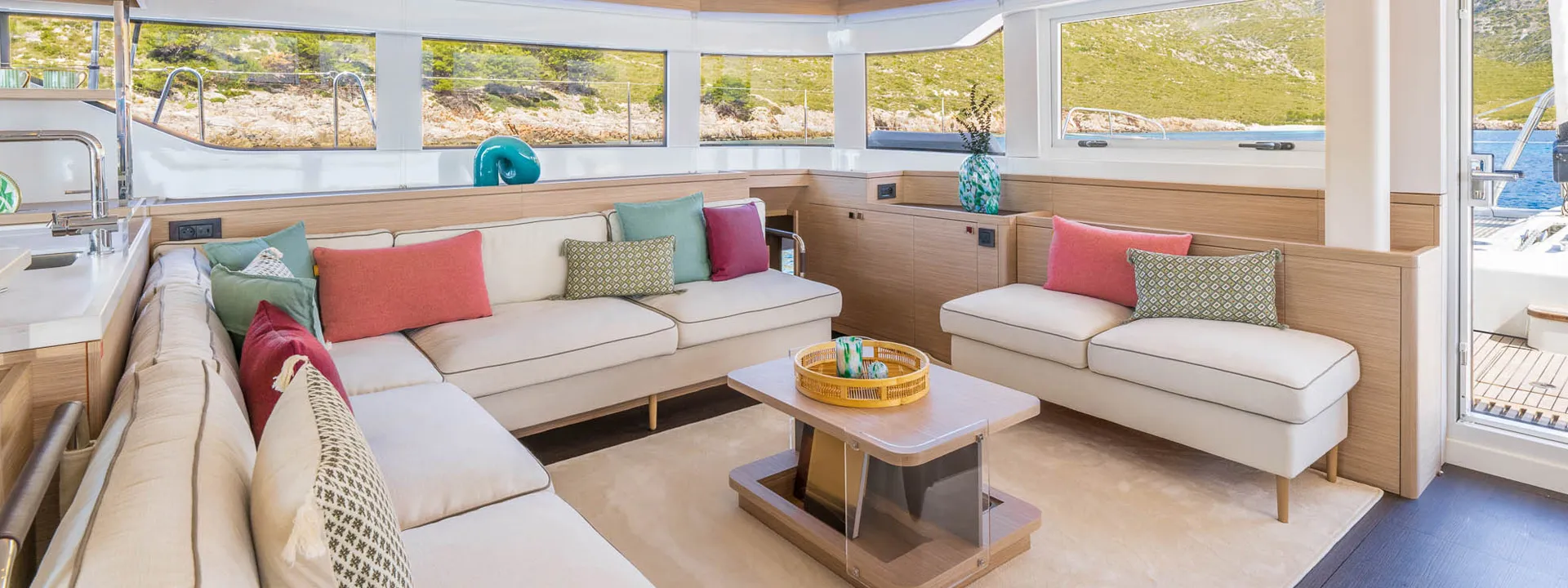
The saloon is the pivot. It is modular and turned toward the exterior, available in versions with a galley or with a bar, and lit by large vertical windows. Galley up or galley down is the single decision that reorganizes the boat: galley up keeps the cook in the conversation and the hull cabins quiet, galley down frees the saloon entirely for living and suits a boat run with crew. Interior design is by Nauta Design, and Lagoon's own point about the layout is that movement around the catamaran is fluid and unobstructed, and that you are greeted with a panoramic view on entering each living space.

Outside there are two cockpits and both get used. The aft cockpit is entirely open to the sea, with opening terraces that give immediate access for swimming and gently angled steps that make getting in and out of the water safe rather than athletic; Lagoon expects it to become your favourite living space. The forward cockpit is reached through a door forward of the saloon, and its flooring is flush with the saloon — no step, no hatch to negotiate with a tray. VPLP Design's own comment on the model is that the vast forward cockpit, flush with the saloon, reinforces the harmony between interior and exterior living spaces. The flybridge carries the helm, and on most days the people who are not sailing settle there too.

Market Position

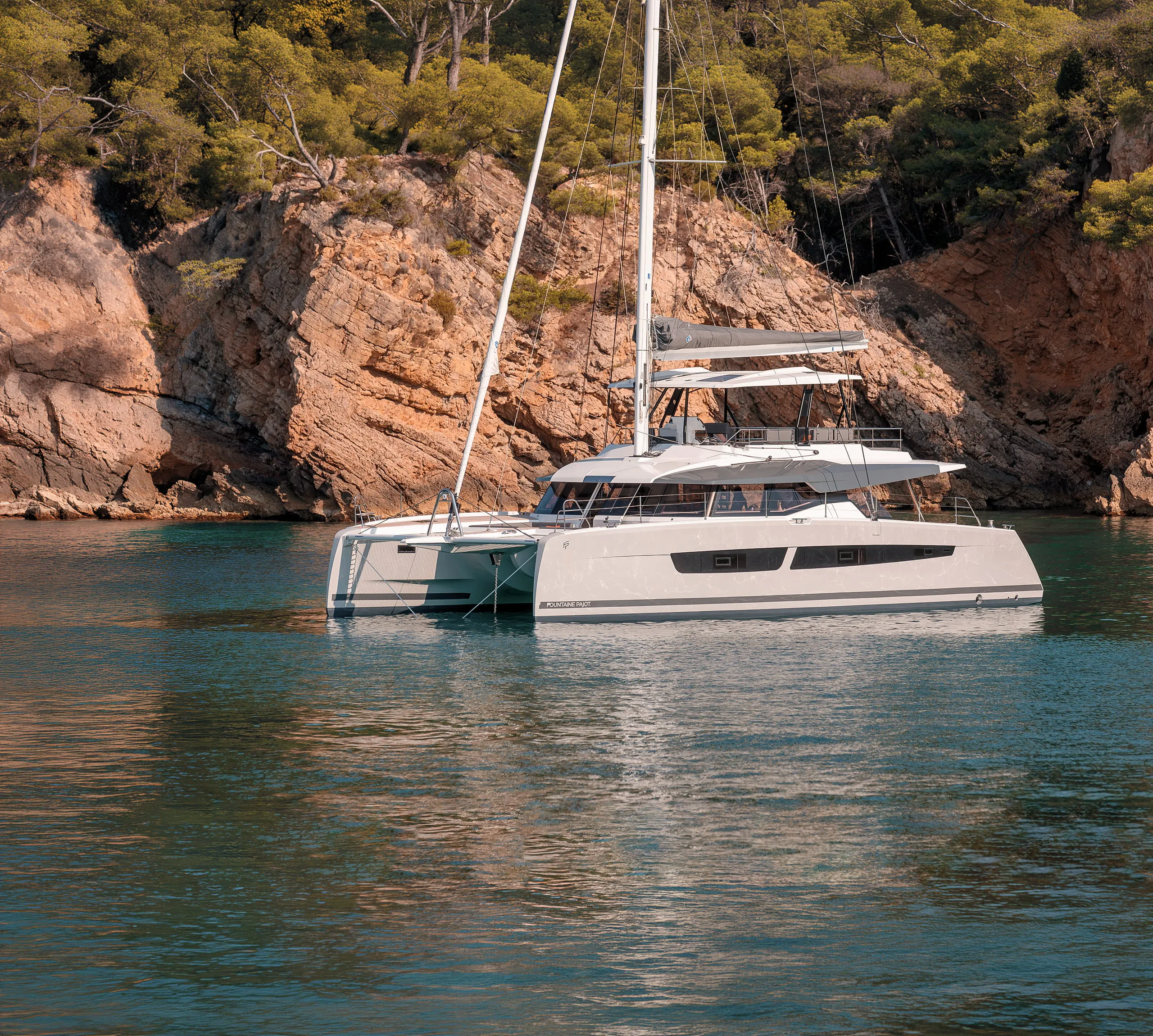
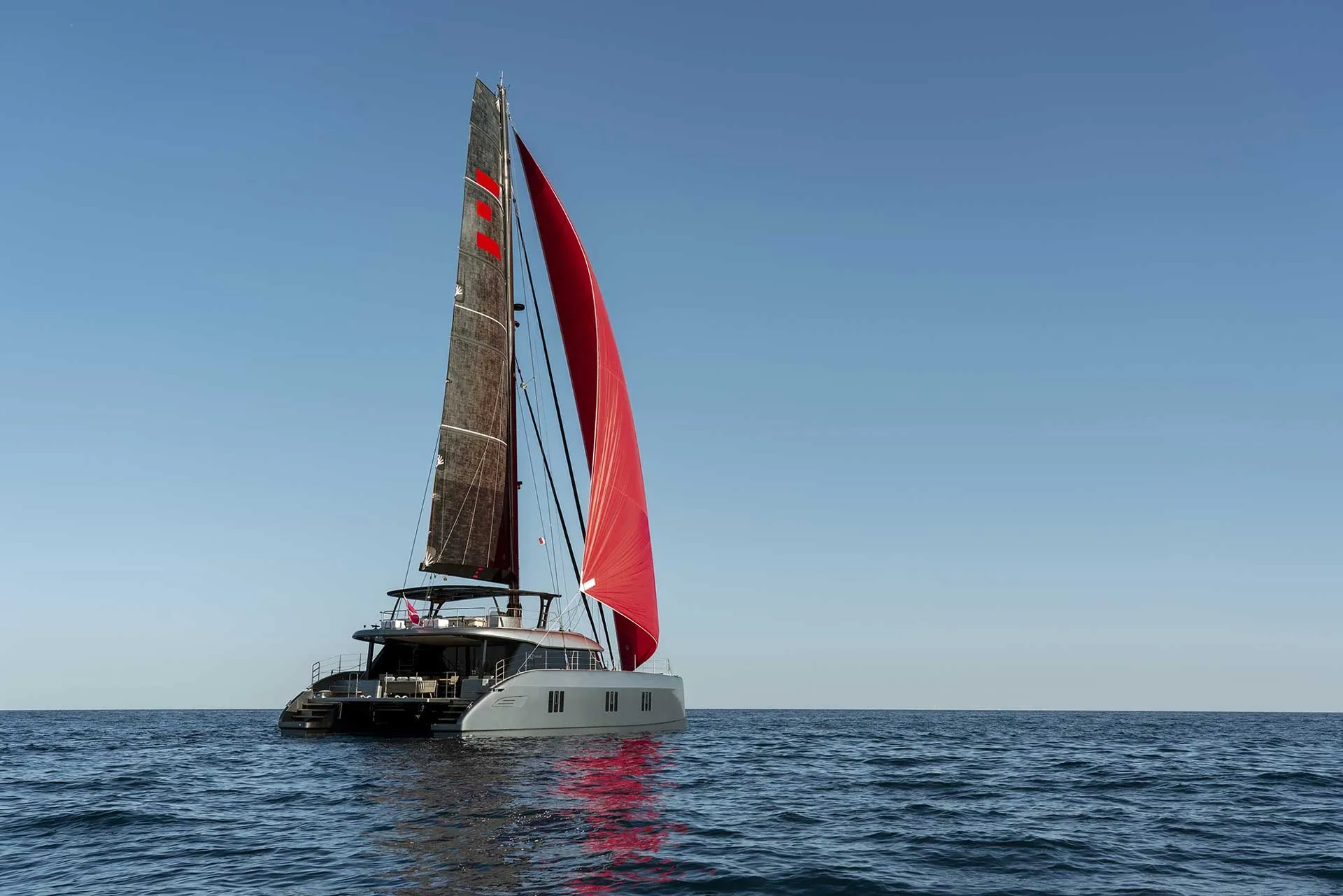
Within Lagoon's sailing range the 60 sits above the 55 Millenium and below the Sixty 5, which opens the Premium line — she is the top of the standard range and the point at which a crew cabin becomes an available layout rather than an assumption. Against cross-brand competition she meets the Fountaine Pajot flagships, the Sunreef 60 and boats such as the Catana 65, and she argues on volume and deck plan rather than sail-driven speed: two full cockpits, 4-5 Cabins / 4-5 Heads, and a genoa-plus-staysail rig conservative enough for an experienced couple to run without permanent crew. Performance-oriented catamarans of similar length will point higher and sail faster; very few will give you this much usable outdoor living space, or a forward cockpit you can actually walk into from the saloon.

Who the 60 Is For

Buy the Lagoon 60 if you have already owned a 45- to 50-foot catamaran, know which spaces you actually use, and want more volume and more separation without committing to permanent crew — the four-cabin galley-down boat is the private owner's version, and the five-cabin-plus-crew-cabin layout is the one to look at if you will charter her or hand off the cooking. Be honest about the size: a 32'5" (9.87 m) beam and 77,616 lbs (35,200 kg) unladen mean confirming your home berth, your travel lift and your bridge clearances before you commit, and learning to dock her in a crosswind before you need to. If you want a catamaran you can still slot single-handed into a tight marina, look at the Lagoon 51 Iconic below her; if outright sailing performance is the point, a lighter performance cat is the better answer.

Lagoon 60 Articles & Guides

Compare With

Frequently Asked Questions

Do I need crew to run a Lagoon 60?

No — she is set up for an experienced couple, with crew as an option rather than an assumption. The rig is conservative on purpose: 2,475 sq ft of upwind sail area split into a 936 sq ft genoa and a 624 sq ft staysail, so when it builds at night with two of you awake you roll the genoa away and sail on a small, inboard, well-shaped sail instead of a big one reefed into a poor shape.

Propulsion is Twin Yanmar (2 x 150 HP), for 10 knots (under power) and 8-9 knots (under sail/power). If you plan to charter her, or simply want the cooking and the cleaning handed off, one of the five-cabin layouts adds a dedicated crew cabin. The honest homework is dimensional, not nautical: confirm your home berth, your travel lift and your bridge clearances can take a 32'5" (9.87 m) beam and 77,616 lbs (35,200 kg) unladen, and learn to dock her in a crosswind before you need to.

Who designed the Lagoon 60?

Three names, all credited on Lagoon's own specification sheet: naval architecture by VPLP Design, exterior design by Patrick le Quément, and interior design by Nauta Design.

VPLP's own comment on the boat is that the vast forward cockpit, flush with the saloon, reinforces the harmony between interior and exterior living spaces — and that flush floor is the detail you actually feel, because there is no step and no hatch to negotiate with a tray in your hands. The forward cockpit is reached through a door forward of the saloon; aft, the cockpit is entirely open to the sea, with opening terraces for immediate access to swim and gently angled steps that make getting in and out of the water safe rather than athletic.

What cabin and galley layouts are offered on the Lagoon 60?

Four arrangements: four cabins with the galley down, five cabins with the galley down, five cabins with the galley down plus a crew cabin, or five cabins with the galley up. That covers 4-5 Cabins / 4-5 Heads and eight to fourteen berths.

Galley up or galley down is the decision that reorganizes the whole boat. Galley up keeps the cook in the conversation and the hull cabins quiet; galley down frees the saloon entirely for living and makes more sense on a boat run with crew. The saloon itself is modular and turned toward the exterior, available with either a galley or a bar, and lit by large vertical windows. Interior design is by Nauta Design.