Lagoon Sixty 5

Expert Review, Technical Specifications & Market Analysis

The Essentials

FeatureSpecifications
Overall Length67'5" (20.55 m)
Beam32'10" (10.00 m)
Draft5'3" (1.60 m)
Displacement86,374 lbs (39,200 kg)
EnginesTwin Yanmar (2 x 150 HP)
Fuel Capacity343 gal (1,300 L)
Water Capacity264 gal (1,000 L)
Cabins / Heads4-6 Cabins / 4-6 Heads
Max Speed10 knots (under power)
Cruise Speed8-9 knots (under sail/power)

Source: Spec & Photos courtesy of Lagoon. Specs verified by Tony Smith, USCG 100 Ton Master, on August 18, 2026.

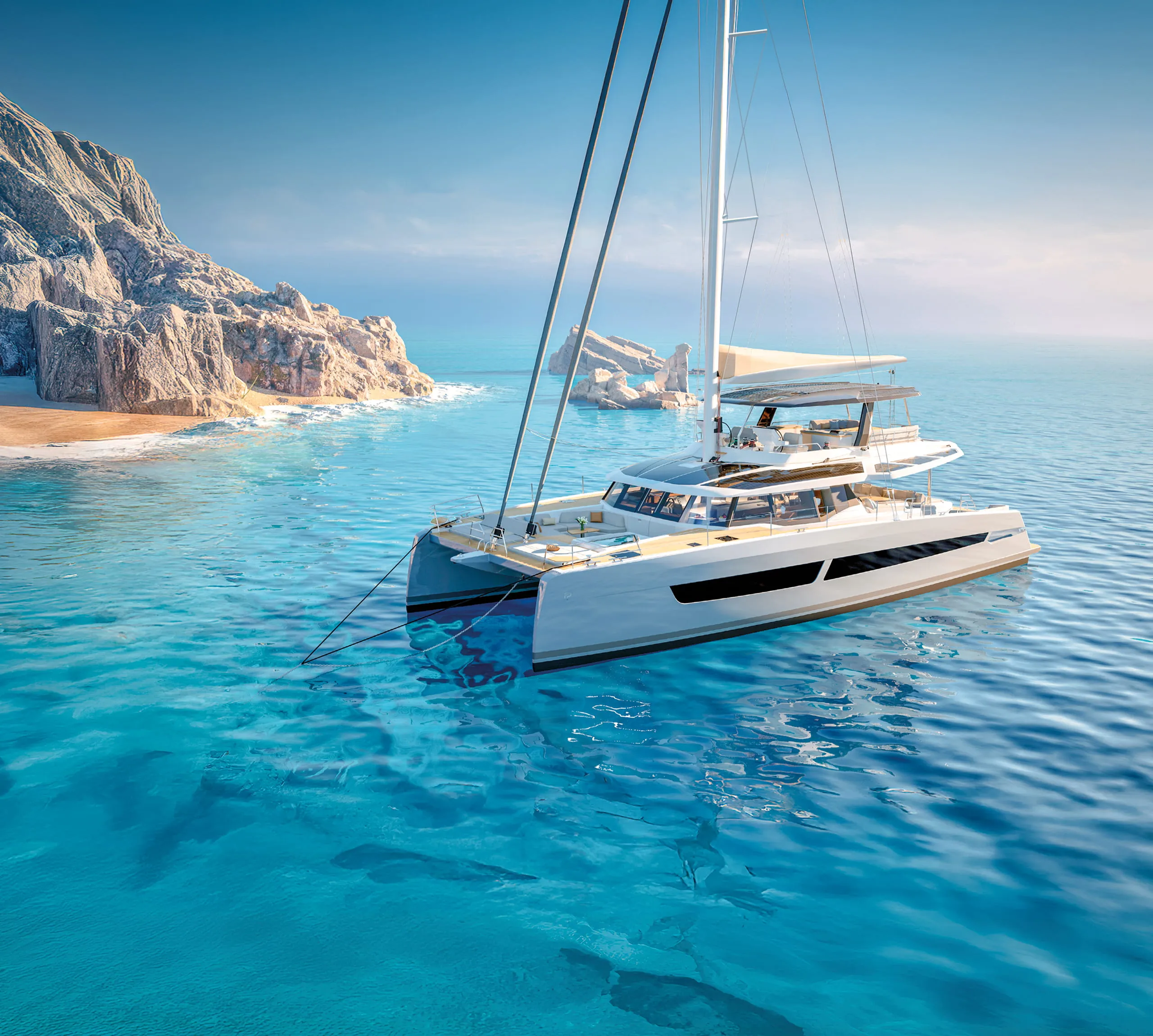
Move your life aboard without giving anything up. The Lagoon Sixty 5 opens Lagoon's Premium line with a 67'5" (20.55 m) hull, a fully equipped flybridge helm, and four-, five- or six-cabin layouts sleeping 8 to 16.

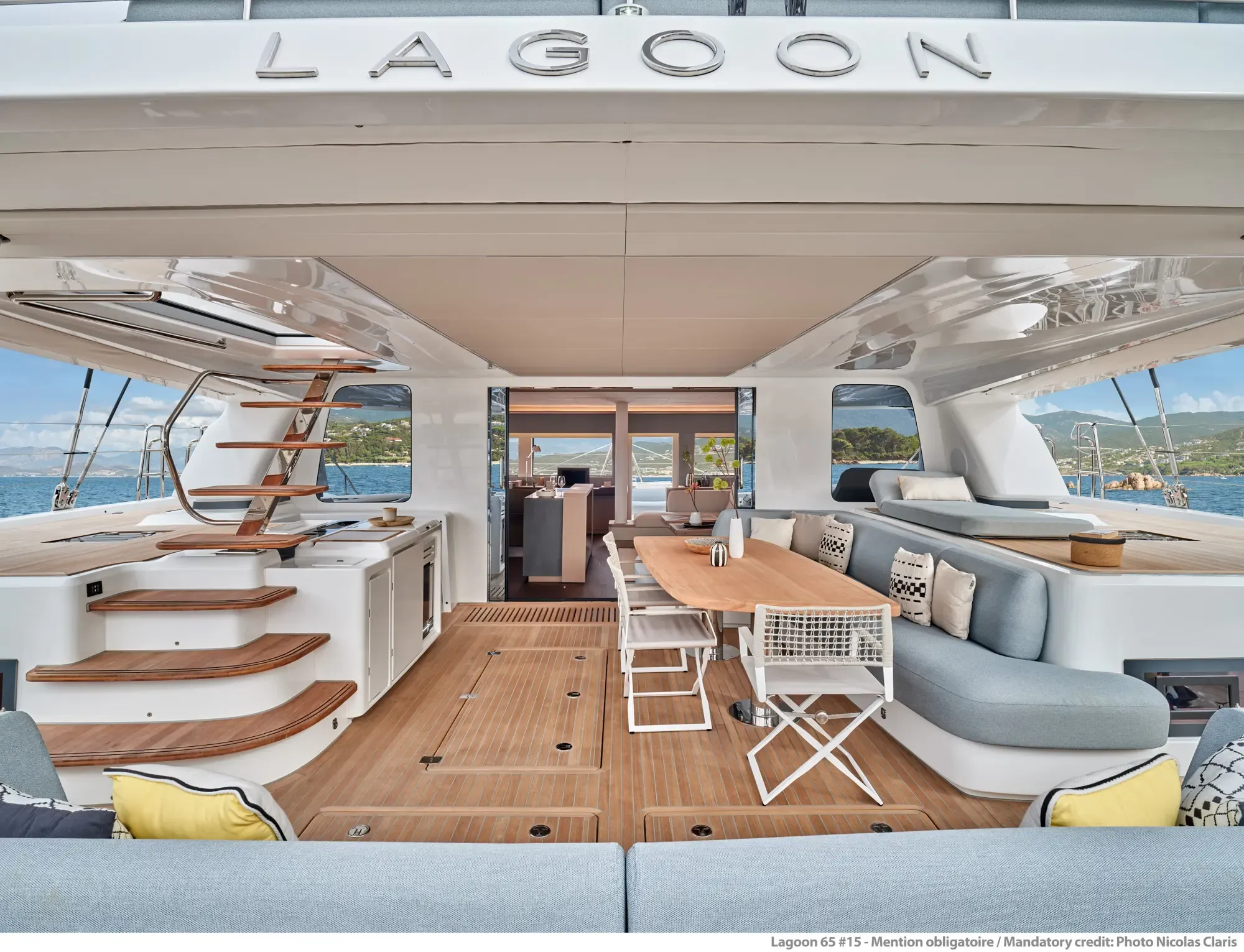
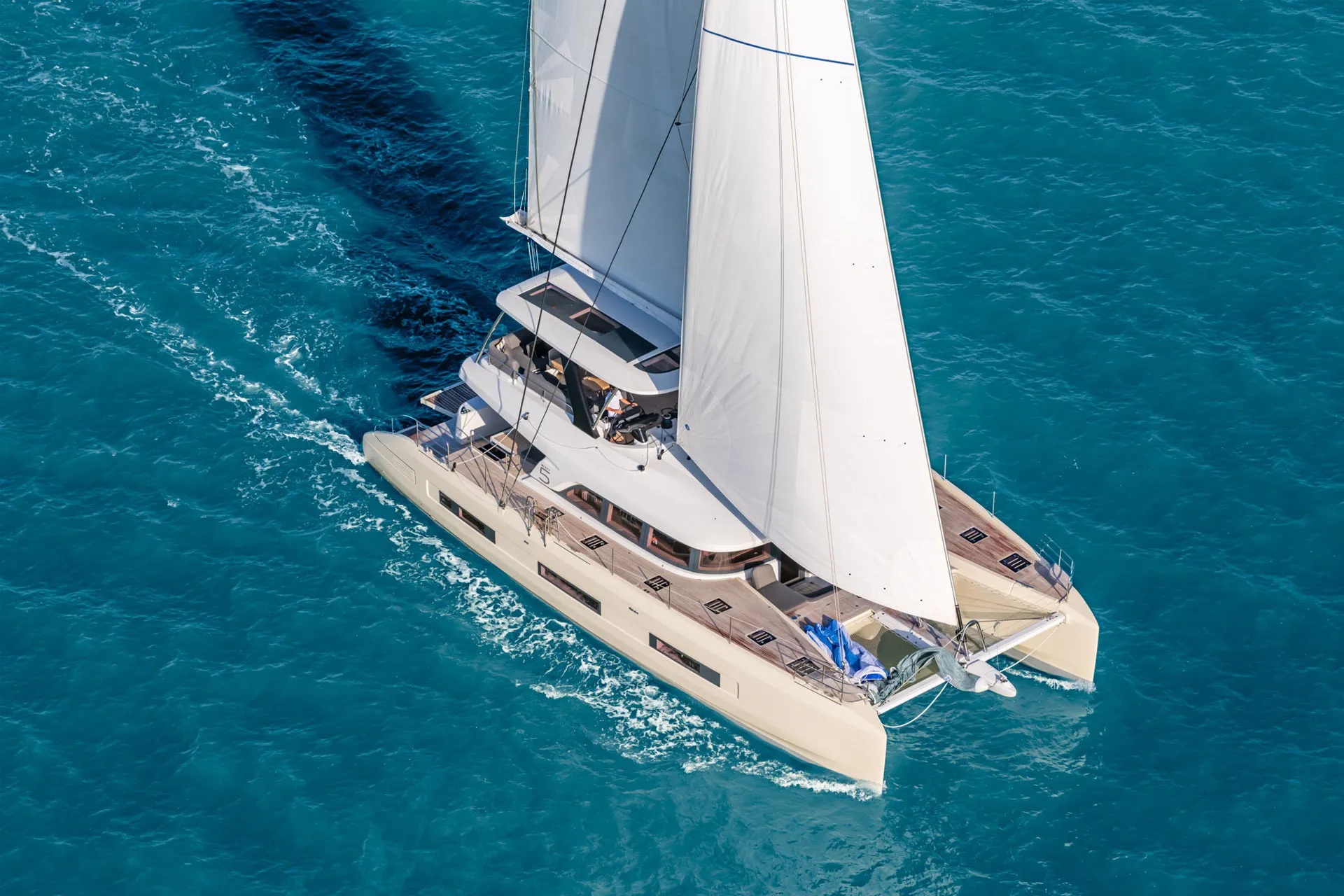
Lagoon Sixty 5 exterior

Quick Verdict

  • Roughly 90 m² of interior and 87 m² of exterior living space — close to half this yacht's usable area is outdoors
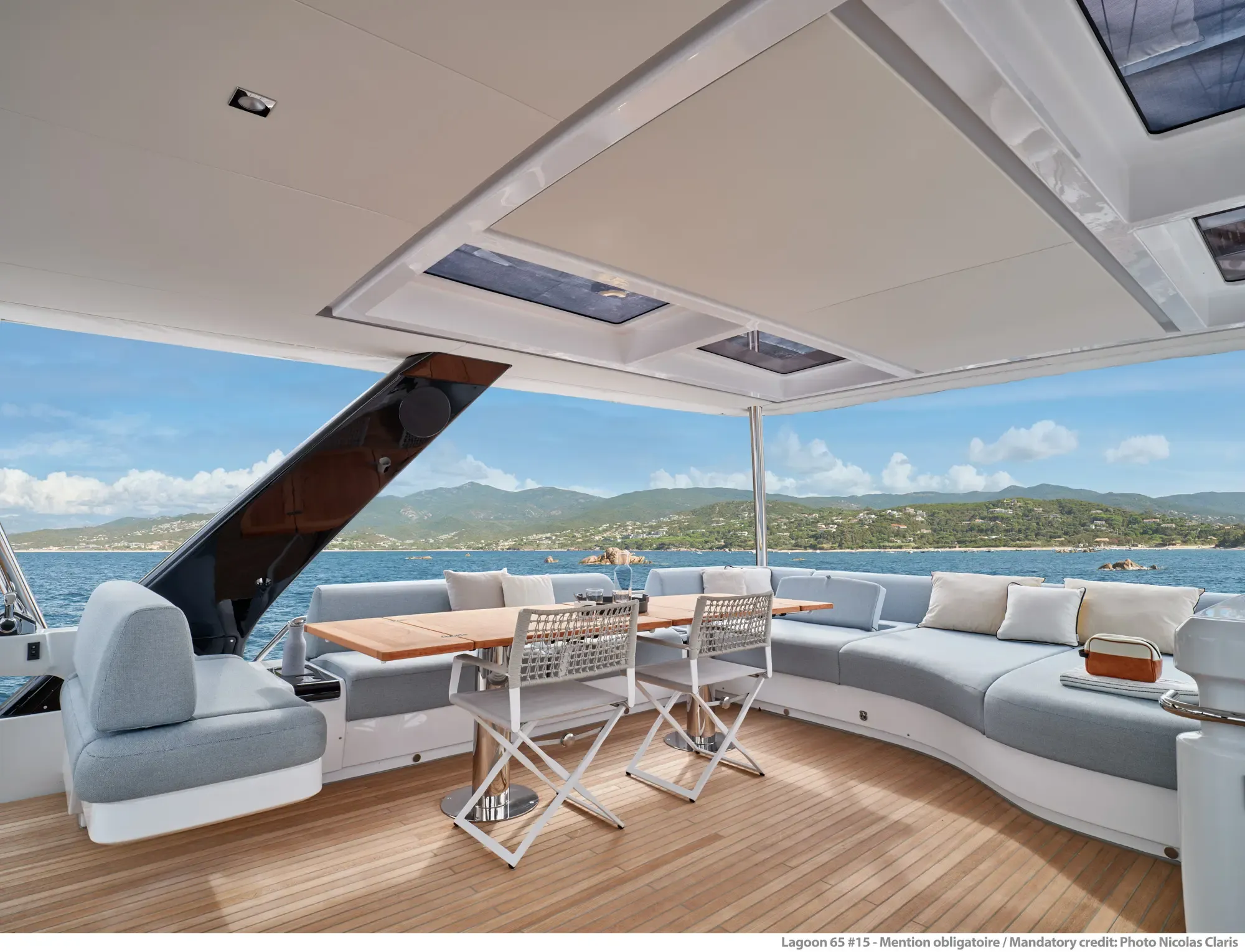
  • Full flybridge helm, offered standard, with sun baths or with loose furniture, so the space reconfigures for passage, dinner or sunbathing
  • Simple working sail plan: one 168 m² (1,808 sq ft) full-batten mainsail and a 102 m² (1,098 sq ft) roller-furling genoa, with an optional 150 m² Code 0
  • Four-, five- and six-cabin layouts with galley up or galley down, plus a semi-custom program covering hull colour, woodwork and upholstery
  • 5'3" (1.60 m) draft is shallow for a 67'5" yacht and opens anchorages a comparable monohull cannot use
  • Trade-off: 32'10" (10.00 m) beam and 33.9 m (111'3") air draft need checking against your marinas, bridges and travel lift before you commit
Tony Smith, Founder of Minted Yachts

Our Take

The Sixty 5 is where Lagoon stops building a bigger cruising catamaran and starts building a yacht. You feel it in the numbers Yacht Class published — around 90 square meters inside and 87 outside. Almost half your living space is open to the weather, and on a boat you intend to spend months aboard in the tropics, that ratio is the whole experience. I would rather have that than another two feet of saloon.

What I keep coming back to, though, is how conventional the sailing side is, and I mean that as praise. One big full-batten mainsail, one genoa on a furler, an optional Code 0 for the light stuff. There is nothing exotic to learn and nothing exotic to break at 2 a.m. Combine that with a flybridge helm where the person steering is still part of the group, and you get a 67-footer that an experienced couple can genuinely run themselves — which is the difference between a yacht that gets cruised and a yacht that gets admired at the dock.

Two pieces of advice. Choose your cabin count based on the guests who actually turn up, not the ones you imagine: six cabins is a hosting and charter tool, and if you are not filling them the four- or five-cabin boat gives you storage and quiet you will use every day. And use the customization program with a plan — decide how you will live aboard first, then pick the woodwork and the layout, because it is very easy to specify a beautiful yacht that does not match your actual routine. Get those two right and the Sixty 5 is one of the most complete cruising platforms in her size.

Watch Our Lagoon Sixty 5 Reviews

Official Lagoon Premiere: Inside the Lagoon Sixty 5

Video courtesy of Lagoon.

Lagoon Sixty 5 Overview

The Lagoon Sixty 5 is a 67'5" (20.55 m) sailing catamaran with a 32'10" (10.00 m) beam and a 5'3" (1.60 m) draft — the entry point to Lagoon's Premium line. Light displacement is 86,374 lbs (39,200 kg), tankage is 343 gal (1,300 L) of fuel and 264 gal (1,000 L) of water, air draft is 33.9 m (111'3"), and CE certification is A:14 / B:18 / C:24 / D:40.

She is offered in 4-6 Cabins / 4-6 Heads with berths from 8 to 16, with the galley up or down and a lounge version of the saloon available. That spread is the point: the four-cabin boat is a private owner's yacht and the six-cabin boat is a hosting or charter platform, and Lagoon runs a customization program on this model covering hull colour simulations, interior layouts, woodwork and upholstery. She is built for long-distance cruising where the yacht is not a holiday rental but the place you live for months at a time.

Performance & Handling

The working sail plan is deliberately conventional: a 168 m² (1,808 sq ft) full-batten mainsail and a 102 m² (1,098 sq ft) genoa on a roller furler, with a 150 m² Code 0 optional for light air, adding up to 272 m² (2,927 sq ft) of upwind sail area. The important word is furler — the everyday headsail rolls away from the helm, and there is nothing exotic to learn and nothing exotic to break at two in the morning. The multihull press, quoted on Lagoon's own model page, reported that in their test sails the Sixty 5 impressed on both performance and comfort.

Propulsion is Twin Yanmar (2 x 150 HP) as standard, with 2 x 195 HP offered as an option, giving 10 knots (under power) and 8-9 knots (under sail/power). The helm is on the flybridge, fully equipped, and positioned so the person steering stays part of the group rather than isolated from it. At 5'3" (1.60 m) the draft is genuinely shallow for a yacht of this length and displacement, which opens anchorages a comparable monohull cannot use — while the 32'10" (10.00 m) beam and 33.9 m (111'3") air draft are the two numbers to check against your marinas, bridges and travel lift before you commit.

Interior & Accommodations

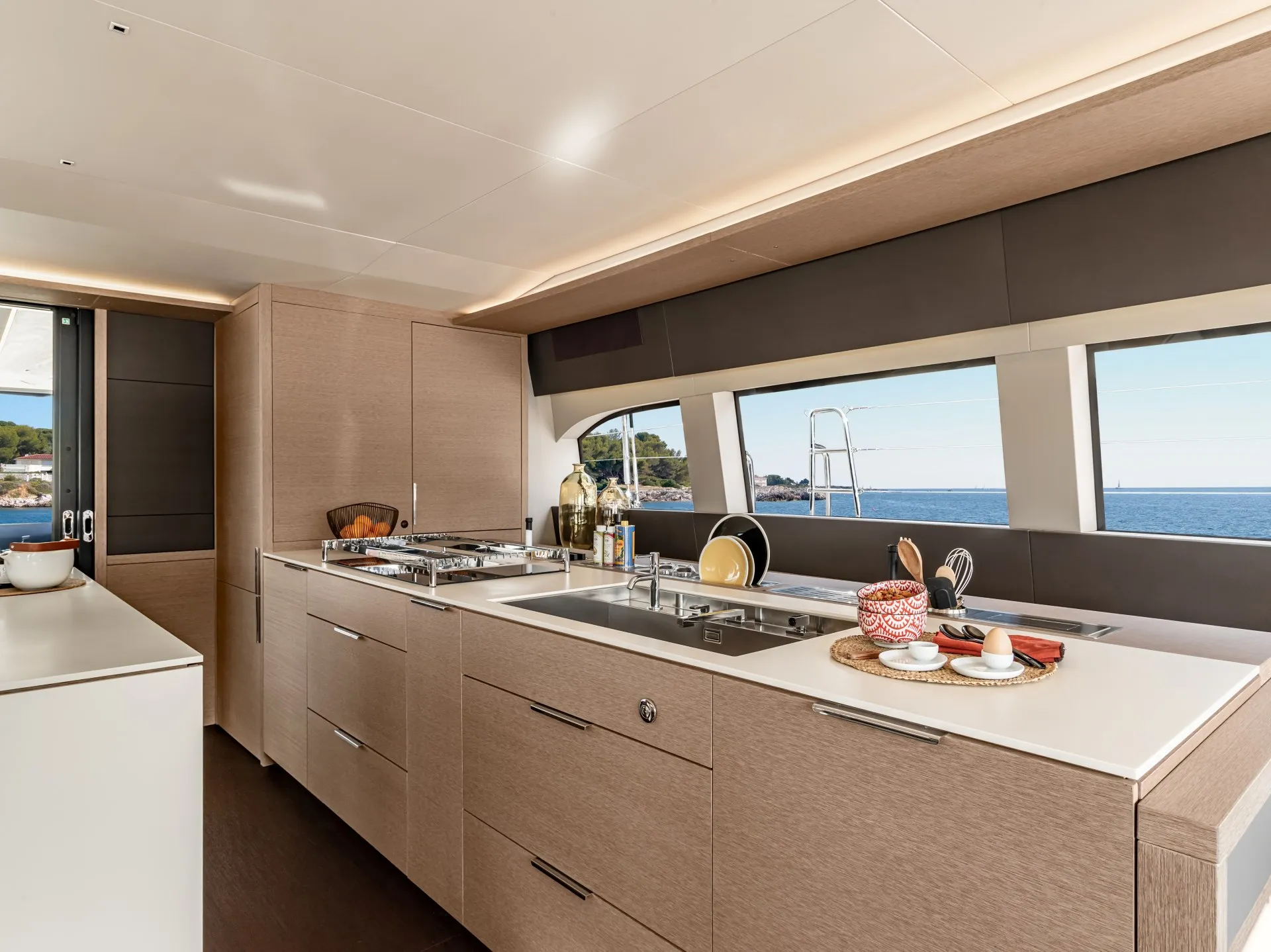
The interior is by Nauta Design, and open space is the theme: living areas flooded with natural light, sight lines that lead your gaze toward the horizon, and woodwork and upholstery finished to Lagoon's Premium standard. The galley is offered up or down and it changes the character of the yacht. Galley up puts the cook at saloon level, in the conversation and with the view, and suits owners who run the boat themselves; galley down keeps working and living spaces apart and makes more sense when someone is cooking for you. A lounge version of the saloon is available, and the choices run all the way down to a coffee table in place of the standard dining table.

Below, the layouts run from four cabins to six, so you can make the owner's accommodation genuinely private or maximize the guest count — 4-6 Cabins / 4-6 Heads, 8 to 16 berths. The flybridge is the centre of gravity: the helm is up there, fully equipped with current electronics, and Lagoon offers the deck standard, with sun baths, or with loose furniture as an option — the last of which lets you reconfigure the space for dinner, for sunbathing or for a passage.

Market Position

The Sixty 5 opens Lagoon's Premium line, sitting directly above the Lagoon 60 at the top of the standard range and below the Seventy 7 and Eighty 2, whose scale generally assumes professional crew. That is the useful thing about her: she is a 67-footer with a one-mainsail, one-furling-genoa working rig, which keeps her inside the reach of an experienced owner-operator instead of requiring a permanent crew. Cross-brand she lines up against the Fountaine Pajot and Sunreef flagships and the Privilège Serie 7, and her argument is livable volume and choice — four-, five- and six-cabin layouts, galley up or down, and a semi-custom program — rather than outright sailing performance.

Who the Sixty 5 Is For

Buy the Sixty 5 if you have already run a catamaran, want a boat you can live aboard for months rather than long weekends, and value staying involved in sailing her: the working rig is conventional by design, and a 32'10" (10.00 m) beam with a high, central flybridge helm is more manageable than the numbers suggest once you have practiced. Choose the cabin count for the guests who actually turn up — six cabins is a hosting and charter tool that brings more heads, more linen and more turnover work, while the four- and five-cabin layouts hand you back storage and quiet you will use every day. If this would be your first catamaran, start with a 45- to 50-footer and learn what you actually use; and if you want a lighter boat that points higher and accelerates in soft air, a performance-oriented cat is the better answer than this one.

Lagoon Sixty 5 Articles & Guides

Compare With

Frequently Asked Questions

How many cabins does the Lagoon Sixty 5 have?

Four to six cabins with four to six heads — 4-6 Cabins / 4-6 Heads, sleeping eight to sixteen. The spread is the point: the four-cabin boat is a private owner's yacht with real storage and real quiet, while the six-cabin boat is a hosting or charter platform where every berth has to be sellable.

The saloon can be ordered with the galley up or down, with a lounge version available, and the flybridge comes standard, with sun baths, or with loose furniture as an option so you can reconfigure it for dinner, for sunbathing or for a passage. Interior design is by Nauta Design, and Lagoon runs a customization program on this model covering hull colour simulations, interior layouts, woodwork and upholstery.

Should I buy the Lagoon Sixty 5 or the Lagoon 60?

The Sixty 5 if you want the Premium line and a semi-custom boat; the Lagoon 60 if the top of the standard range is enough. The Sixty 5 opens Lagoon's Premium line, and with it comes a customization program — hull colour simulations, interior layouts, woodwork and upholstery worked through with Lagoon's own team — plus a six-cabin option the 60 does not offer.

On the Sixty 5 the helm sits on the flybridge, fully equipped, and positioned so whoever is steering stays part of the group rather than isolated from it. What you take on is size: 67'5" (20.55 m) of hull and 32'10" (10.00 m) of beam need a berth, a lift and a bridge clearance to match, and both boats reward practice before they reward ambition. If this would be your first catamaran, buy neither yet — run a 45- to 50-footer for a season and learn which spaces you actually use.

What are the Lagoon Sixty 5's dimensions, and where can she go?

She is 67'5" (20.55 m) overall, with a 32'10" (10.00 m) beam and a 5'3" (1.60 m) draft. That draft is genuinely shallow for a yacht of this length, and it is what opens the thin, sandy anchorages a comparable monohull has to skip.

The numbers that will actually constrain you are the other two. A 32'10" beam decides which marinas and which travel lifts are open to you, and air draft is 33.9 m (111'3"), which decides which bridges are. Check all three against the cruising ground you will really use — not the one in the brochure — before you commit to a hull, because beam and air draft are the two dimensions you cannot negotiate down later.