
April 12, 2026
The Horizon RP110 Review: When the Raised Pilothouse Makes Sense
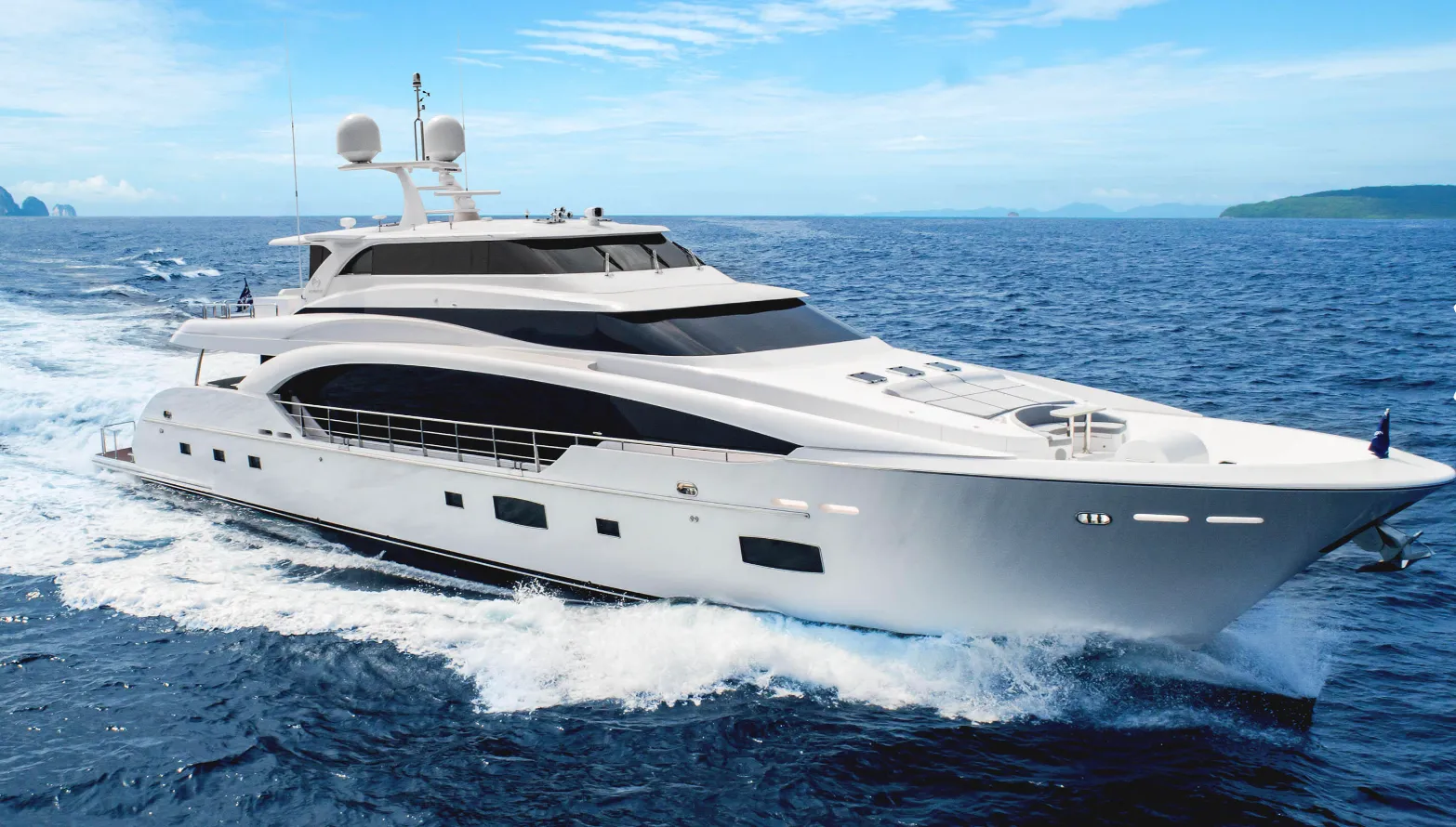
The Horizon RP110's raised pilothouse keeps the owner at the helm without exiling them from the main deck — 110 feet of Donald Blount naval …
Read the articleExpert Review, Technical Specifications & Market Analysis
| Feature | Specifications |
|---|---|
| Overall Length | 110' 0" (33.53 m) |
| Beam | 25' 0" (7.62 m) |
| Draft | 5' 11" (1.8 m) at half load |
| Displacement | 283,290 lb (128.5 t) at half load |
| Engines | Twin CAT C32A, 1,800 hp each |
| Fuel Capacity | 5,550 US gal (21,000 L) |
| Water Capacity | 800 US gal (3,000 L) |
| Cabins / Heads | 4 guest + 3 crew |
Source: Spec & Photos courtesy of Horizon Yachts. Specs verified by Tony Smith, USCG 100 Ton Master, on August 10, 2026.
Part of the Horizon Yachts RP series — see how owners step up through the lineup.

The RP110 is one of the more honest boats in the 110-foot class. Horizon has been building this hull long enough that the engineering is sorted, the supply chain is mature, and the build quality is consistent. The raised pilothouse is not a styling gimmick. It is a functional design choice that changes the way you operate the boat. The helm position gives you real visibility, the layout keeps you connected to the main deck, and the systems are accessible enough that an experienced owner can stay involved without needing a full-time engineer.
This boat is for the owner who has already figured out what they actually use. If you have owned in the 70-to-85-foot range and you know you want more space but not more complexity, the RP110 is a smart step up. It is not the flashiest boat at the dock, but it is one of the most versatile. The performance envelope is wide enough to handle both coastal cruising and offshore passages, and the layout is flexible enough to work with a small crew or even owner-operated on short trips. The downside is that you are still looking at $200,000 to $350,000 per year in crew costs if you run it properly, and the fuel burn at 18 knots is real.
The resale market for the RP110 is starting to mature, and the data is encouraging. Horizon builds enough volume that there is liquidity in the market, but not so much that the boats feel generic. Maintenance costs are predictable if you stay on top of the schedule, and the CAT C32A engines are well-supported. The biggest risk is over-customizing the interior. Buyers in this class want flexibility, and if you spec a layout that is too specific to your use case, you will pay for it on the back end. Keep the layout standard, maintain the boat properly, and the RP110 will hold value better than most of its competitors.
Video courtesy of Horizon Yachts.
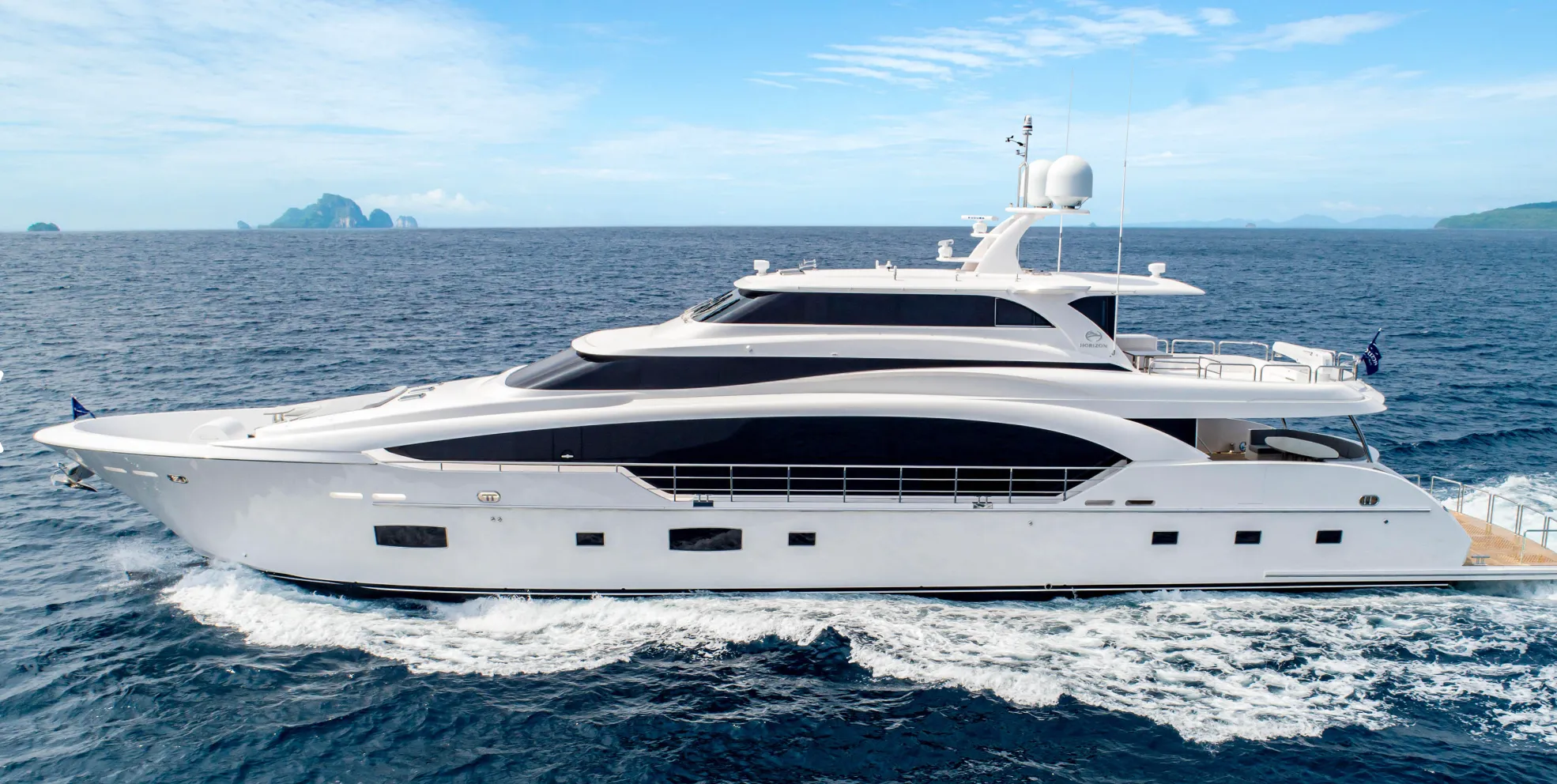
Photos courtesy of Horizon Yachts.
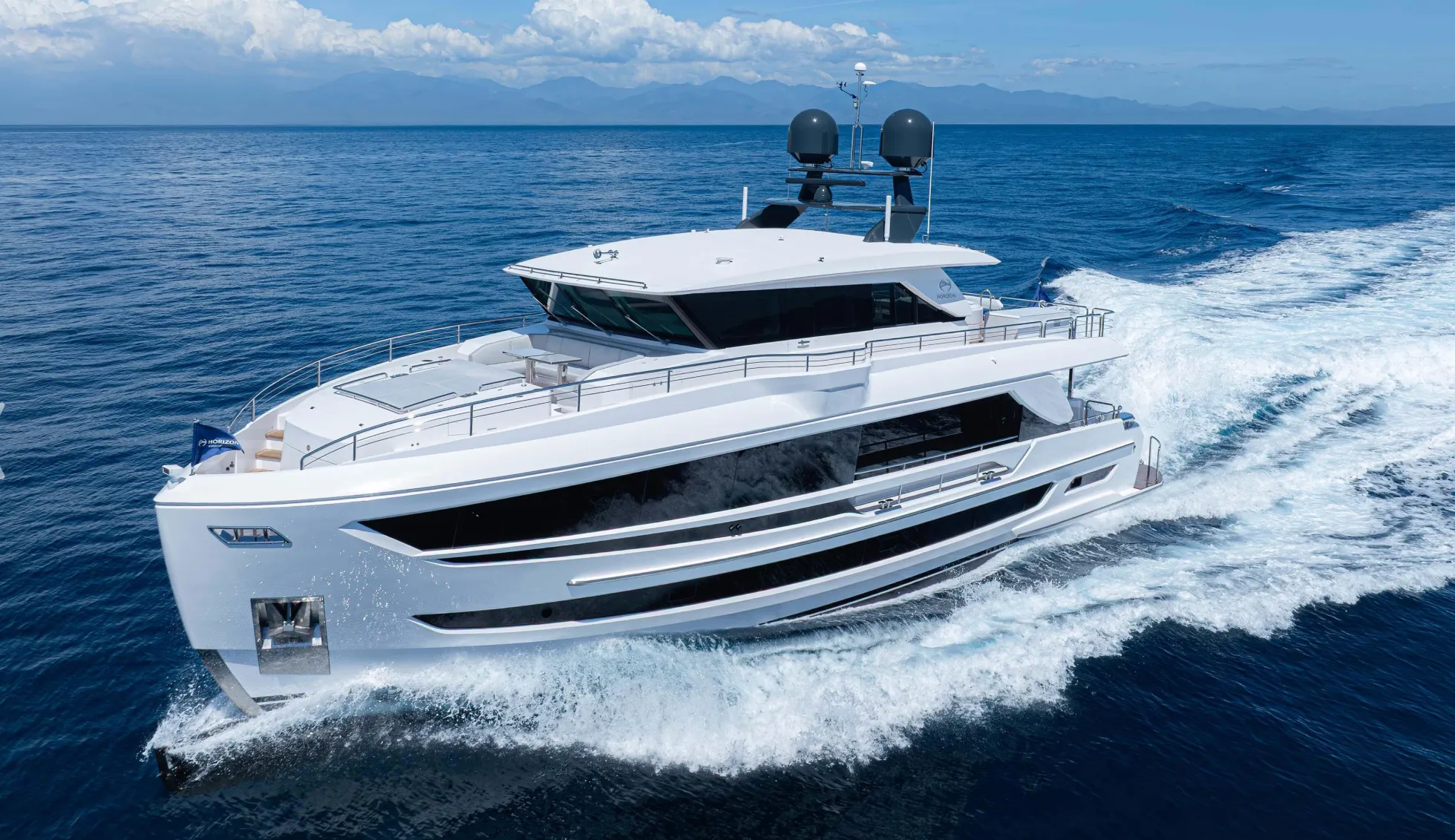
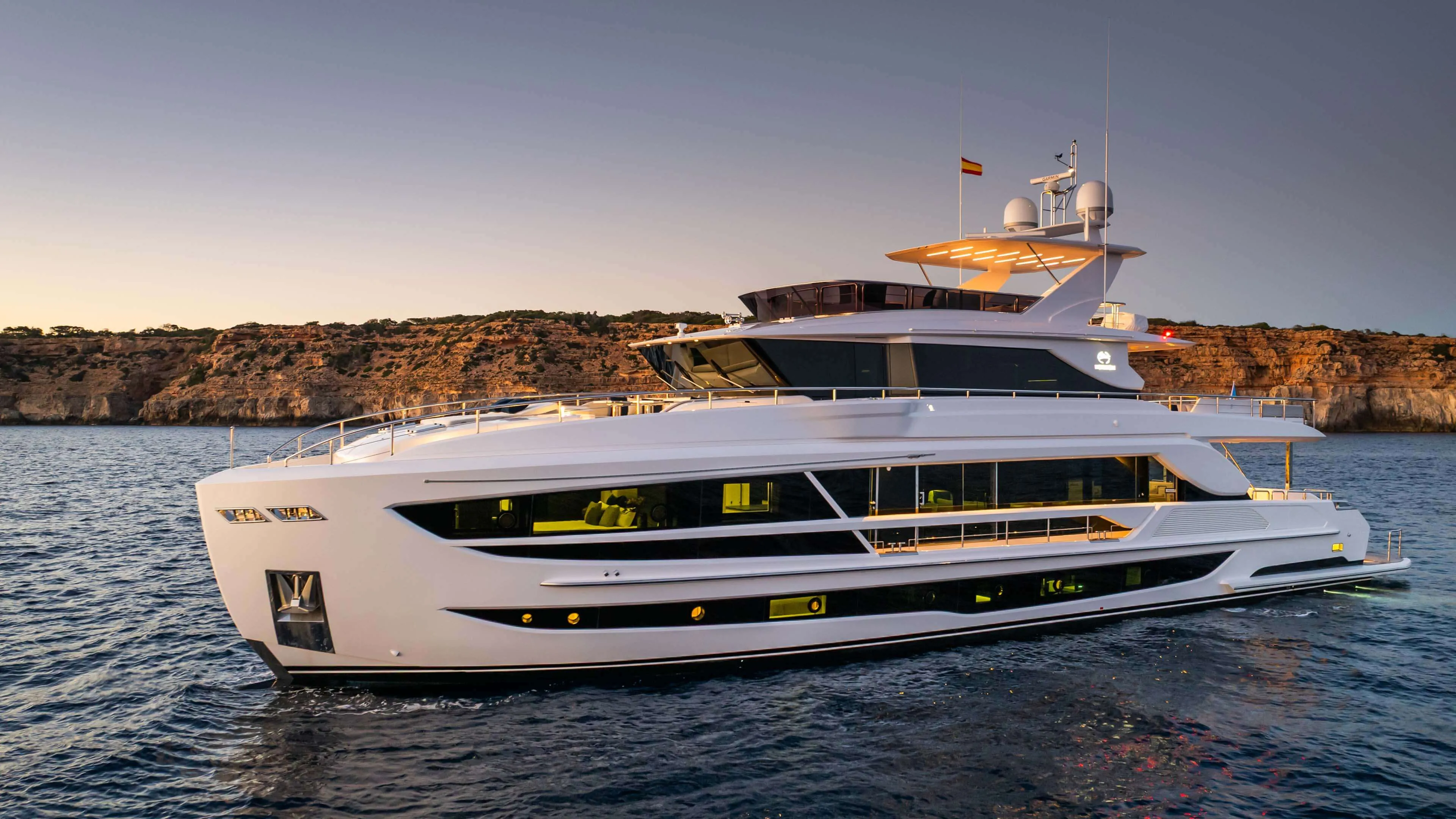
Horizon's specification lists quarters for three crew alongside four guest cabins, and at 110 feet with 5,550 gallons of fuel to manage, that is realistic rather than aspirational.
The raised pilothouse means you can genuinely stay involved in running the boat — the sightlines and the connection to the main deck are the whole point of the layout — but this is a crewed yacht you can drive, not an owner-operator boat with occasional help. Note that the RP Series brochure describes a five-stateroom layout where the spec table says four guest cabins; read the general arrangement.