Galeon 425 HTS

Expert Review, Technical Specifications & Market Analysis

The Essentials

FeatureSpecifications
Overall Length44' 2"
Beam12' 10"
Draft3' 7"
Engines2 x Diesel (up to 480 hp)
Fuel Capacity251 gal
Water Capacity119 gal
Cabins / Heads2 Cabins / 2 Heads
Max Speed30 knots

Source: Spec & Photos courtesy of Galeon. Specs verified by Tony Smith, USCG 100 Ton Master, on August 26, 2026.

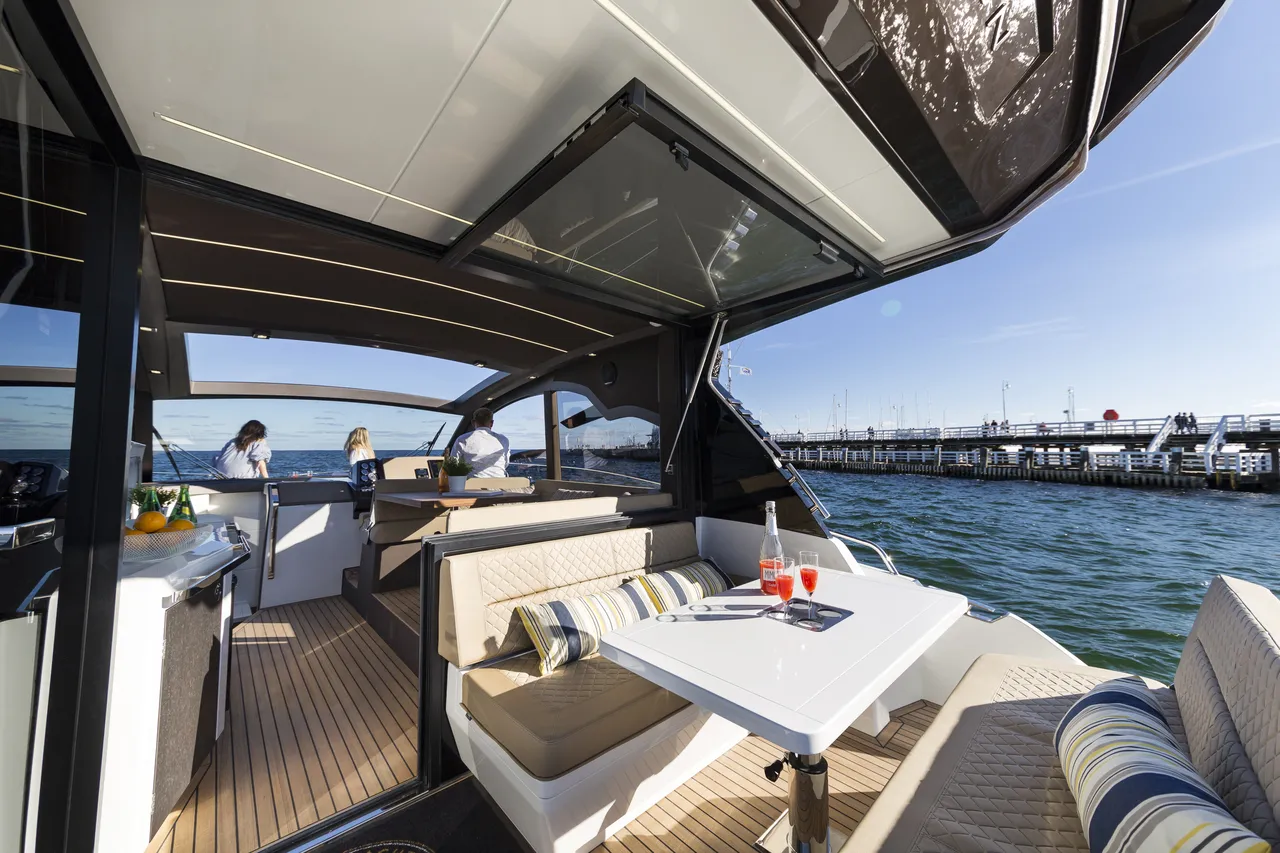
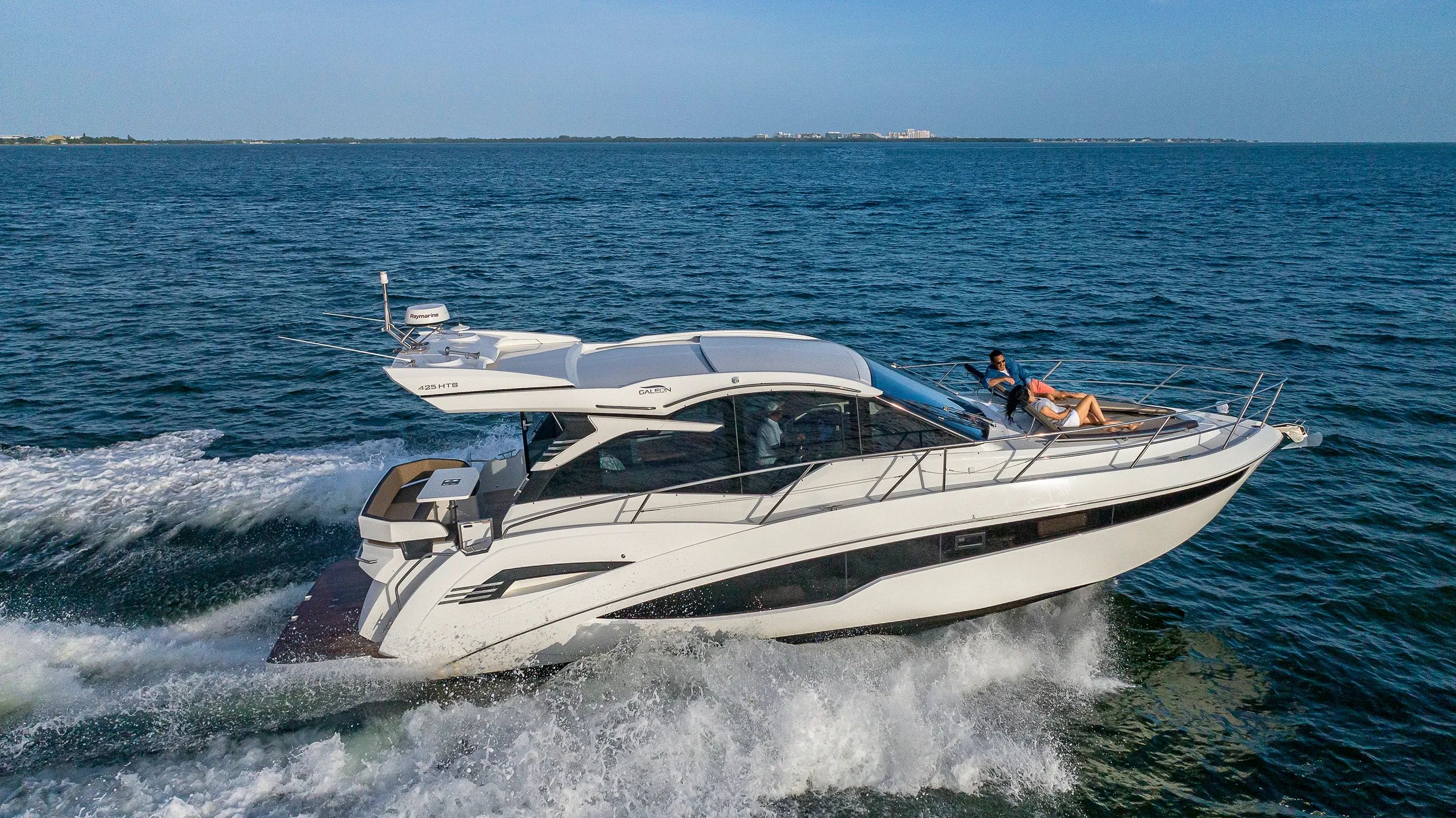
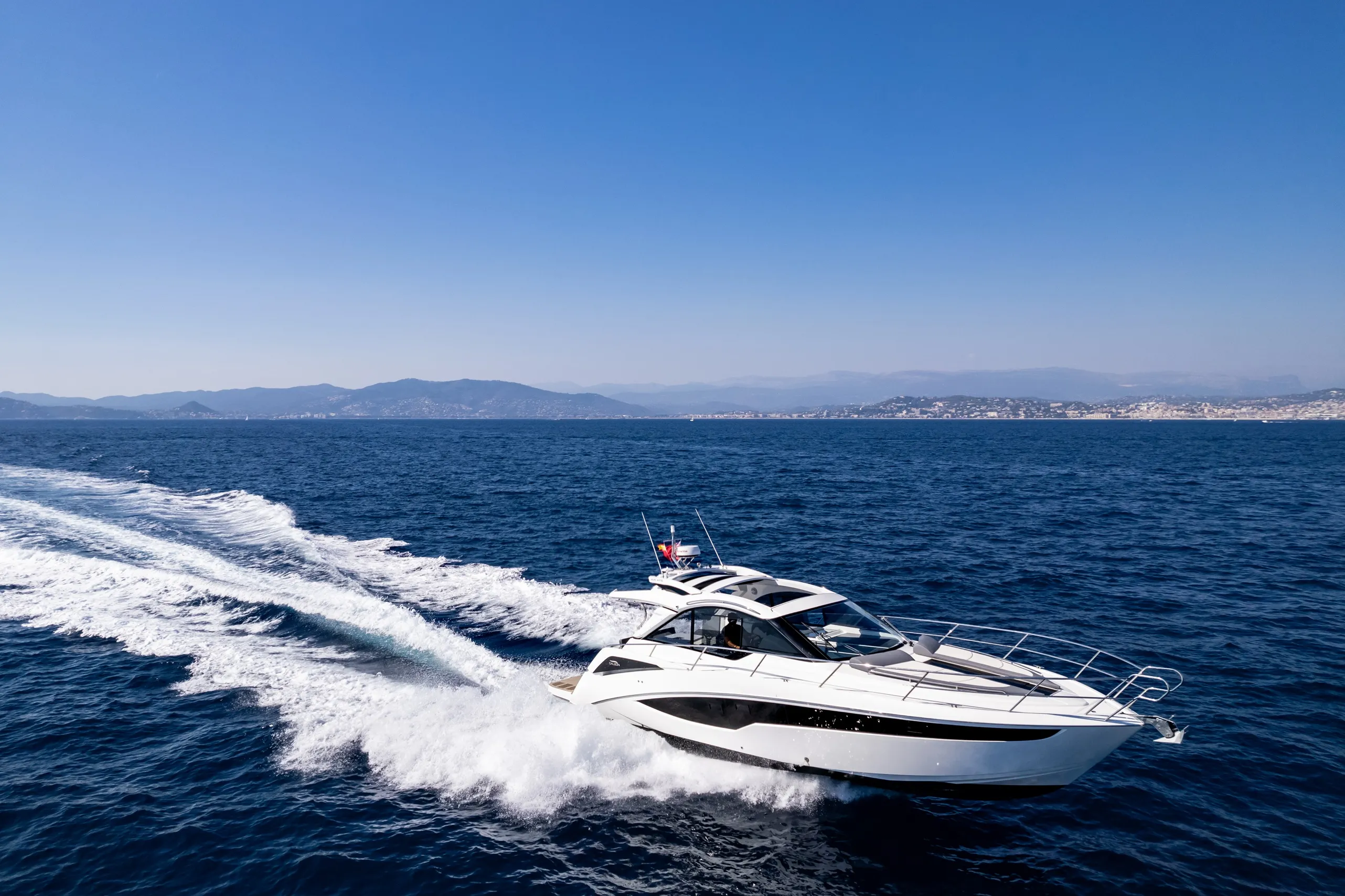
A fully enclosed main deck with an electric sunroof overhead and a retractable glass panel aft - the 425 HTS is the version of Galeon's 44' 2" hull built to be used in weather, and it carries a tender garage.

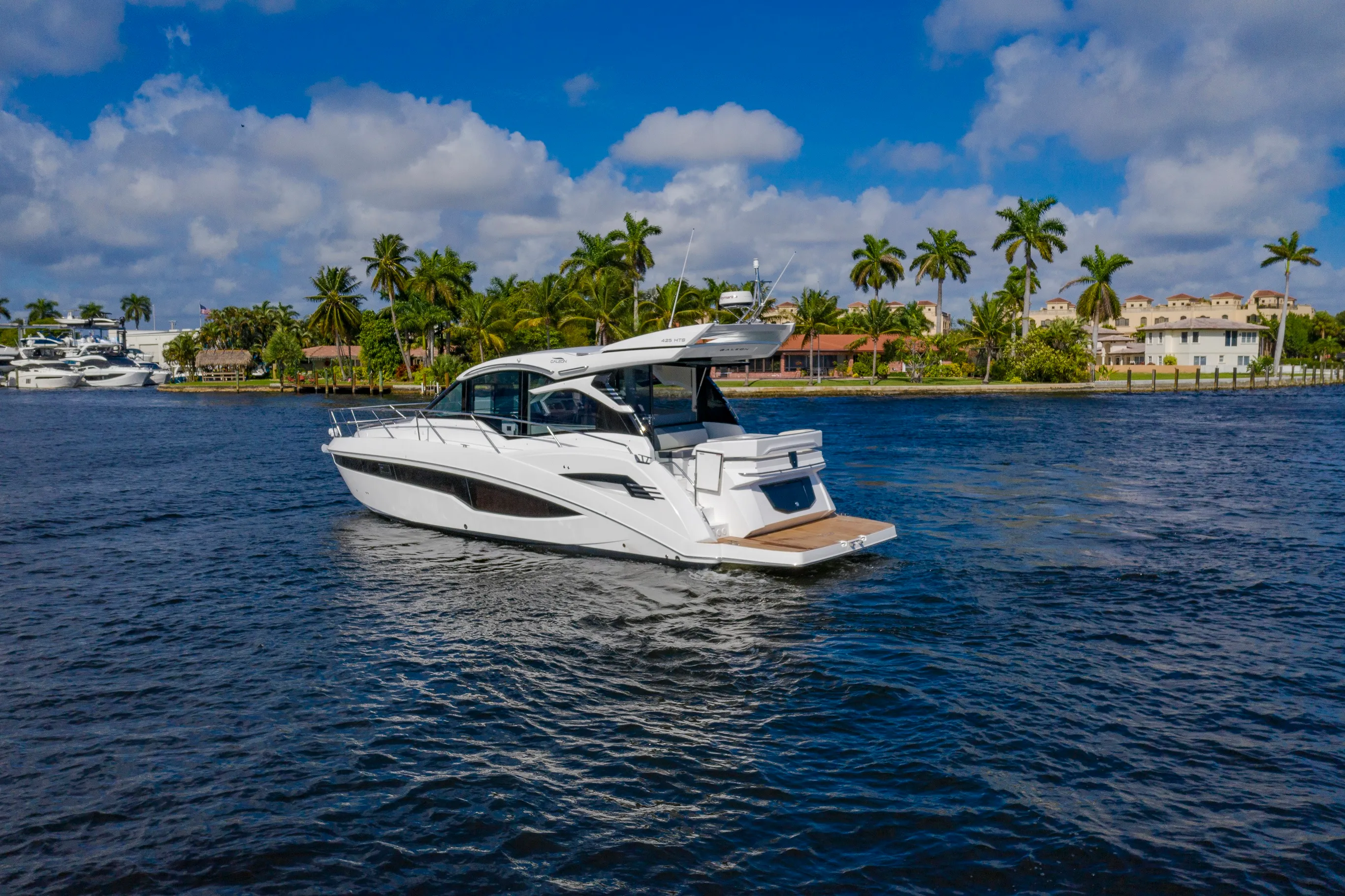
Galeon 425 HTS exterior

Quick Verdict

  • A fully enclosed main deck that reopens two ways: a large electric sunroof through the hardtop, and a retractable glass panel aft that joins the saloon to the cockpit as one space.
  • 44' 2" long on a 12' 10" beam, the same hull as the 405 HTS. The 425 draws 3' 7", is rated to a maximum of 2 x 480 hp and runs to 30 knots.
  • A tender garage plus an extended hydraulic swim platform, so the toys do not have to live in the cockpit. Measure your existing tender against both before you assume the arrangement works.
  • Two cabins, both with en-suite bathrooms. Full-beam cabin aft with sliding berths that make a double or two singles; bow VIP with a full-size bed and a portside wardrobe.
  • Fuel 251 gallons, fresh water 119 gallons, ten guests for the day and four berths for the night. Wide walkaround side decks lead to a bow lounge.
  • The hull is an optimised deep V, tuned for rough water. Bring your cruise figure back from the sea trial and the displacement from the yard in writing before you commit to a lift.
Tony Smith, Founder of Minted Yachts

Our Take

Here is the thing I want people to understand about the 425 HTS. It is not a bigger 405 and it is not a smaller anything - it is the same 44' 2" hull with a completely different answer bolted on top. Galeon enclosed the main deck, then gave you two ways to un-enclose it: an electric sunroof through the hardtop and a glass panel at the back that drops away and turns the saloon and the cockpit into one room. That is a boat you can use in March and a boat you can use in July, and most 44-footers make you pick one at the order desk and live with it.

The tender garage is the part I would sell somebody on, and nobody ever leads with it. Think about how a day at anchor actually goes with six people aboard. On most boats this size the tender is on the swim platform or taking up the cockpit, and either way it is in the way of the thing you came here to do. Take it off the deck and the aft end of the boat gets its purpose back. Combine that with the extended hydraulic platform and you have an anchor-out boat that behaves like a bigger one.

What I would do before signing is short and specific. Ask the yard for the displacement in writing, because you will need it for a lift or an insurance form. Get the cruise speed and the observed burn off your own sea trial rather than off anybody's estimate - run it at the rpm you would really hold and write down what you see. And put the engine rating on the contract; 2 x 480 hp is the ceiling for this model, not a description of the boat sitting in front of you. Then go stand in the saloon with the aft glass down and the sunroof open, because that is what you are actually buying, and it either lands for you or it does not.

Galeon 425 HTS Overview

The Galeon 425 HTS is 44' 2" long on a 12' 10" beam, and it shares that hull with the 405 HTS. Same length, same beam, same slip. What makes the 425 its own boat is that the main deck is fully enclosed, and the enclosure is the point rather than a compromise: an electric sunroof opens the roof over the saloon, and a retractable glass panel drops at the aft end to join the saloon to the cockpit. Closed, it is a boat for a cold morning and a wet crossing. Open, it is a boat that runs the length of the deck with nothing between you and the water.

The rest of the exterior is arranged around moving people safely and carrying things. Wide walkaround side decks lead cleanly to a bow lounging area, so getting forward to a line does not involve gymnastics. The extended hydraulic swim platform handles the tender or the toys and makes launching a one-person job. And there is a tender garage - the kind of everyday convenience that stops the cockpit from becoming a garage instead.

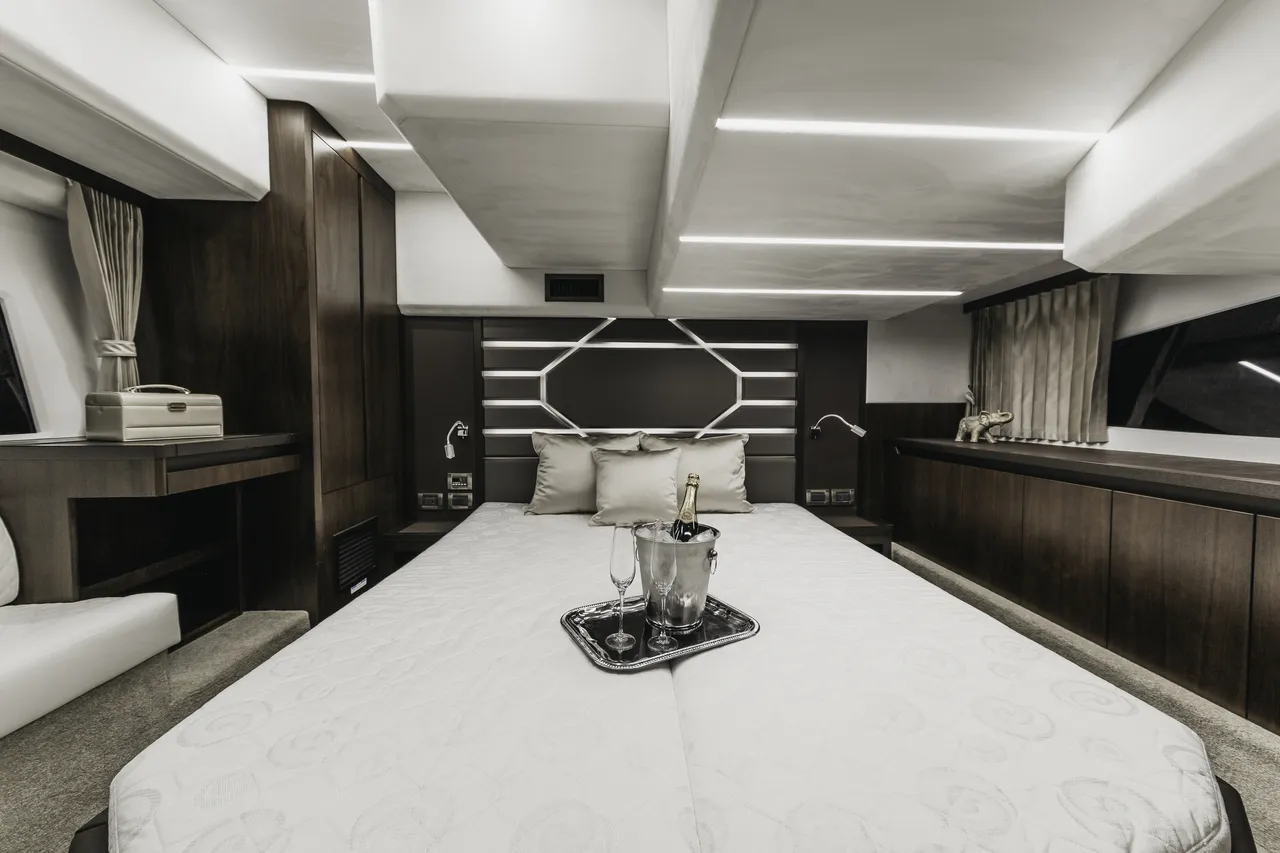
Below, two cabins and two en-suite bathrooms. The full-beam cabin aft has flexible sliding berths that make a double or two singles; the bow VIP takes a full-size bed with a portside wardrobe and its own bathroom, finished to a choice of interior palettes. The galley is fully equipped with modern appliances and generous storage. Fresh water is 119 gallons, fuel is 251 gallons, and the boat is rated for ten guests. Draft is 3' 7", power is twin diesels rated to a maximum of 2 x 480 hp, and top speed is 30 knots. The hull is an optimised deep V, tuned for a stable ride in rough water and responsive handling at speed.

Performance & Handling

Top speed is 30 knots on twin diesels rated to a maximum of 2 x 480 hp. Establish your cruise figure at sea trial - run the boat at the rpm you would genuinely hold all day, hold it there, and record the speed and observed burn - and get the displacement from the yard in writing before you size a lift or a trailer.

The maximum power rating is a ceiling rather than a specification of the boat in front of you. A hull can be built below it, and the rating that matters is the one written on your build contract, not the one on a listing.

The case for how this boat rides is the hull form: an optimised deep V, meant to stay composed in a chop and to hold its line under power. That is a handling argument rather than a speed argument, and it is exactly the kind of claim to test rather than read - take the sea trial out into the conditions you actually boat in, not the flat water inside the breakwater.

Draft is 3' 7", and the number that settles a marginal home channel is the one for your own drive package rather than anything on a comparison table. Fuel is 251 gallons against 119 gallons of fresh water, and on a boat that sleeps four it is usually the water tank that ends a long weekend at anchor first, not the fuel.

Interior & Accommodations

The enclosed main deck is what you are buying, and it works because of two pieces of hardware. Overhead, a large electric sunroof retracts through the hardtop, so the saloon can be a sealed room or an open one at the touch of a button. Aft, a retractable glass panel drops away and joins the saloon to the cockpit as one continuous space. Between them, the boat covers both ends of the year: closed and warm in March, wide open in July.

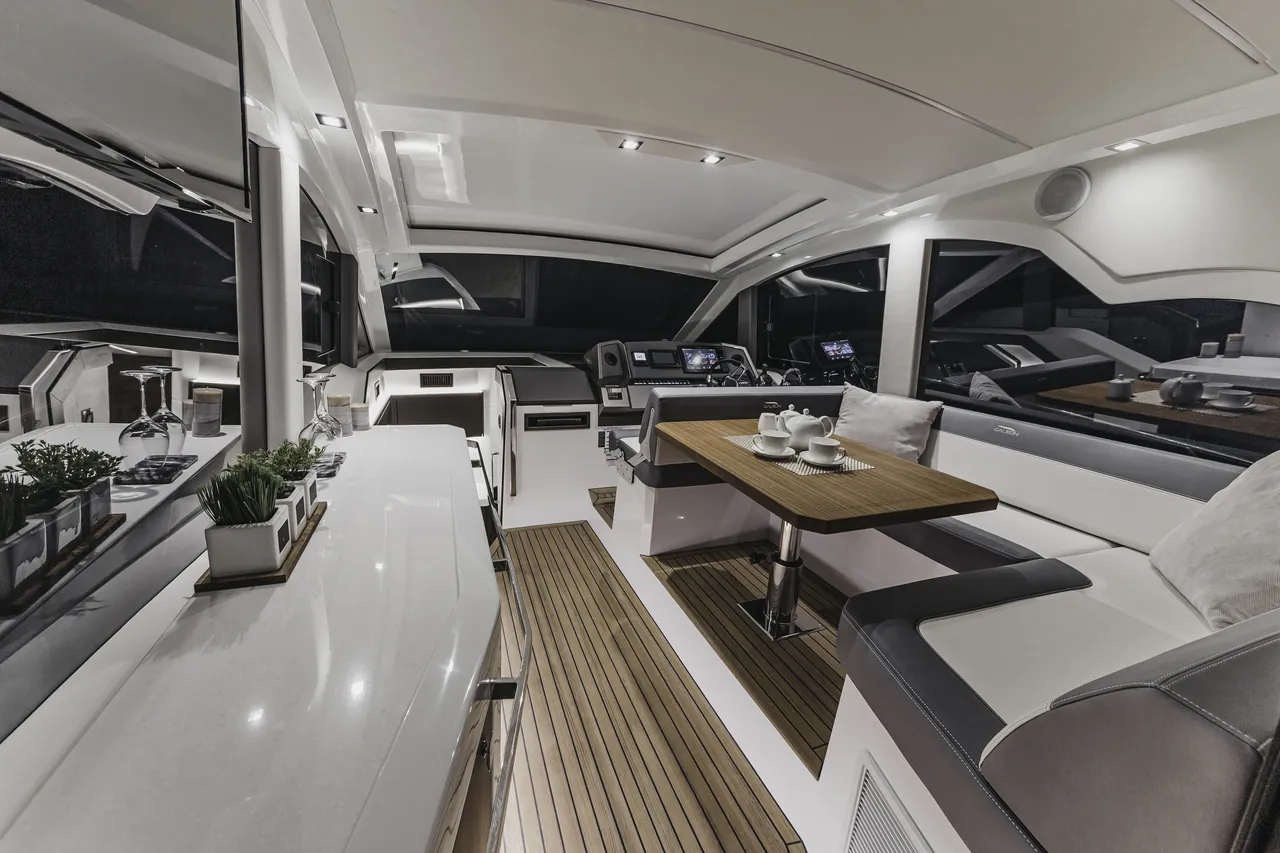
Large windows and the panoramic sunroof keep the main deck bright, and the seating is designed to move with the day. The lounge area converts - flexible seating that can extend the cockpit for entertaining or fold back toward the saloon for interior comfort. It is a genuinely useful piece of design on a 44-footer, where fixed furniture is what usually stops a boat from having two moods.

The galley is fully equipped: modern appliances, generous storage and a layout that is elegant enough to sit in the middle of the main deck without looking like a utility. It is set up for long cruises rather than for reheating.

Below, there are two cabins, and both have en-suite bathrooms. The full-beam cabin aft has flexible sliding berths that configure as a double or as two singles, with a generous bathroom of its own. The bow VIP has a full-size bed, a portside wardrobe and its own en-suite, styled to whichever interior palette you choose. Four berths, nobody sharing a bathroom, and premium materials with clever storage throughout. Fresh water is 119 gallons, which is the tank most likely to call time on a long weekend at anchor.


Market Position

The comparison to make first is the one inside Galeon's own range, because it is unusually clean: the 425 HTS and the 405 HTS are both 44' 2" long on a 12' 10" beam. Neither is the bigger boat, and neither is a stretched version of the other. The 425 encloses the main deck and reopens it with an electric sunroof and a retractable aft glass panel; it is rated to a maximum of 2 x 480 hp for 30 knots, draws 3' 7" and carries 251 gallons of fuel. The 405 opens up differently - a sliding cockpit roof and opening windows beside the helm - and is rated to a maximum of 2 x 440 hp for 28 knots, and draws 3' 3", or 3' 11" with running gear. If you cruise in shoulder seasons or in weather, the 425 is the version of this hull to be looking at.

Up the hardtop line, the 450 HTC sits at 45' 10"; down it, the 410 HTC at 40' 11". For the same footprint with a flybridge instead, the 420 FLY is 44' 11".

Against the wider 44-foot hardtop diesel market, the 425's argument is that it refuses the usual trade. Most boats at this size ask you to choose once, at the order desk, between a sports cruiser you use in summer and an enclosed coupe you use all year. The electric sunroof and the drop-away aft glass mean the 425 does not need you to choose. The tender garage is the other quiet advantage: on most 44-footers the tender lives on the swim platform or in the cockpit, and neither of those is free.

One practical note before options. The extended hydraulic swim platform is what decides which tender fits, and the garage is what decides where it goes. Measure the tender you already own against both before you assume the arrangement works.

Who the 425 HTS Is For

The 425 HTS fits the owner whose season is longer than summer. A fully enclosed main deck with an electric sunroof overhead and a retractable glass panel aft is the specific answer to boating in a place where the weather turns - you close it and keep going, then open both and the boat becomes a sports cruiser again. If you have ever cut a trip short because the flybridge or the open cockpit stopped being pleasant, this is the deck plan that fixes that.

It fits people who actually carry a tender. The tender garage plus the extended hydraulic swim platform means the toys have somewhere to live that is not the cockpit, and that changes how usable the aft end of the boat is when you are at anchor with guests aboard.

It fits couples and couples with guests. Two cabins, two en-suite bathrooms, four berths and ten guests aboard for the day. The full-beam cabin aft configures as a double or as two singles; the bow VIP has a full-size bed and its own bathroom. There is no third cabin, so if the boat has to sleep six, look higher up the range.

It is the wrong boat if you want to be outdoors by default. On the same 44' 2" hull, the 405 HTS is the one built to run with the roof back, and if that is how you boat you should not pay for an enclosure you will leave open.

Galeon 425 HTS Articles & Guides

Compare With

Frequently Asked Questions

Is the Galeon 425 HTS bigger than the 405 HTS?

No - they are the same size. Both the Galeon 425 HTS and the 405 HTS are 44' 2" long on a 12' 10" beam, and both carry two cabins with two en-suite bathrooms. The difference is what sits above the hull and on the engine beds. The 425 has a fully enclosed main deck that reopens through an electric sunroof and a retractable aft glass panel, plus a tender garage; it draws 3' 7", is rated to a maximum of 2 x 480 hp and runs to 30 knots. The 405 is built to open up - a sliding cockpit roof and opening windows beside the helm - draws 3' 3" (3' 11" with running gear), is rated to a maximum of 2 x 440 hp and runs to 28 knots.

Does the Galeon 425 HTS have a tender garage?

Yes. The Galeon 425 HTS carries a tender garage, which means the tender does not have to live on the swim platform or in the cockpit - a meaningful difference on a 44-footer when you are at anchor with guests aboard. It is paired with an extended hydraulic swim platform that handles launching, recovery and water access. Between them, the platform decides which tender fits and the garage decides where it stows, so measure the tender you already own against both before you assume the arrangement works.

How fast is the Galeon 425 HTS?

The Galeon 425 HTS has a top speed of up to 30 knots on twin diesels rated to a maximum of 2 x 480 hp. The speed you will actually hold all day is worth establishing at sea trial - run the boat at the rpm you would genuinely cruise at, hold it there, and record the speed and the observed fuel burn before calculating range. The power figure is a maximum rating rather than a description of any particular boat, so confirm what you are buying on the build contract.

How many cabins and bathrooms does the Galeon 425 HTS have?

The Galeon 425 HTS has two cabins and two en-suite bathrooms, sleeping four, and is rated for ten guests aboard during the day. The full-beam cabin aft has flexible sliding berths that configure as one double or as two singles, with its own generous bathroom. The bow VIP takes a full-size bed with a portside wardrobe and its own en-suite, finished to a choice of interior palettes. Nobody shares a bathroom, and there is no third cabin - a boat that has to sleep six is a different hull.