
August 25, 2026
Galeon 410 HTC: The Same Hull as the 400 FLY, Minus the Flybridge
Galeon builds one 40' 11" hull and sells it two ways, and the 410 HTC is the version with the upper deck removed. A fixed hardtop with a lar…
Read the articleExpert Review, Technical Specifications & Market Analysis
| Feature | Specifications |
|---|---|
| Overall Length | 40' 11" |
| Beam | 12' 11" |
| Draft | 3' 3" |
| Displacement | 27,192 lbs |
| Engines | 2 x Diesel (up to 440 hp) |
| Fuel Capacity | 264 gal |
| Water Capacity | 118 gal |
| Cabins / Heads | 2 Cabins / 2 Heads |
| Max Speed | 29 knots |
Source: Spec & Photos courtesy of Galeon. Specs verified by Tony Smith, USCG 100 Ton Master, on August 24, 2026.
The same 40' 11" hull as the 400 FLY with the upper deck deleted: a fixed hardtop and retractable sunroof instead of a flybridge, about 1,210 lbs more weight, a foot less air draft, and Beach Mode balconies that open the beam to 21 ft.
Part of the Galeon HTC series — see how owners step up through the lineup.

I like this boat for a reason that has nothing to do with the hardtop and everything to do with what Galeon has done structurally. They built one 40' 11" hull and gave you two roofs. The 400 FLY puts a flybridge on it. The 410 HTC takes the upper deck off entirely. Same length, same beam, same tanks, same engine band. That means for once you can stop cross-referencing two spec sheets and ask yourself one honest question: do I want to sit up there, or do I want the boat to feel lower and sharper underneath me?
If it is the second, this is your boat and the numbers are on your side. Galeon's figures put the hardtop a knot quicker and a foot lower at the bridge, and the yard's stated case for the design is the lower centre of gravity - less roll, better manners in a beam sea. It costs you about twelve hundred pounds in the hardtop structure and its glass, which is real weight, but it sits low where weight belongs instead of up high where it does not. And the sunroof is the part that makes the whole idea work. A fixed roof with no way to open it is a compromise you live with; a fixed roof with a big retractable panel over the helm is just weather protection you can switch off.
Two things before you sign. First, the draft. It is quoted more than one way on this hull, and I am not going to let a client size a slip off a number he cannot pin down. Get the figure for your exact drive package in writing. Second, go stand in the cockpit with Beach Mode deployed. Twelve foot eleven of beam becomes twenty-one feet with the balconies down, and that is either the best thing about this boat or hardware you will open twice and then forget about. There is no way to know which one you are from a brochure. You have to stand in it.
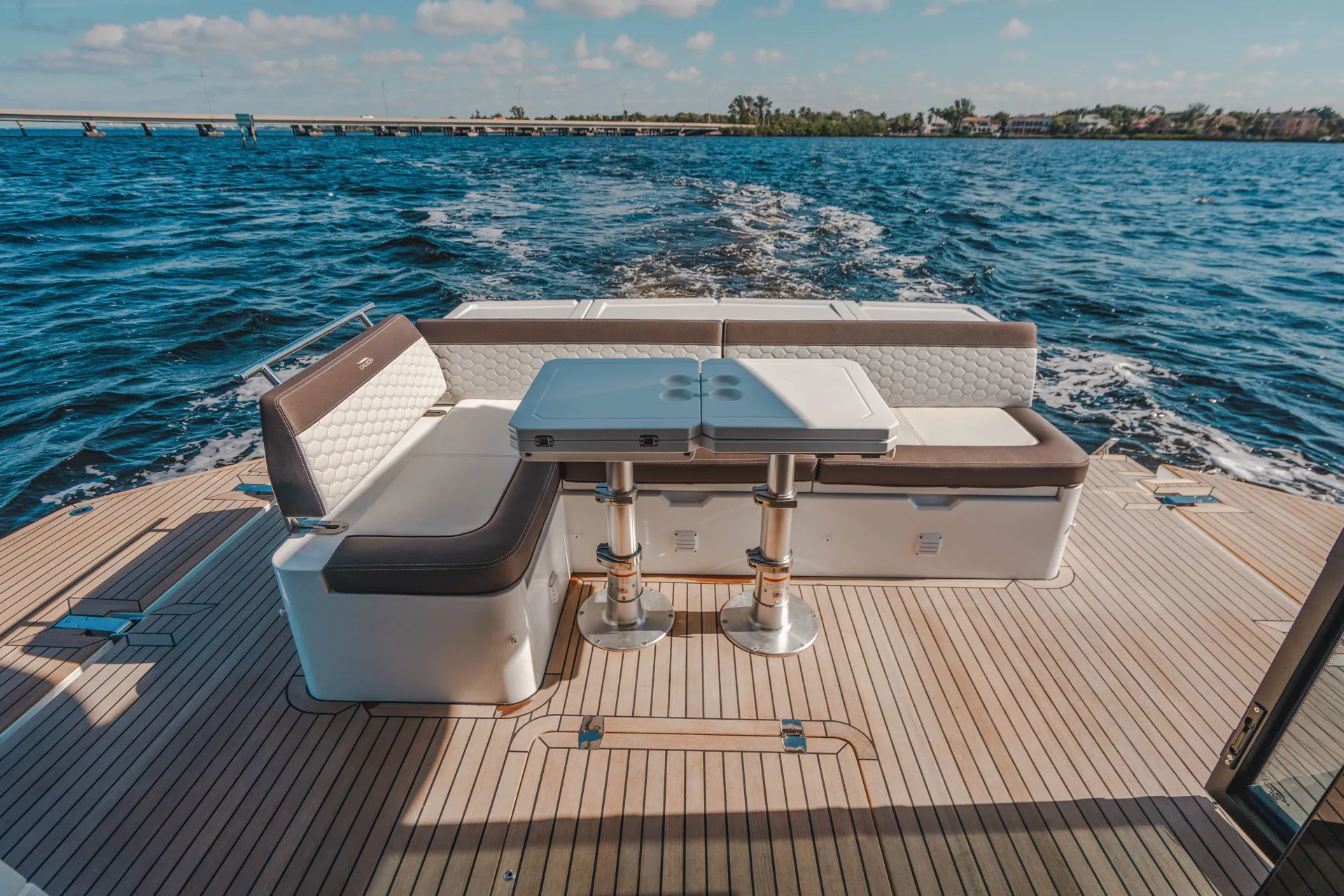
Photos courtesy of Galeon.
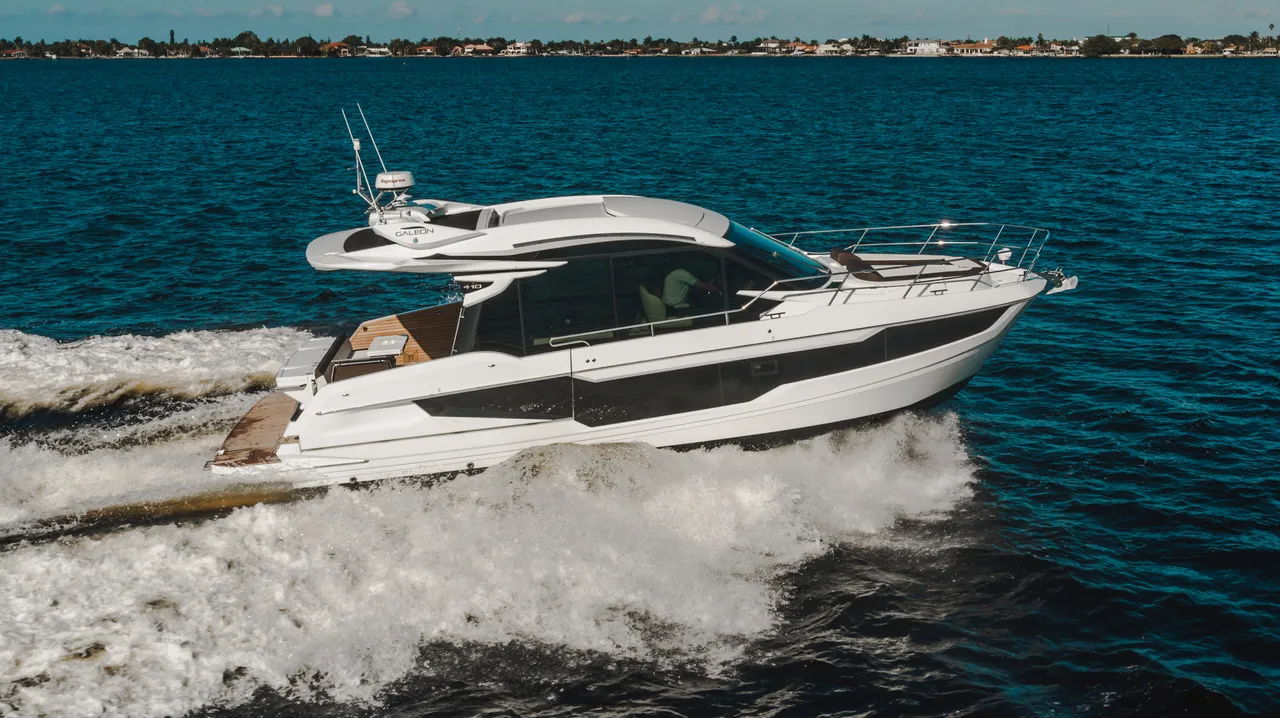
The Galeon 410 HTC is the hardtop version of the 400 FLY - a coupe-like silhouette on the same hull, with no space or functionality given up to get it. The hull is identical: 40' 11" overall, about 36' 4" of hull length, 12' 11" beam, 264 US gallons of fuel across two tanks, 118 gallons of fresh water, the same waste tanks and the same 2 x 270 to 2 x 440 hp engine band. What changes is everything above the main deck.
In place of a flybridge there is a fixed hardtop with a large retractable sunroof over the helm and a soft roof over the cockpit. Galeon's argument for it is structural rather than aesthetic: without an upper deck the centre of gravity drops, which improves handling and reduces sway. The numbers show the trade running both ways. Light craft mass is 27,192 lbs with base engines against the 400 FLY's 25,981 lbs, so the hardtop version is about 1,210 lbs heavier. Bridge clearance falls from 15' 5" to 14' 5". Top speed rises from 28 knots to 29.
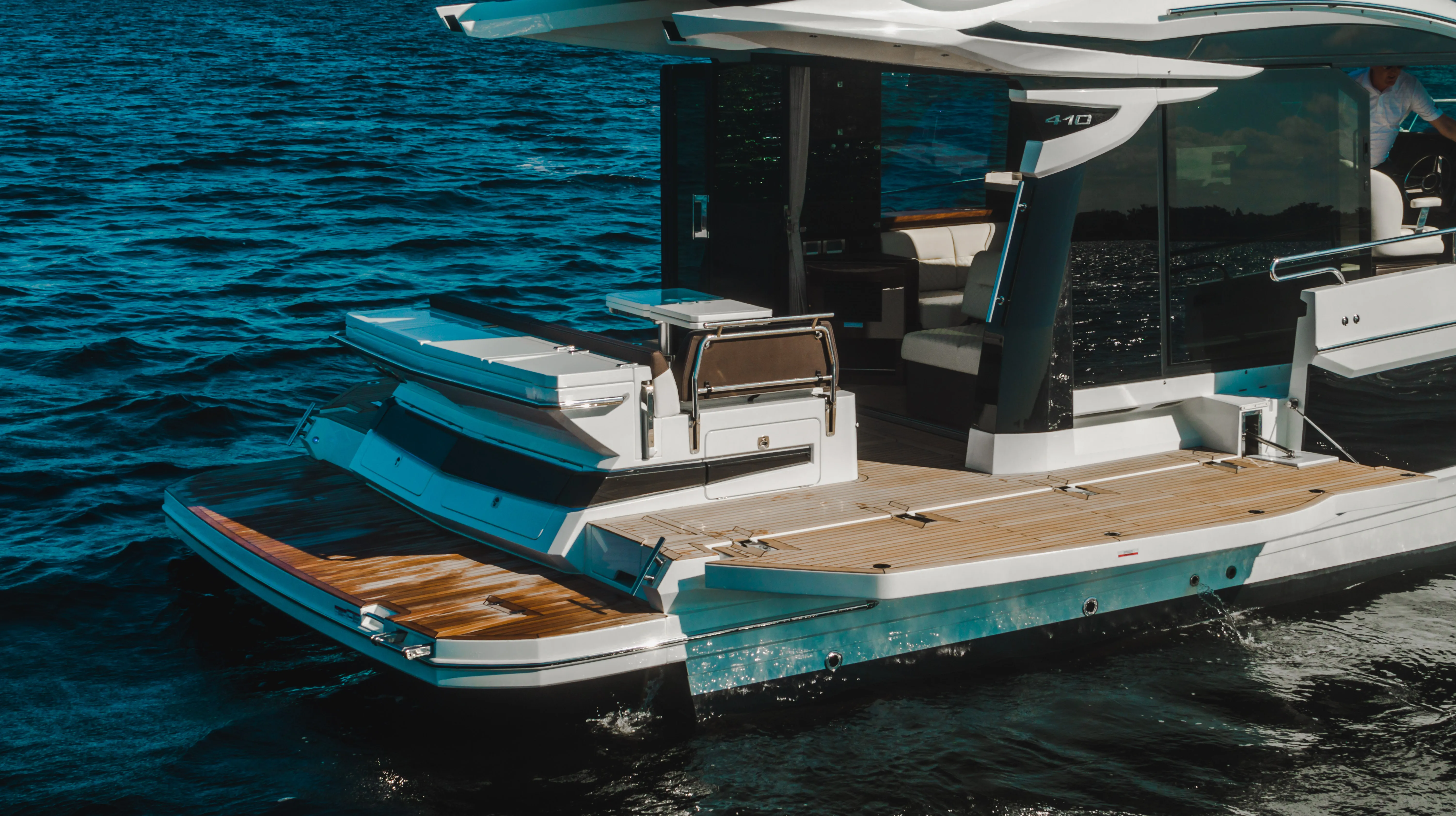
Beach Mode is the headline feature, and on this model the number that goes with it is published: hydraulic fold-down side balconies take the maximum beam from 12' 11" to 21 ft, a terrace sitting just above the waterline. The extended hydraulic aft platform is rated to 882 lbs for a tender or water toys, with an optional transom bar carrying a grill, chopping board, sink and drained cooler.
Draft is 3' 3", and the boat is CE Category B with a crew limit of twelve.
Galeon's published top speed for the 410 HTC is up to 29 knots. Cruise speed and burn are sea-trial numbers: hold the boat at your intended rpm, record what you see, and get it in writing on the engine package you order.
The engine band is 2 x 270 hp minimum and 2 x 440 hp maximum, sold as a power band rather than a named package. A listing that specifies a particular diesel is describing that individual boat's build, not the model specification.
The one knot of top speed over the 400 FLY is the entire performance difference between the two, and both figures are Galeon's own. The yard's stated reason for the hardtop is the lower centre of gravity: less sway, sharper handling, a more confident ride at speed and in changing conditions. That is a handling argument rather than a speed argument, and it is the one worth testing on the sea trial rather than reading about.
Weight and air draft are the figures that will actually shape the decision. Light craft mass is 27,192 lbs with base engines - about 1,210 lbs more than the flybridge version, which is the hardtop structure and its glass. Maximum load is 6,327 lbs on top of that. Bridge clearance is 14' 5" from the waterline at minimum draft and height to transport is 14' 1".
Draft is quoted at 3' 3", and at 2' 11" measured without propellers on the identical hull the 400 FLY uses. Plan to the deeper figure and get the number for your drive package in writing.
Two cabins, two bathrooms, and Galeon offers the main deck two ways: a classic galley-down layout or a galley-up version. Both keep the same accommodation below.
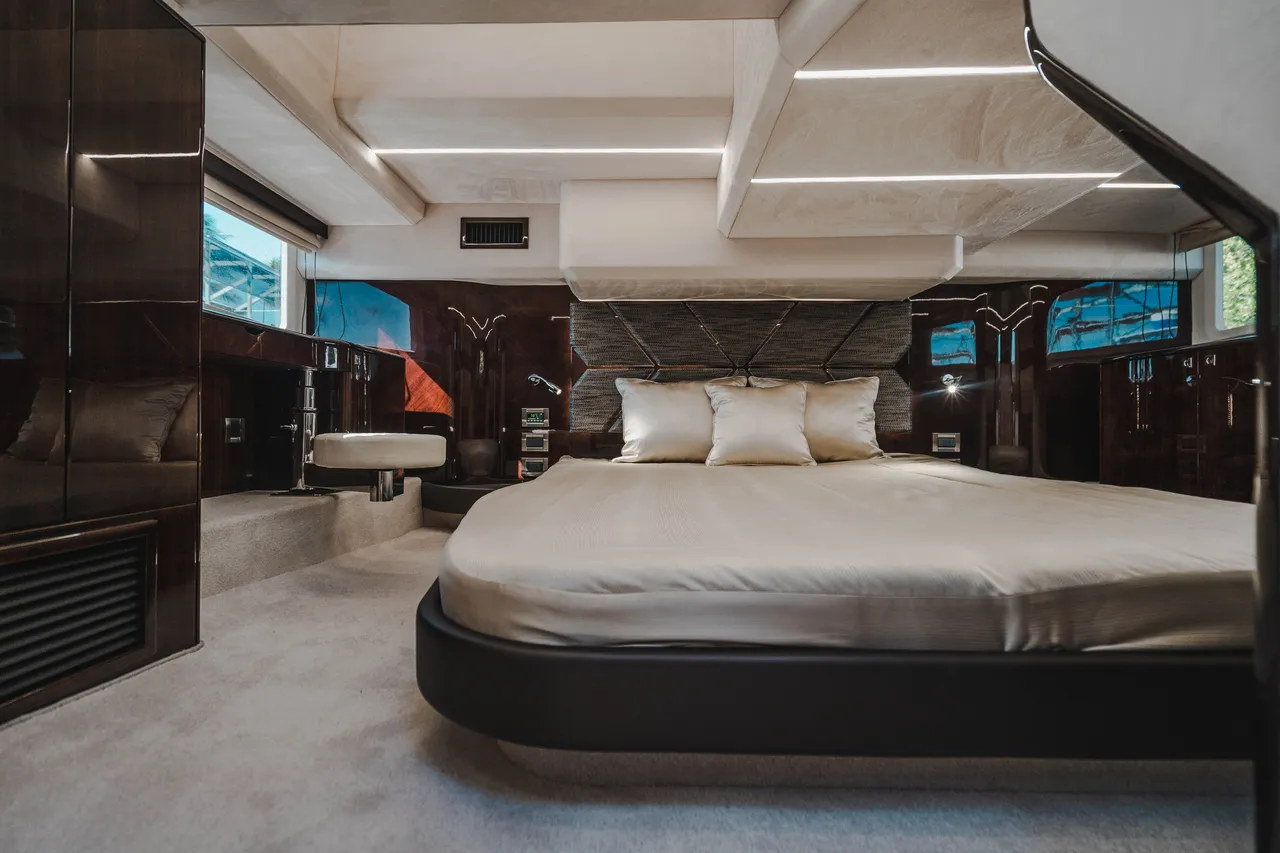
The master is midship and full-beam, lit by hull windows, with a spacious double berth, a vanity station, worked-in storage and a private en-suite. The bow VIP takes twin V-shaped berths that slide together into a double - flexibility that costs nothing when it is designed in from the start. Four people sleep aboard and nobody shares a bathroom.
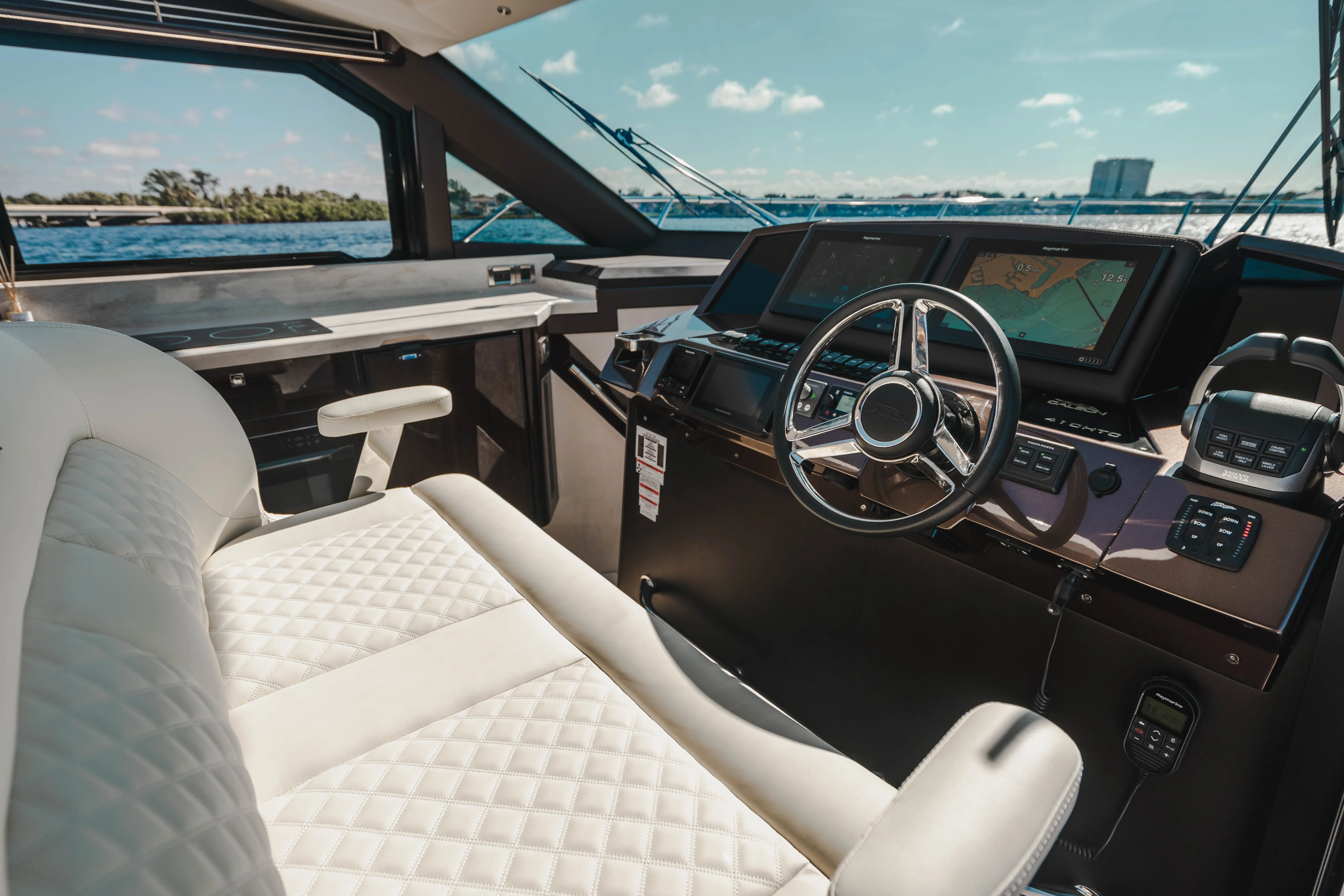
Above, the main deck is open-plan and heavily glazed. A C-shaped dinette and entertainment area with a pop-up TV sits aft, the galley and helm forward, and the galley's upper window slides open for ventilation while you cook. Sliding starboard doors beside the helm mean the driver can step out to take a line. Sliding doors connect the saloon to the cockpit dinette, and a two-way backrest with a pivoting double bench swings the seating between the two spaces. Overhead, the electric sunroof is the piece that makes a fixed hardtop worth having - full shelter from sun and rain when you want it, an open-cockpit feel when you do not.
The cockpit is the day space and Galeon treats it as the primary one. Beach Mode drops the balconies to 21 ft of beam, a fold-out aft seat converts the cockpit into a lounge, and fold-out tables on both levels let you eat wherever the shade is. Fresh water is 118 gallons against a 33-gallon black tank, and the black tank is what sets your pump-out interval, not the shower.
There are two ways to read the 410 HTC and both are correct. It is a 41-foot hardtop sport cruiser, and it is a 400 FLY with the upstairs removed. Galeon does not hide the second reading - it describes the boat as inspired by the award-winning 400 FLY.
That makes the in-brand comparison the one to settle first. Identical hull, identical beam, identical fuel and water, identical engine band. The hardtop is about 1,210 lbs heavier, one knot faster, a foot lower at the bridge, and by the yard's own argument better balanced because there is no upper deck raising the centre of gravity. You give up the second helm station, the flybridge seating and the wet bar. You gain a fixed roof with a retractable sunroof over the helm, a coupe profile, and a boat that should feel sportier under you.
Inside the HTC line the step up is the 450 HTC. Against the wider market, a buyer at 41 feet shopping hardtop sport cruisers is usually choosing between weather protection and open-air feel, and most builders make you pick one. The large retractable sunroof is Galeon's answer to that, and Beach Mode is the argument that this hull entertains better than a coupe normally does - 21 ft of beam with the balconies down is a genuinely different cockpit from 12' 11".
Two practical notes. The galley-down and galley-up layouts are a decision made at the order desk, and they change how the main deck lives more than any option on the sheet. And the extended aft platform's 882 lb rating is the number that decides what tender you can carry - check it against the one you already own before you assume it fits.
The 410 HTC fits the owner who wants the boat to feel like a sports car and still keep the sun off. The fixed hardtop with its large retractable sunroof is the whole proposition: shelter over the helm when the weather turns, open sky when it does not, and no upper deck raising the centre of gravity. Galeon's stated reason for building it this way is handling, and that is a thing to judge on the water rather than on paper.
It fits people who entertain at anchor more than they cruise overnight. Beach Mode opens the beam from 12' 11" to 21 ft, a fold-out aft seat converts the cockpit into a lounge, fold-out tables serve both levels, and the optional transom bar puts a grill, a sink, a chopping board and a drained cooler at the transom. The extended hydraulic platform is rated to 882 lbs for a tender or the toys.
It fits couples, and couples who take guests. Two cabins and two en-suite bathrooms, four berths, a full-beam midship master and a bow VIP whose twin V-berths slide together into a double. There is no third cabin and no bunk option, so if the boat has to sleep six this is the wrong hull.
It is the wrong boat if you want a second station. Removing the flybridge is the point of the model, and if you find yourself wishing for an upper helm the answer on this exact hull is the 400 FLY. And if your home channel is marginal, get the draft for your own drive package in writing before you commit to a slip.
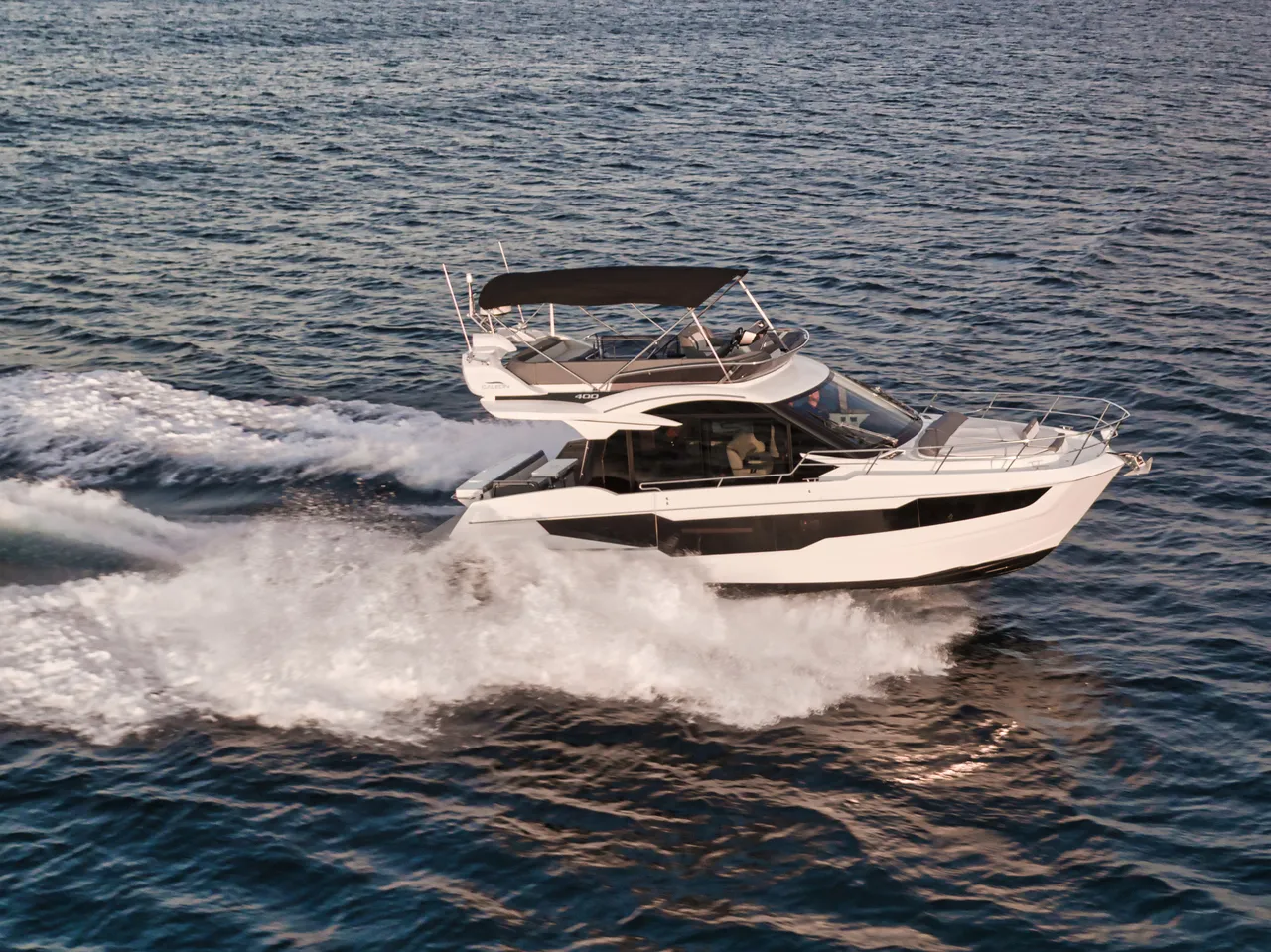
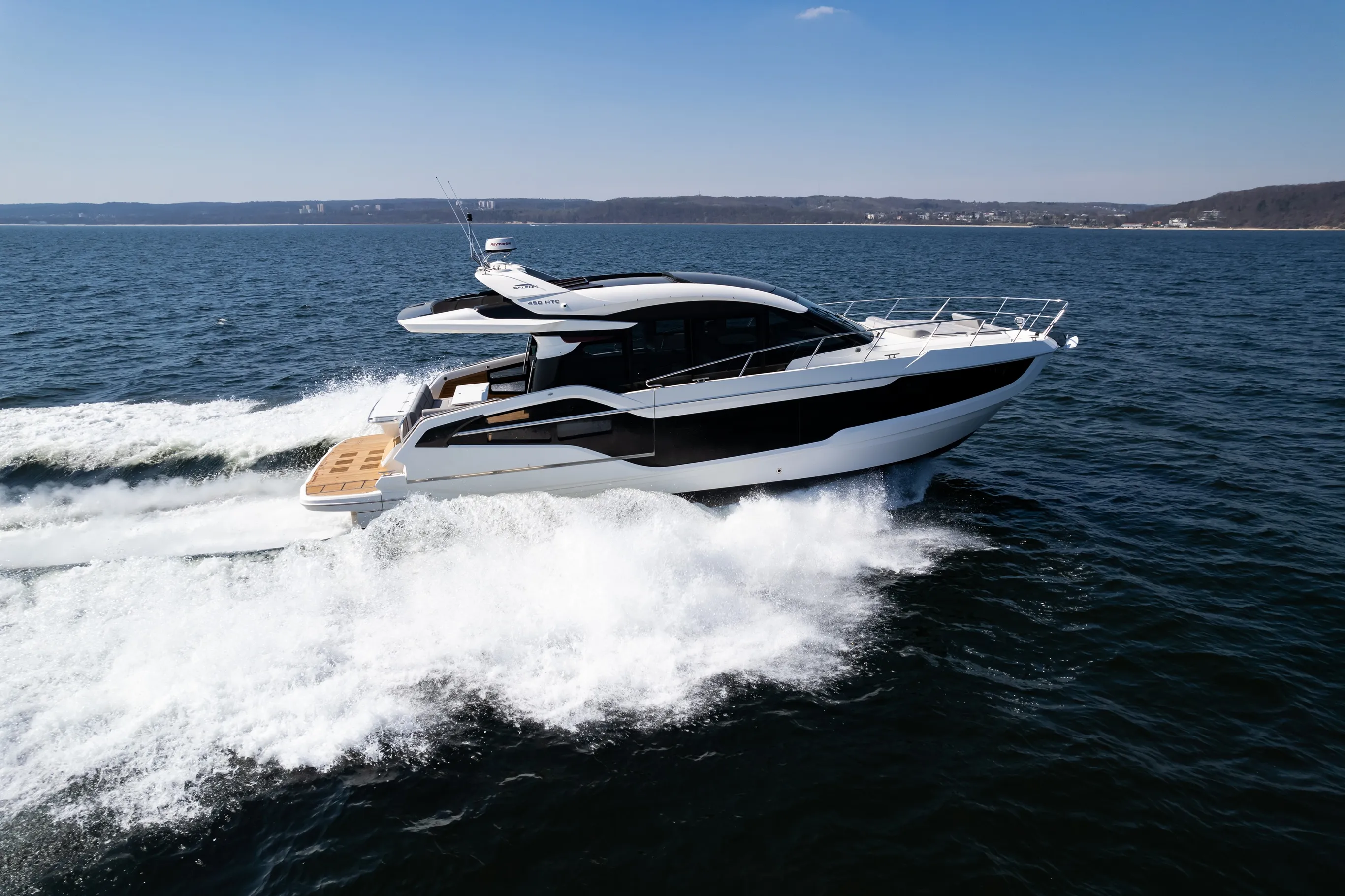
Up to 29 knots, on a maximum engine rating of 2 x 440 hp with a minimum of 2 x 270 hp. Cruise speed and fuel burn are numbers to establish at your own sea trial, at the rpm you would actually run, in writing - that is what turns the roughly 264 US gallons of fuel aboard into a range you can plan on.
Draft is a number to confirm rather than assume, because it is quoted two ways: 3' 3", and 2' 11" measured without propellers. Four inches is not academic if you cruise thin water. Ask for the figure that applies to your engine package in writing, and size a slip off the deeper one. Fresh water is about 118 gallons, and the boat is CE Category B with a crew limit of 12.
A second helm station and an upper living deck - and Galeon's argument for the 410 HTC is that you gain more than you lose. Without a flybridge the yacht's centre of gravity is lower, which Galeon says improves handling, reduces sway and delivers a sportier, more confident ride, particularly for owners cruising at higher speeds or in changing sea conditions. The top speed backs the direction of travel, at up to 29 knots against 28 for the 400 FLY.
The other gain is height. Bridge clearance drops to 14' 5" from the flybridge boat's 15' 5", a foot that decides whether some fixed bridges and some covered storage are available to you at all. Against that, the HTC's main deck has to carry all of the outdoor living: the cockpit is explicitly the primary day area, opened out by the fold-down balconies, with an electric sunroof and a glass roof over the helm doing the work the upper deck would otherwise do. If you entertain at anchor in numbers, the flybridge is the reason to pay for one.
21 ft, from a closed beam of 12' 11" - Galeon's own figure for the 410 HTC with Beach Mode deployed. Check it against the berth you actually keep the boat in before you count on opening the terraces at the dock.
What the extra eight feet of beam buys is the cockpit. The balconies fold down hydraulically into a terrace just above the waterline, with sliding doors linking the saloon and dinette, a two-way backrest that faces either way and a pivoting double bench. Aft, the hydraulic platform is rated to support about 880 lbs, with an optional transom bar carrying a grill, chopping board, sink and drained cooler. Fold-out tables on deck take the al fresco dining.
Below the rail, yes - it is one 40' 11" hull sold in two configurations, and Galeon says as much: the 410 HTC is the hardtop version, inspired by the award-winning 400 FLY, offering a sleek coupe-like silhouette without compromising space or functionality. The two match on length overall, beam, draft, tankage, cabins, en-suites and the 2 x 440 hp engine ceiling. The HTC replaces the flybridge with a large glass roof above the helm and a soft roof over the cockpit.
What changes is what you would expect to change when a deck comes off. The HTC weighs 27,192 lbs against the 400 FLY's 25,982 - about 1,210 lbs more, since the hardtop structure is not simply the flybridge deleted. It sits lower, with bridge clearance of 14' 5" against 15' 5". And it is rated a knot faster, 29 knots against 28. If a listing tells you the HTC is the bigger boat or the roomier one, ask which figure says so, because Galeon's do not.