
August 27, 2026
Galeon 375 GTO: One Hull, Three Transoms, and 48 Knots
Most 38-foot boats make you choose a category before you buy - fisherman or entertainer - and sell you the hull that follows. The Galeon 375…
Read the articleExpert Review, Technical Specifications & Market Analysis
| Feature | Specifications |
|---|---|
| Overall Length | 37' 9" |
| Beam | 12' 4" |
| Draft | 2' 6" |
| Displacement | 20,820 lbs |
| Engines | 2 x Outboard 600 hp; 3 x 400 hp optional |
| Fuel Capacity | 396 gal |
| Water Capacity | 57 gal |
| Cabins / Heads | 2 Cabins / 1 Head |
| Max Speed | 48 knots |
Source: Spec & Photos courtesy of Galeon. Specs verified by Tony Smith, USCG 100 Ton Master, on August 26, 2026.
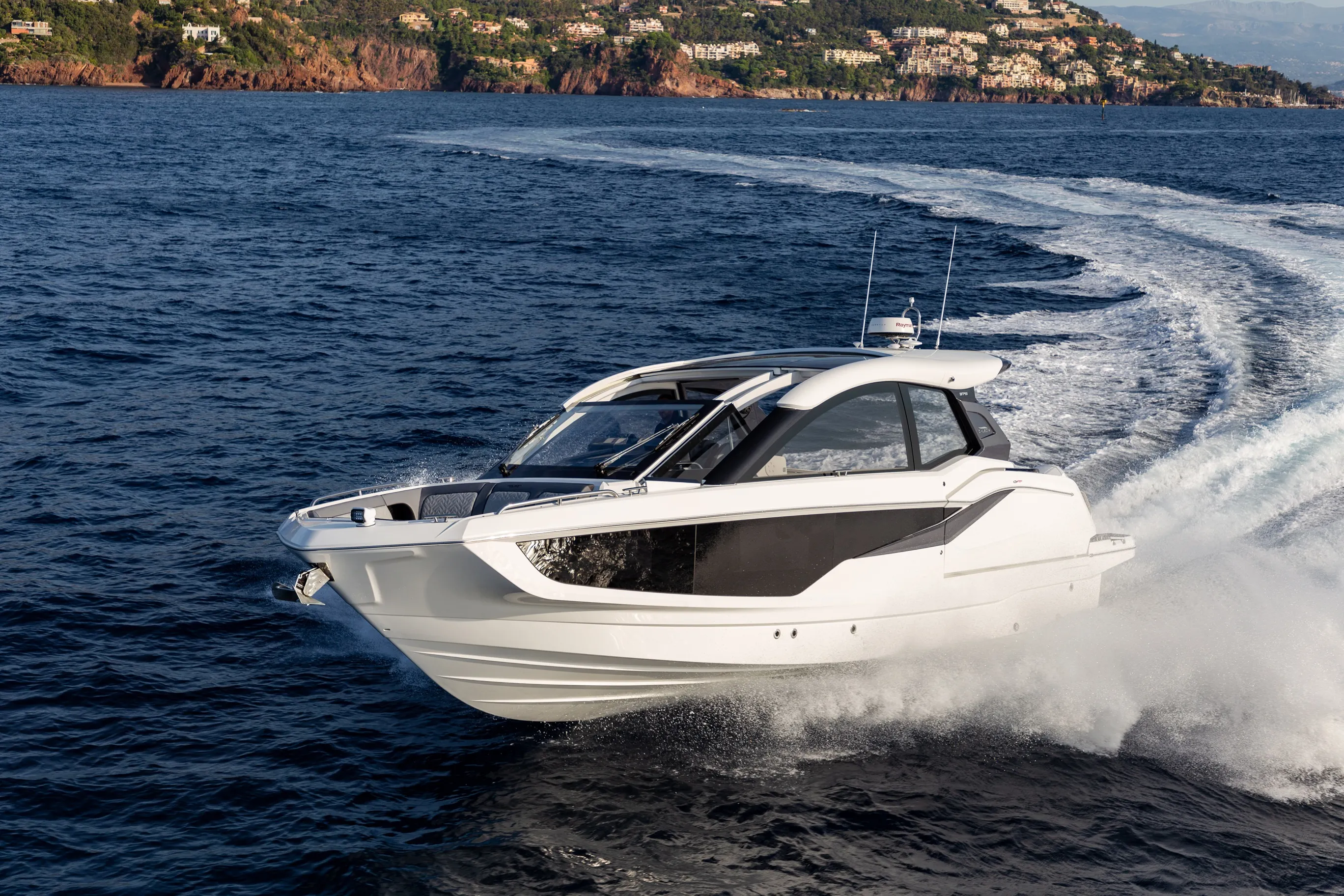
Up to 48 knots, a flush walkaround deck, and a transom you specify three ways - leisure, bench, or a fishing edition with livewells and rod holders.
Part of the Galeon GTO series — see how owners step up through the lineup.

Most 38-foot boats make you pick a side. You are a fisherman or you are an entertainer, and the builder sells you the hull that follows from your answer. The 375 GTO is one of the few boats at this length that lets you have that argument on the order form instead of in the showroom. Three transoms - leisure, bench, or a fishing edition with livewells and rod holders - on the same hull, with the same helm and the same cabins. That is smarter product planning than the numbers alone suggest, and it is why I put this boat in front of clients who keep changing their minds about what kind of boater they are.
Forty-eight knots is the other headline, and I want to be careful about how I sell it. It is a real number on a 20,820 lb hull with a carbon fibre roof, and it will genuinely reshape a weekend - places that were a trip become an afternoon. But get the burn at your intended cruise rpm, in writing, at the sea trial before you turn 396 gallons of fuel into a distance. I will not let a client plan a route off a top speed.
The thing I would spend the most time on is the smallest line on the order sheet. That space in the saloon can be a compact galley or it can be storage, and you get one shot at it. If your boating is day trips with gear, take the storage and let the wet galley in the cockpit do the food. If you actually cook aboard on a long weekend, take the galley and accept the lost stowage. There is no right answer, and there is no changing it in three years when you have worked out which one you are.
Video courtesy of Galeon.
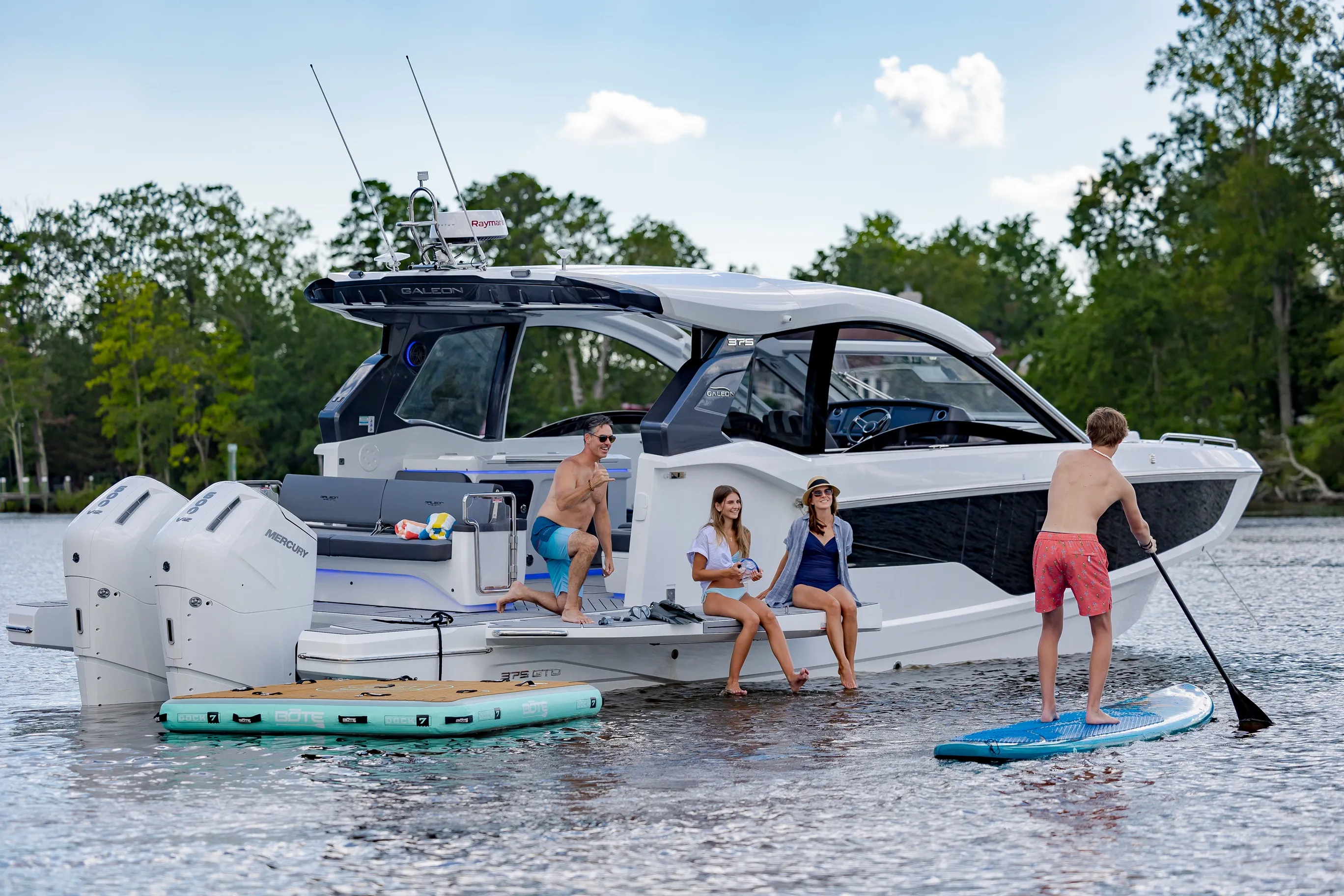
Photos courtesy of Galeon.
The Galeon 375 GTO is a 37' 9" outboard sport cruiser built around a decision most builders make for you: what the back of the boat is for. Three transom configurations are offered on the same hull - a leisure arrangement, a bench, and a fishing edition with livewells and rod holders - so the boat leaves the yard as an entertaining platform or a fishing platform depending on one line on the order form.
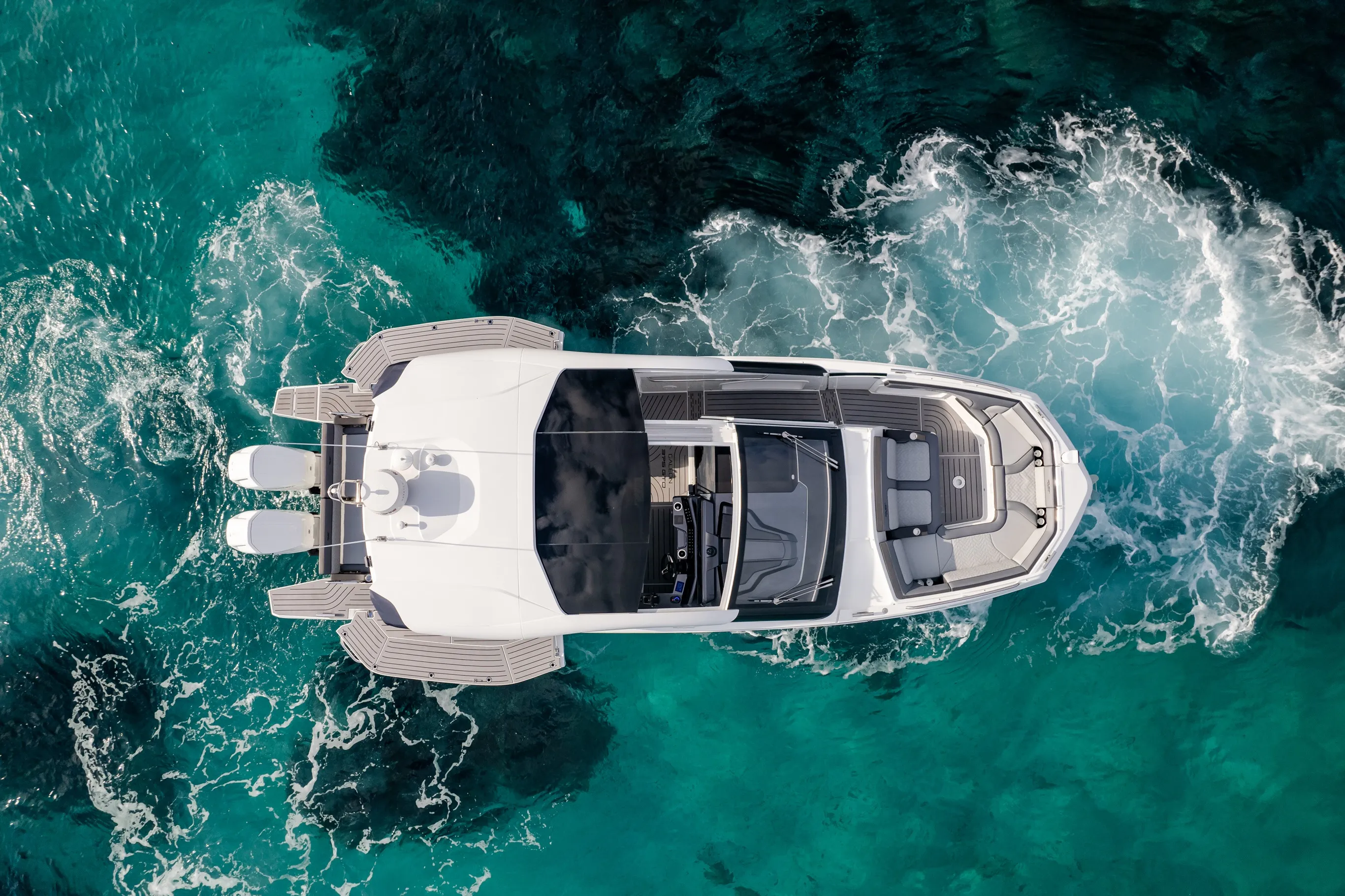
Above the helm sits a dual-panel retractable sunroof, and the side windows open fully, so the wheelhouse goes from enclosed to open without moving anything else. The deck is a flush walkaround, which matters more than it sounds: you can get from the cockpit to the bow along either side without stepping over a coaming, carrying a line, in the dark. The bow lounge has neck support and converts to a sunpad. The cockpit lounge has reversible backrests. Fold-out balconies open the beam from 12' 4" to 17' 9" at anchor.
The numbers: 396 US gallons of fuel, 57 gallons of fresh water, 20,820 lbs unladen, 12 people rated. Power is twin outboards to a maximum of 600 hp each, with a triple 400 hp arrangement on the options list. Top speed is up to 48 knots. Draft is 2' 6" with the engines trimmed up and 3' 7" with them down. The hardtop is carbon fibre - the heaviest structure on the boat, sitting where weight hurts most, built out of the lightest material available.
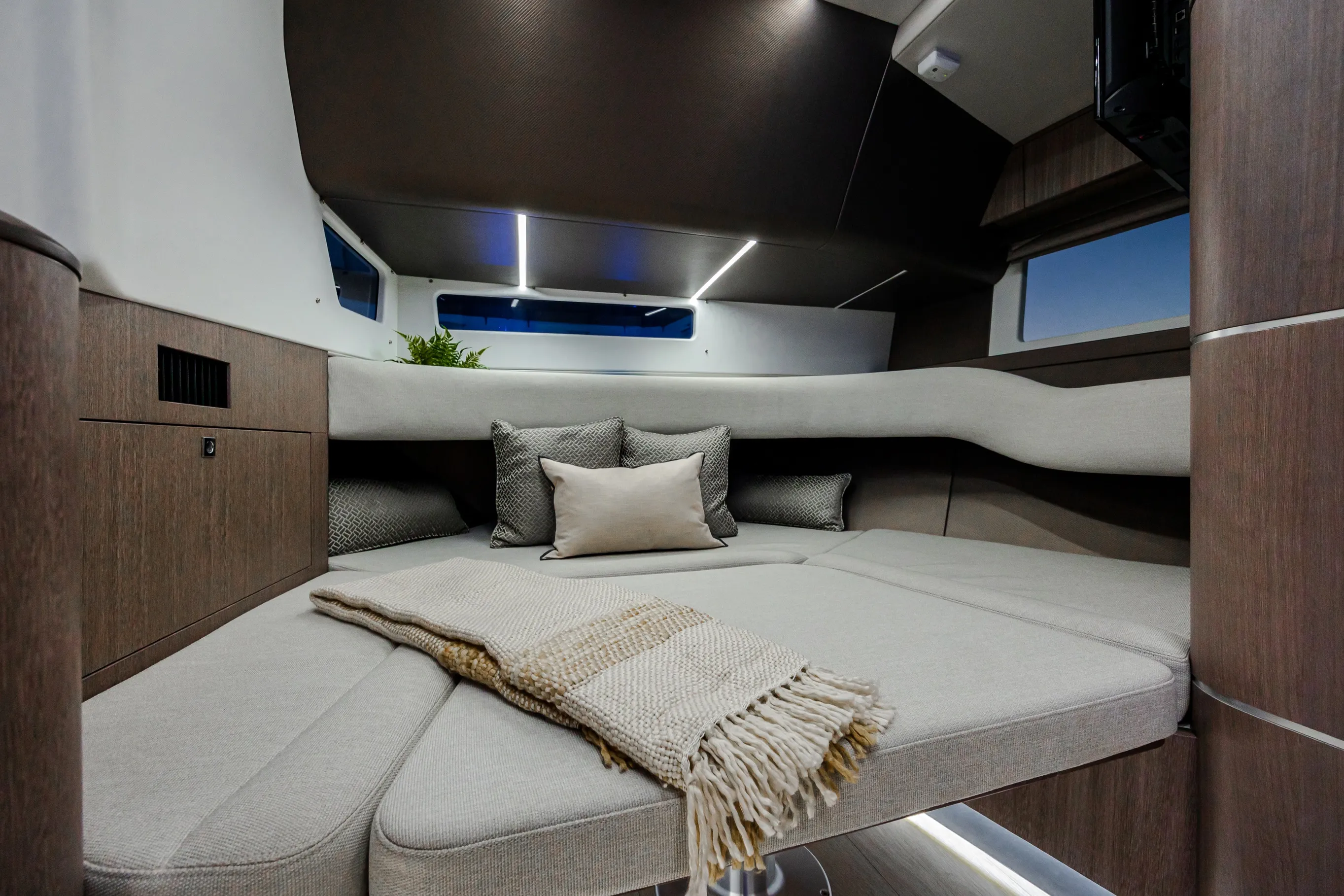
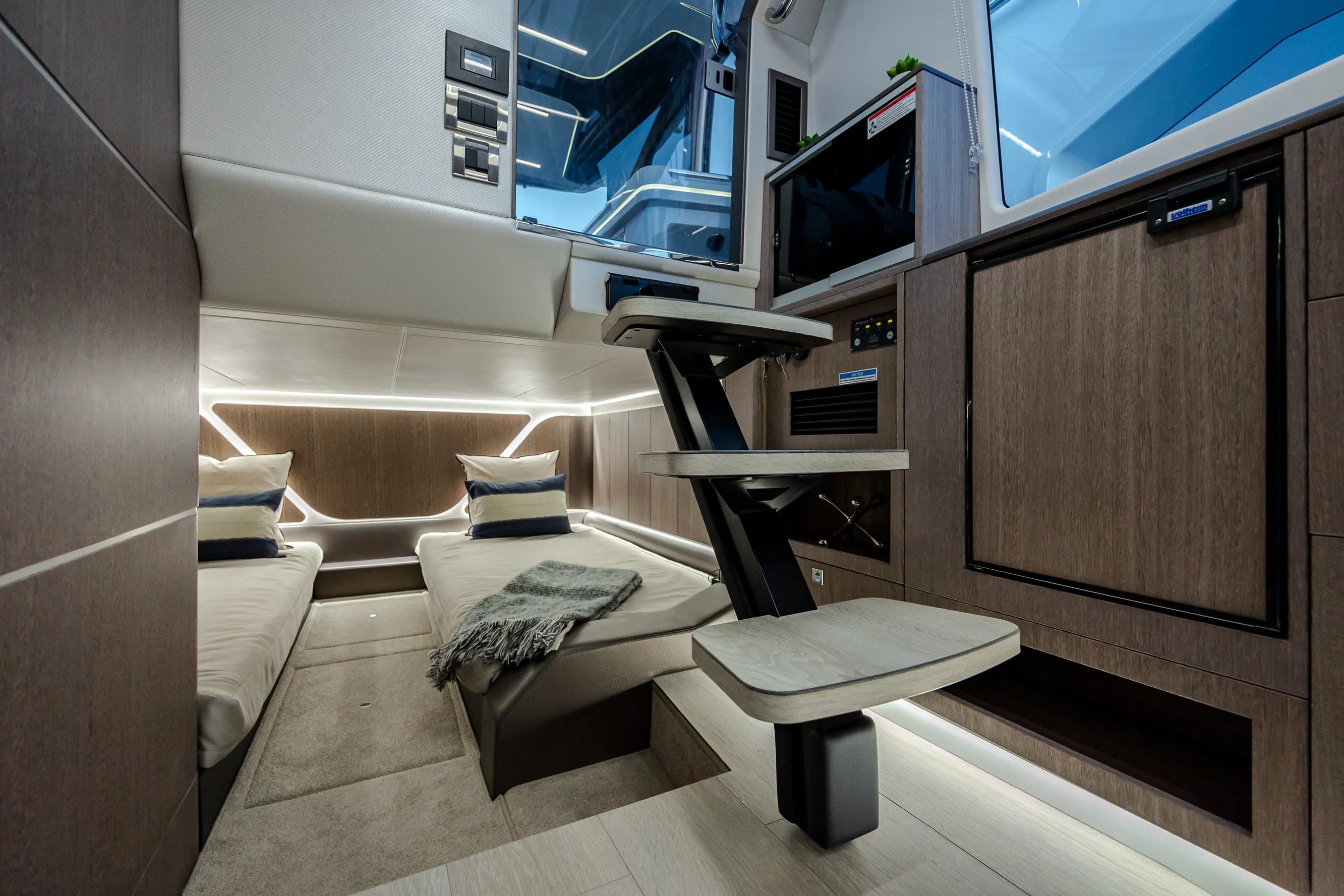
Below deck the 375 sleeps four in two spaces: a convertible bow settee and a private midship cabin with two single berths and a walkway between them. The head has a standing-height shower. Interior finishes run to walnut, walnut high gloss, oak and cherry.
Up to 48 knots. Twin outboards at up to 600 hp each is the standard route; a triple 400 hp arrangement is on the options list. The number you actually plan a passage around is the one you generate yourself: ask for observed speed and fuel burn at your cruise rpm during the sea trial, in writing.
Forty-eight knots on a 37' 9" hull is a serious figure and it is worth being clear about where it comes from. The boat is 20,820 lbs unladen, which is light for the length and the volume, and the carbon fibre hardtop is a deliberate part of that: it is the one large structure sitting high above the waterline, and it is built out of the lightest material available rather than laminate. Outboards do the rest of the work, hanging the mass off the transom instead of burying it amidships.
Draft moves with the engines - 2' 6" trimmed up, 3' 7" trimmed down. That thirteen-inch swing is the pair of figures to check against your home channel at low water, and the deeper one is what you idle on.
Fuel is 396 US gallons, a large tank for 37 feet and the reason this hull gets cross-shopped against boats five feet longer. What that buys you in range depends entirely on the burn figure you take away from the sea trial, so do not let anyone do the arithmetic for you from a top speed.
At the helm: a two-tone dash with triple touchscreens, electric steering, twin sport seats, joystick docking, and digital anchoring that holds the boat on its engines without ground tackle. That last one changes how a boat this fast is used at a sandbar or a fuel dock, and it is worth trying yourself rather than watching.
Four berths in two separate spaces, and the midship cabin is the one to look at. It takes two single beds with a wide central walkway between them - not a double stuffed under the cockpit sole, but a room you can stand up between the beds in. For guests, for children, or for a couple who sleep better apart, that is a better answer than a bigger berth in a smaller volume.
Forward, the bow settee converts to a double. The head has a standing-height shower along with a toilet, a sink and a window, which on a 37-footer is the difference between a shower you use and a shower you avoid.
There is one decision in the saloon that gets made at the order desk and cannot be reversed later: the space can be specified as a compact galley with appliances and smart storage, or as a dedicated storage area. Galley if you cook aboard on longer trips; storage if you are running day trips with gear, or if the wet galley in the cockpit is already handling the food. It changes how the boat lives more than any other option on the sheet.
Above, the main deck is glass and air. The dual-panel sunroof retracts over the helm, the side windows open fully, and oversized hull windows with ambient lighting keep the lower deck from feeling like a cave. Finishes run to walnut, walnut high gloss, oak and cherry.
Fresh water is 57 gallons. That is a comfortable weekend for four rather than a week, and it is the figure to plan nights around.
Inside Galeon's outboard class the 375 GTO sits between the 335 GTO and the 435 GTO, and the three are not scaled versions of one another. The 335 is a two-cabin weekender with 225 gallons of fuel and 36 knots. The 375 adds twelve knots, 171 gallons of fuel and a walkaround deck. The 435 goes to three outboards, 51 knots, 528 gallons and a full-beam master. Each step buys speed and range roughly in proportion to length, which makes the choice a genuine question about how you use a boat rather than how much boat you can carry.
Against the wider market, the 375's distinguishing feature is that it does not commit. Builders at 38 feet generally ask you to pick a category first - centre console for fishing, sport cruiser for entertaining - and then sell you the boat that follows from your answer. The 375 sells one hull with three transoms, and the fishing edition with livewells and rod holders is a real specification rather than a rod holder bolted onto a leisure boat. If you fish twenty days a year and entertain the other forty, that is a different proposition.
The trade is below deck. Two singles amidships and a convertible settee forward is four berths, not four cabins, and there is one head. A dedicated cruiser of this length will beat it on accommodation, and the 375 is not trying to win that comparison.
Two things to settle before you sign. The transom configuration is a build decision, not a refit. So is the galley-or-storage choice in the saloon. Both are cheap to think about now and expensive to change later.
The 375 GTO fits the owner whose weekends do not all look the same. Fishing on Saturday morning and eight people aboard on Sunday afternoon is the use this hull is built for, and the transom is where it happens: a fishing edition with livewells and rod holders, a bench, or a leisure arrangement, chosen once at order. The flush walkaround deck serves both - it is how you work a fish forward and how you take a line at a dock without climbing over anything.
It fits people who want speed to be real. Up to 48 knots on a 20,820 lb hull under a carbon fibre hardtop is not a number you will use twice; it changes what counts as a day trip and what counts as a weekend.
It fits four people in two spaces. Two singles with a walkway between them amidships, a convertible settee forward, and a head with a standing-height shower. Fresh water is 57 gallons - a good weekend, not a week.
It fits an owner who wants the wheelhouse to open. The dual-panel sunroof retracts over the helm and the side windows open fully, so the same boat is sheltered in a squall and open at anchor.
It is the wrong boat if you need three cabins or a second head. The accommodation is four berths in two spaces, and that is the whole of it.
And it is the wrong boat if the transom decision is one you would rather defer. It is made once, on the order form, and it defines the back half of the boat for as long as you own it.
It depends on whether you genuinely cook aboard, and it is worth taking seriously because you get one shot at it - the space in the saloon is specified either as a compact galley with appliances and smart storage or as a dedicated storage area, and it is not a change anyone makes later.
Take the galley if your boating includes long weekends where meals happen on board rather than ashore, and where somebody wants to be out of the weather while making them. Take the storage if you run day trips with gear - fishing tackle, water toys, wet kit - and the wet galley in the cockpit is already handling drinks and lunch. The second case is more common than buyers expect, especially on a boat ordered with the fishing transom, and stowage on a 37-footer with this much deck is genuinely scarce. Decide which owner you are before the boat is laid up, not after.
Four, in two separate spaces. The midship cabin takes two single beds with a wide central walkway between them - a room you can stand up in rather than a double wedged under the cockpit sole - and the bow settee converts to a double. There is one head, with a standing-height shower, a toilet, a sink and a window.
Twelve is the rated day capacity, which is where the deck layout matters more than the berths: reversible cockpit backrests, a bow lounge with neck support that converts to a sunpad, and fold-out balconies that take the beam from 12' 4" to 17' 9" at anchor. The limit on overnights is fresh water at 57 gallons - a comfortable weekend for four rather than a week. If you need three cabins or a second head, this is not the hull; the accommodation is four berths in two rooms and that is the whole of it.
A leisure arrangement, a bench, and a fishing edition with livewells and rod holders. All three are built on the same 37' 9" hull with the same helm, the same deck and the same two cabins below - what changes is the back half of the boat, and it is chosen once on the order form rather than added later.
The fishing edition is a genuine specification rather than a rod holder bolted onto a leisure boat: livewells and rod holders with lockers to match, integrated into the transom. That is the feature that lets one boat cover a Saturday morning of fishing and a Sunday afternoon with eight people aboard, and it is unusual at this length - most builders at 38 feet ask you to choose a category first and then sell you the hull that follows. The honest way to decide is arithmetic: count the days you expect to fish against the days you expect to entertain, and order the transom that matches the larger number.
Up to 48 knots, on twin outboards rated to a maximum of 600 hp each with a triple 400 hp arrangement on the options list. That is a serious figure for a 37' 9" hull and it comes from weight: 20,820 lbs unladen, helped by a hardtop built out of carbon fibre rather than laminate - the heaviest large structure on board, sitting where weight hurts most.
Draft is a pair of numbers rather than one. 2' 6" with the engines trimmed up, 3' 7" with them down, and the deeper figure is the one you will be idling a channel on at low water. Ask for observed speed and fuel burn at your intended cruise rpm during the sea trial, in writing, and do the arithmetic yourself - that figure is what turns 396 US gallons of fuel into a range.