
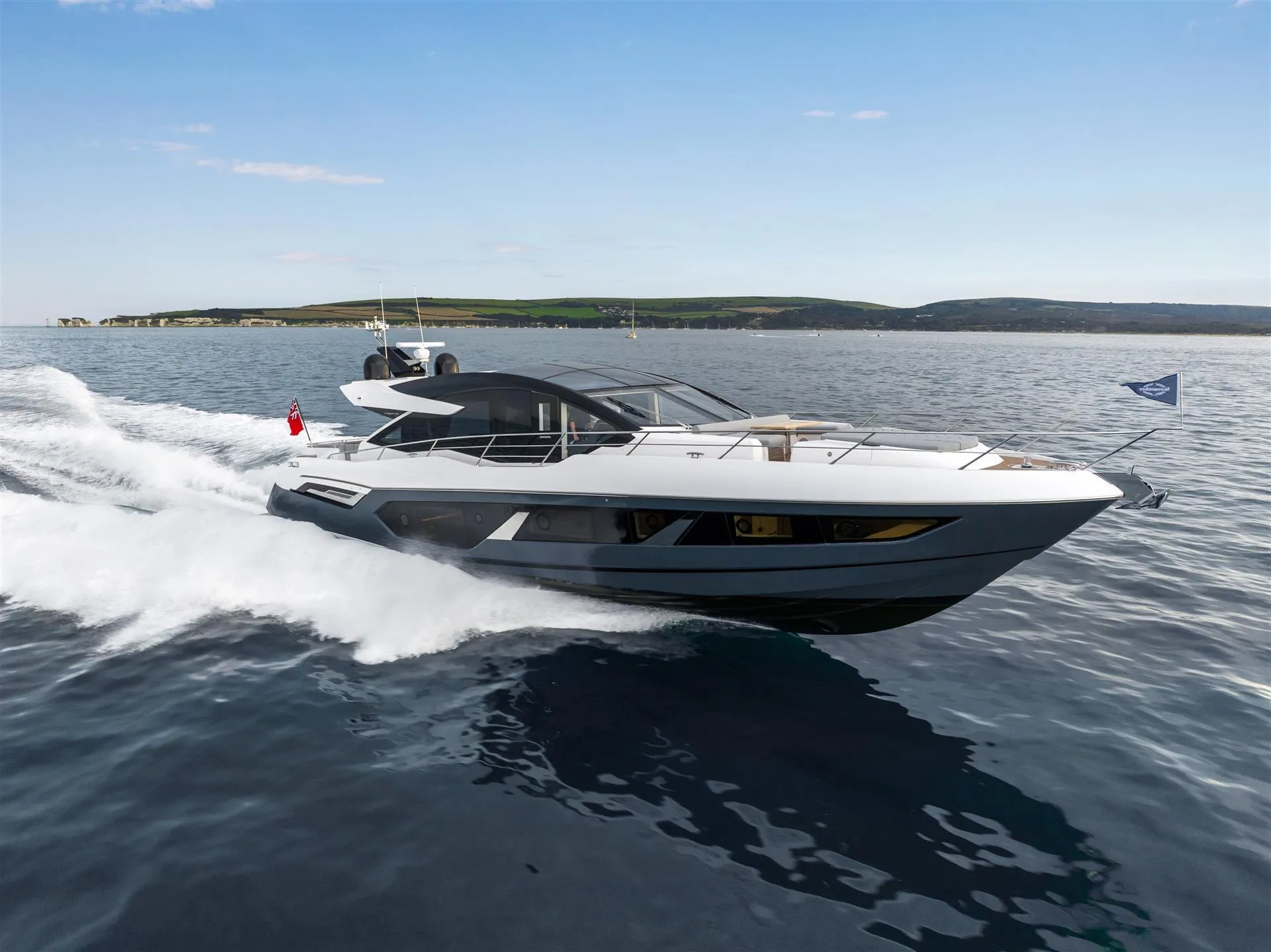
August 28, 2026
Sunseeker Predator 75: 40 Knots, One Helm, and a Cockpit That Disappears
Out of nineteen current Sunseeker models, exactly two are published at 40 knots, and they are built on the same hull. The Predator 75 and th…
Read the articleExpert Review, Technical Specifications & Market Analysis
| Feature | Specifications |
|---|---|
| Overall Length | 75' 8" |
| Beam | 17' 8" |
| Draft | 6' 2" |
| Displacement | 103,396 lbs |
| Engines | Twin MAN V12-1550 (2 x 1,550 HP) |
| Fuel Capacity | 1,268 gal |
| Water Capacity | 211 gal |
| Cabins / Heads | 3-4 Cabins / 3 Heads + Crew |
| Max Speed | 40 knots |
Source: Spec & Photos courtesy of Sunseeker. Specs verified by Tony Smith, USCG 100 Ton Master, on August 27, 2026.
At 40 knots the Predator 75 and its Sport Yacht twin are the fastest boats Sunseeker builds - out of nineteen current models, nothing else comes close. The Predator is the one that keeps it to a single helm on the main deck, under a carbon sunroof.
Part of the Sunseeker Predator series — see how owners step up through the lineup.

Two things about this boat are worth saying before anything else. First, 40 knots. Across Sunseeker's nineteen current models, only the Predator 75 and the 75 Sport Yacht are published at that number - the next fastest thing in the range is the Superhawk 55 at 38, and the flagships are down in the twenties. This is the fast end of the catalogue. Second, the Predator 75 and the 75 Sport Yacht are the same platform: 75' 8" overall, 17' 8" beam, 6' 2" draft, 103,396 lbs at half load, twin MAN V12-1550 on shafts, 1,268 gallons of fuel, 211 of water, three cabins with a fourth optional across three en-suites plus crew. Every published number matches.
So what is the actual difference? It is not the enclosure and it is not the finish, whatever the names suggest. It is the deck plan. The 75 Sport Yacht has a traditional second helm on a flybridge reached by a stairway, with companion seating and a chaise-longue sunpad up there, plus a foredeck seating area with a table for six. The Predator 75 has none of that. It runs from one helm forward of the main-deck sofa, under an oversized polished carbon fibre sunroof that opens over the helm, with the cockpit door sliding to starboard and the door and window then descending beneath the seating so the cockpit and saloon become one room. That is a genuinely different boat to own even though the specification sheet is identical.
Which one you want comes down to whether you will use an upper deck. If you cruise somewhere hot and you like being outside and above the water, the Sport Yacht is the sensible answer and I would not talk you out of it. If you want a lower, cleaner profile and you would rather have one properly resolved helm than two, the Predator is the honest choice - and there is nothing lost on speed, weight or accommodation by taking it. On either boat, use the trial for two things: find out which of the two MAN V12 packages is under the demonstrator before you form a view about the top end, and get observed burn at your intended cruising rpm in writing.
Video courtesy of Sunseeker.
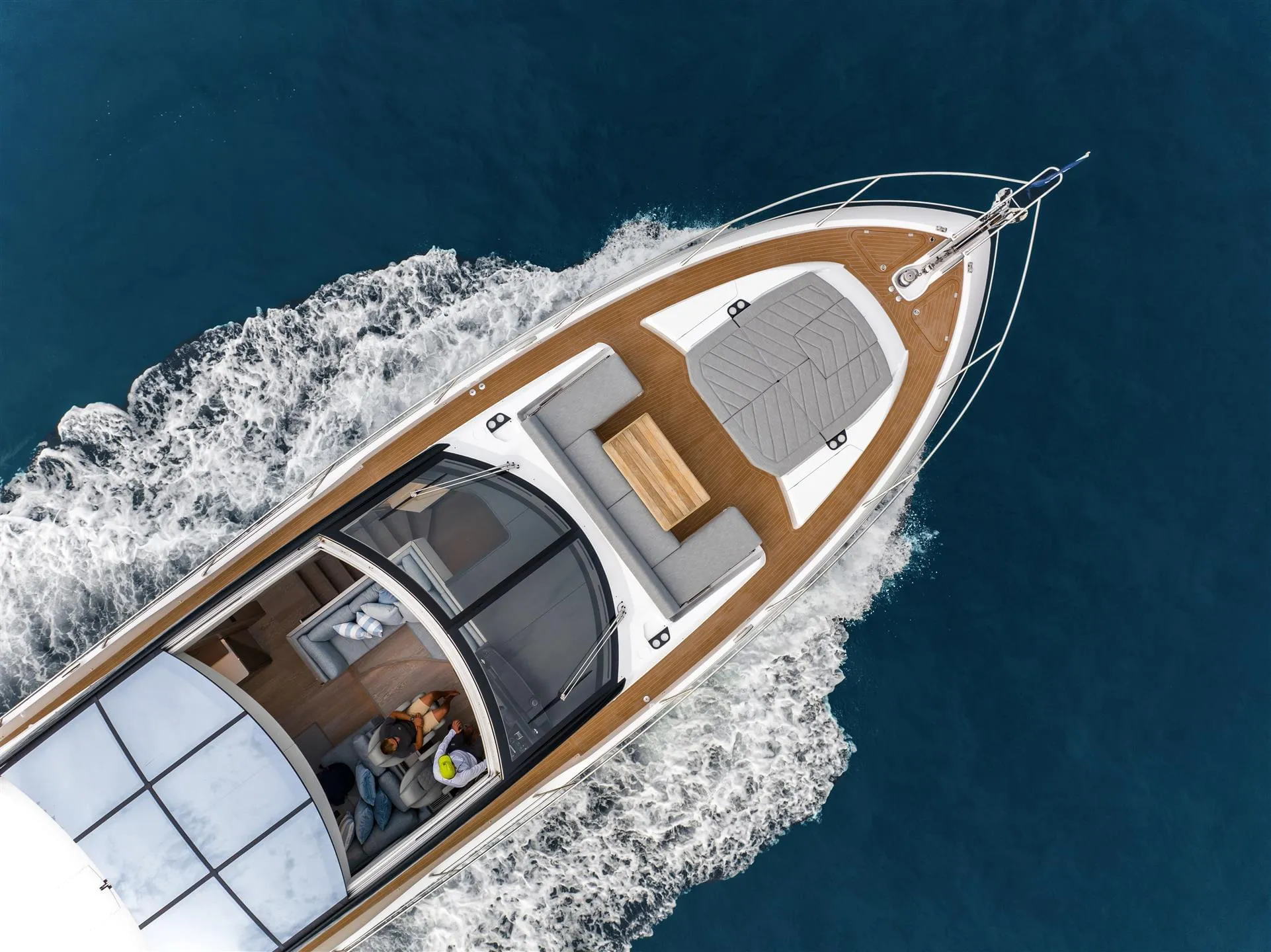
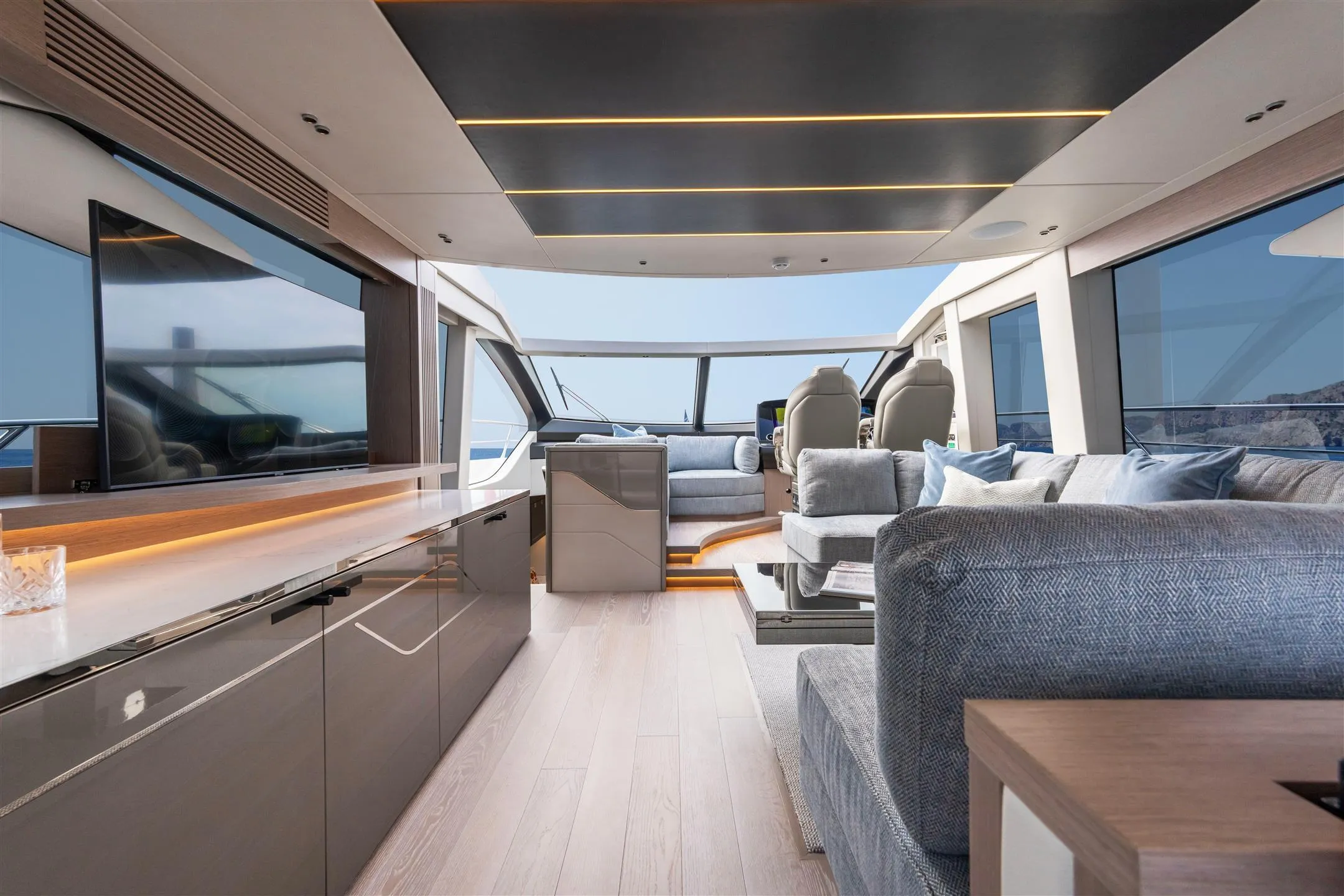
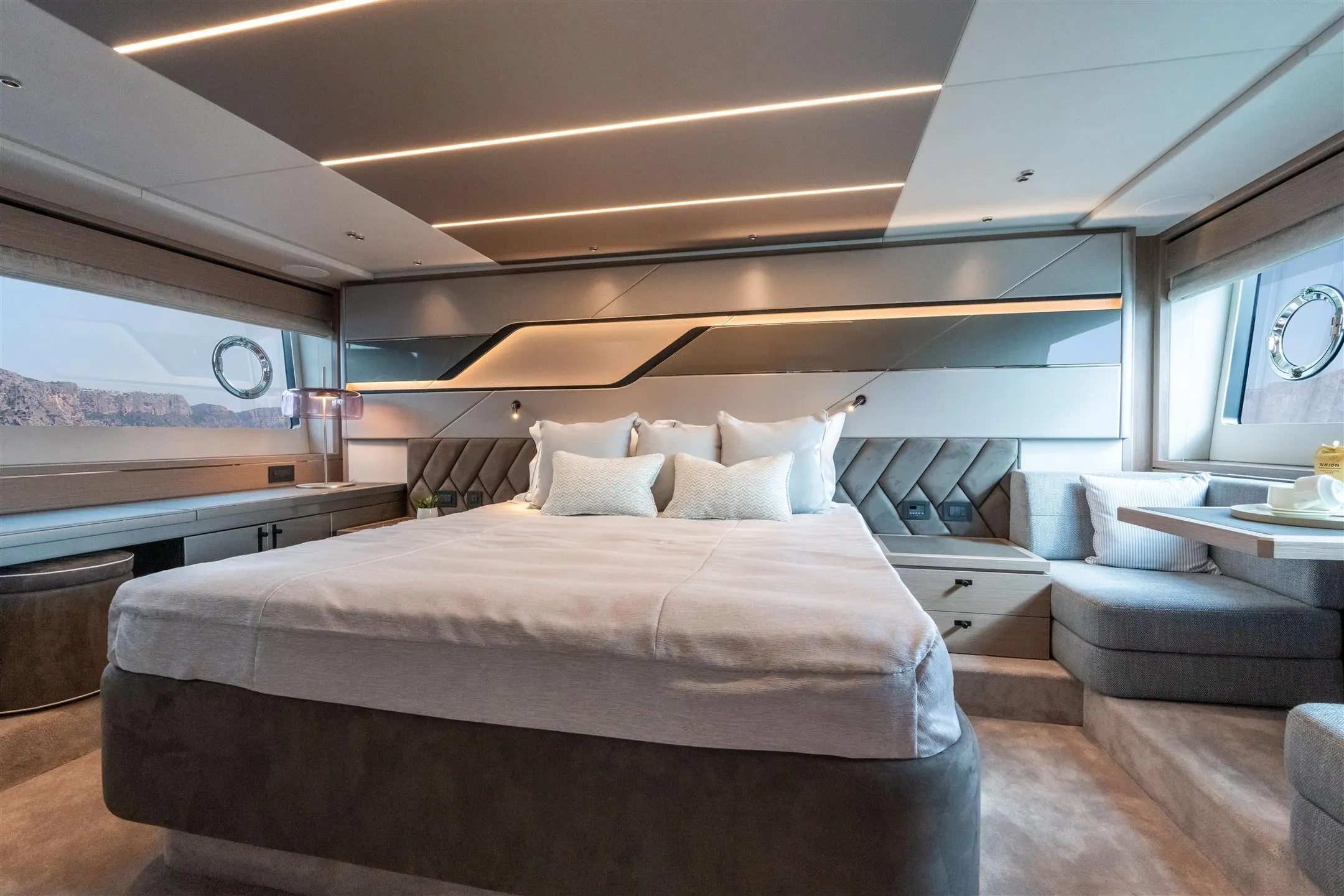
Photos courtesy of Sunseeker.
The Sunseeker Predator 75 is 75' 8" overall on a 17' 8" beam, drawing 6' 2" at full load and displacing 103,396 lbs at half load. Power is twin MAN V12-1550 at 2 x 1,550 HP driving shafts rather than pods, and top speed is up to 40 knots. Fuel is 1,268 US gallons, fresh water 211.
Unlike the smaller Predators, this is a shaft-drive boat, and unlike its Sport Yacht sibling it runs from a single helm on the main deck. The helm sits forward of the sofa with companion seating alongside to port, and above it is an oversized polished carbon fibre sunroof that opens to flood the main deck with light. There is no flybridge and no second station.
Sunseeker's exterior work on this generation is specific. The hull and superstructure glazing are described as new and angular, with stainless steel air intake cowlings and exterior handrails, new exterior upholstery and moulding options, and a choice of four grey hull colours.
The aft cockpit carries a classic arrangement: U-shaped seating with a rise-and-fall carbon fibre table, and an aft sunpad with a large storage compartment concealed beneath it. The connection between cockpit and saloon is the detail worth noticing - the cockpit door slides to starboard, and then the door and window descend beneath the seating so the two spaces become one.
Below deck the arrangement accommodates up to eight guests and two crew. The full-beam master has a dressing table with storage, a chaise longue and additional wardrobe space. All three guest suites have en-suites, with a shared day head reached from the lower hallway. There is a fully fitted lower galley and dining space. Cabins are listed as 3 with 4 optional, en-suites and day head as 3, plus crew.
Up to 40 knots is the published maximum, and in the context of Sunseeker's current nineteen-model range that is the headline. Only this boat and the 75 Sport Yacht - which is the same platform - reach it. Nothing else Sunseeker builds today is published above 38.
The drivetrain is worth understanding. This is a shaft-drive boat, not a pod boat: the smaller Predators run Volvo Penta IPS on pods, and at 75 feet Sunseeker goes back to shafts. The standard fit is twin MAN V12-1550 at 2 x 1,550 HP, and Sunseeker offers a second V12 package on this hull. Establish which one is fitted to any boat you drive, and do not assume a demonstrator represents the specification you would order.
Your cruising numbers come off the boat itself. On sea trial, run it at the rpm you actually intend to cruise at, get observed burn at that rpm in writing, and work your own arithmetic against 1,268 gallons.
Draft is 6' 2" at full load - a foot more than the 65s, and a number to check against your home berth and your usual anchorages before anything else. Displacement is 103,396 lbs at half load, so get a rigged, loaded weight for your own hull before you book a lift.
One handling note: shafts and no joystick pods means docking is a conventional skill again at 75 feet. Test that honestly on the day, and think about whether you want a captain.
The main deck is where the Predator 75 makes its case, and the case is that one big room is better than two smaller ones.
Interior styling is deliberately bold: contemporary furniture in wood, carbon fibre and stainless steel, lit by dimmable mood lighting. The standard arrangement puts wraparound seating and a large television unit on the main deck, with the helm station forward of the sofa and companion seating alongside to port. Above the helm is an oversized polished carbon fibre sunroof, which opens the space to the sky - Sunseeker's own point is that it floods the living area with light, and on a boat with no flybridge that overhead is doing real work.
Aft, the cockpit runs U-shaped seating around a rise-and-fall carbon fibre table, with an aft sunpad over a large concealed storage compartment. The link between the two is the good bit: the cockpit door slides to starboard, and then both the door and the window descend beneath the seating. Open, there is no threshold and no frame - the saloon and cockpit read as a single deck.
Below, the arrangement takes up to eight guests and two crew. The full-beam master has a dressing table fitted with storage, a chaise longue and generous additional wardrobe space. All three guest suites have their own en-suites, and a shared day head is reached from the lower hallway rather than through a cabin. There is a fully fitted lower galley with a dining space beside it, which turns the lower deck into a second social zone for smaller groups rather than purely into sleeping accommodation.
Sunseeker describes the space configuration as fully customisable. As always, that means it is decided at order rather than later.
The comparison that matters most is in-house and it is unusually clean. The Predator 75 and the 75 Sport Yacht share one platform: 75' 8" overall, 17' 8" beam, 6' 2" draft, 103,396 lbs at half load, twin MAN V12-1550 on shafts, 1,268 gallons of fuel, 211 of water, three cabins with a fourth optional, three en-suites plus crew, up to 40 knots. Every published figure matches.
The difference is the deck plan, and it is not what the names imply. The 75 Sport Yacht adds a traditional second helm on a flybridge reached by a stairway, with companion seating and a chaise-longue sunpad, and a foredeck seating area with a table for six. The Predator 75 has neither, and instead resolves everything into one main-deck helm under an oversized carbon fibre sunroof, with a lower, cleaner profile for it. If someone tells you the Predator is the open one and the Sport Yacht is the enclosed one, they have it backwards - the Sport Yacht is the one with the extra deck.
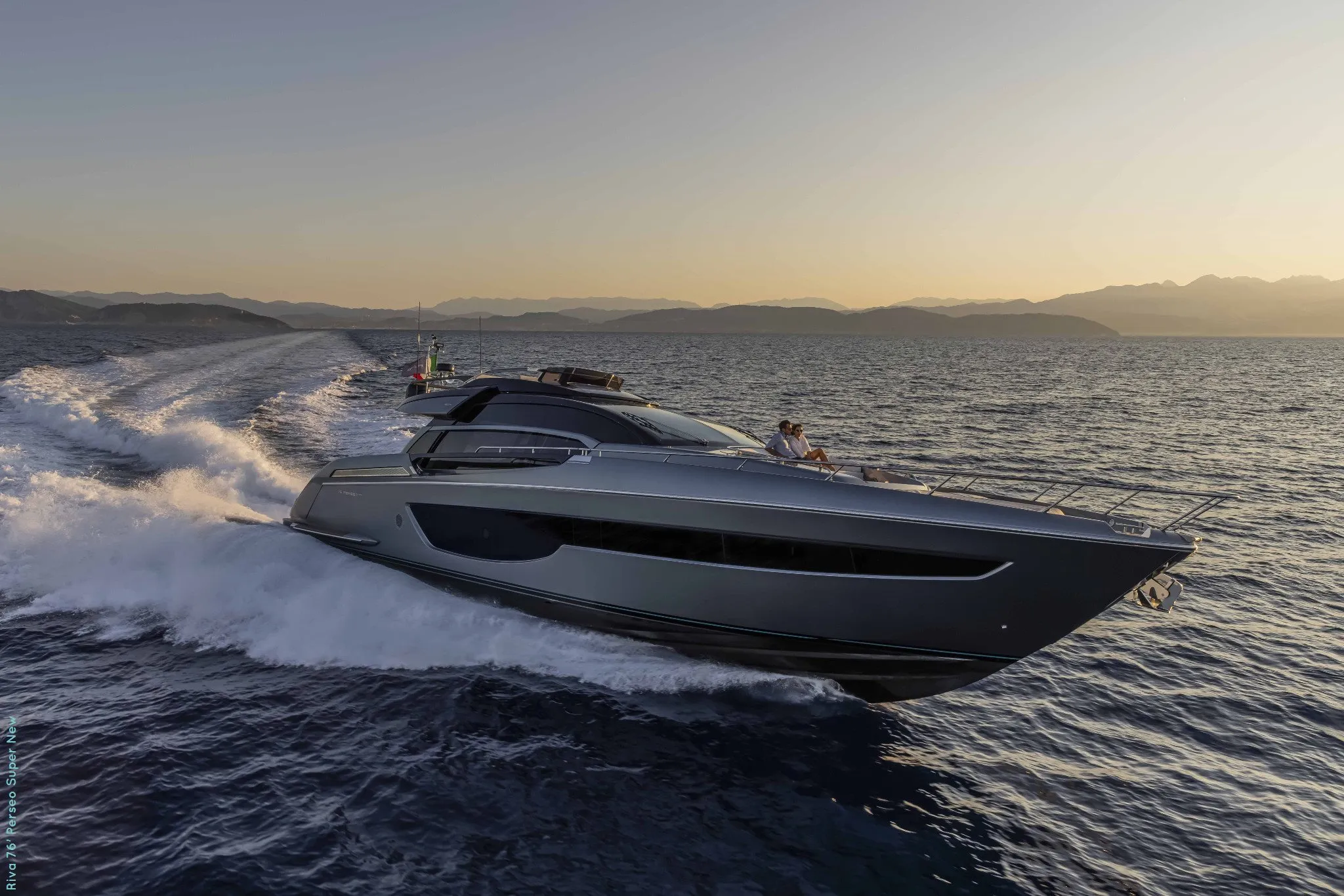
Outside the range, the 75-foot performance market is Italian territory. The Riva 76' Perseo Super at 76' 3" is within seven inches on length and is the direct stylistic rival. The Pershing 7X at 69' 3" is shorter but competes on exactly the same instinct - a hard-edged, fast, single-purpose boat.
What the Predator 75 brings to that fight is the top speed, the fact that it is one of only two boats in Sunseeker's whole current range published at 40 knots, and a main deck that opens completely to the cockpit once the door and window drop away. That last feature is the one people remember from the sea trial.
This boat fits an owner who wants speed at 75 feet and does not want an upper deck. Up to 40 knots is the joint highest figure in Sunseeker's current nineteen-model range, and the Predator gets there with a low, single-station profile rather than a flybridge stacked on top.
It fits people who entertain on one level. The cockpit door slides to starboard and the door and window then drop beneath the seating, which turns the saloon and cockpit into one continuous deck around U-shaped seating and a rise-and-fall carbon fibre table. With the carbon sunroof open above the helm, the whole main deck is a single indoor-outdoor room.
It fits eight guests and two crew, with a full-beam master, an en-suite for every one of the three guest suites, a shared day head off the lower hallway rather than through a cabin, and a fully fitted lower galley and dining space that gives the lower deck a social function of its own.
It fits an owner who cares how the boat looks from the dock. Sunseeker gives this generation new angular hull and superstructure glazing, stainless steel air intake cowlings and handrails, new upholstery and moulding options, and a choice of four grey hull colours.
It does not fit anyone who wants a second helm or an upper deck. That is the 75 Sport Yacht - same hull, same numbers, plus a flybridge with a traditional helm, companion seating and a chaise-longue sunpad, and a foredeck with a table for six.
It does not fit a buyer who wants joystick pod docking at this size, because this is a shaft-drive boat and the handling expectations are different.
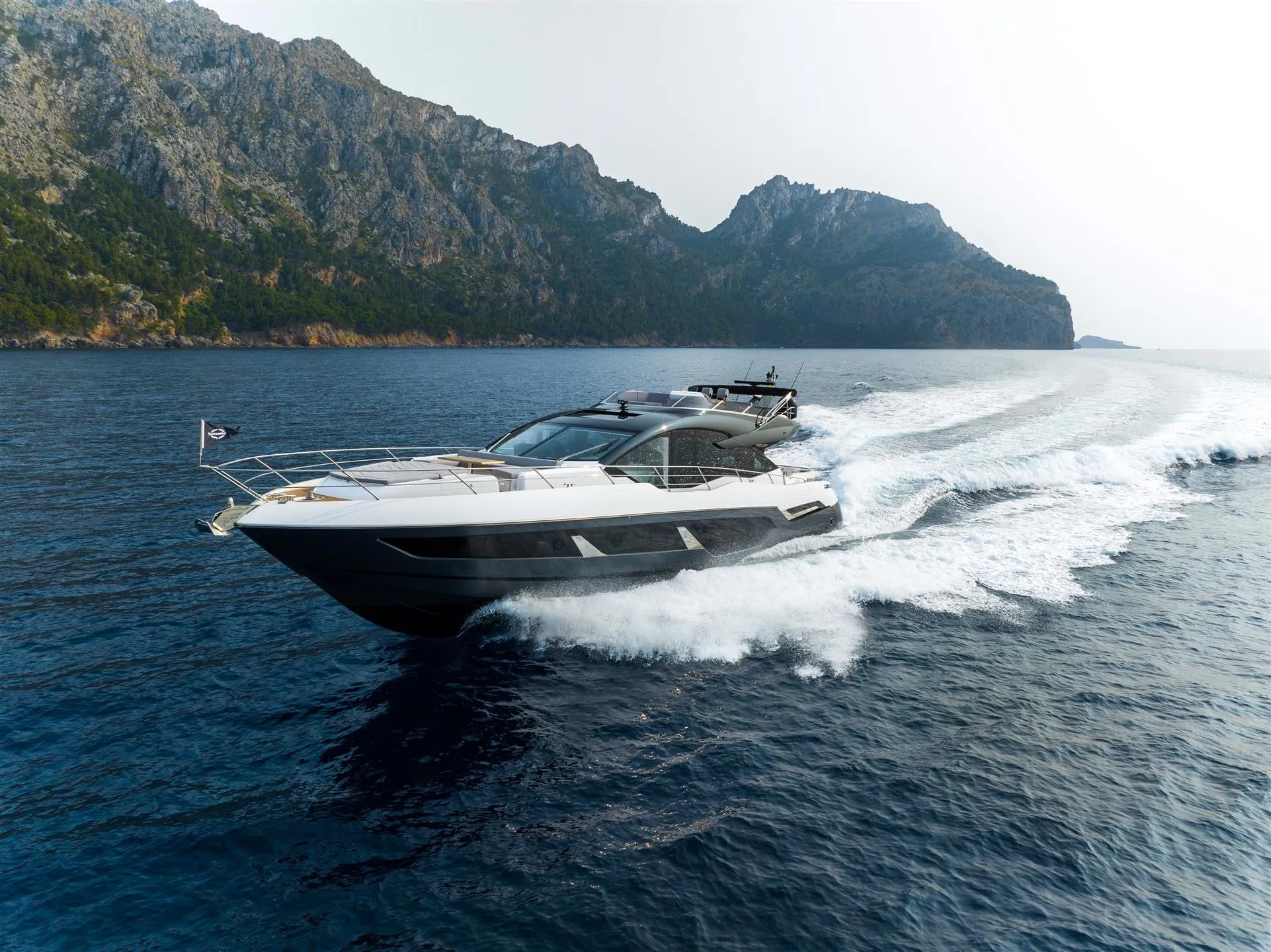
Sunseeker publishes a maximum of up to 40 knots, from twin MAN V12-1550 rated 2 x 1,550 HP driving shafts. Across Sunseeker's nineteen current models, only the Predator 75 and its platform twin the 75 Sport Yacht reach that figure - the next fastest is published at 38 knots.
Get observed burn at your intended cruising rpm in writing at sea trial and work your own arithmetic against the 1,268 gallons of fuel. Also establish which engine package is fitted to any boat you drive, and get that designation onto the contract - the body copy on Sunseeker's own page names two different V12 packages above a technical tab that gives only the MAN output ceiling.
Shafts. Sunseeker's smaller performance hulls - the Predator 55 and Predator 65 - run Volvo Penta IPS on pods with joystick docking, and at 75 feet the brand returns to conventional shaft drive with twin MAN V12-1550 engines.
That is a real change in how you own the boat. Docking a 75-footer becomes a conventional skill again, with no joystick to fall back on. Test it properly on the trial, in a berth the width of the one you keep with wind across it, and be honest with yourself about whether you want a captain.
No. The Predator 75 runs from a single helm on the main deck, forward of the sofa with companion seating alongside to port, beneath an oversized polished carbon fibre sunroof that opens to bring light into the living space. There is no second station and nothing above the main deck.
If you want an upper helm on this hull, that is the 75 Sport Yacht - the same platform on every published figure, with a traditional second helm on a spacious flybridge reached by a stairway, companion seating and a chaise-longue sunpad up there, and a foredeck with seating and a table for six. The Sport Yacht is the boat with the extra deck, which is the opposite of what the two names suggest to most people.
They are one platform: 75' 8" overall, 17' 8" beam, 6' 2" draft, 103,396 lbs at half load, twin MAN V12-1550 at 2 x 1,550 HP on shafts, 1,268 gallons of fuel, 211 of water, three cabins with a fourth optional across three en-suites plus crew, up to 40 knots.
The question is one deck. The 75 Sport Yacht has a traditional second helm on a spacious flybridge reached by a stairway, with companion seating and a chaise-longue sunpad, plus a foredeck with seating and a table for six - three social areas rather than two. The Predator 75 has one helm on the main deck under an oversized polished carbon fibre sunroof, sits lower, and has a cockpit door that slides to starboard before the door and window descend beneath the seating so the saloon and cockpit become one deck.
If you will genuinely use an upper deck, take the Sport Yacht - you give up nothing on speed, weight, tankage or accommodation to get it. If you will not, take the Predator.