Sunseeker 82 Ocean Enclosed

Expert Review, Technical Specifications & Market Analysis

The Essentials

FeatureSpecifications
Overall Length82' 6"
Beam21' 6"
Draft6' 1"
Displacement164,531 lbs
EnginesTwin MAN V12-1650 (2 x 1,650 HP)
Fuel Capacity2,245 gal
Water Capacity396 gal
Cabins / Heads4-5 Cabins / 4-5 Heads
Max Speed25 knots

Source: Spec & Photos courtesy of Sunseeker. Specs verified by Tony Smith, USCG 100 Ton Master, on August 27, 2026.

The same 82' 6" hull as the 82 Ocean, to the digit on every published figure, with the upper deck closed in instead of open. You are not choosing a boat here. You are choosing a season.

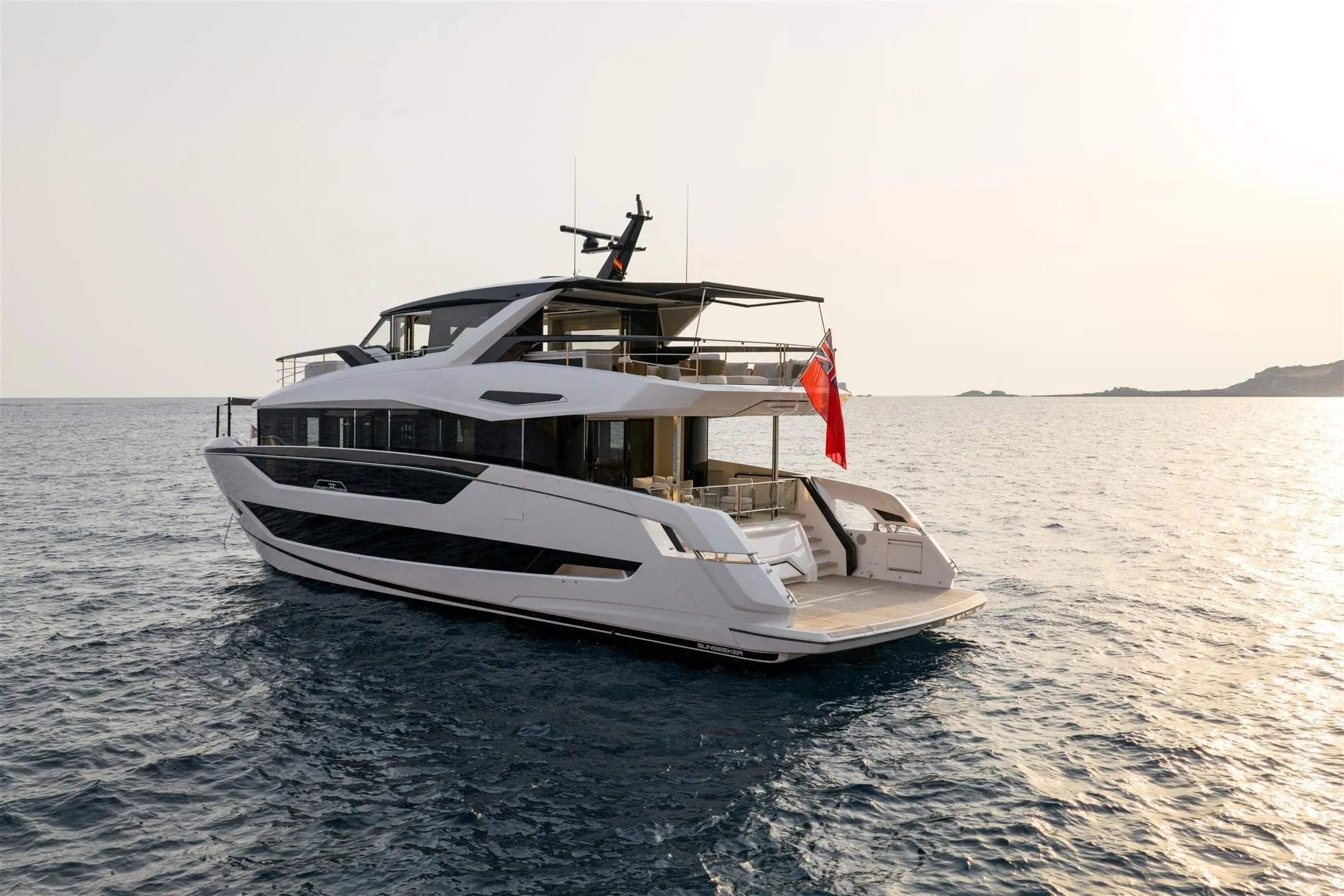
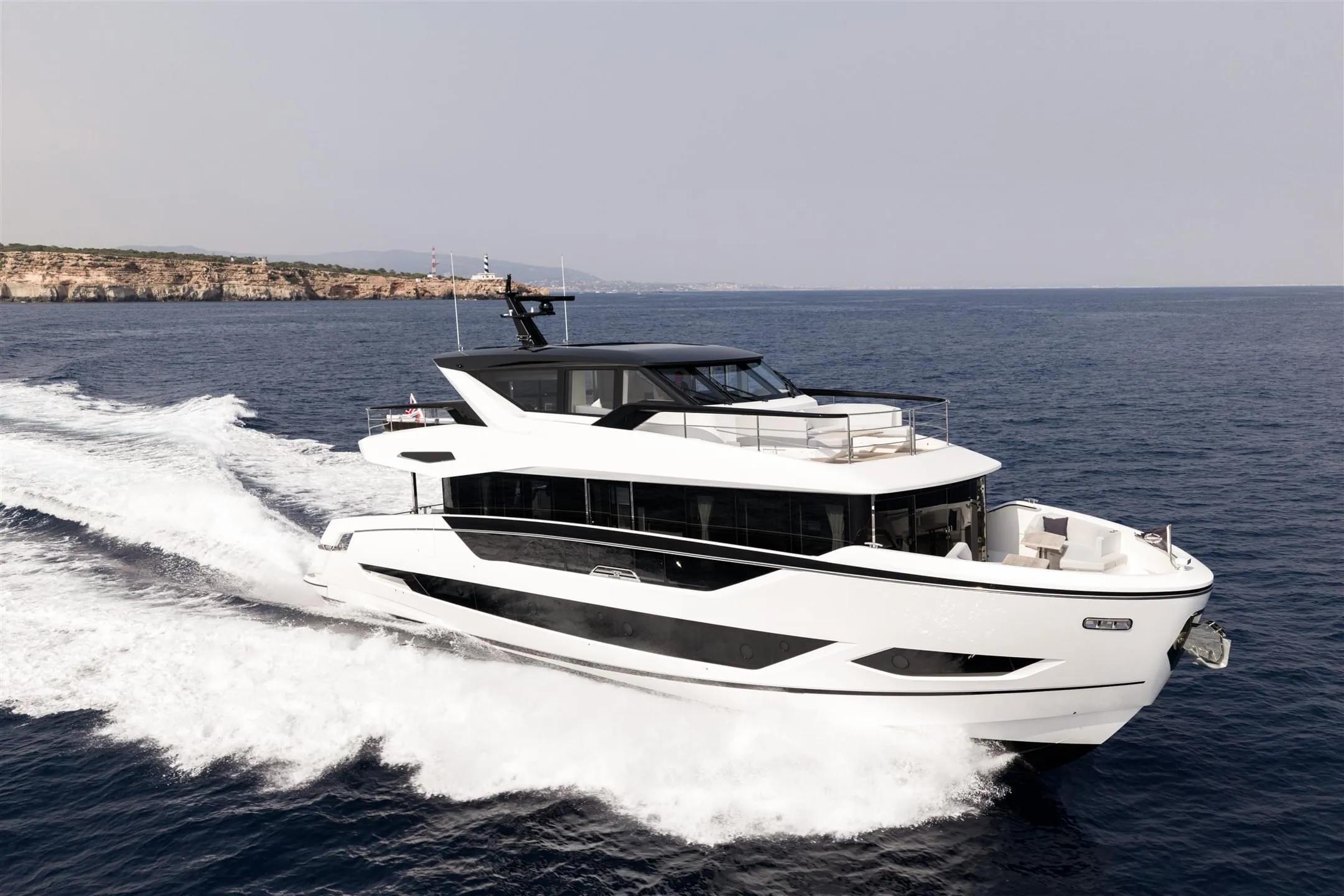
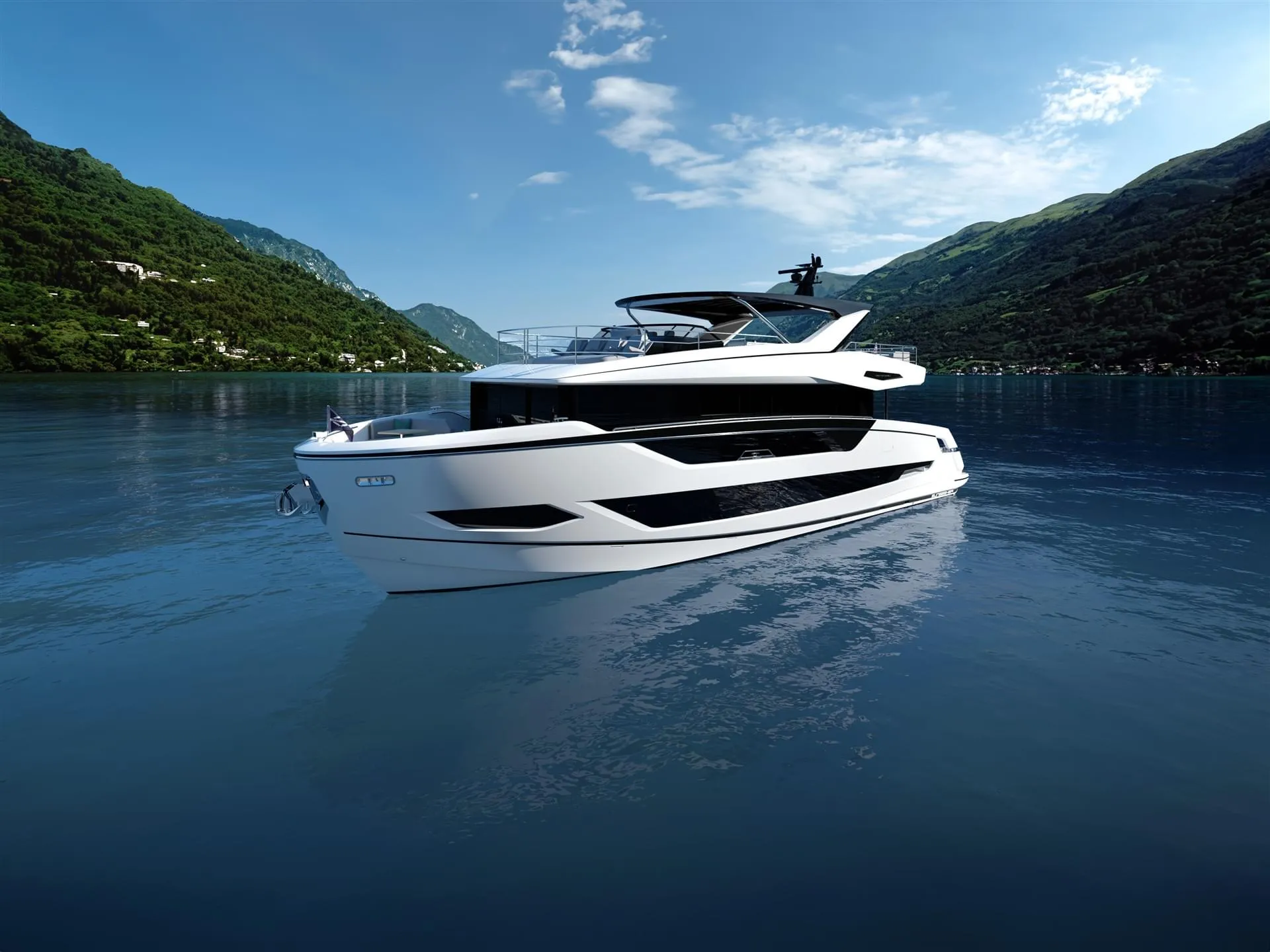
Sunseeker 82 Ocean Enclosed exterior

Quick Verdict

  • Every published figure matches the open 82 Ocean exactly. Length, beam, draft, half-load displacement, engines, fuel, water, cabins, heads and maximum speed are identical in all ten places. The enclosure is the difference, and it is the whole of the difference.
  • One displacement, one draft, one maximum speed, applied to both boats. The roof costs you nothing on paper and buys you nothing on paper. If a seller argues that the Enclosed is slower, or steadier, they are selling you a feeling rather than a figure.
  • Buy it for the calendar, not the boat. An enclosed upper deck earns its keep in shoulder seasons and unreliable weather. In settled heat, the open 82 is the identical hull underneath and probably the better choice.
  • Drawn as cabins rather than cabins plus crew, with 396 gallons of water on a boat that may have five of them. Both 82s sit below the 88' 11" line where Sunseeker starts drawing crew quarters into the class. Settle the arrangement drawing and the watermaker at contract, not at handover.
Tony Smith, Founder of Minted Yachts

Our Take

I want to be blunt about what you are choosing here, because the marketing will not be. The 82 Ocean Enclosed and the open 82 Ocean are the same boat. Same length, same beam, same draft, same weight at half load, same engines, same tanks, same cabin count, same twenty-five knots. Ten rows on the specification and ten identical figures. Sunseeker even runs four of the same photographs on both model pages. So when somebody starts explaining how the enclosed hull handles differently, stop them: on paper these two are one boat, and the roof is the whole of the difference.

What you are actually buying is a roof, and I do not say that dismissively. A roof over the upper deck is one of the few changes to a boat that reliably changes how much you use it. An open flybridge is a fair-weather room. An enclosed one is available in the shoulder seasons and on the grey days, and over a season that is a lot of days. If you cruise somewhere the sun is not guaranteed, or your calendar runs from March to November rather than June to September, this is the version to buy and it is not a close call. If you are in the tropics and you want the wind on you, buy the open one and do not feel you have missed anything.

The two things I would chase on this boat are the same two I chase on its twin, and they are not glamorous. Both 82s are drawn as cabins where every Sunseeker above 88 feet is drawn as cabins plus crew, so if a captain is part of your plan, get the arrangement drawing for your hull number and find the cabin yourself. And three hundred and ninety-six gallons of fresh water is not much for four or five cabins plus a full upper deck in daily use. Watermaker, in the contract, at the start.

Watch Our Sunseeker 82 Ocean Enclosed Reviews

Official Sunseeker Premiere: Inside the Sunseeker 82 Ocean Enclosed

Video courtesy of Sunseeker.

Sunseeker 82 Ocean Enclosed Overview

Start with the fact that decides everything else about this boat. On Sunseeker's own pages, the 82 Ocean Enclosed and the 82 Ocean publish the same figure on every single specification row: 82' 6" length overall, 21' 6" beam, 6' 1" draft, 164,531 lbs at half load, twin MAN V12-1650s at 1,650 HP a side, 2,245 gallons of fuel, 396 gallons of fresh water, four to five cabins, four to five heads and 25 knots maximum.

Not similar. Identical, to the digit, in ten places out of ten. The two boats even share four gallery photographs on the manufacturer's own site, the same image files on both pages.

So the name is the specification. Enclosed means the upper deck is closed in rather than open to the weather, and that is the difference Sunseeker is selling. Everything a specification sheet can measure stayed where it was.

The rest of the sheet reads as the class does. Displacement is a half-load figure, which is the condition to plan every lift, berth and bridge clearance around. Draft is quoted as a maximum at full load. Fuel and water are US gallons. And accommodation is a band rather than a fixed count, which means the interior arrangement is a decision you make rather than one you inherit.

Performance & Handling

The useful question about an enclosed upper deck is whether it moves weight upward, and whether that shows up in how the boat behaves. Here is the answer Sunseeker gives: one displacement figure, 164,531 lbs at half load, applied to both boats. One draft, 6' 1" at full load, for both. One maximum speed, 25 knots, for both, on the same twin MAN V12-1650s.

That symmetry cuts both ways, and it is worth being clear about both. The Enclosed is not the slower, thirstier, tenderer version of the open 82. It is not the drier, steadier one either. On every figure the builder prints, the two of them are one hull.

What the numbers do tell you is that 3,300 HP is moving 164,531 lbs, about 50 lbs of boat per horsepower, and returning 25 knots. That is the lowest maximum in the current Sunseeker range under 130 feet, shared with the open 82. It is a consequence of a wide, heavy, deep-tanked hull rather than of a roof.

Then do what you would do on any boat in this class: hold your intended rpm on the sea trial and have observed consumption at that rpm recorded in the report, with the load and tank state noted beside it. That line describes your hull, at your loading, at the speed you will actually hold, and it is worth more to you than any figure printed for the model in general.


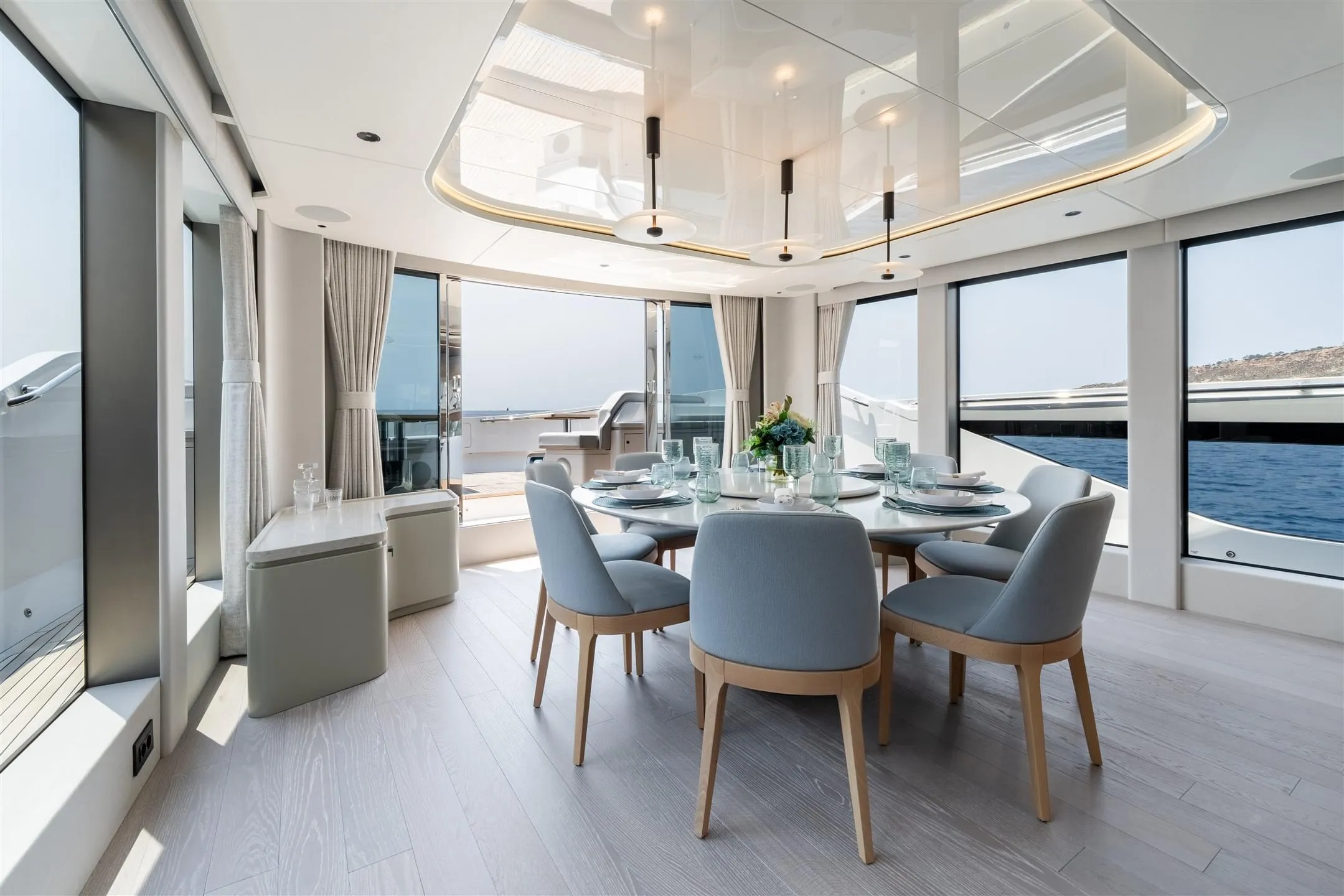
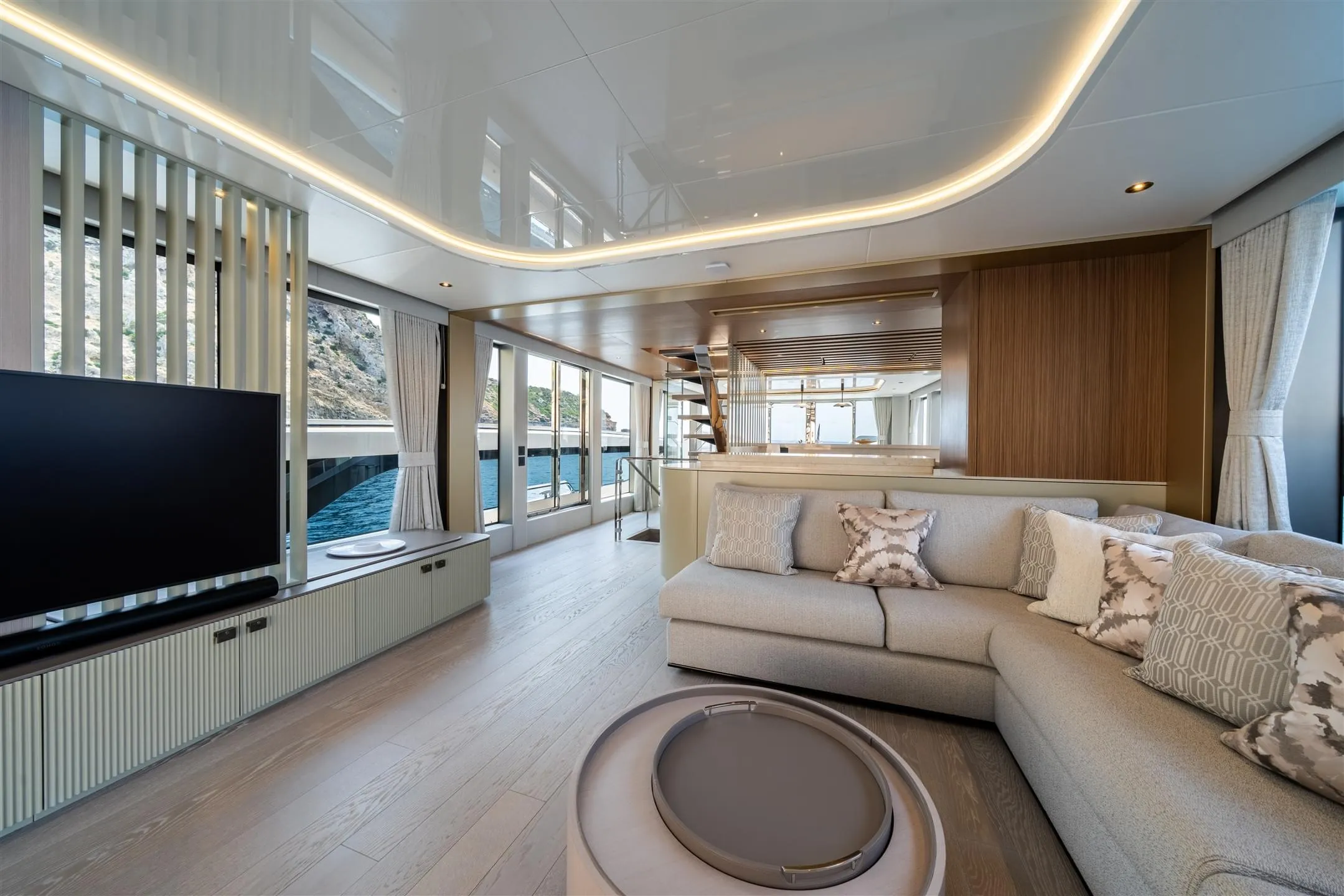
Interior & Accommodations

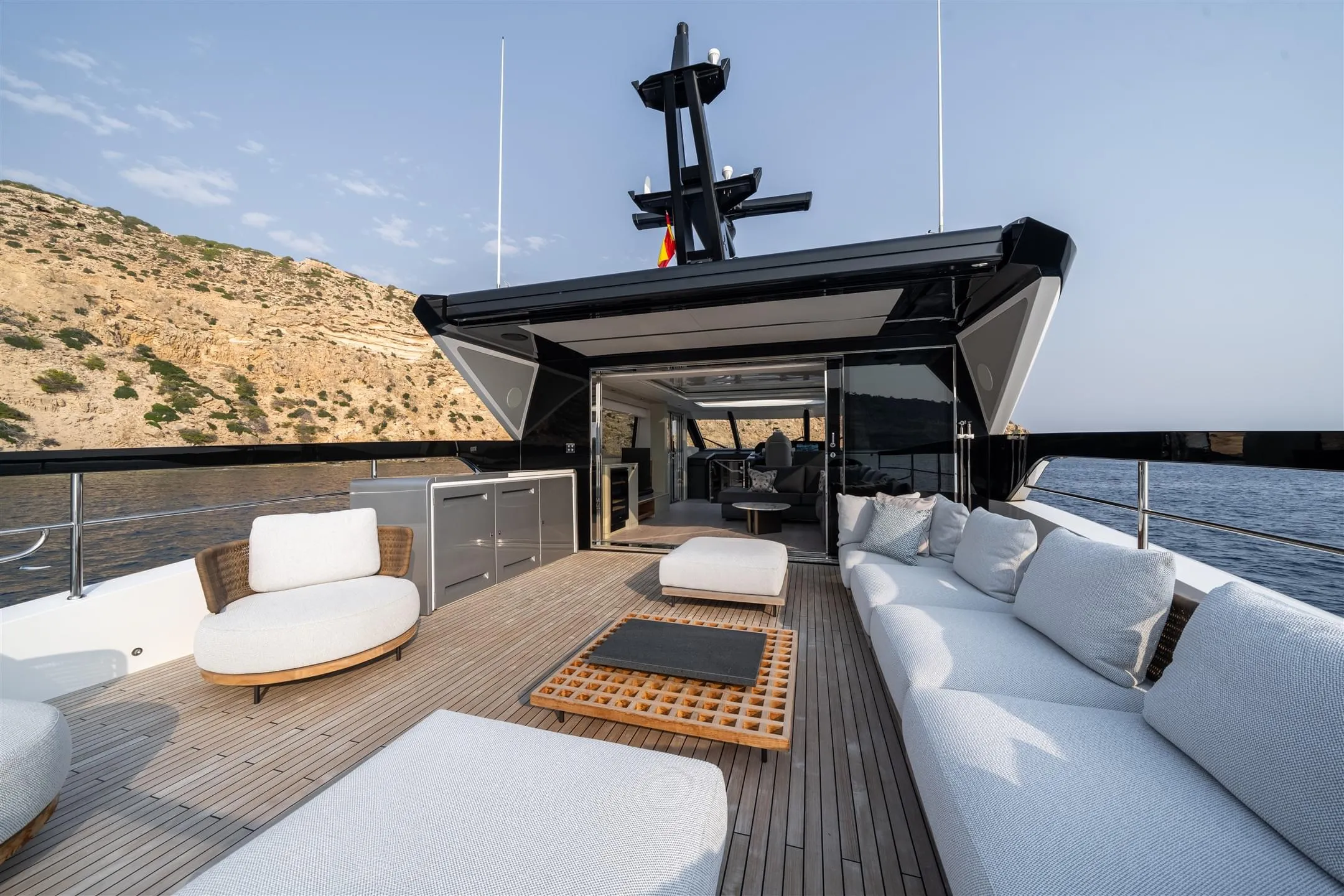
The enclosed upper deck converts a deck into a room, and that is the practical consequence worth thinking about. An open flybridge is a place you go when the weather allows. An enclosed one is a place that is available on the days when it does not, which on most cruising calendars is a larger number of days than owners expect when they are shopping in June.

Below that, the accommodation is published exactly as it is on the open boat: four to five cabins and four to five heads. That band is a choice rather than a specification, and the fifth cabin comes out of volume that is otherwise doing something else. Settle which arrangement you are buying before you fall for a photograph, and be aware that because the two 82s share images on Sunseeker's site, a picture you are shown may not even be of the variant you are looking at.

The 21' 6" beam is what carries the whole interior. On an 82' 6" hull that is close to a quarter of the length, more width than a number of 88-footers on this market, and it is why the four and five cabin layouts work at all.

Two things to settle before contract. Both 82s are drawn as cabins where every Sunseeker in this class from 88' 11" up is drawn as cabins plus crew, so if you plan to carry crew, have the arrangement drawing for your hull show you where they sleep. And fresh water is 396 gallons, which on a five cabin boat with an extra deck of living space in daily use is a ceiling worth designing around at contract stage.

Market Position

Within Sunseeker's own range this boat has one true comparison and it is the 82 Ocean. They are the same hull with the same published numbers, and the choice between them is about climate, season length and whether you want the upper deck to be usable in weather, rather than about how the boat goes.

Further up the class, the 90 Ocean Enclosed is the same idea applied to a bigger hull, and it is where the enclosed-boat logic gets its clearest expression: five cabins and six en-suites plus crew on the published table, against the four-to-five band here. That is the step, and it is an accommodation step rather than a comfort one.

Outside the brand, the natural cross-shops at this length are the Princess X80, which is published at 82' 5" and lands within an inch of this boat's length, and the Azimut Fly 82 at 81' 4". Both are faster on paper. Neither is as wide: the 82 Ocean Enclosed's 21' 6" is more beam than either carries, and beam is what pays for interior volume on a boat like this.

The argument for the Sunseeker in that group is width, tankage and an upper deck that works in bad weather. The argument against it is 25 knots. Buyers who have owned an open flybridge in a marginal climate tend to find the first argument persuasive, and buyers who cruise in reliable sunshine tend not to.

Who the 82 Ocean Enclosed Is For

This boat is for the owner whose cruising season is longer than the weather is good. If you run north, or you use the boat through shoulder seasons, or your home waters are as often grey as blue, an enclosed upper deck stops being a styling choice and starts being the difference between a deck you use and one you look at.

It also fits the owner who wants the upper helm to be somewhere people actually sit while the boat is moving, rather than a station that empties the moment it rains or the moment the boat comes up on plane in a chop.

It does not fit you if you are buying a flybridge specifically to be outside on it. The open 82 Ocean exists for exactly that owner, it is the identical boat underneath, and there is no penalty in choosing it. In a hot, settled climate the open version is very likely the right one.

It also does not fit you if you need pace. Twenty-five knots is the published maximum and it is the lowest in the current Sunseeker range below 130 feet.

Finally, it does not fit a crewed programme without homework. Both 82s are drawn as cabins rather than cabins plus crew, which is the clearest signal in the class that these are boats for owners who run their own or use day help. If your plan involves a captain and a stewardess living aboard, get that answered on the arrangement drawing for your hull before you commit.

Sunseeker 82 Ocean Enclosed Articles & Guides

Compare With

Frequently Asked Questions

How much fuel and water does the Sunseeker 82 Ocean Enclosed carry?

Fuel is 2,245 US gallons and fresh water is 396 US gallons. Take care with Sunseeker's capacity rows, which on some pages print litres, imperial gallons and US gallons together; both figures above are US gallons.

The fuel figure is generous for the length. The water figure is the one to plan around. On a boat that can be specified with five cabins, and with a closed-in upper deck that gets used across more of the year, 396 gallons is a real ceiling.

That makes a watermaker a build-contract item rather than a commissioning afterthought. Raise it at the first meeting.

Is the Sunseeker 82 Ocean Enclosed slower or heavier than the open 82 Ocean?

No. Sunseeker publishes one displacement figure for both boats, 164,531 lbs at half load, one draft, 6' 1" at full load, and one maximum speed, 25 knots, on the same twin MAN V12-1650s.

So the enclosure is not a performance decision in either direction. Nobody can honestly tell you the Enclosed is slower or more tender because of weight up high, and nobody can tell you it is drier or steadier under way either.

If a seller makes either argument, the useful question is which published figure it comes from. Choose on climate and season length instead.

What is the difference between the Sunseeker 82 Ocean and the 82 Ocean Enclosed?

The upper deck, and on Sunseeker's published figures that is the entire difference.

Both boats are 82' 6" overall with 21' 6" of beam and 6' 1" of draft at full load, both weigh 164,531 lbs at half load, both run twin MAN V12-1650s at 1,650 HP a side, both carry 2,245 gallons of fuel and 396 gallons of fresh water, both publish four to five cabins and four to five heads, and both top out at 25 knots. Ten specification rows, ten identical figures.

The Enclosed has the upper deck closed in rather than open to the weather. That is what the name denotes and it is what changes in daily use.

As corroboration that this really is one hull presented twice: four of the gallery photographs on the two model pages are the same image files.

Which 82 Ocean is right for my cruising area?

Answer one question and the boat picks itself: how many months a year is your weather genuinely reliable?

If the answer is most of them, buy the open 82 Ocean. It is the identical hull with identical published figures, and an open flybridge in settled heat is exactly what you want.

If the answer is four or five, buy the Enclosed. A closed-in upper deck turns a fair-weather room into one that works in shoulder seasons, wind and rain, and that is the difference between a deck you use and a deck you photograph.

There is no third consideration, because underneath they are the same boat. This is one of the cleaner decisions in yacht buying, provided nobody muddies it for you.