
August 20, 2026
Sea Ray SLX 350 Outboard: Two Feet Longer, 1,208 Pounds Lighter
Moving the machinery onto the transom makes the SLX 350 Outboard 38'0" and 13,027 lb — longer and lighter than the sterndrive — with a publi…
Read the articleExpert Review, Technical Specifications & Market Analysis
| Feature | Specifications |
|---|---|
| Overall Length | 38'0" |
| Beam | 10'6" |
| Draft | 32" outboards down / 23" outboards up |
| Displacement | 13,027 lbs |
| Engines | Twin Mercury 350 Verado V10 FourStroke Outboards with Joystick Piloting (T-350 hp) standard, black or white cowl; twin Mercury 400 Verado V10 FourStroke Outboards with Joystick Piloting (T-400 hp), white, optional. Dynamic Running Surface optional |
| Fuel Capacity | 160 gal |
| Water Capacity | 30 gal |
| Cabins / Heads | Open bowrider layout; the head is relocated to starboard beneath the helm, which enlarges the air-conditioned portside Port Hideaway (berth upgrade optional); 27 gal holding tank, macerator with seacock interlock optional. Sea Ray publishes no berth count and no "Sleeps" row for this model |
| Max Speed | 48–64 mph (Sea Ray's published wide-open throttle range) |
Source: Spec & Photos courtesy of Sea Ray. Specs verified by Tony Smith, USCG 100 Ton Master, on August 20, 2026.
Part of the Sea Ray SLX series — see how owners step up through the lineup.

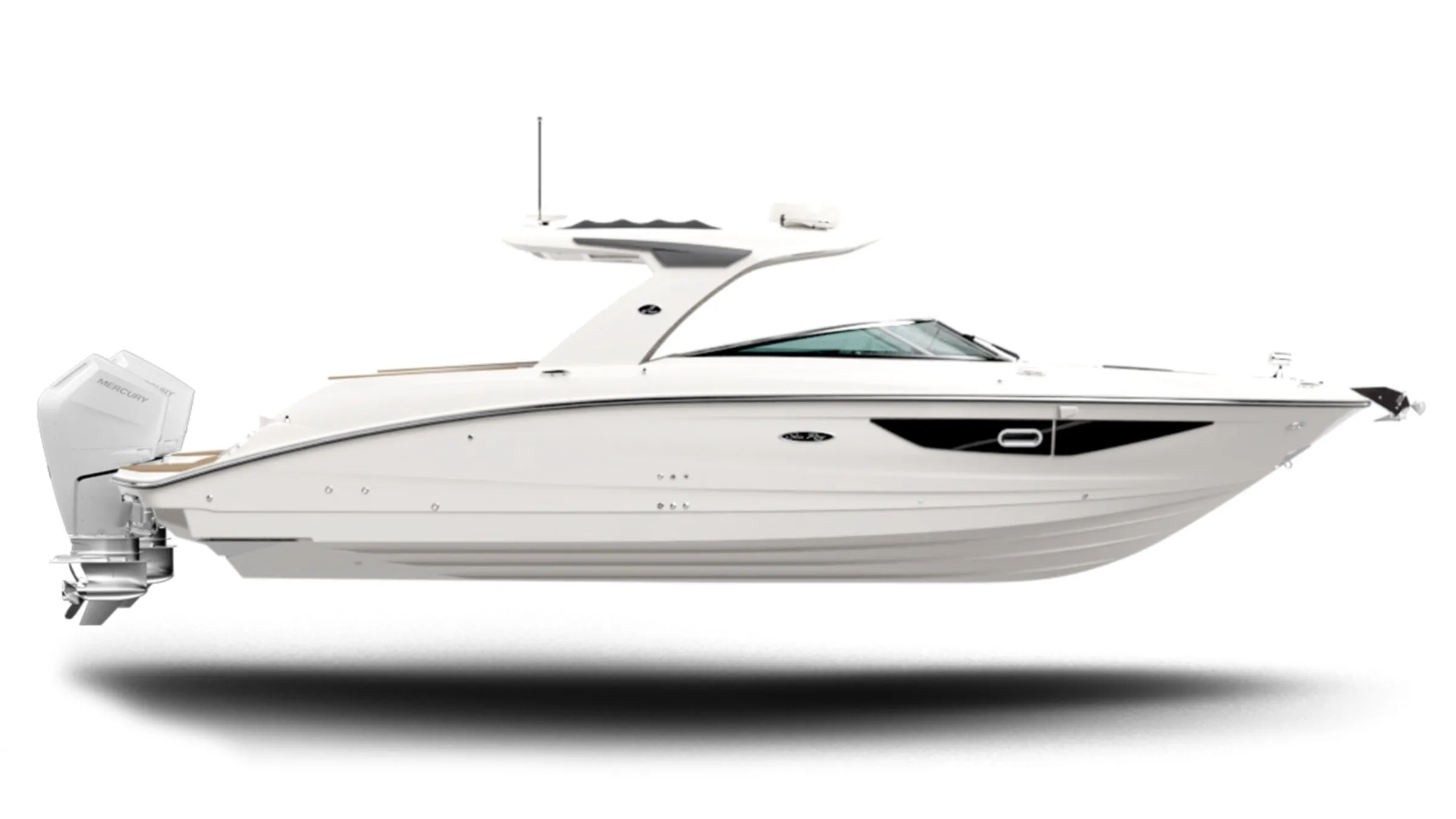
Look at the two specification blocks side by side once and the outboard argument stops being a matter of taste. This boat is 38 feet against the sterndrive's 36, and it is 13,027 pounds dry against 14,235 — longer and more than half a ton lighter, drawing 32 inches with the motors down instead of 37. Sea Ray publishes 48 to 64 miles an hour here against 44 to 52 on the sterndrive. Take the top of that band with the same salt you would take any builder's number, but the shape of the difference is real and it is all the same cause: the machinery is no longer inside the hull.
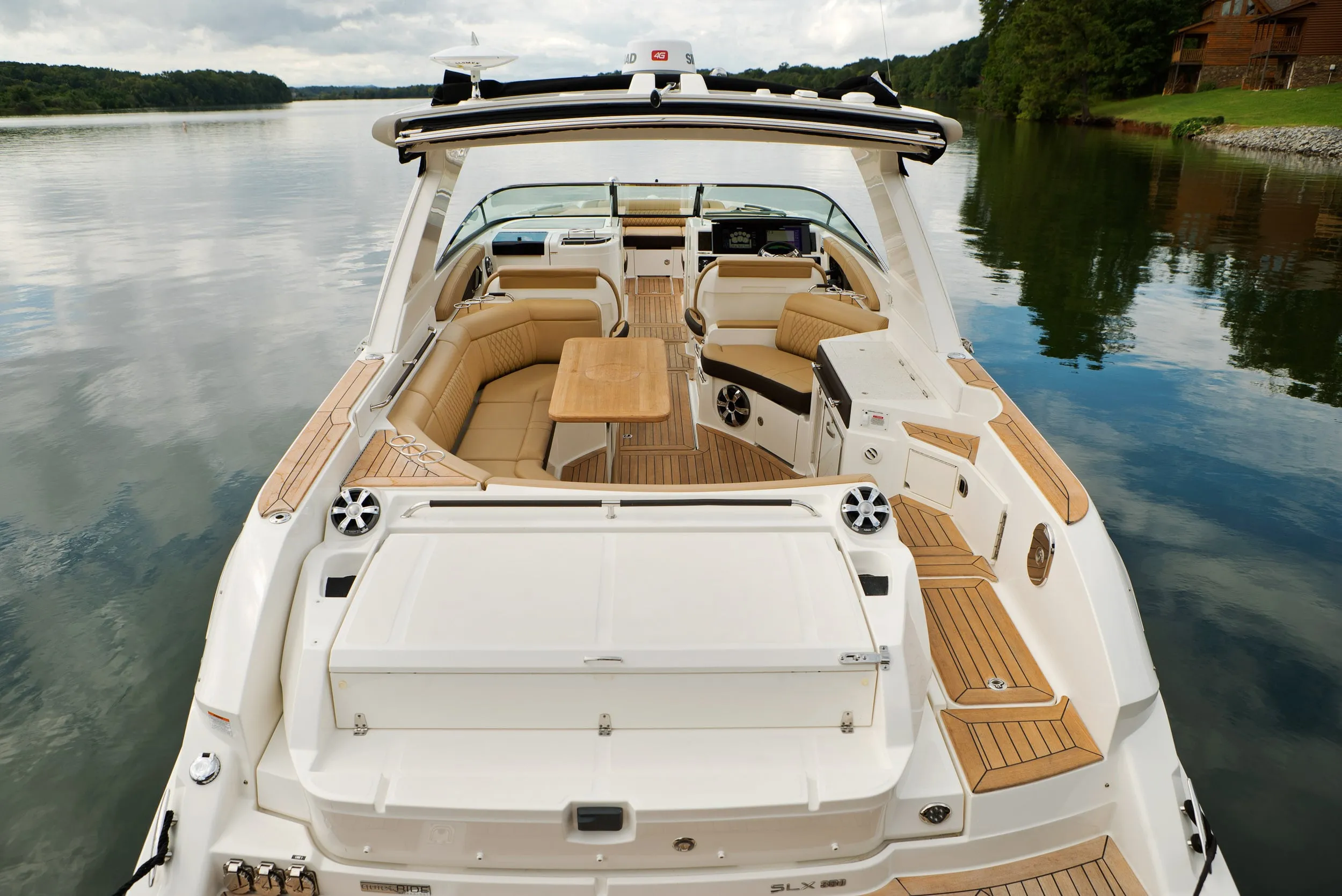
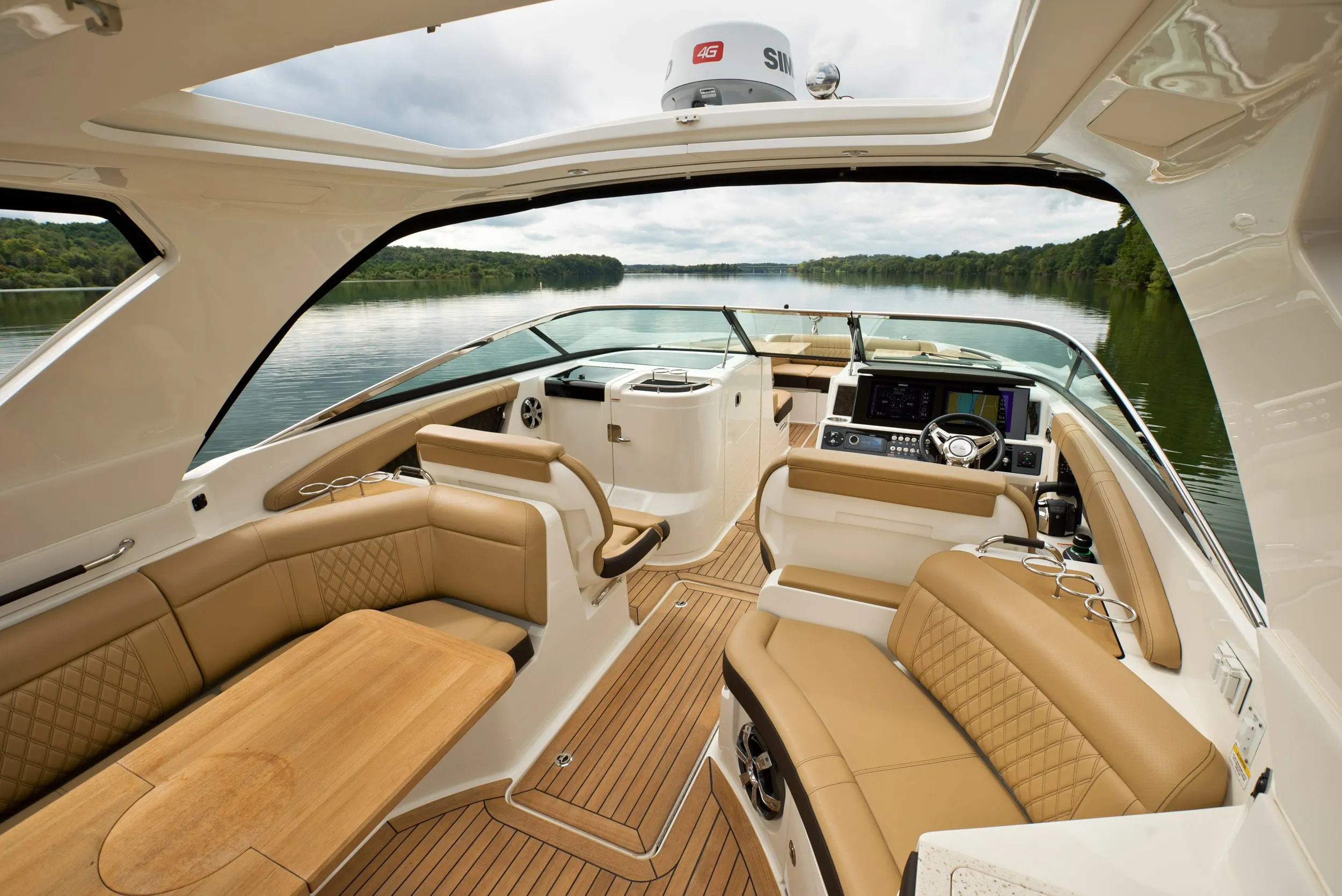
The feature I would actually buy this version for has nothing to do with engines. Sea Ray moved the head across to starboard, under the helm console, and used the space that freed to enlarge the Port Hideaway on the port side. An air-conditioned room on an open 38-footer is already unusual; a bigger one, on the side you can actually sit in, is the sort of change that only comes from redesigning a boat rather than repowering it. Add the easy-up bow shade with walk-through access from the cockpit and a seating layout built for eighteen, and this is a genuinely different interior from the sterndrive, not a variant of it.
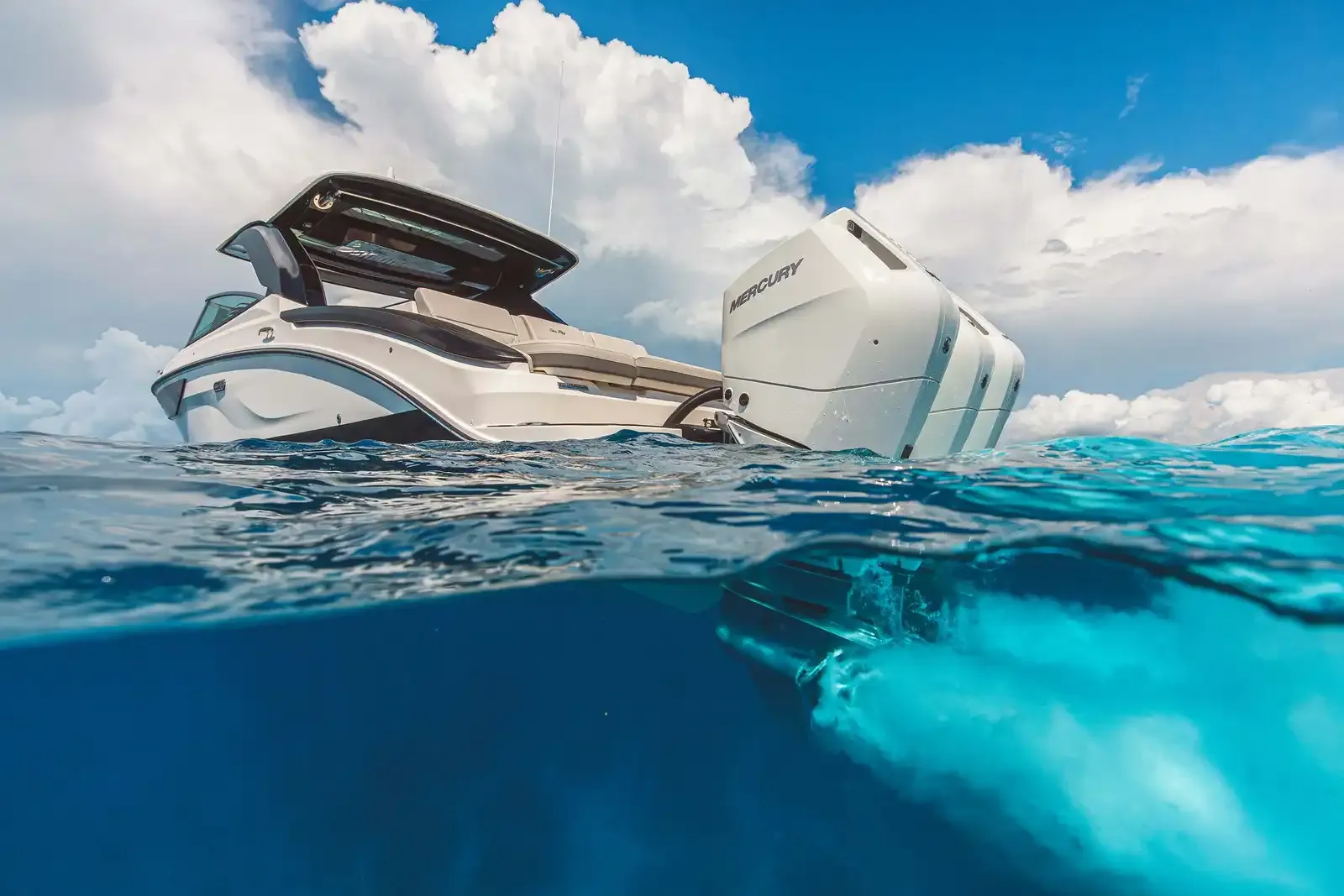
The ownership case is the quiet one. No bellows, no gimbal bearing, no drive to pull — routine service happens under a cowling at standing height, and that is the reason Sea Ray now offers an outboard version of every SLX from the 260 up, with the 360 built no other way. What you give up is the transom: two V10s live where the sterndrive's full-width swim platform would be, and the submersible swim step is not on this option list. Go stand on both boats with the engines off before you decide. The rest of the decision the numbers make for you.
Video courtesy of Sea Ray.
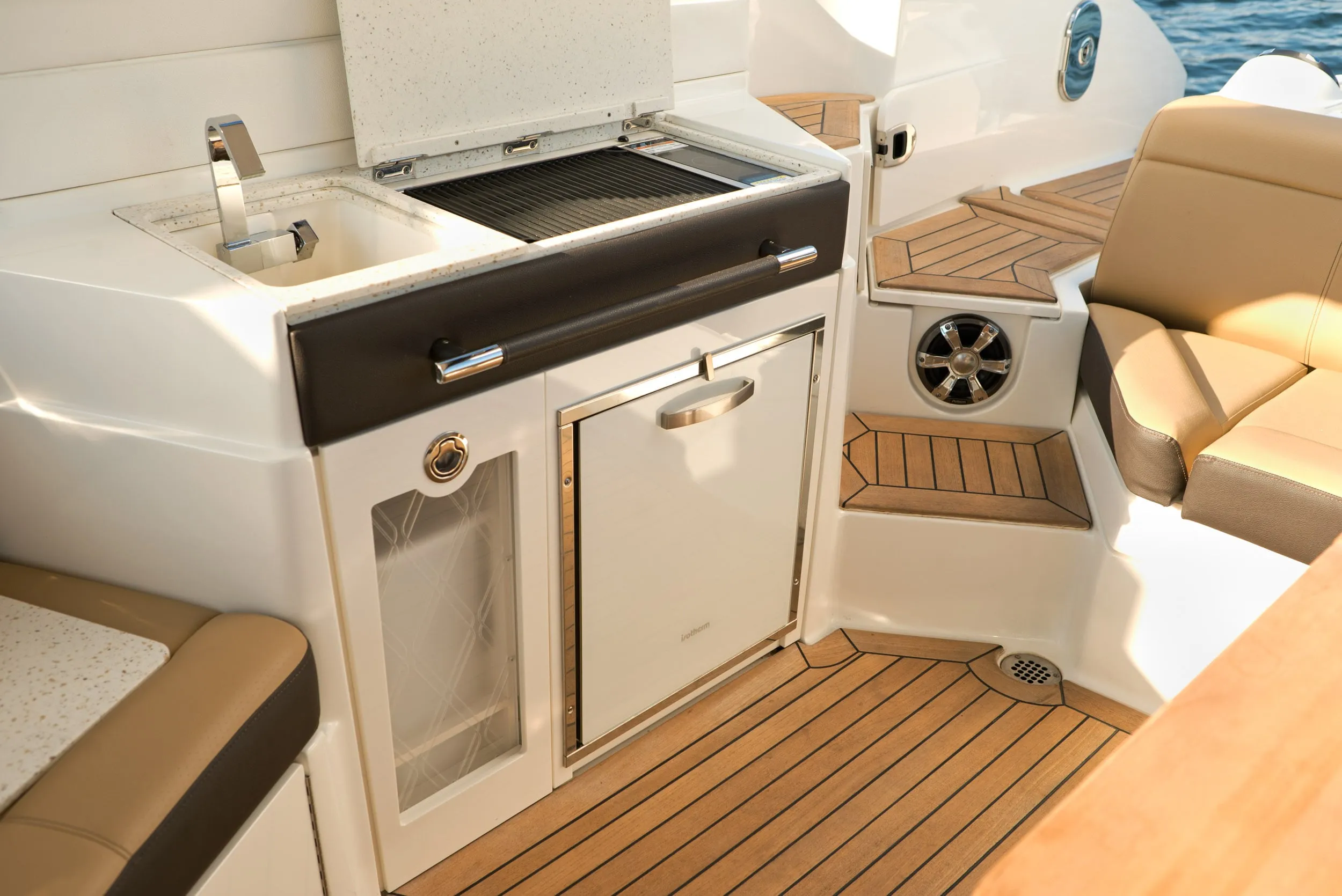
Photos courtesy of Sea Ray.
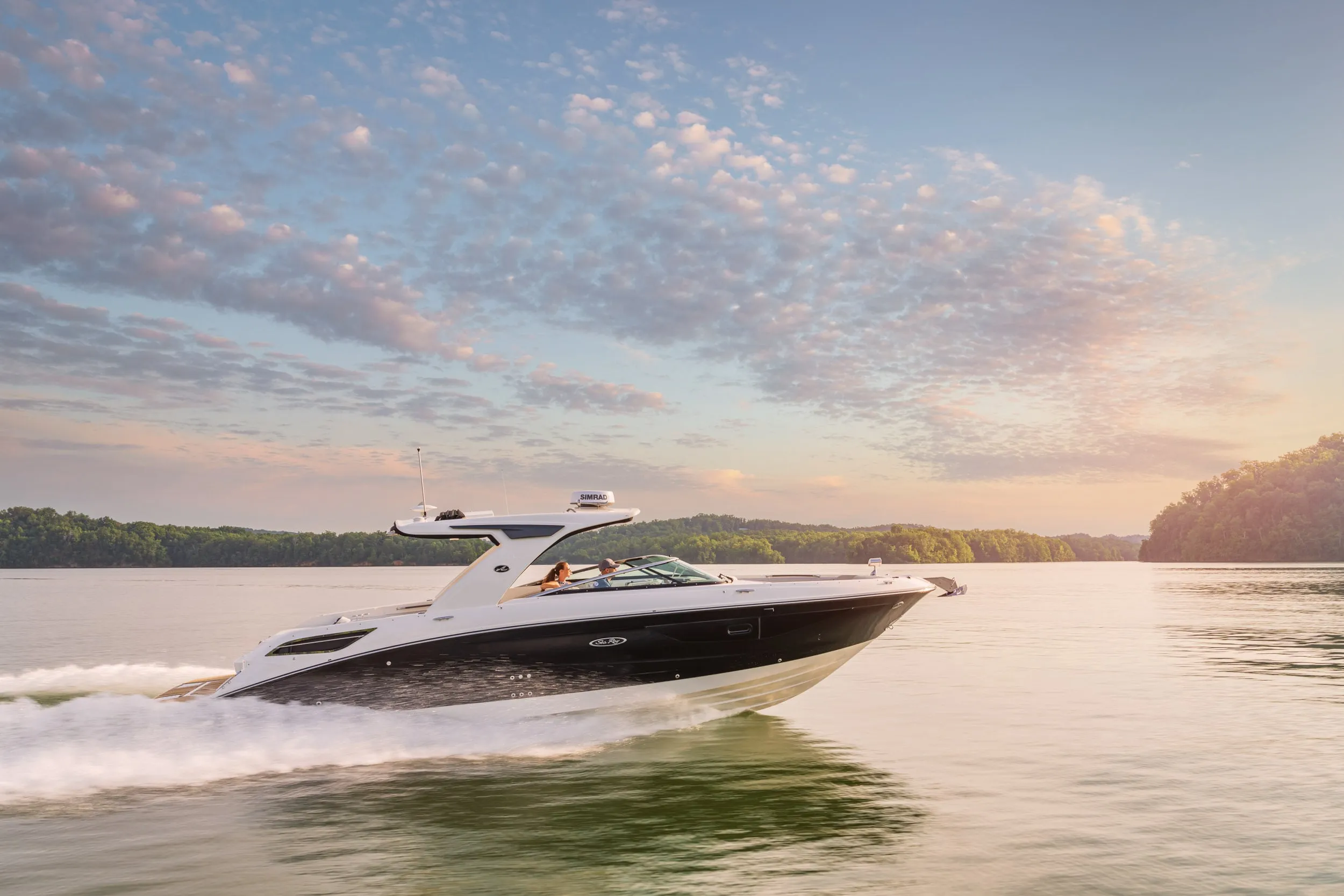
Sea Ray moved it there deliberately. In the builder's own words the head is moved to the starboard side under the helm, giving additional space for the portside hideaway — so the air-conditioned Port Hideaway on this boat is larger than the sterndrive SLX 350's.
That is the strongest argument for this version that has nothing to do with engines, and it is the kind of change that comes from redesigning a boat rather than repowering it. A berth upgrade for the Hideaway is optional, which makes it a retreat rather than a stateroom.
It depends on what you want the transom to do. The outboard is the longer, lighter, shallower boat — 38'0" against 36'0", 13,027 pounds dry against 14,235, drawing 32 inches against 37 — and Sea Ray publishes 48 to 64 mph for it against 44 to 52. There are no drives, no bellows and no gimbal bearings to service.
The sterndrive keeps the back of the boat clear, which is why the full-width swim platform and the automated submersible swim step appear on its option list and not on the outboard's. It also offers six published propulsion configurations against the outboard's three. Stand on both with the engines off before you decide.
Sea Ray publishes a 48 to 64 mph wide-open-throttle band for this model, against 44 to 52 for the sterndrive SLX 350. Treat the band as a ceiling rather than a plan, and settle your own cruise on the water.
Standard propulsion is twin Mercury 350 Verado V10 outboards with Joystick Piloting, with twin 400 Verado V10s on the option list. Fuel capacity is 160 gallons, deadrise 21 degrees, and dry weight 13,027 pounds — 1,208 pounds under the sterndrive on two feet more length.
Sea Ray describes a reimagined seating layout with room for 18. The deck carries concealable transom loungers, an easy-up bow shade, and center walk-through access from the cockpit to the bow.
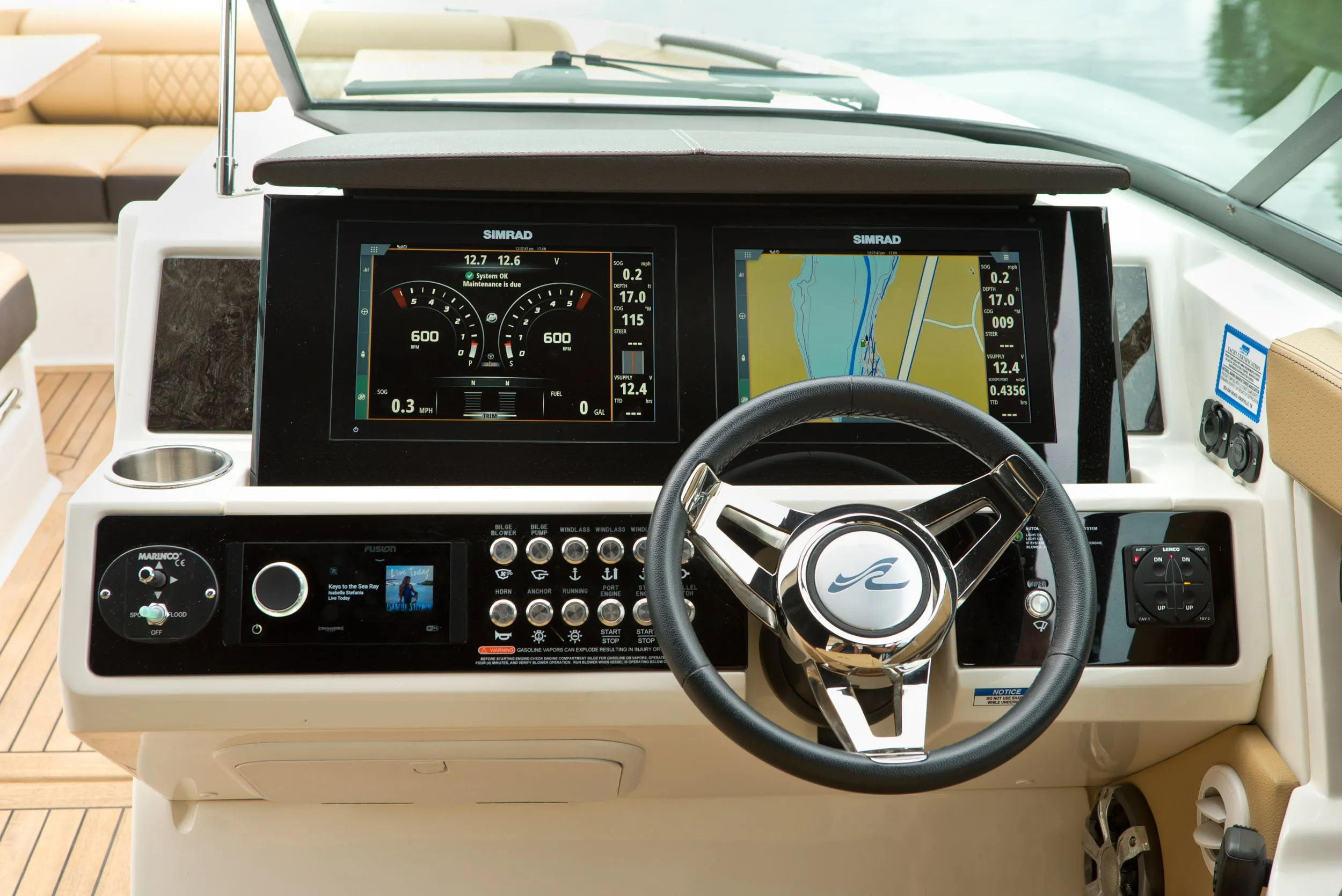
Standard helm electronics are a dual digital dash with two Simrad GO9 nine-inch touchscreens carrying Mercury VesselView Link data, NAVIOP digital switching, a chartplotter with preloaded charts and a transducer with depth, water temperature and fishfinder; a 12-inch dual Simrad dash is optional. Dry weight is 13,027 pounds on a 10'6" beam.