
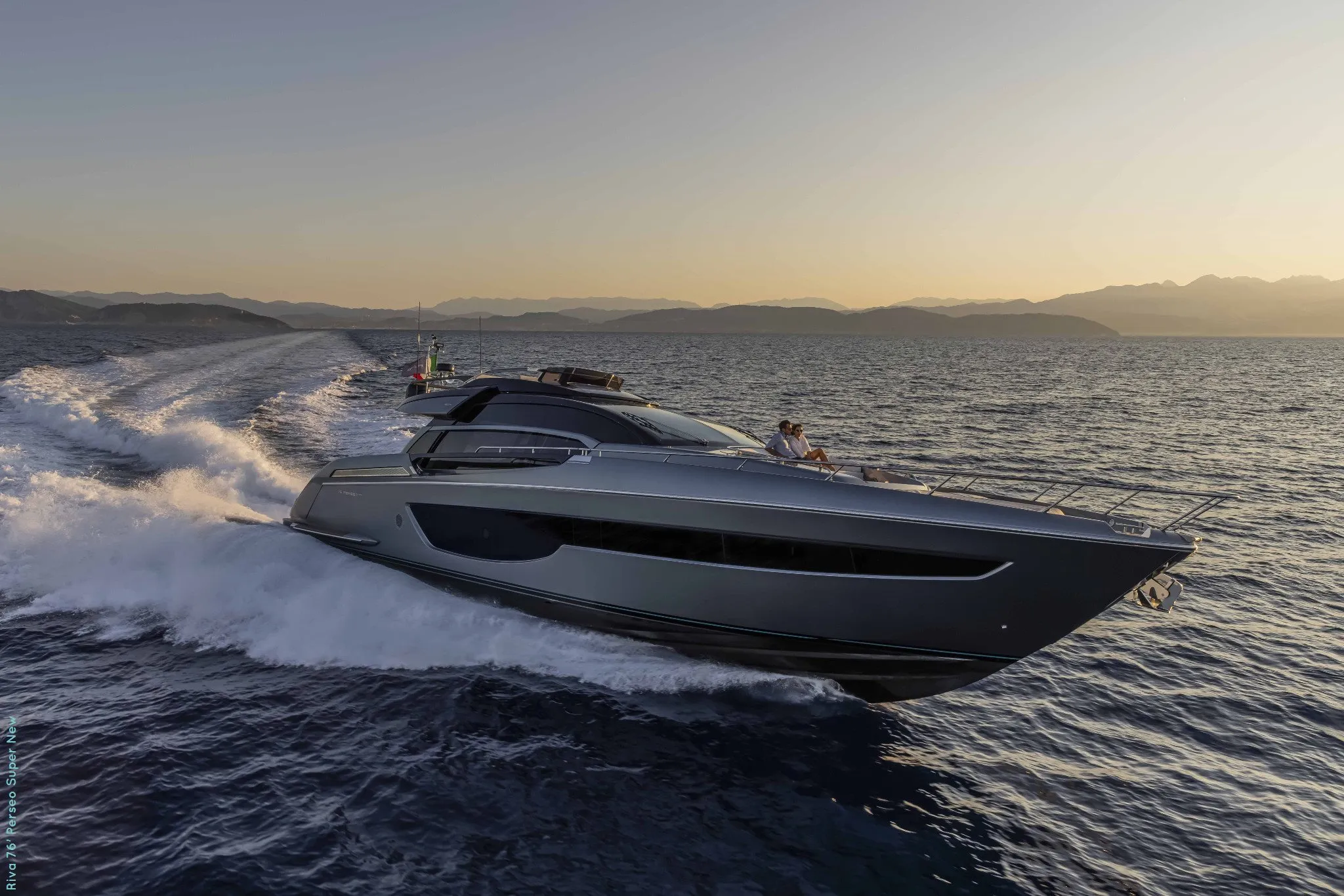
Riva 76' Perseo Super76' 3" (23.25 m)
View Specs & ReviewThe most famous small harbour in the Caribbean — and it takes no bookings
Yachting in St Barthélemy
A Minted Location · St Barthélemy, The Leewards
The single most useful sentence anyone has published about Port de Gustavia is five words long, and it is in the Collectivité's own port regulation: "Aucune réservation de poste n'est possible." No berth reservation is possible. Not for a 40-footer, not for a 200-footer, not in January, not for the Bucket. Places are allocated by the port's agents in the chronological order of arrival declarations, and a boat that does not get one waits at anchor.
That is the whole market in one line. What the Collectivité publishes in place of a berth list is a quay-by-quay allocation, and read it slowly: the Quai Bord de Mer, the Quai du Centenaire, the Quai de la Poste, the Quai Atwater, the Quai de carénage, the Quai des Marins and the Quai de l'Hôtel de la Collectivité are all reserved for pleasure vessels "ne dépassant pas 11 mètres de longueur hors tout" — 36 ft (11 m). The Anse de Corossol and the Anse de Public take anchoring and buoys for unoccupied boats to 32 ft (9,99 m).
Only two quays take the big boats at all. "Le reste du Quai de la République, et le Quai du Général de Gaulle accueillent les grands yachts jusqu'au droit de la Capitainerie" — the rest of the République and the Général de Gaulle take the large yachts, as far as the harbour office and no further.
So the famous picture — the row of big hulls stern-to along Gustavia — is the small end of the fleet. The rest lie in the avant-port, the waiting anchorage outside buoys G1 and G2, which the regulation defines as "une zone de mouillage affectée à tout navire en attente": a holding area for any vessel waiting. Arrive outside the Capitainerie's hours and that is compulsory, not optional. Everyone above the harbour's appetite anchors off and tenders in, and the Collectivité has published an official dinghy quay for exactly that.
⚠️ And then the ceiling most owners never see coming. The two anchorages people actually want — Colombier and Île Fourchue — are inside the Réserve Naturelle, and the reserve's own rule is that "dans les baies de Fourchue et Colombier, les navires de plus de 25 mètres ne sont pas autorisés." Vessels over 82 ft (25 m) are not permitted. The eco-moorings cap at 20 tonnes and 25 metres, 96 hours at a time, and a boat must then spend 96 hours outside the reserve before it may come back. St Barths is a superyacht hub whose best water is closed to superyachts.
Where to keep a yacht in St Barthélemy
Port de Gustavia is one port with three jobs, and the Collectivité's regulation says so plainly: "Le port de GUSTAVIA est à la fois un port de plaisance, un port de pêche et un port de commerce." The plan d'eau runs from the Pointe du Fort Oscar and the Petit Saint du Bas across to the Gros Ilets, marks A and B, and the south point of the Anse des Gascons.
| Berths, LOA and depth | Settled on arrival by the port's agents — confirm on VHF 12 or +590 590 27 66 97 |
| Most Gustavia quays | Pleasure vessels "ne dépassant pas 11 mètres" — 36 ft (11 m), beam at least 0.30 m narrower than the berth |
| The big-yacht quays | "Le reste du Quai de la République, et le Quai du Général de Gaulle" — as far as the Capitainerie |
| Corossol · Anse de Public | Anchor and buoys, unoccupied boats to 32 ft (9,99 m) only |
| Avant-port | Outside buoys G1 and G2 — "zone de mouillage affectée à tout navire en attente" |
| Reservations | "Aucune réservation de poste n'est possible." |
| VHF | Channel 12, and call fifteen minutes before entering the port perimeter |
| Capitainerie | 07:00–18:00, every day, all year |
| Water | €0.012 per litre subscribed · €0.019 per litre transient, metered at every quay |
| Showers and heads | 07:30–18:00, port users only, no laundry |
The clocks here are strict, and they are written down. Under Article 11.2.2, pleasure vessels at the quay "ne peuvent accoster entre 17 heures et 7 heures le lendemain" and "ne peuvent appareiller entre 15 heures et 7 heures le lendemain." You cannot come alongside after 17:00 and you cannot leave after 15:00 — with off-season derogations to depart up to 17:00 subject to traffic. A boat holding a stationing permit that goes out for the day must be back on its spot before 17:00 or lose the benefit of it. Entry and exit are only permitted during the Capitainerie's hours; arrive later and you anchor in the avant-port and declare at opening.
Berth allocation is a police decision, not a booking. The agents fix the place "quelle que soit la durée du séjour envisagée", on the port's capacity, the chronological order of requests, and the vessel's length, beam, draft and state of upkeep. They also fix how long you may stay, and any vessel in escale must move on first instruction. Longer-term users hold an amodiation — monthly or annual, strictly personal, never lettable or transferable, with no acquired right of renewal.
Two mooring rules catch people. "L'amarrage à couple est interdit" — rafting up is prohibited unless the port's agents order it. And "le navire d'une longueur supérieure ou égale à 25 mètres (82 pieds) amarrés arrière à quai, devra affourcher" — at 82 ft (25 m) and above, stern-to means two anchors, and a boat lying stern-to on one anchor must have at least its own length of chain between anchor and bridle.
Insurance is a condition of entry, not a formality. The regulation makes access, berth allocation and occupation conditional on cover that includes damage to port structures, pollution of any kind, fire and its spread, and refloating, removal and destruction of the wreck in the event of the vessel sinking in the port or in the access channel. The port also disclaims custody outright: paying a fee "ne peut être assimilé à une convention de gardiennage ou de dépôt."
The berthing tariff is settled at the Capitainerie. Article 18 puts the redevances on the notice board there, so budget by asking on +590 590 27 66 97 — and note that the fee is payable in advance, with no prorata for days absent or an early departure.
Marinas
| Name | Where | Max yacht | Slips | Fuel |
|---|---|---|---|---|
| Port de Gustavia — Port de PlaisanceGustavia allocates by quay rather than by a single size cap. Most of the harbour — Quai Bord de Mer, Quai du Centenaire, Quai de la Poste, Quai Atwater, Quai de carénage, Quai des Marins and the Quai de l'Hôtel de la Collectivité — is reserved for pleasure vessels "ne dépassant pas 11 mètres de longueur hors tout" (36 ft), with beam at least 0.30 m narrower than the berth. "Le reste du Quai de la République, et le Quai du Général de Gaulle accueillent les grands yachts jusqu'au droit de la Capitainerie." Capitainerie 07:00–18:00 every day of the year, VHF channel 12, and contact required fifteen minutes before entering the port perimeter. No berthing 17:00–07:00, no departure 15:00–07:00. Rafting up is prohibited. At 25 m (82 ft) and above, stern-to means two anchors. Water metered at €0.012/litre subscribed and €0.019/litre transient; showers and heads 07:30–18:00. Berthing rates are posted at the Capitainerie under Article 18 — ask on +590 590 27 66 97, and note the fee is payable in advance with no prorata for days absent or an early departure. | Gustavia, west coast | — | — | Station de carburant on the Quai Jeanne d'Arc at the commercial port |
Fuel docks
| Name | Where | Max yacht | Slips | Fuel |
|---|---|---|---|---|
| Port de Gustavia — Port de Commerce and the fuel stationThe Quai Jeanne d'Arc and its terre-pleins are assigned to commercial vessels "sauf approvisionnement des autres navires à la station de carburant" — the one exception being other vessels taking fuel. Hours are Monday–Friday 06:00–18:00 and Saturday 06:00–12:00, closed Saturday afternoons, Sundays and public holidays; commercial vessels may only berth or sail within them, and an exceptional movement needs at least 24 clear hours' notice on a weekday and attracts a specific tax. Pilotage is compulsory for commercial vessels over 100 m LOA, and the pilot's tariff is "affiché à la Capitainerie". | Quai Jeanne d'Arc, Gustavia | — | — | Station de carburant on the Quai Jeanne d'Arc — the regulation's only stated refuelling point |
Figures are as each facility publishes them on its own site; blank cells mean the facility doesn't state a number. Confirm slip availability and current rates directly — or ask us to make the calls.
Cruising from St Barthélemy
Clearance is compulsory and it is a paper act, not a digital one. The port states that "les formalités d'entrée et sortie sont obligatoires pour l'accès au port de plaisance de Gustavia", that they may be filed online a maximum of 24 hours ahead through the port's clearance portal, and — the part people miss — that "l'enregistrement de ces formalités ne se fera qu'après impression et signature du document au bureau du port." Filing online does not clear you in. Printing and signing at the port office does. The port also states that no local agent is required: "la présence d'un agent représentant le navire n'est pas obligatoire au port de Gustavia", and that every officer at the Capitainerie is bilingual.
On customs, St Barths is not where most people think it is. The Direction générale des douanes states it flatly: "Depuis le 1er janvier 2012, elle est devenue un « pays et territoire d'Outre-mer » (PTOM), situé hors du territoire douanier de l'UE. Elle bénéficie ainsi d'une large autonomie en matière douanière." Saint-Barthélemy is French, and it is outside the European Union's customs territory. A droit de quai of 5% applies to all goods brought into the island.
That matters more here than anywhere else in the Caribbean because of what is fifteen miles away. The same douane page states that Saint-Martin's status "n'a pas été modifié" — it is a région ultrapériphérique, inside the Community customs territory, with a historic "port-franc" regime. Two French islands, one short hop apart, on opposite sides of the EU customs line. Anything you plan to import, land or have shipped in should be planned around which island you do it on.
Immigration is one email address. The port publishes the Gendarmerie nationale, bta.st-barthelemy@gendarmerie.interieur.gouv.fr — ask them before you plan crew changes around a nationality.
The Réserve Naturelle is the second regime, and it is stricter than the port's. It is managed by the Agence Territoriale de l'Environnement, covers 1,200 hectares of marine domain in five separate zones, and it publishes hard numbers:
| Colombier · Fourchue | "les navires de plus de 25 mètres ne sont pas autorisés" — over 82 ft (25 m) not permitted |
| Anchoring there | Requires insurance carrying the "retirement et destruction" clause |
| Eco-moorings | 20 tonnes and 25 metres maximum · 96 hours at a stretch |
| Coming back | 96 hours outside the reserve before you may return |
| Reinforced protection zone | "interdiction totale de pêcher, de poser l'ancre et de pratiquer la plongée en scaphandre" |
| Dive moorings | 23 dive sites · boats to 10 tonnes and 15 metres · one boat per buoy · 2h30 maximum |
| Speed | 5 knots in the reserve's bays, within 300 m of the coast and within 100 m of the islets |
| Also banned | Jet skis, seabobs, electric surfboards, towed sports, under-hull lighting, drones below 300 m |
Speed changes with the water, and Article 11.1 draws the line. 3 knots inside the box formed by the Pointe du Fort Oscar, the Petit Saint du Bas, the Gros Ilets, buoys G1 and G2 and the Pointe à Corossol; 5 knots on the rest of the port's plan d'eau, and 5 knots again in the reserve's bays.
Refit work happens off the island. The regulation names slipways at Corossol, in the Anse de Public and near the post office at the Quai Atwater, and a "Quai de carénage" — but the nearest lift is a day-sail away in Sint Maarten, whose shipyard states 150- and 75-ton travelifts on three metres of draft. Plan a haul-out there.
⚠️ And the hardest sentence the port authority has ever written about itself: "Le Port de Gustavia n'est pas un abri en cas d'événement météorologique sévère ni a fortiori en cas de cyclone." The port of Gustavia is not a shelter in severe weather, still less in a cyclone. On forecast sustained winds of 80 km/h or more from any direction, or swell over three metres from the north-east through west to south, the Collectivité's own moorings — corps morts, chains and buoys — are formally prohibited from use. A signal at Fort Oscar warns of a severe event. At Vigilance JAUNE — possible danger more than 36 hours out — owners who cannot get their boat ashore on the island must leave the port and find shelter. At Alerte ORANGE, 24 to 36 hours before the system passes within 110 km of the Îles du Nord, owners who can get ashore must clear the port too. At Alerte VIOLETTE, all movement in the port is prohibited. Read those together with the nearest lift being in Sint Maarten and the storm plan writes itself: your hurricane plan for St Barths is somewhere else.
- The avant-port — the waiting anchorage outside G1 and G2 — Outside the Gustavia entrance buoysThe regulation defines the avant-port outside buoys G1 and G2 as "une zone de mouillage affectée à tout navire en attente" — a mooring zone for any waiting vessel. This is where the boats the harbour cannot take actually lie, and it is not optional in two cases: entry and exit are only authorised during the Capitainerie's hours, so a late arrival anchors here and declares at opening; and a vessel that has declared in but finds no place goes onto a waiting list kept at the Capitainerie and waits here. Access is by the Fort Oscar channel, marked with yellow buoys. Sound your own swinging room and confirm anything you are unsure of with the Capitainerie on VHF 12.
- Anse de Corossol and Anse de Public — North of Gustavia harbourDelimited by marker buoys, and the size limit is unusually precise: they permit "le mouillage sur ancre et sur bouées de bateaux non habités d'une longueur maximale hors-tout de 9,99 mètres" — anchoring and buoy moorings for UNOCCUPIED boats to 32 ft (9,99 m). Swimming is permitted. The regulation also names a slipway (cale de halage) and pontoon at Corossol and a second slipway in the Anse de Public, and requires both to be kept clear of any obstruction — no vessel, tender or vehicle may be parked or tied near them.
- The Réserve Naturelle — 82 ft and under at Colombier and Fourchue — Colombier, Fourchue, Frégate, Toc Vers, Gros Ilets, Pain de SucreThe rule that decides which boats can use the anchorages everyone wants: "dans les baies de Fourchue et Colombier, les navires de plus de 25 mètres ne sont pas autorisés" — vessels over 82 ft (25 m) are not permitted. Any vessel anchoring there must hold insurance naming the "retirement et destruction" clause. Eco-moorings take a maximum of "20 tonnes et 25 mètres" and may be occupied "96 heures d'affilée", after which the vessel must leave and may only return after a minimum of 96 hours outside the reserve; the same size and time limits apply where anchoring is permitted. The reinforced protection zone carries an "interdiction totale de pêcher, de poser l'ancre et de pratiquer la plongée en scaphandre". 23 dive sites have moorings for boats of "10 tonnes et 15 mètres maximum", one boat per buoy, 2h30 maximum, with sailboat anchoring and mooring strictly prohibited. 5 knots in the bays, within 300 m of the coast and within 100 m of the islets. Jet skis, seabobs, electric surfboards, towed sports, under-hull lighting and drones below 300 m are banned. The reserve covers 1,200 hectares in five separate zones and is managed by the Agence Territoriale de l'Environnement at agencedelenvironnement.fr.
- Clearance, customs and immigration — French, and outside the EU customs territory — Saint-BarthélemyThe Direction générale des douanes states that "depuis le 1er janvier 2012, elle est devenue un « pays et territoire d'Outre-mer » (PTOM), situé hors du territoire douanier de l'UE", with a droit de quai of 5% on all goods brought into the island. Saint-Martin, fifteen miles away, is the opposite: a région ultrapériphérique inside the Community customs territory with a historic "port-franc" regime — two French islands on opposite sides of the EU customs line, so plan anything you import or have shipped in around which island you land it on. On clearance the port states the formalities are compulsory, may be filed online a maximum of 24 hours in advance, and that "l'enregistrement de ces formalités ne se fera qu'après impression et signature du document au bureau du port"; no local agent is required and every Capitainerie officer is bilingual. Immigration questions go to the Gendarmerie nationale at bta.st-barthelemy@gendarmerie.interieur.gouv.fr — ask them before you plan crew changes around a nationality.
Service, refit & supplies
Shipyards & refit
| Name | Where | Max yacht | Dockage |
|---|---|---|---|
| Haul-out and storm season — both happen off the islandThe port regulation names slipways at Corossol, in the Anse de Public and near the post office at the Quai Atwater, and a "Quai de carénage", but the nearest lift is Sint Maarten's shipyard, at 150 and 75 tons on three metres of draft — that is where refit work goes. The port authority is equally direct about weather: "Le Port de Gustavia n'est pas un abri en cas d'événement météorologique sévère ni a fortiori en cas de cyclone." On forecast sustained winds of 80 km/h or more from any direction, or swell over three metres from north-east through west to south, the Collectivité's own moorings — corps morts, chains and buoys — are formally prohibited from use, with a warning signal at Fort Oscar. At Vigilance JAUNE, more than 36 hours out, owners who cannot get the boat ashore on the island must leave the port to find shelter; at Alerte ORANGE, 24–36 hours before the system passes within 110 km of the Îles du Nord, those who can haul out must clear the port too; at Alerte ROUGE cargo work stops; at Alerte VIOLETTE all movement is prohibited. Plan the storm season somewhere else. | Saint-Barthélemy | — | — |
On the St Barthélemy calendar
St Barths runs year-round and the clocks that matter are the port's, not a season's.
- Capitainerie (port de plaisance): 07:00–18:00, every day of the week, all year. Communications on VHF channel 12, and the regulation requires contact fifteen minutes before entering the port perimeter.
- Port de commerce: Monday–Friday 06:00–18:00, Saturday 06:00–12:00. Closed Saturday afternoons, Sundays and public holidays. A commercial berth must be requested in writing at least 48 hours before arrival.
- No berthing between 17:00 and 07:00. No departure between 15:00 and 07:00. Off-season derogations may allow departure to 17:00. A day-absent boat holding a place must be back before 17:00 to keep it.
- Entry and exit are only authorised during the Capitainerie's hours. Outside them, anchor in the avant-port and declare at opening.
- Clearance online: a maximum of 24 hours in advance — and it only registers once printed and signed at the port office.
- Showers and heads: 07:30–18:00. The Quai du Général de Gaulle's south return must stay clear from 18:00 to 07:00.
- Reserve moorings: 96 hours maximum, then 96 hours outside the reserve before returning. Dive moorings: 2h30.
- Storm clocks are published in phases, not dates: Vigilance JAUNE (more than 36 h out) — boats that cannot be hauled ashore must leave the port; Alerte ORANGE (24–36 h) — boats that can be hauled must leave; Alerte ROUGE (6–8 h) — commercial operations stop; Alerte VIOLETTE — all movement prohibited.
The racing calendar belongs to the organising clubs rather than to the port. The New Year's Eve Regatta, the Bucket, Les Voiles de Saint-Barth, the Transat AG2R and the Cata Cup all run out of Gustavia — take the dates from the organiser for the season you are planning. There is no peak-season booking window, minimum stay or special tariff, which follows from the rule at the top of this page: reservations do not exist here in any season.
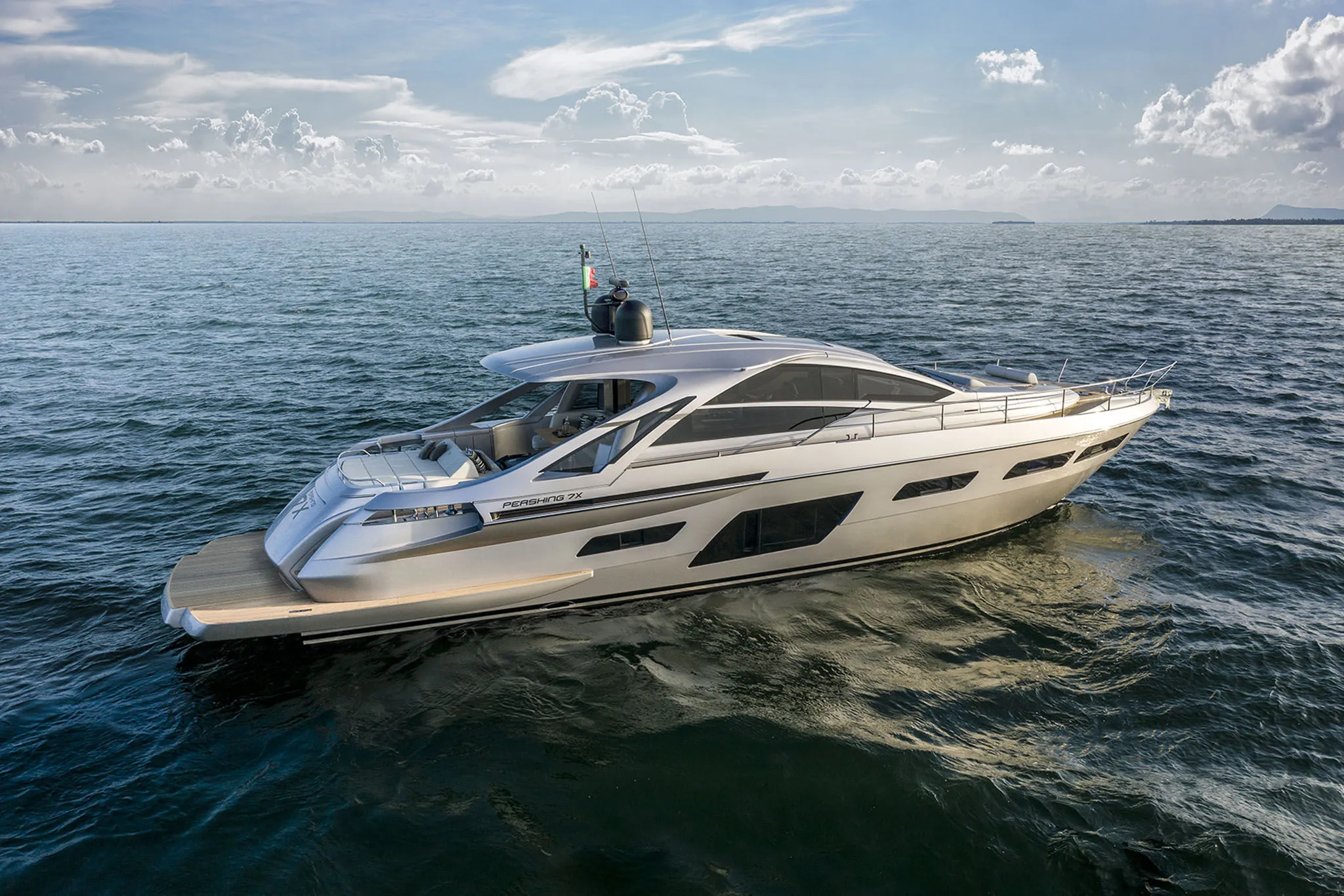
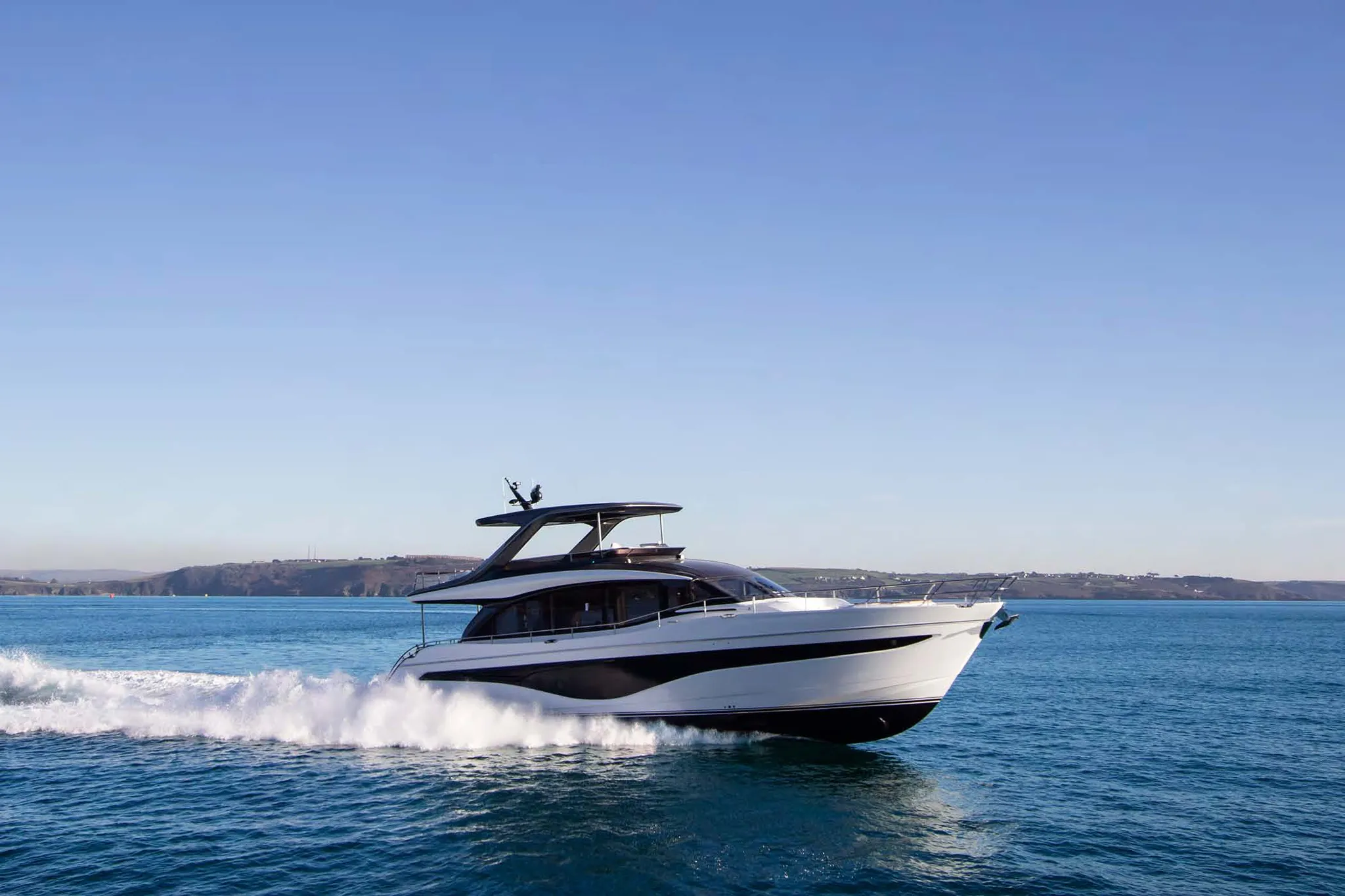
Yachts we'd shortlist for St Barthélemy
Reviewed the same way as everything on this site — specifications verified against the builder's own numbers.
Frequently Asked Questions
What is the largest yacht that can berth in Gustavia?
Gustavia sets its ceiling quay by quay rather than with a single number. The Quai Bord de Mer, Quai du Centenaire, Quai de la Poste, Quai Atwater, Quai de carénage, Quai des Marins and Quai de l'Hôtel de la Collectivité are reserved for pleasure vessels "ne dépassant pas 11 mètres" — 36 ft — while "le reste du Quai de la République, et le Quai du Général de Gaulle accueillent les grands yachts jusqu'au droit de la Capitainerie." So the big boats have two quays, as far as the harbour office and no further, and the practical ceiling is that allocation plus one rule: at 25 m (82 ft) and above, a vessel lying stern-to must moor with two anchors. Length, beam, draft and state of upkeep all weigh in the agents' decision — confirm yours with the Capitainerie on VHF channel 12 or +590 590 27 66 97.
Is Saint-Barthélemy in the European Union?
Not for customs. The Direction générale des douanes states that since 1 January 2012 Saint-Barthélemy has been a "pays et territoire d'Outre-mer" (PTOM) "situé hors du territoire douanier de l'UE", with wide customs autonomy of its own, and a droit de quai of 5% applies to all goods brought into the island. The contrast with its neighbour matters: Saint-Martin, fifteen miles away, remains a région ultrapériphérique inside the Community customs territory with a historic port-franc regime — two French islands on opposite sides of the EU customs line, so plan an import or a shipment around which of them you land it on. For immigration and nationality questions the port publishes one contact: the Gendarmerie nationale at bta.st-barthelemy@gendarmerie.interieur.gouv.fr.
Can a yacht be hauled out in St Barths, and is Gustavia a hurricane hole?
No to both. The port regulation names slipways at Corossol, in the Anse de Public and by the Quai Atwater, and a Quai de carénage, but the nearest lift is in Sint Maarten — a day-sail away, with 150- and 75-ton travelifts on three metres of draft. On weather the port authority is blunt about itself: "Le Port de Gustavia n'est pas un abri en cas d'événement météorologique sévère ni a fortiori en cas de cyclone." On forecast sustained winds of 80 km/h or more, or swell over three metres from north-east through west to south, the Collectivité's own moorings are formally prohibited from use, and from Vigilance JAUNE onward owners are required to take their boats out of the port to find shelter. Plan both refit and storm season somewhere else.
What are the anchoring rules in the St Barths nature reserve?
The Réserve Naturelle bars vessels over 25 metres — 82 ft — from the bays of Fourchue and Colombier outright, and any vessel anchoring there must carry insurance naming the "retirement et destruction" clause. The eco-moorings take a maximum of 20 tonnes and 25 metres, may be held for 96 hours at a stretch, and a boat must then spend at least 96 hours outside the reserve before returning; the same limits apply where anchoring is permitted. The reinforced protection zone bans fishing, anchoring and scuba diving entirely. The 23 dive moorings take boats to 10 tonnes and 15 metres, one boat per buoy, for a maximum of 2h30. Speed is 5 knots in the bays and within 300 m of the coast, and jet skis, seabobs and electric surfboards are prohibited.
Is there dock and dine in St Barths?
Not from a restaurant, but the Collectivité publishes something better: the Quai de la République at the terrains de boules is officially assigned to ships' tenders — a purpose-built dinghy landing in the middle of Gustavia, because the port's whole design assumes the big boats lie off and come ashore in the RIB. Take your place or lie off, land there, and walk; the waterfront restaurants are all within a few minutes of the quay. The tender rules come with it: mark "AX" and the mother ship's name, motor down while moored, lights after dark, a licence for engines of 6 CV or more, and nobody under fifteen unaccompanied. Barbecues aboard and running generators in the port are both prohibited.
Can you reserve a berth in Port de Gustavia, St Barths?
No. The Collectivité de Saint-Barthélemy's port regulation states it in five words — "Aucune réservation de poste n'est possible" — no berth reservation is possible, at any length and in any season. Places are allocated by the port's agents in the chronological order of arrival declarations, weighed against the port's capacity and the vessel's length, beam, draft and state of upkeep, and the agents also fix how long you may stay. A vessel that finds no place goes onto a waiting list kept at the Capitainerie and anchors in the avant-port outside buoys G1 and G2 while it waits. Call the Capitainerie on VHF channel 12 fifteen minutes before entering the port perimeter.