
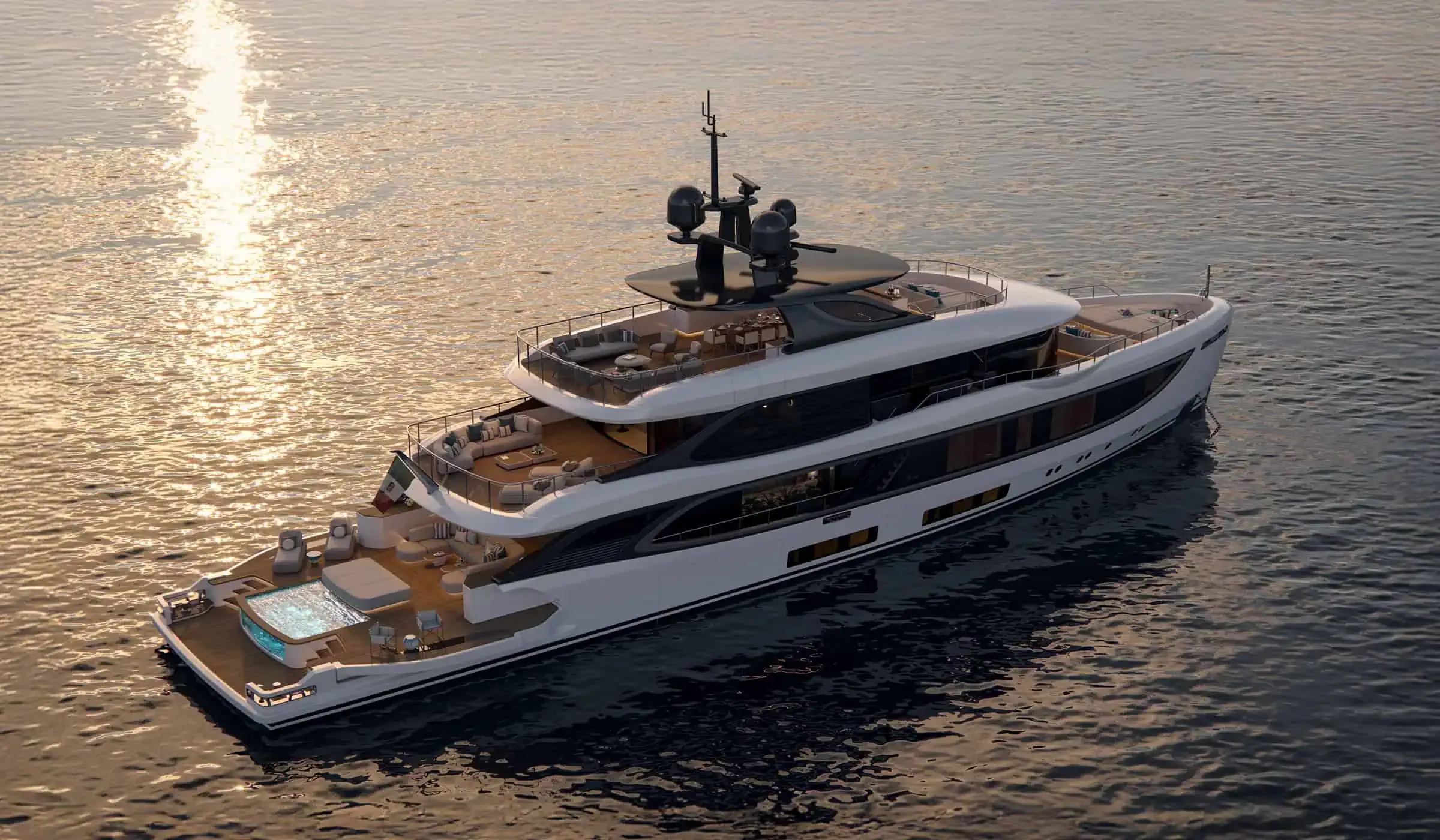
Benetti Oasis 42M139' 5"
View Specs & ReviewThe last full-service port before Mexico — berth, refit, clear and provision in one harbour
Yachting in San Diego
A Minted Location · San Diego, California
Three hundred feet, confirmed twice by two different authorities. Fifth Avenue Landing on the Embarcadero states it is "accepting reservations for superyachts up to 300 feet", and US Customs and Border Protection designates that same dock a reporting location for "Vessels 125 to 300 feet."
San Diego is where a 150-foot yacht can berth, refit, clear customs and provision inside one harbour — and then run 360 miles to Turtle Bay without touching another full-service port.
The berthing depth is real. Kona Kai publishes 520 slips from 30 to 250 feet and calls itself the closest marina to open ocean in San Diego Bay — no bridges between it and the sea. Shelter Island Marina publishes 200 feet, Shelter Cove 190, Loews Coronado 140 across 80 slips with 100-amp power, and Harbor Island West 620 slips with a fuel dock and a free 24-hour pump-out.
Refit is the reason big boats come here. One Chula Vista yard publishes 665 tons and 820 tons on different pages of its own site, along with 220 feet of length, a beam given as 53 feet in one place and 54 in another, five docks taking vessels to 265 feet with 13 feet of draft, and up to 4,000 amps of electrical service. Plan against the lower figures and confirm anything above them with the yard.
And then there is Mexico. Buyers of 40-to-200-foot boats here cross the border, and the rules on both sides are published and specific. They are below.
Where to keep a yacht in San Diego
Fifth Avenue Landing is the market's ceiling. A "12-slip boutique San Diego superyacht marina and transient berthing facility… accepting reservations for superyachts up to 300 feet", downtown at 600 Convention Way, with blackwater pump-out and ample shore power at every berth and a named dockmaster. CBP designates it a reporting location for vessels 125 to 300 feet, staffed 06:00–22:00 Monday to Friday, with arrangements made in advance on (619) 857-4000.
Below it, the inventory is genuinely deep:
| Marina | Published maximum | Slips |
|---|---|---|
| Kona Kai Marina, Shelter Island | 250 ft | 520, from 30 ft — "closest marina to open ocean in San Diego Bay" |
| Shelter Island Marina | 200 ft | slips from 20 ft |
| Shelter Cove Marina, America's Cup Harbor | 190 ft | 161, from 28 ft |
| Loews Coronado Bay Marina | 140 ft | 80, with 30, 50 and 100-amp and pump-out at the slip |
| Safe Harbor Cabrillo Isle, Harbor Island | 139 ft end ties | wet slips 30–77 ft; max beam 23′8″, draft 12 ft, height unrestricted |
| Marina Cortez, Harbor Island | 120 ft | over 500, from 25 ft |
| Pier 32 Marina, National City | 120 ft | from 28 ft, six miles south of downtown |
| Safe Harbor Bayfront, Chula Vista | 112 ft end ties | max beam 41 ft, draft 9 ft |
| Safe Harbor Sunroad, Harbor Island | 110 ft | transient 30–110 ft; hosts the San Diego International Boat Show |
| Safe Harbor South Bay, Chula Vista | 104 ft | beam, draft and height all unrestricted |
| Harbor Island West Marina | 100 ft | 620, with a fuel dock and free 24-hour pump-out |
Transient pricing here is unusually transparent, and flat. Pier 32 publishes a guest rate of $3.00 per foot per night and a transient rate of $6.00, with no season column at all. Sun Harbor publishes $2.25 per foot per day, "whether it's for one day or thirty." Shelter Cove splits by length rather than by month: $3.00 per foot to 46 feet and $3.50 above, up to two weeks. Safe Harbor publishes explicit transient beam, draft and height limits at every property.
The one variable rate in the market is event-driven rather than seasonal. Half Moon Marina on Shelter Island charges $3.25 per foot per day on non-concert nights, $5.25 on concert nights and $5.00 on major holiday weekends — there is a concert venue next door, so check the calendar before you book.
The Port's own guest docks are at the Shelter Island Harbor Police Dock, 26 guest slips where "vessels can stay for periods of up to 15 days, within a 40 day period." Two sizes are published for the one structure, and both matter. The Port's guest-dock terms cover "recreational vessels up to 65-feet in length" at $1.27 per lineal foot per day; CBP describes the same dock as "Shelter Island Harbor Police Dock (Vessels up to 235 feet)… Dock length is 235-feet and Masters should be aware the water depth adjacent to this dock is 14-feet at MLLW. There are no vertical height restrictions." Plan a guest-dock stay against 65 feet, and arrange anything larger with the Harbor Police Communications Center on (619) 686-6272 before you arrive. The rate is moving as well: $1.27 on the guest-docks page, $1.47 from 15 February 2026 and $1.51 from 1 July in the Port's own reservation system — budget the higher.
Refit is the deepest part of this market.
The Chula Vista yard is the big one, and it publishes its capacity three ways. Its home page says "Haul Outs up to 665 Tons." Its capabilities page says "up to 820 tons, 220 feet long and 54 feet wide." Its services page lists "100, 300 and 820-ton travel lifts" and a "100-ton variable width and 665-ton Tier 4 travel lift", at "220 feet (67m) in length and 53 feet (16m) in beam." Plan against 665 tons, 220 feet and 53 feet of beam, and confirm anything larger with the yard. It also publishes five docks taking vessels up to 265 feet with drafts to 13 feet, and up to 4,000 amps of electrical service.
On Shelter Island, a second yard publishes a 150-ton travel lift "accommodating vessels of up to 200 feet in length", with a 200-foot work pier carrying 16 feet of water. A third publishes hoists and lifts to 150 tons with a 102-foot crane boom. On Mission Bay a fourth runs a 100-ton lift with 90-foot side ties across 228 slips.
The Port lists four more repair facilities around Shelter Island and Point Loma. They quote tonnage, maximum LOA, beam and draft job by job rather than on a spec sheet, so call with your dimensions before you plan a haul-out around a date.
Fuel is at three docks, all publishing both winter and summer hours, all seven days a week: Harbor Island West 7am–5pm winter, 7am–7pm summer; a Shelter Island dock 7am–5:30pm and 7am–7pm; and an America's Cup Harbor dock, family-owned since 1972, 7am–6pm and 7am–8pm.
Anchoring is free but permitted, and the Port's terms are specific. A-1 La Playa Cove is a "72-hour, weekend-only anchorage" from 09:00 Friday to 09:00 Monday, extending to 96 hours on holiday weekends, maximum 40 boats. A-5 Glorietta Bay is up to 72 hours with a minimum of one calendar day between permits, maximum 20 boats. A-9 Cruiser Anchorage is "to non-residents of San Diego County only", requires a Harbor Police vessel inspection and an in-person permit, and allows 30 days with two extensions to a total of 90 days in any 12 months, renewing every 30 days without exception.
Three terms to plan around. "No fee is required to anchor in these areas; however, a permit is required." There must be a 24-hour gap before applying for another permit. And "the maximum length for all vessels at the anchorages and slips is 65'" — catamarans and anything over 15 feet of beam go to designated slips instead.
⚠️ "The discharge of black water (sewage) from any vessel while berthed, moored, or anchored in San Diego Bay is prohibited." Every marina in the table above publishes a pump-out — use one.
Marinas
| Name | Where | Max yacht | Slips | Fuel |
|---|---|---|---|---|
| Fifth Avenue LandingThe market's ceiling: "12-slip boutique San Diego superyacht marina and transient berthing facility… Accepting reservations for superyachts up to 300 feet" — and CBP designates the same address a clearance reporting location for vessels 125 to 300 feet. Blackwater pump-out and ample shore power at every berth, with a named dockmaster. Arrangements must be made in advance on (619) 857-4000. | Downtown Embarcadero, 600 Convention Way | 300 ft | 12 | — |
| Kona Kai Marina"520 boat slips from 30' - 250'" and the "closest marina to open ocean in San Diego Bay" — no bridges between it and the sea, which matters for anything with real air draft. | Shelter Island | 250 ft | 520 | — |
| Shelter Island Harbor Police DockTwo sizes are published for the one structure, and both matter. The Port's guest-dock terms cover "recreational vessels up to 65-feet in length" at $1.27 per lineal foot per day. CBP describes the same dock as "Vessels up to 235 feet… Dock length is 235-feet and Masters should be aware the water depth adjacent to this dock is 14-feet at MLLW. There are no vertical height restrictions." Plan a guest-dock stay against 65 feet and arrange anything larger with the Harbor Police Communications Center on (619) 686-6272 before you arrive. The rate is moving as well: $1.27 on the guest-docks page, $1.47 from 15 February 2026 and $1.51 from 1 July in the Port's own reservation system — budget the higher. | 1401 Shelter Island Drive | — | 26 | — |
| Shelter Island Marina"Slips from 20 to 200 feet." One of the few marinas on the bay publishing a maximum at or above 190 feet. | Shelter Island | 200 ft | — | — |
| Shelter Cove Marina"Slips vary in size from 28' to 190'", in America's Cup Harbor. It prices by length rather than by month, with no seasonal tier. | America's Cup Harbor | 190 ft | 161 | — |
| Loews Coronado Bay Marina"80 slips to accommodate vessels up to 140 feet" with 30, 50 and 100-amp electricity and pump-out at the slip. | Coronado | 140 ft | 80 | — |
| Safe Harbor Cabrillo IsleWet slips 30–77 ft with end ties from 70 to 139 ft, on Harbor Island. Beam, draft and height limits are published alongside length, so a wide or deep boat can be checked against the berth before booking. | Harbor Island | 139 ft | — | — |
| Harbor Island West Marina"620 boat slips ranging in size from 21 to 100 feet", with a pump-out that is "open 24 hours a day" and carries "no fee." One of the bay's three fuel docks. | Harbor Island | 100 ft | 620 | Yes — winter open daily 7am–5pm, summer 7am–7pm |
| Pier 32 MarinaSlips 28 to 120 feet, six miles south of downtown. Two flat rates, no seasonal tier. | National City, at the mouth of Sweetwater Channel | 120 ft | — | — |
| Marina Cortez · Safe Harbor SunroadMarina Cortez publishes over 500 slips from 25 to 120 feet. Sunroad publishes 110 feet, a pump-out free to members and $25 for the public, and hosts the San Diego International Boat Show each June. | Harbor Island | 120 ft | 500 | — |
| Safe Harbor Bayfront · Safe Harbor South BayThe south-bay pair. Bayfront publishes a 41-foot transient beam allowance — a genuine option for a large catamaran — with end ties to 112 ft over 9 ft of draft. South Bay takes 25 to 104 ft with beam, draft and height all unrestricted. | Chula Vista | 112 ft | — | — |
| Half Moon MarinaThe one variable rate in San Diego, and it is event-driven rather than seasonal: there is a concert venue next door. Check the calendar before you book. | Shelter Island | 80 ft | — | — |
| Sun Harbor Marina"Slip sizes range from 38 to 76 feet. Each slip comes with an individual pump-out station." Individual pump-out at every slip is rare enough to be worth noting. | America's Cup Harbor | 76 ft | — | — |
Yacht clubs
| Name | Where | Max yacht | Slips | Fuel |
|---|---|---|---|---|
| San Diego Yacht Club · Coronado Yacht Club · Coronado Cays Yacht ClubSan Diego Yacht Club runs an outstation "3 miles northwest of Avalon on Catalina Island" and hosts the 2026 Etchells Worlds; visitor terms come from the club direct. Coronado YC has 250 wet slips and 79 dry, with dinghy dock use "limited to member and reciprocal vessels less than 14' LOA." Coronado Cays YC takes reservations via its dockmaster on 619-730-8505. | Point Loma, Coronado and the Coronado Cays | — | 250 | — |
Fuel docks
| Name | Where | Max yacht | Slips | Fuel |
|---|---|---|---|---|
| The three fuel docksHarbor Island West 7am–5pm winter and 7am–7pm summer; a Shelter Island dock 7am–5:30pm and 7am–7pm; and an America's Cup Harbor dock, family-owned since 1972, 7am–6pm and 7am–8pm. The seasonal difference across the whole market is one to two hours of daylight — not a closure. | Harbor Island, Shelter Island and America's Cup Harbor | — | — | Yes — all three publish both winter and summer hours, seven days a week |
Figures are as each facility publishes them on its own site; blank cells mean the facility doesn't state a number. Confirm slip availability and current rates directly — or ask us to make the calls.
Cruising from San Diego
⚠️ This is a naval harbour, and the federal standoff rules are not advisory.
Under 33 CFR Part 165: "Naval vessel protection zone is a 500-yard regulated area of water surrounding large U.S. naval vessels", where "large U.S. naval vessel means any U.S. naval vessel greater than 100 feet in length overall." The zone exists at all times — "whether the large U.S. naval vessel is underway, anchored, moored, or within a floating dry dock."
Five hundred yards is the zone; one hundred yards is the hard standoff. "When within a naval vessel protection zone, all vessels shall operate at the minimum speed necessary to maintain a safe course… no vessel or person is allowed within 100 yards of a large U.S. naval vessel unless authorized." To request authorisation, contact the Coast Guard, the senior naval officer present, or the official patrol on VHF-FM channel 16.
San Diego-specific security zones add more: Naval Station San Diego, where transit permission comes from 619-683-6495 or VHF 16; the Point Loma naval facility, which requires 100 feet of standoff, with the Captain of the Port on (619) 278-7033 or Navy Port Operations on (619) 556-1433; a 100-yard radius around any cruise ship landward of the sea buoys; and recurring 800-foot fireworks safety zones for the summer symphony series and the 4 July displays at Mission Bay and Glorietta Bay.
Clearing back in from Mexico — CBP, cited exactly. Under 19 CFR 4.2, "any small vessel arriving to the United States from a foreign port or place… are required to report their arrival to CBP immediately (see 19 U.S.C. 1433)." The San Diego reporting phone is (619) 491-2600 — "call… in advance of your arrival to receive specific reporting instructions."
Have ready: *"name, date of birth and citizenship of all persons on board (including passport number); name of the boat and/or boat registration number; CBP user fee decal number (if 30 feet or longer); homeport and current location; and return contact number."*
| Designated reporting location | Vessel size | Hours | Method |
|---|---|---|---|
| Shelter Island Harbor Police Dock, 1401 Shelter Island Dr | Vessels up to 235 feet | 24 hours, 7 days | "immediately contact CBP by dialing *82 on the telephone located at the top of the dock brow" |
| Dana Launch Ramp Public Dock, Mission Bay | Under 42 ft of vertical clearance and up to 50 feet | 24 hours | (619) 685-4300 option 4 |
| Fifth Avenue Landing, 600 Convention Way | 125 to 300 feet | 06:00–22:00 Mon–Fri | Arrangements "must be made prior to arrival by calling (619) 857-4000" |
Over 130 feet: contact the Harbor Police Communications Center on (619) 686-6272 eight hours before arrival and request dock space. The dock is 235 feet with 14 feet of water at MLLW and no vertical height restrictions. CBP ROAM is available in California and has replaced the retired Small Vessel Reporting System.
Going the other way — Mexico's own rules, in ANAM's own words. The temporary import permit regime covers "embarcaciones de recreo y deportivas, del tipo lancha, yate o velero de más de cuatro metros y medio de eslora" — recreational vessels over 4.5 metres, about 14.8 feet.
- Cost: "En Módulos CIITEV… así como en los 10 Consulados de México en EEUU, el costo es de 51 dólares más IVA. En el caso de permisos solicitados a través de internet, el costo es de 45 dólares más IVA."
- Validity: ten years, with "entradas y salidas múltiples" — multiple entries and exits — for the life of the permit.
- Departing by sea: "Cuando la embarcación salga del país vía marítima, el original y copia simple del despacho de altura sellado por autoridad portuaria" — the despacho de altura, stamped by the port authority, is the document that closes out the permit.
Permits come from CIITEV modules at a customs port of entry — Ensenada is listed — from ten Mexican consulates in the US including Los Angeles, San Bernardino and Sacramento, or online.
The working sequence on the Mexican side: apply for the permit "between 60 and seven days before you depart"; the original stays aboard at all times; clear in with a crew list, then immigration for FMMs at $332 MXN per person, then the Port Captain. Clear out with a "crew list for exiting Mexico (Zarpe)", then immigration, then the Port Captain. One West Coast note worth having: "There isn't a Banjército Office in Cabo San Lucas; therefore it is recommended to use Ensenada, Baja California, as your first Port of Entry" if you are coming down from the United States.
Distances south, from the rally organiser's own published schedule: San Diego to Turtle Bay 360 miles, then a 240-mile leg to Bahía Santa María and a 180-mile leg to Cabo.
Tide and current. NOAA station 9410170, epoch 1983–2001: MHHW 9.52 · MHW 8.77 · MSL 6.73 · MLW 4.73 · MLLW 3.79. Great Diurnal Range 5.72 feet, mean range 4.05. Highest astronomical tide 11.413 feet (5 December 2025); highest observed 12.027 (25 November 2015).
And one operational fact worth knowing before a big boat leaves on a spring tide. At the bay entrance station, 2026 maxima are about 2.05 knots on the flood and 3.03 on the ebb. The ebb consistently runs about a knot stronger than the flood.
- A-1 La Playa Cove — Shelter IslandFree but permitted: "No fee is required to anchor in these areas; however, a permit is required." Maximum 40 boats. Leave a 24-hour gap before applying for another permit, and note that "the maximum length for all vessels at the anchorages and slips is 65'."
- A-5 Glorietta Bay — Coronado, south of the golf courseMaximum 20 boats. Note also that the Port's designated Safe Harbor location relocated to the Glorietta Bay Basin with effect from 1 January 2025.
- A-9 Cruiser Anchorage — Point LomaOpen "to non-residents of San Diego County only." Requires a vessel inspection by a Harbor Police Officer, and permits "must be obtained in person" at 1401 Shelter Island Drive; notify Dispatch on (619) 686-6272. Marked by three large yellow can buoys warning of the restricted water toward the Coast Guard Air Station.
- Naval vessel protection zones — San Diego BayNot advisory. "Naval vessel protection zone is a 500-yard regulated area of water surrounding large U.S. naval vessels" — any naval vessel over 100 feet — and it exists at all times, underway, anchored, moored or in dry dock. Within it, operate at minimum safe speed, and "no vessel or person is allowed within 100 yards" unless authorised. Request authorisation on VHF-FM 16. The Point Loma naval facility requires 100 feet of standoff; cruise ships carry a 100-yard radius.
Service, refit & supplies
Shipyards & refit
| Name | Where | Max yacht | Dockage |
|---|---|---|---|
| Marine Group Boat WorksThe yard publishes its capacity three ways. Its home page says "Haul Outs up to 665 Tons." Its capabilities page says "up to 820 tons, 220 feet long and 54 feet wide." Its services page lists "100, 300 and 820-ton travel lifts" AND a "100-ton variable width and 665-ton Tier 4 travel lift", at "220 feet (67m) in length and 53 feet (16m) in beam." Plan against 665 tons, 220 feet and 53 feet of beam, and confirm anything larger with the yard. It also publishes five docks taking vessels up to 265 feet with drafts to 13 feet, and up to 4,000 amps of electrical service. | Chula Vista | 220 ft | — |
| Driscoll Boat WorksA "150 Ton Marine travel lift" "accommodating vessels of up to 200 feet in length", and the figure most yards omit: "Our 200 foot work pier has a water depth of 16 feet." Depth alongside is what actually decides whether a deep-draft boat can use a pier. | Shelter Island | 200 ft | Pier-side services, 220v 50a |
| Safe Harbor Shelter Island boatyard · Driscoll Mission BayThe Shelter Island yard publishes "Hoists & Lifts Max Weight: 150 tons" plus a crane with a 102-foot boom at 30 tons; maximum LOA is quoted on the call. Driscoll Mission Bay runs a 100-ton travel lift with 90-foot side ties across 228 slips from 25 to 82 feet, with 30A 110V and 50A 220V. | Shelter Island and Mission Bay | 90 ft | Shelter Island yard hours Mon–Fri 07:30–16:30 |
| The Shelter Island and Point Loma repair clusterThe Port lists four more repair facilities around Shelter Island and Point Loma, and the working waterfront behind them covers paint, rigging, engineering and electronics. Tonnage, maximum LOA, beam and draft are quoted job by job rather than on a spec sheet, so call with your dimensions and your dates before you plan a haul-out around them. | Shelter Island and Point Loma | — | — |
On the San Diego calendar
San Diego runs year-round.
Nothing here shuts for the winter. All three fuel docks publish winter and summer hours, both seven days a week — the seasonal delta is one to two hours of daylight, not a closure. Transient rate cards are flat, with no season column; one marina splits its rate by length rather than by month. The Port's anchorage and guest-dock rules carry no seasonal clause at all.
And the racing calendar runs January to December. The Islands Race sails in February, the Puerto Vallarta Race in February and March, and the Hot Rum Series in November and December.
Dated events, organiser-published only:
- SDYC Islands Race — 6 to 7 February 2026
- Puerto Vallarta Race — 26 February to 6 March 2026
- Day at the Docks — 19 April 2026, 09:00–17:00, at the sportfishing landings in Point Loma, "the West Coast's largest public celebration of sportfishing"
- SDYC Yachting Cup — 1 to 3 May 2026
- Etchells World Championship — 7 to 15 May 2026
- SoCal 300 — 28 to 30 May 2026
- San Diego International Boat Show — 11 to 14 June 2026, at Safe Harbor Sunroad on Harbor Island: Thursday pre-show 2–7pm, Friday and Saturday 10am–7pm, Sunday 10am–5pm, with both on-water and on-land exhibitions, 40-plus builders and brokerages, 150-plus vessels and 5,000-plus visitors a day
- SDYC Hot Rum Series — 7 November, 21 November and 5 December 2026
- Baja Ha-Ha XXXII — 2 to 14 November 2026. "Nov 2 — 10 am Boat Parade off Shelter Island with Mexican officials and fireboats", then "11 am start off Pt. Loma" for the 360-mile leg to Turtle Bay. Entry is limited to boats "between 27 and 125 feet in length."
Fireworks safety zones are written into federal regulation, so plan around them: the summer symphony series runs Friday, Saturday and Sunday from the last weekend of June through the first weekend of September, with 800-foot safety zones around the barges, and the Mission Bay and Glorietta Bay 4 July displays take one evening in the first week of July.
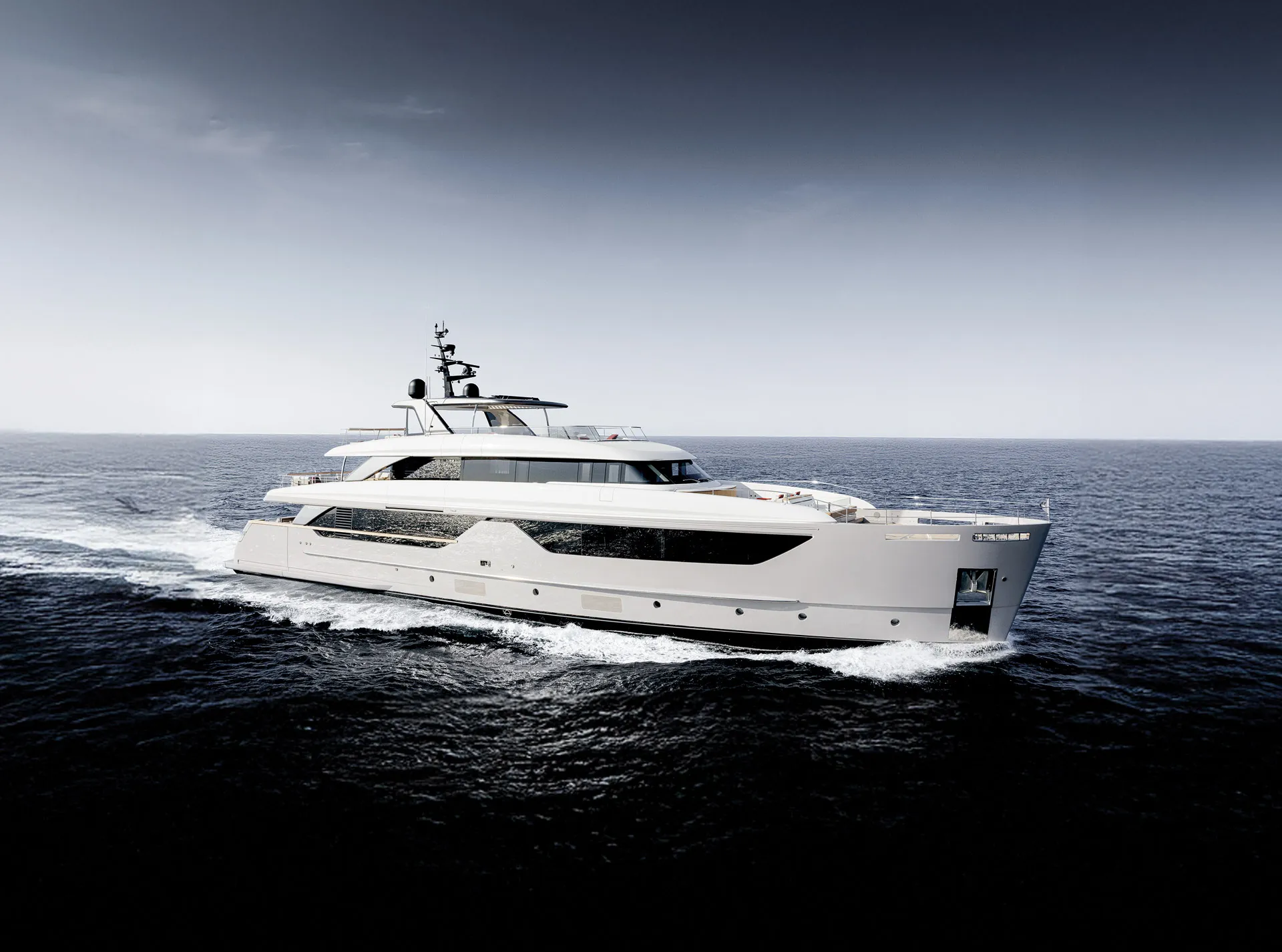
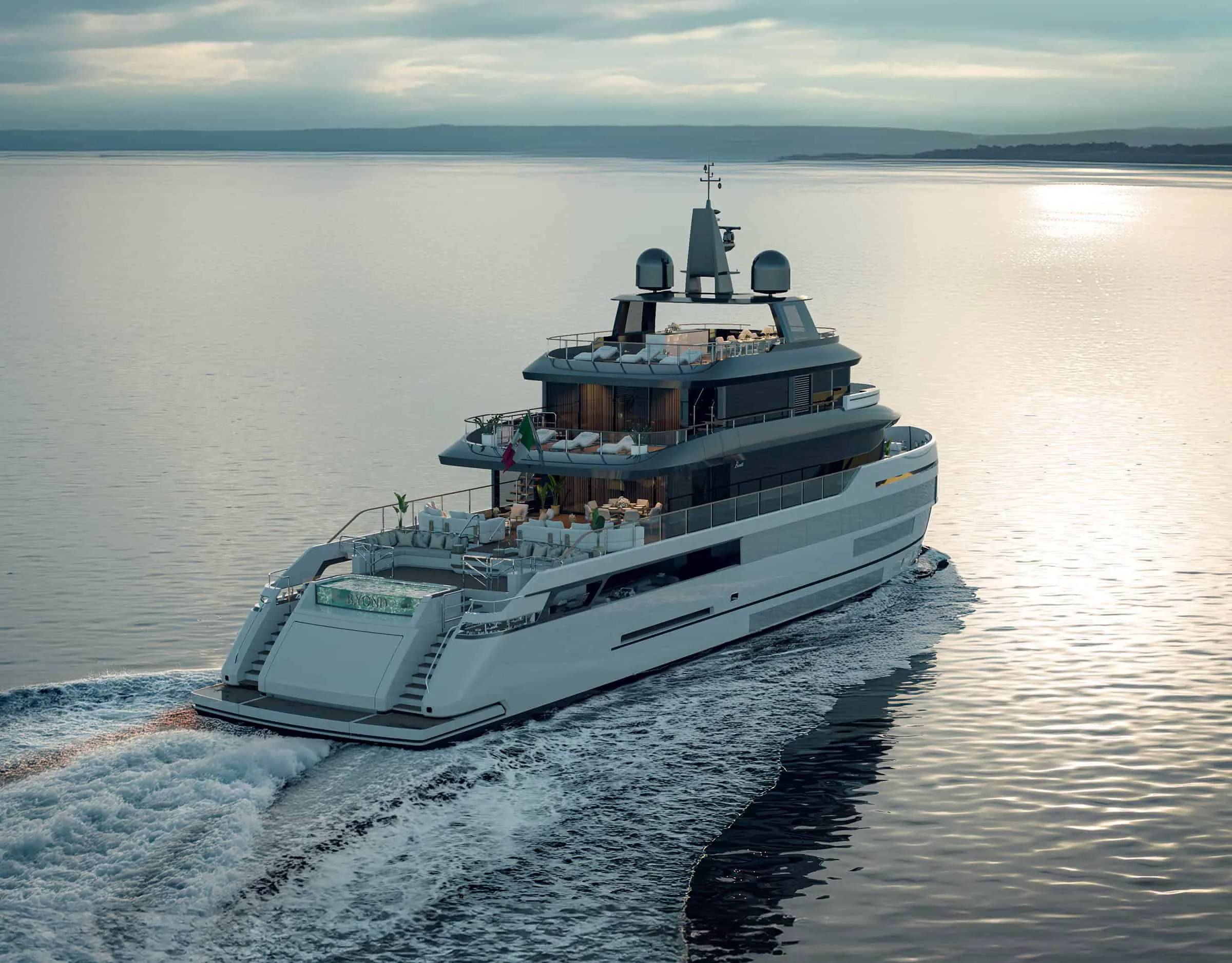
Yachts we'd shortlist for San Diego
Reviewed the same way as everything on this site — specifications verified against the builder's own numbers.
Frequently Asked Questions
How close can you get to a naval vessel in San Diego Bay?
One hundred yards, and this is federal regulation rather than courtesy. A naval vessel protection zone is a 500-yard regulated area around any US naval vessel over 100 feet, and it exists at all times — underway, anchored, moored or in a floating dry dock. Within the zone all vessels must operate at the minimum speed necessary to maintain a safe course, and no vessel or person is allowed within 100 yards unless authorised. Authorisation comes from the Coast Guard, the senior naval officer present, or the official patrol on VHF-FM channel 16. The Point Loma naval facility requires 100 feet of standoff, and cruise ships carry a 100-yard radius.
Where does a yacht clear customs in San Diego coming back from Mexico?
At one of three designated CBP reporting locations, chosen by size. The Shelter Island Harbor Police Dock takes vessels up to 235 feet, 24 hours a day, seven days a week — you dial *82 on the telephone at the top of the dock brow. The Dana Launch Ramp public dock at Mission Bay takes vessels under 42 feet of vertical clearance and up to 50 feet in length. Fifth Avenue Landing handles 125 to 300 feet, 06:00 to 22:00 Monday to Friday, by prior arrangement. Anything over 130 feet should call the Harbor Police Communications Center on (619) 686-6272 eight hours before arrival. The general San Diego reporting number is (619) 491-2600.
What is the largest yacht that can be hauled out in San Diego?
Up to 820 tons at the Chula Vista yard, which publishes the figure three different ways — so here are all of them. Its home page says haul-outs up to 665 tons. Its capabilities page says up to 820 tons, 220 feet long and 54 feet wide. Its services page lists 100, 300 and 820-ton travel lifts alongside a 100-ton variable width and 665-ton lift, at 220 feet in length and 53 feet in beam. Plan against 665 tons, 220 feet and 53 feet of beam, and confirm anything larger with the yard. Separately, a Shelter Island yard publishes a 150-ton lift taking vessels to 200 feet, with a 200-foot work pier carrying 16 feet of water.
What is the largest yacht that can berth in San Diego?
Three hundred feet, and it is confirmed twice. Fifth Avenue Landing on the downtown Embarcadero states it is accepting reservations for superyachts up to 300 feet across 12 slips, and US Customs and Border Protection designates that same dock a reporting location for vessels between 125 and 300 feet. Below it, Kona Kai publishes 520 slips from 30 to 250 feet, Shelter Island Marina publishes 200, Shelter Cove 190, and Loews Coronado 140 across 80 slips with 100-amp power.
What do you need to take a yacht into Mexico from San Diego?
A temporary import permit, which Mexico's customs authority applies to recreational vessels over 4.5 metres — about 14.8 feet. It costs 51 dollars plus IVA at a CIITEV module or a Mexican consulate in the US, or 45 dollars plus IVA online, and it is valid for ten years with multiple entries and exits. The document that closes it out when you leave by sea is the despacho de altura, stamped by the port authority. Because there is no Banjército office at Cabo San Lucas, Ensenada is the recommended first port of entry from the West Coast.
Can you anchor in San Diego Bay?
Yes, free of charge, but a permit is required and the terms are specific. A-1 at La Playa Cove is a weekend-only 72-hour anchorage from 09:00 Friday to 09:00 Monday, extending to 96 hours on holiday weekends, capped at 40 boats. A-5 at Glorietta Bay allows up to 72 hours with a minimum of one calendar day between permits, capped at 20. A-9, the Cruiser Anchorage, is open to non-residents of San Diego County only, requires a Harbor Police vessel inspection and an in-person permit, and allows 30 days with two extensions to 90 days a year. The maximum length at all anchorages and guest slips is 65 feet, and discharging black water anywhere in the bay is prohibited.