

Aquila 54 Yacht 54' 2"
View Specs & Review830 berths, a 440-tonne travelift, and a haul-out pit 45 feet wide
Yachting in Martinique
A Minted Location · Martinique, The Windwards
If you own a catamaran and you have been told the Caribbean cannot lift it, Martinique is the answer.
Carenantilles, the shipyard at Le Marin, runs two Cimolai boat lifts of 80 tonnes and 440 tonnes over travelift pits it describes as "2 darses de 9,7M et 14M de largeur maximum, tirant d'eau 5M max" — two pits of 9.7 m and 14 m maximum width and 5 m maximum draft. Its own English page renders that as "max width 45 ft (14m) and max draft 16ft (5m)." Forty-five feet of beam, over sixteen feet of draft, on a 440-tonne lift.
The marina in front of it is built on the same scale. The Port de Plaisance du Marin publishes "830 postes d'amarrage, 100 bouées de mouillage" — 830 berths and 100 mooring buoys — and describes itself, accurately on these numbers, as "l'un des plus grands ports de la Caraïbe."
And then there is the part people underestimate: this is France. Martinique is an overseas department and region of France and part of the European Union. You pay in euros, VAT is 8.5%, the harbourmaster's office is a French capitainerie, and clearance is a French customs formality filed on a French government website. A boat on a non-EU flag runs here under temporary admission, and the marina's own customs guide defines the window plainly: "tous les navires qui sont dans la fenêtre des 18 mois autorisés entre la clearance d'entrée et de sortie."
The rules bite hardest at the top of the size range. A prefectoral order bans anchoring by any vessel over 50 m (164 ft) outside eighteen named circles on the chart. Pleasure yachts between 50 and 80 m get a derogation — but only if they anchor more than 2.5 nautical miles from one of those circles, and only if they report it to the coastguard.
So treat Martinique as what it is: the industrial capital of the eastern Caribbean for yacht owners — the berths, the lift, the fuel and the euro-denominated invoice — with European rules attached to all of it.
Where to keep a yacht in Martinique
The Port de Plaisance du Marin is the market, and it publishes the numbers.
Built in the early 1990s at the head of the bay at Le Marin, it states 830 berths and 100 mooring buoys, pontoons, floating quays and hardstanding, a car park of "environ 150 places", water and electricity distribution, and a fuel station. Since 1 January 2026 the town of Le Marin has run it through SPL Sud Nautique, of which it is the majority shareholder — "garantissant une gouvernance locale."
Two maximum lengths are published, and the one to plan against is the smaller. The Présentation page says the port "peut recevoir des unités jusqu'à 60 mètres de long avec un tirant d'eau de 4,80 mètres" — 197 ft (60 m) over 15.7 ft (4.80 m). The Règlement Intérieur, article 2.1, restricts use of the port to pleasure vessels "ne dépassant pas les 150 tonnes et 50 mètres de long" — 164 ft (50 m) and 150 tonnes. The bylaw is what a berth contract is written against, so plan against fifty metres and get the difference in writing before you commit a 55-metre boat.
| Berths | 830 postes d'amarrage · 100 bouées de mouillage |
| Maximum | 197 ft (60 m) per the Présentation page · 164 ft (50 m) and 150 tonnes per the Règlement Intérieur |
| Depth | 15.7 ft (4.80 m) tirant d'eau, stated with the 60 m figure |
| VHF | Canal 09 |
| Capitainerie | High season from November: Mon–Sat 08:00–13:00 and 14:00–17:00, Sun and holidays 08:00–13:00 · Low season from June: Mon–Sat 08:00–13:00 and 14:00–16:30, Sun and holidays 08:00–13:00 |
| Fuel | Two high-flow pumps, 12 m³/hour, diesel and duty-free diesel, plus a self-service point · 08:00–17:15, seven days |
| Included | Grey and black water pumping at the berth, wifi, showers, waste points, mail, water shuttle, port surveillance, wharf tax |
The tariff is per foot and it is startlingly cheap by Caribbean standards. Dockage runs €0.60 per foot per night from 20 to 50 feet, €0.70 from 51 to 65, €0.80 from 66 to 100, and €2.50 above 100 feet — with a 20% surcharge on the first two nights and a tourist tax of €0.66 a night. By the year it is €110 per foot to 50 feet, rising to €189.20 above 100. Mooring buoys run €10 to €15 a night by band, €948 to €1,920 a year. Water is €9/m³, electricity €0.36/kWh, and rates include 8.5% VAT.
⚠️ Multihull owners should read the next line before they budget: "Majoration des 50 % des multicoques quelque soit le type d'Escale" — a 50% surcharge on multihulls, whatever the type of stay. It is published in both French and English on the current tariff sheets for berths and for mooring buoys, and it applies to the annual rate as well as the nightly one. There is also a 15% surcharge for vessels lived aboard for more than three months. A catamaran paying €110 a foot a year pays €165. That is still cheap — but it is not the number on the front of the sheet.
The port bylaw is worth reading before you arrive, because it is enforced. Speed inside the port is capped at two knots. Rafting up "en file indienne" or "à couple" is formally prohibited, tenders excepted. Private mooring buoys and corps-morts are banned in the port's water. Spearfishing is banned. You must present your registration document and an insurance certificate covering third party, fire and cyclone at the office on arrival, and fees are payable in advance.
Elsewhere on the island the answer is a telephone call rather than a tariff. At Fort-de-France, the Port de plaisance communautaire de l'Étang Z'Abricots — run by CACEM, the central Martinique agglomeration — carries 340 anneaux à flot, which a planned extension would take to 417 afloat and 150 ashore. Boat sizes there are settled on the telephone, so agree length and draft with the harbour office on +596 596 751 157 before you commit.
Marina de la Pointe du Bout at Trois-Îlets works the same way. It is a designated customs clearance point and it is on every chart of the bay; berths, length, depth and rates are agreed with the Régie Port de Plaisance on +596 596 660 774.
Marinas
| Name | Where | Max yacht | Slips | Fuel |
|---|---|---|---|---|
| Port de Plaisance du Marin"830 postes d'amarrage, 100 bouées de mouillage", built in the early 1990s and described by its operator as "l'un des plus grands ports de la Caraïbe". Two maximum lengths are published: the Présentation page says the port "peut recevoir des unités jusqu'à 60 mètres de long avec un tirant d'eau de 4,80 mètres" (197 ft over 15.7 ft), while article 2.1 of its Règlement Intérieur restricts use to pleasure vessels "ne dépassant pas les 150 tonnes et 50 mètres de long" (164 ft, 150 tonnes). Plan against the bylaw — that is what a berth contract is written against. Dockage €0.60/ft/night to 50 ft, €0.70 to 65 ft, €0.80 to 100 ft, €2.50 above; €110/ft/year to 50 ft; 20% surcharge on the first two nights, 50% surcharge on multihulls "quelque soit le type d'Escale", 15% on boats lived aboard more than three months, €0.66/night tourist tax, 8.5% VAT included. Water €9/m³, electricity €0.36/kWh. Bylaw: two knots inside the port, no rafting up, no private corps-morts, no spearfishing, registration papers and third-party/fire/cyclone insurance produced on arrival. Managed by SPL Sud Nautique since 1 January 2026. | Bassin Tortue, Le Marin — the head of the bay on the south coast | 164 ft | 830 | Fuel station on site — two 12 m³/hour pumps, diesel and duty-free diesel, plus self-service, 08:00–17:15 daily |
| Port de plaisance communautaire de l'Étang Z'Abricots · Fort-de-FranceThe capital's marina, run by CACEM, the central Martinique agglomeration. The MRAe's environmental opinion on the extension project records the current capacity as 340 anneaux "à flots", rising to "417 anneaux « à flots » (340 + 77) et 150 places « à sec »" if the extension is built, alongside a 150 m quay and dredging to improve approach and berthing. Boat sizes are settled on the telephone rather than posted, so agree length, draft and rate with the harbour office on +596 596 751 157 before you commit. | ZAC de l'Étang Z'Abricots, Fort-de-France | — | 340 | — |
| Marina de la Pointe du Bout · Trois-ÎletsThe best-known marina in the bay of Fort-de-France, and a designated customs clearance point on every chart of the bay. Berth count, maximum length, depth and rates are settled by telephone rather than posted, so call the Régie Port de Plaisance on +596 596 660 774 before you plan around it. | Pointe du Bout, Trois-Îlets, across the bay from Fort-de-France | — | — | — |
Fuel docks
| Name | Where | Max yacht | Slips | Fuel |
|---|---|---|---|---|
| Station carburant — Port de Plaisance du MarinThe operator states a large fully sheltered reception pontoon "complètement protégé pour vous libérer de tout soucis d'accostage" and two high-flow pumps at 12 m³/hour on gasoil and duty-free gasoil. The planning fact is next door: the douane's approved-points list makes the fuel station at Ponton N°3 a clearance point open 07:30–13:00 and 14:00–17:00 every day including public holidays, with clearance itself "ouvert tous les jours jusqu'à 16h30" — better weekend and holiday cover than the capitainerie. The port bylaw prohibits mooring in front of the fuel station outside fuelling. | Le Marin, on the bassin | — | — | Diesel and duty-free diesel — two high-flow pumps at 12 m³/hour, plus a self-service point |
Figures are as each facility publishes them on its own site; blank cells mean the facility doesn't state a number. Confirm slip availability and current rates directly — or ask us to make the calls.
Cruising from Martinique
Clearing into Martinique is clearing into France, and since 2024 it is done on a French government website before you arrive.
The Direction Interrégionale des douanes Antilles-Guyane publishes the rule: "A compter du 1er septembre 2024, les formalités de « Clearance », obligatoires pour l'entrée et la sortie des navires de plaisance naviguant dans les îles des Antilles françaises (Martinique, Guadeloupe, Saint-Barthélémy et Saint-Martin), sont modifiées." The form is now dematerialised, filed at demarche.numerique.gouv.fr, and the change also obliges boats moving between the French Antillean islands to clear, not only those arriving from abroad.
The clearance points themselves are the surprise. France does not run a customs hall for yachts here; it accredits local businesses to take the declaration. The douane's own list, updated 15 December 2025, names eleven in Martinique — and they include a cybercafé, a ship chandler, a tourist office and a snack bar:
| Where | Point | Published hours |
|---|---|---|
| Le Marin | Capitainerie du port (nouvelle extension) | Mon–Sat 08:00–17:00, Sun and holidays 08:00–12:30 |
| Le Marin | Station-service CAP, Ponton N°3 | 07:30–13:00 / 14:00–17:00 daily — "Point de clearance ouvert tous les jours jusqu'à 16h30" |
| Fort-de-France | Port de plaisance de l'Étang Z'Abricots | Accueil 07:00–17:00, permanence 06:00–18:00 |
| Fort-de-France | Station CAP DCML, Centre de carénage, Baie des Tourelles | Mon–Sat 08:00–17:00, Sun and holidays 09:15–12:00 |
| Fort-de-France | Sea Services ShipChandler, rue Ernest Deproge | Mon–Fri 08:30–17:00, Sat 08:30–12:30 |
| Le François | Capitainerie, Marina – Pointe Bateau | Every day 08:00–18:00 |
| Anses d'Arlet | Cyberbase, allée des Arlésiens | Mon/Tue/Thu 08:00–13:00 and 14:00–17:00 · Wed/Fri 08:00–13:00 · Sat 08:00–11:00 · Sun closed |
| Trois-Îlets | Régie Port de Plaisance, Marina de la Pointe du Bout | Telephone first |
| Sainte-Anne | Snack Boubou, rue Saffache | Telephone first |
| Saint-Pierre | Office municipal du tourisme · L'Alsace en Kay | Telephone first |
| Trinité | Brigade de surveillance des douanes | Telephone first |
The best-covered clearance point on the island is a fuel station. Ponton N°3 at Le Marin takes clearances seven days a week including public holidays, to 16:30 — and Le François takes them every day to 18:00, later than anywhere else. Four of the eleven do not post hours, so telephone before you plan a day around them.
On a non-EU flag, the customs regime that matters is temporary admission. The marina's own published guide to import duty, customs and VAT defines a yacht-in-transit as "tous les navires qui sont dans la fenêtre des 18 mois autorisés entre la clearance d'entrée et de sortie" — eighteen months between entry and exit clearance. Inside that window, two procedures let you buy parts and labour without the local taxes:
- Procédure Simplifiée de Transfert (PST) — legal exemption from import duty on goods delivered directly to a yacht-in-transit. Standard cost €250 for a consignment under 40 kg and under €7,000 in value; the guide states it is worth doing once the imported goods exceed about €1,250. Delivery must go through a freight forwarder or by air or sea freight — the post office is excluded. Vessels registered in Martinique or Guadeloupe are excluded from the scheme.
- Procédure de Perfectionnement Actif (PA) — repair and maintenance work carried out without VAT on parts or labour.
The taxes in play are octroi de mer at roughly 10%, additional duties of 4% to 12% on materials imported from outside the common market, and VAT of up to 8.5%. The guide's own summary: planning the two procedures together can save "jusqu'à 20%" on the total. That is the single strongest financial reason to schedule a refit here rather than somewhere without the paperwork.
The yard is the other reason. Carenantilles publishes, on its own page:
| Lifts | 2 Cimolai boat lifts — 80 tonnes and 440 tonnes |
| Pits | "2 darses de 9,7M et 14M de largeur maximum" — 32 ft and 45 ft (9.7 m and 14 m) |
| Draft | 16 ft (5 m) maximum |
| Yard | 2.5 hectares (6 acres) fully surfaced, with 2 berths ashore for yachts to 164 ft (50 m) |
| Work dock | 500 m (1,600 ft), taking 2 mega-yachts and "environ 70 plus petits bateaux" |
| Also | 125 A shore power · water treatment and recovery · 24/7 video security and an on-site guard |
| Range | "De la « réparation rapide » à une rénovation complète… jusqu'aux Super-yachts de 50 mètres" |
| VHF | 73 |
Read the pit width, not the tonnage. A 440-tonne lift sounds like it takes anything; the constraint is 45 ft (14 m) of beam and 16 ft (5 m) of draft, and the narrower pit is only 32 ft. Check your beam against 14 m and your draft against 5 m, in that order, before you check your displacement.
⚠️ Anchoring is regulated by length, and the penalty is your licence. The prefecture's order regulating anchoring along the Martinique coast outside port-authority waters — adopted as R02-2018-11-22-002 — sets out:
- Article 2: anchoring by any vessel over 50 m overall is prohibited outside eighteen listed zones, each a circle of 0.1 M (185 m) or 0.15 M (277 m) radius, chosen because the seabed inside them carries "ni coraux protégés ni herbiers sensibles" — neither protected coral nor sensitive seagrass. Two of the eighteen are in the baie du Marin, one is in the baie de Saint-Pierre, four are in the bay of Fort-de-France and three in the anses d'Arlets.
- Article 3: vessels up to 50 m may anchor outside those zones, provided neither anchor nor chain rests on the coral reefs listed in the order of 25 June 2017 — and "il appartient au capitaine du navire de vérifier la nature du fond", by eye from the surface or, where visibility does not allow it, from the government's published charts.
- Article 6: pleasure yachts over 50 m and under 80 m may anchor outside the zones only more than 2.5 M from one of them, and only if the anchoring is reported without delay to CROSS Antilles-Guyane.
- Article 4 and 8: anchoring inside one of the eighteen zones needs prior authorisation from CROSS Antilles-Guyane whatever your length, declared six hours ahead, deemed granted if no refusal arrives within four hours, and capped at thirty-six hours except in exceptional circumstances.
- Article 14: the sanctions on a private skipper are not a fine but a licence — "le retrait temporaire ou définitif de leur permis plaisance", or, for those without one, a ban on navigating from a French port or in French territorial waters.
Confirm the current text in the recueil des actes administratifs de la préfecture de la Martinique before you plan a 60-metre boat's anchorage around it.
The Parc naturel marin de Martinique is the other authority in these waters. Created 5 May 2017, the eighth marine park in France and the second in the Caribbean, it publishes an area of 48,900 km² running from the coast to the outer limit of the exclusive economic zone — "jusqu'à environ 370 km des côtes" — and counts "+ de 14 000 navires de plaisance dont environ 2 000 voiliers et 12 000 bateaux à moteurs" in it. It is progressively laying ecological mooring buoys so boats can tie up without dropping iron on seagrass.
At Le Marin the same logic is being built into the bay. The Direction de la Mer states the aim of the zone de mouillage et d'équipements légers there is "d'organiser de manière rationnelle le mouillage des navires", and that it "permet de libérer des espaces maritimes du mouillage forain, de nettoyer les corps-morts sauvages… d'éviter l'ancrage sur les fonds marins ou l'amarrage à la mangrove." The port's own environment page confirms the work is "en cours", with eco-designed corps-morts — ask the capitainerie which buoys are laid before you plan on one.
Hurricane season is a contract term here, not a suggestion. The port publishes cyclone instructions for June to November and states the obligation directly: cyclone insurance must be current, covering at minimum damage to port works, refloating and wreck removal, and third-party damage. During the season port staff reserve the right to reposition an unattended boat. Boats on six named pontoon runs are required to lay an anchor out as well as their lines, mooring in front of the fuel station is prohibited, and no boat's lines may block another's exit.
- La Rade de Saint-Pierre — zone de mouillage organisée — In front of Saint-Pierre, under Mount Pelée on the north-west coastA managed mooring field, not a marina, run by SAEPP in front of the island's former capital. Published 2026 rates, VAT included at 8.5%: stopover under a month at €12 (0–29 ft), €15 (30–49 ft) and €18 (over 50 ft) a night; €65, €85 and €100 a week; €162, €186 and €210 a month. A 50% surcharge applies to multihulls, and a €0.66 tourist tax per night to stopover rates. Included: manoeuvring assistance, grey and black water pumping afloat, mail and an afloat shuttle for long stays; water delivered afloat at €2.50 per 100 litres is charged. The buoys are described as "connected", with sensors detecting a vessel's presence and departure. Clearance is handled on site on dedicated software. Confirm maximum length and depth with the office — every day 08:00–12:00 — before you arrive.
- Anchoring in Martinique — over 50 m, only in eighteen zones — French internal and territorial waters around Martinique, outside port limitsA length-based anchoring rule with real teeth. The prefectoral order regulating anchoring outside port-authority waters — adopted as R02-2018-11-22-002 — prohibits anchoring by any vessel over 50 m overall outside eighteen listed circles of 0.1 M (185 m) or 0.15 M (277 m) radius, chosen because their seabed carries "ni coraux protégés ni herbiers sensibles". Two are in the baie du Marin, one in the baie de Saint-Pierre, four in the bay of Fort-de-France and three in the anses d'Arlets. Vessels up to 50 m may anchor outside the zones provided neither anchor nor chain rests on the coral reefs listed in the order of 25 June 2017, and "il appartient au capitaine du navire de vérifier la nature du fond". Pleasure yachts of 50–80 m get a derogation only beyond 2.5 M from a listed zone, reported without delay to CROSS Antilles-Guyane. Anchoring inside a zone needs CROSS authorisation at any length, declared six hours ahead, deemed granted absent a refusal within four hours, and capped at thirty-six hours. Sanctions on a private skipper run to "le retrait temporaire ou définitif de leur permis plaisance" or a ban on navigating in French waters. Confirm the current text in the recueil des actes administratifs before you plan a large boat's anchorage around it.
- Clearing into France — eleven approved points — Martinique, and the French Antilles generallyMartinique is an overseas department of France and part of the EU, and clearance is a French customs formality. The douane states: "A compter du 1er septembre 2024, les formalités de « Clearance », obligatoires pour l'entrée et la sortie des navires de plaisance naviguant dans les îles des Antilles françaises… sont modifiées" — dematerialised, filed at demarche.numerique.gouv.fr, and now required for movements between the French Antillean islands as well as arrivals from abroad. The approved-points list of 15 December 2025 names eleven in Martinique: the capitainerie and the fuel station at Le Marin, three in Fort-de-France (the marina, a haul-out station and a ship chandler), Le François (every day 08:00–18:00), a cybercafé at Anses d'Arlet, the Trois-Îlets marina, a snack bar at Sainte-Anne, a tourist office and a shop at Saint-Pierre, and the customs brigade at Trinité. Four of the eleven do not post hours, so telephone first. On a non-EU flag the regime is temporary admission — "la fenêtre des 18 mois autorisés entre la clearance d'entrée et de sortie" — inside which the PST and PA procedures allow parts and labour free of import duty and VAT, saving up to 20%; boats registered in Martinique or Guadeloupe are excluded.
Service, refit & supplies
Shipyards & refit
| Name | Where | Max yacht | Dockage |
|---|---|---|---|
| Carenantilles"2 boat lifts Cimolai 80 tonnes et 440 tonnes" over "2 darses de 9,7M et 14M de largeur maximum, tirant d'eau 5M max" — travelift pits of 32 ft and 45 ft maximum width and 16 ft maximum draft, which the yard's own English page states as "max width 45 ft (14m) and max draft 16ft (5m)". Also "2,5 hectares de terre plein entièrement recouverte d'enrobée avec 2 places pour méga-yacht (longueur 50M)", a 500 m work dock taking two mega-yachts and "environ 70 plus petits bateaux", 125 A shore power, water recovery and treatment, and 24/7 video security with an on-site guard. Range stated as "De la « réparation rapide » à une rénovation complète… jusqu'aux Super-yachts de 50 mètres." The constraint is the pit, not the tonnage: check beam against 14 m and draft against 5 m before displacement. Hail VHF 73 or telephone for yard hours. | Usine du Marin, alongside the port de plaisance | 164 ft | Haul-out and refit; VHF 73 |
On the Martinique calendar
Martinique runs year-round, and the clocks that matter are the capitainerie's, the douane's and the cyclone calendar's.
- Port de Plaisance du Marin, high season from November: capitainerie Mon–Sat 08:00–13:00 and 14:00–17:00, Sundays and public holidays 08:00–13:00.
- Low season from June: the afternoon closes half an hour earlier, 14:00–16:30.
- Fuel station: 08:00–17:15, Monday to Sunday — two 12 m³/hour pumps, diesel and duty-free diesel.
- Clearance at Le Marin: Mon–Sat 08:00–17:00 at the capitainerie, Sundays and holidays to 12:30 — or every day to 16:30 at the fuel station on Ponton N°3. Le François takes clearances every day 08:00–18:00, the longest published window on the island.
- Four of the eleven approved clearance points do not post hours — Trois-Îlets, Sainte-Anne, Saint-Pierre and Trinité. Telephone first.
- La Rade de Saint-Pierre: every day 08:00–12:00, mornings only.
- Temporary admission: 18 months between entry and exit clearance for a non-EU-flagged boat.
- Anchoring inside one of the eighteen prefectoral zones: six hours' notice to CROSS Antilles-Guyane, authorisation deemed granted if no refusal in four hours, maximum thirty-six hours.
- Cyclone season, June to November, is a contract term: current cyclone insurance is obligatory for boats in the port, and boats on six named pontoon runs must lay an anchor as well as their lines.
- Tariff surcharges are dated too: 20% on the first two nights, 50% on multihulls at all times, 15% on boats lived aboard for more than three months, and a €0.66 nightly tourist tax.
Race, regatta and yole dates are set by the organising clubs — confirm them directly with the organiser. The hours above are the clocks that actually change a trip.
Yachts we'd shortlist for Martinique
Reviewed the same way as everything on this site — specifications verified against the builder's own numbers.
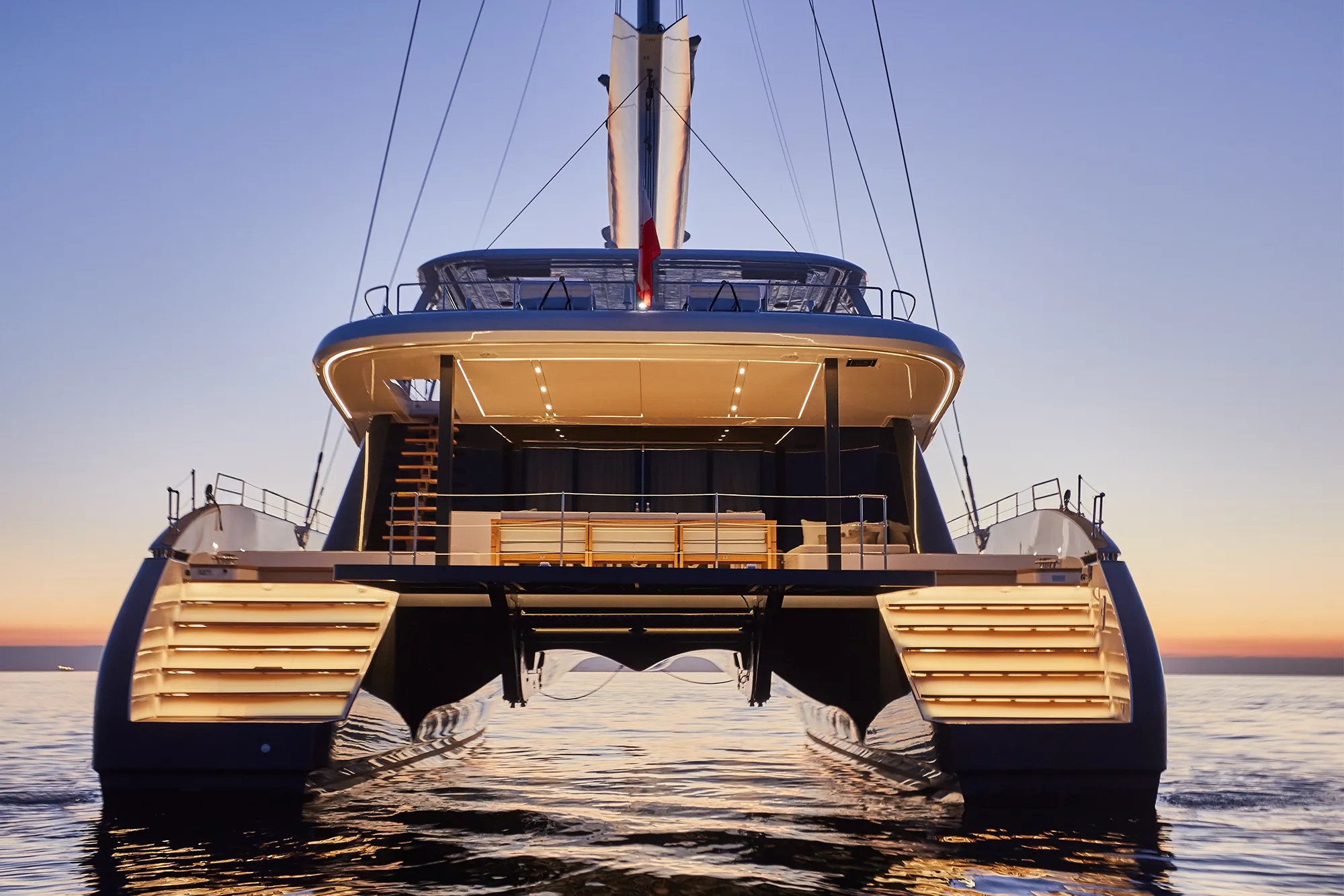
Sunreef 80 Sail NEXT ( Eco-Option )23.87 m (78 ft 4 in)
View Specs & Review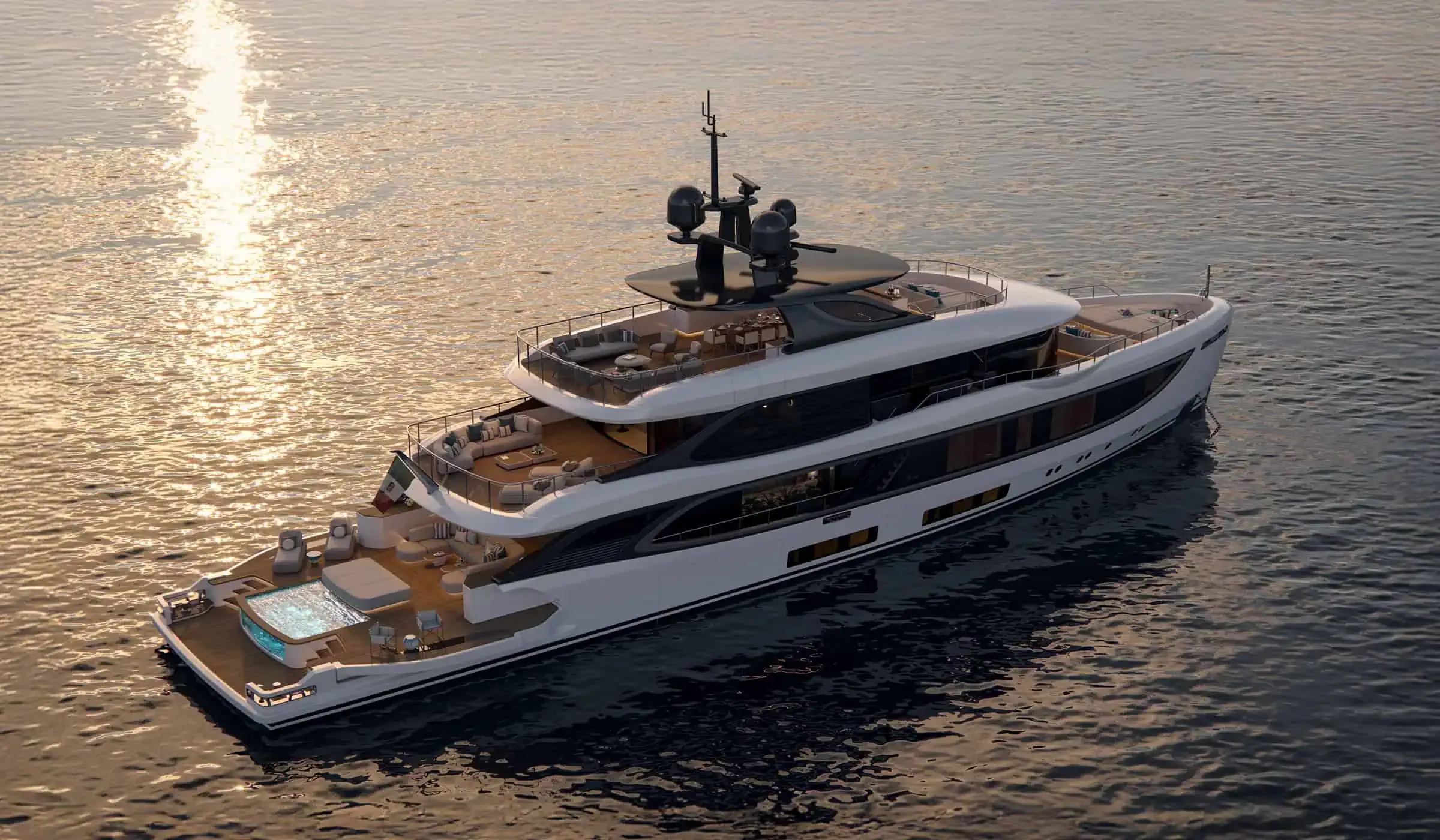
Benetti Oasis 42M139' 5"
View Specs & ReviewFrequently Asked Questions
How many berths does the marina at Le Marin have?
The Port de Plaisance du Marin publishes 830 berths and 100 mooring buoys — "830 postes d'amarrage, 100 bouées de mouillage" — and its operator describes it as one of the largest ports in the Caribbean. It has been run by SPL Sud Nautique, majority-owned by the town of Le Marin, since 1 January 2026. Two maximum sizes are published: the port's Présentation page says it can take vessels up to 60 m with a 4.80 m draft, while article 2.1 of its own Règlement Intérieur restricts use to pleasure vessels not exceeding 150 tonnes and 50 metres. Plan against the bylaw and get any exception in writing.
Is there a catamaran surcharge in Martinique?
Yes. The Port de Plaisance du Marin's current tariff sheets for both berths and mooring buoys carry "Majoration des 50 % des multicoques quelque soit le type d'Escale" — a 50% surcharge on multihulls whatever the type of stay — and the same 50% surcharge appears on the 2026 rate card for the Saint-Pierre mooring zone. It applies to the annual rate as well as the nightly one. Base dockage at Le Marin is €0.60 per foot per night from 20 to 50 feet and €110 per foot per year, so a catamaran on the annual rate pays €165 per foot. There is also a 20% surcharge on the first two nights and 15% for boats lived aboard for more than three months.
Are there anchoring restrictions for large yachts in Martinique?
Yes, and they are set by length. A prefectoral order regulating anchoring outside port-authority waters, adopted as R02-2018-11-22-002, prohibits anchoring by any vessel over 50 metres overall outside eighteen listed circles of 185 m or 277 m radius, sited where the seabed carries neither protected coral nor sensitive seagrass. Pleasure yachts between 50 and 80 metres may anchor outside those circles only if they are more than 2.5 nautical miles from one and report it without delay to CROSS Antilles-Guyane. Anchoring inside a circle requires CROSS authorisation at any length, declared six hours ahead and capped at thirty-six hours. Vessels up to 50 metres may anchor freely outside the zones provided neither anchor nor chain rests on listed coral reefs, and the captain is responsible for verifying the seabed. Penalties for a private skipper include temporary or permanent withdrawal of the boating licence, or a ban on navigating in French waters.
How do you clear customs into Martinique on a foreign-flagged yacht?
Martinique is an overseas department of France, so clearance is a French customs formality, filed online before you arrive. Since 1 September 2024 the douane requires the declaration to be made electronically at demarche.numerique.gouv.fr, and it now applies to movements between the French Antillean islands as well as arrivals from abroad. You then present at one of eleven approved points in Martinique — including the capitainerie and the fuel station at Le Marin, three in Fort-de-France, Le François, a cybercafé at Anses d'Arlet, a snack bar at Sainte-Anne and a tourist office at Saint-Pierre. Four of the eleven do not post opening hours, so telephone first. A non-EU-flagged boat runs under temporary admission, defined as the 18-month window between entry and exit clearance.
Can a large catamaran be hauled out in Martinique?
Yes. Carenantilles at Le Marin states two Cimolai boat lifts of 80 and 440 tonnes working over "2 darses de 9,7M et 14M de largeur maximum, tirant d'eau 5M max" — travelift pits of 32 ft and 45 ft maximum width over a 16 ft maximum draft, rendered on the yard's own English page as "max width 45 ft (14m) and max draft 16ft (5m)". The yard also states 2.5 hectares of surfaced hardstanding with two berths for yachts to 50 m, a 500 m work dock and a stated range up to 50-metre superyachts. Check beam against 14 m and draft against 5 m before you check displacement — the pit governs, not the tonnage.
Is there dock and dine in Martinique?
Yes, in one published form. La Rade de Saint-Pierre publishes a stopover rate without overnight stay — €8.00 for boats to 29 feet, €10.00 from 30 to 49 feet and €12.00 over 50 feet — which is a stated price for taking a buoy, going ashore for a few hours and leaving. Beyond that, dining here works the way it always has: take a berth or a buoy and go in by tender. The tender is regulated — the gendarmerie enforces a two-knot limit on the water at Le Marin and Sainte-Anne and requires visible dinghy registration, with fines announced. The marina at Le Marin publishes shops and restaurants on site and broadcasts the Martinique Cruisers Net in English on VHF channel 8 at 08:15, three times a week.