
August 19, 2026
Lagoon 43 Review: The Catamaran That Rethought How You Get Aboard
The Lagoon 43 is a 45'5" sailing catamaran on a 25'3" beam with twin 57 HP Yanmars, 1,130 sq ft of upwind sail area and an added aft entrywa…
Read the articleExpert Review, Technical Specifications & Market Analysis
| Feature | Specifications |
|---|---|
| Overall Length | 45'5" (13.85 m) |
| Beam | 25'3" (7.69 m) |
| Draft | 4'4" (1.31 m) |
| Displacement | 30,644 lbs (13,900 kg) |
| Engines | Twin Yanmar (2 x 57 HP) |
| Fuel Capacity | 151 gal (570 L) |
| Water Capacity | 166 gal (630 L) |
| Cabins / Heads | 3-4 Cabins / 2-4 Heads |
| Max Speed | 9 knots (under power) |
| Cruise Speed | 7-8 knots (under sail/power) |
Source: Spec & Photos courtesy of Lagoon. Specs verified by Tony Smith, USCG 100 Ton Master, on August 18, 2026.
Count how many times a day someone steps on or off your boat — guests arriving, groceries coming aboard, a line taken at a strange dock at dusk. The Lagoon 43 adds an aft entryway to each hull, and that one idea changes how a 45'5" catamaran feels every single day you use her.
Part of the Lagoon Sailing Catamarans series — see how owners step up through the lineup.

The feature everyone will overlook on this boat is the one I would buy her for. Lagoon added an aft entryway to each hull, and it sounds like a footnote until you have spent a season stepping around a transom with an armful of groceries, a dog, or a dock line you needed to have already. Good design is usually invisible until you live with the alternative, and this is a case where a naval architect clearly watched real owners use a real boat.
The other number I would put in front of any buyer is the water tankage. One hundred and sixty-six gallons is roughly double what the smaller boats in this range carry, and it is the single spec that changes how far you go and how long you stay. I have watched owners cut a perfect week short because of a water tank. You will not do that on this boat.
Where I would slow you down is the headsail and the draft. She carries a furling genoa, not a self-tacking jib, so tacking needs a sheet handled — perfectly manageable for two people, but different from the 38, and you should feel it on a sea trial rather than read about it. And at 4'4" she draws the most of the small Lagoons, which matters if your dream anchorage is on the Bahamas banks. Check the chart, then buy the boat, because everything else about the 43 is right.
Video courtesy of Lagoon.
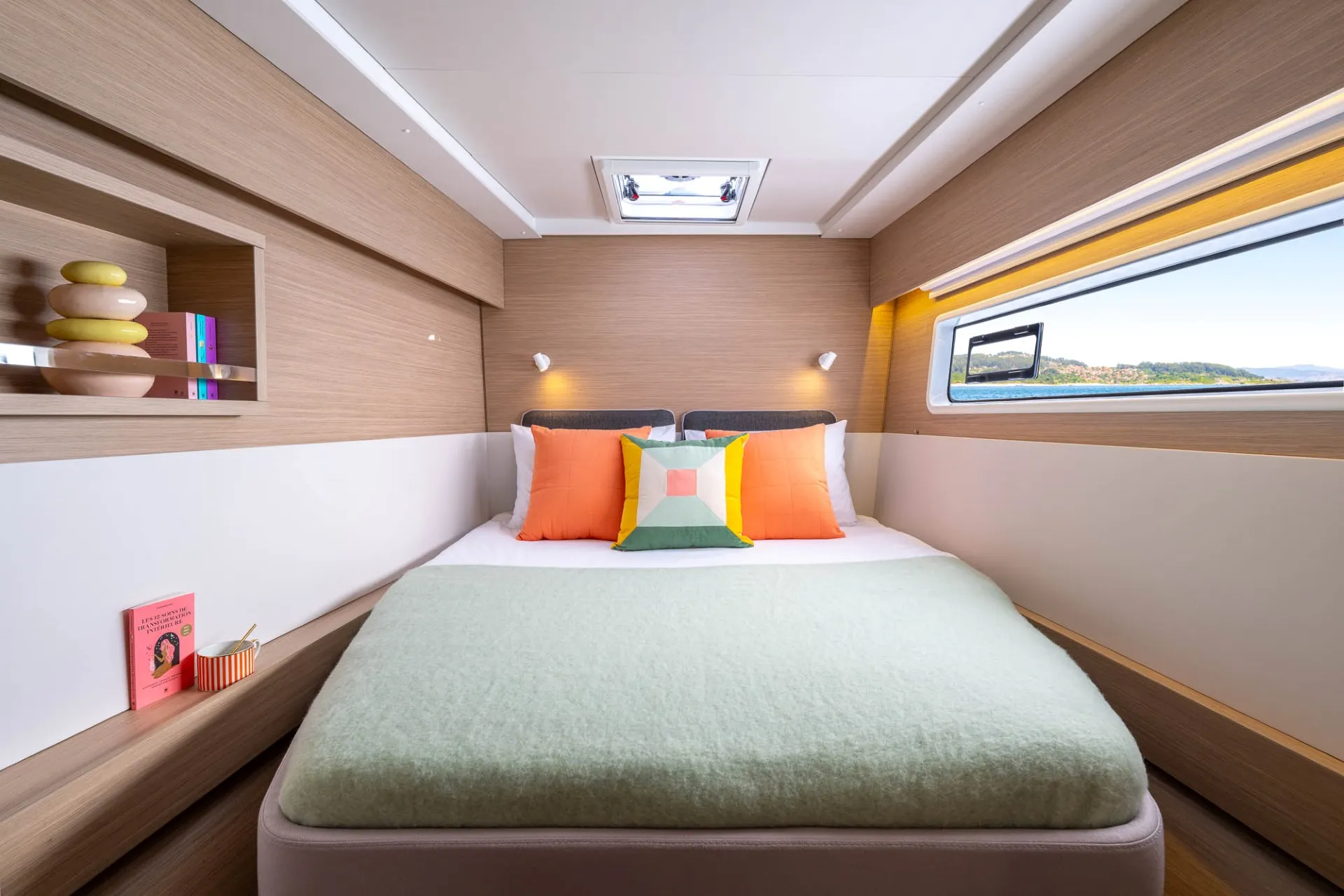
Photos courtesy of Lagoon.
The Lagoon 43 is a sailing catamaran of 45'5" (13.85 m) overall on a 25'3" (7.69 m) beam, drawing 4'4" (1.31 m) and displacing 30,644 lbs (13,900 kg) unladen. She is offered in four interior arrangements — three cabins, three cabins plus a Pullman berth, four cabins, and four cabins plus a Pullman — with two to four heads and berths for six to thirteen. Tankage is 151 gal (570 L) of fuel and a genuinely useful 166 gal (630 L) of fresh water.
She is built around being one boat that does several jobs: an owner's cruising catamaran for a couple, or a family and guest platform when everyone comes at once. VPLP Design is the naval architect, Patrick le Quément drew the exterior and Nauta Design the interior, and Lagoon's new hull form is what pays for the volume — every cabin gained dimensions over the outgoing design, with larger berths across the board rather than only in the owner's suite.
Under power the 43 carries Twin Yanmar (2 x 57 HP), for a maximum of 9 knots (under power) and 7-8 knots (under sail/power) as the cruising figure. Set wide on a 25'3" (7.69 m) beam, those engines will walk her into a slip on the throttles alone, and the flybridge helm gives you the visibility to do it without a spotter.
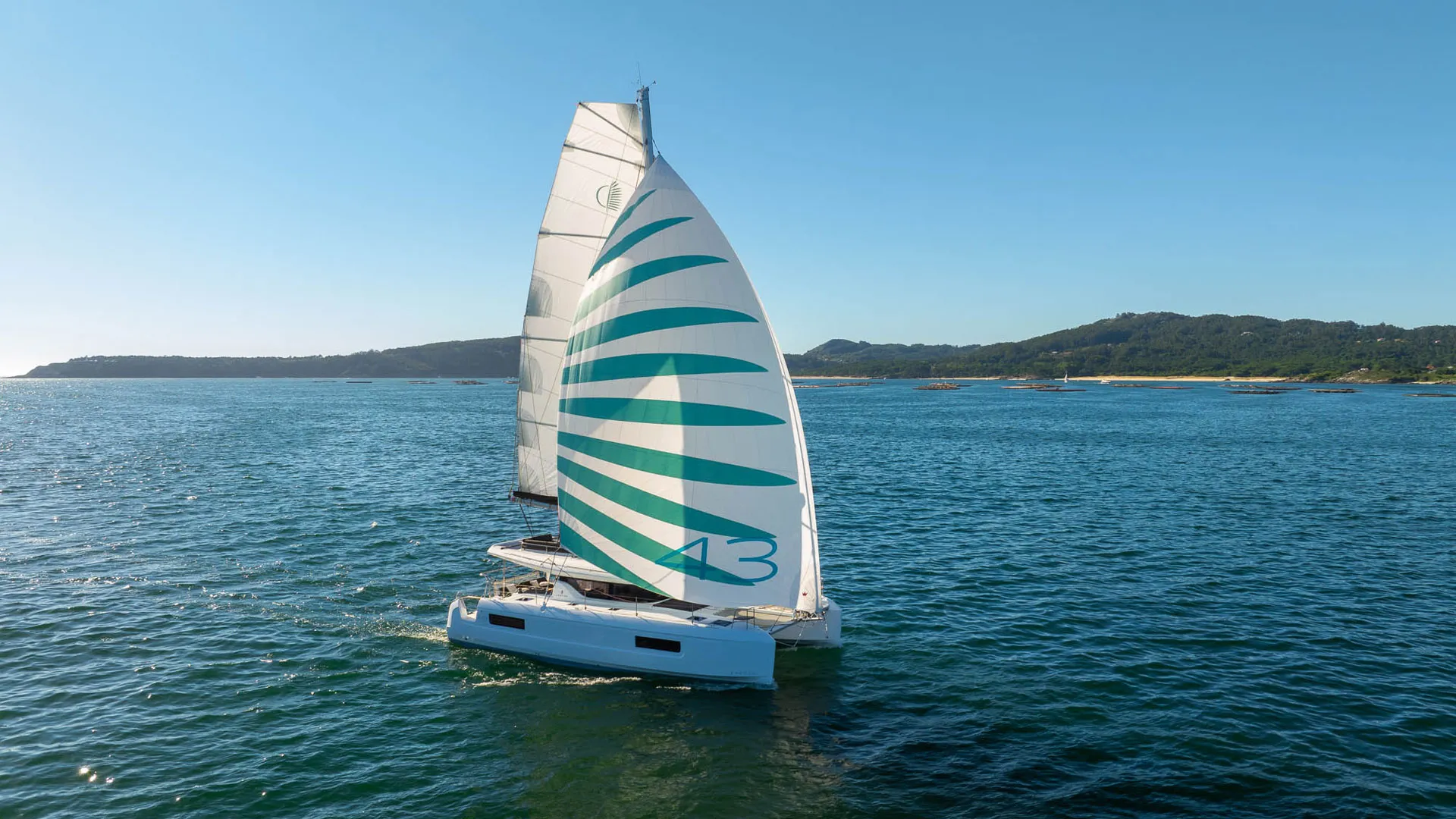
Upwind sail area is 105 m² (1,130 sq ft) on the VPLP hull: a high roach mainsail at 60 m² (646 sq ft), a square top mainsail at 68 m² (732 sq ft), and a furling genoa at 37 m² (398 sq ft), with a Code 0 at 73 m² (785 sq ft) for light air. Note the headsail — the 43 uses a furling genoa rather than the self-tacking jib her smaller sisters carry. That is a real handling difference: you get more drive and better shape control, and you pay for it with a sheet to handle on every tack. On long reaches it will never bother you; if your cruising ground has you tacking up a channel twice a day, factor it in. Air draft is 21.31 m (69'11"), which needs checking against any fixed bridges on your route.
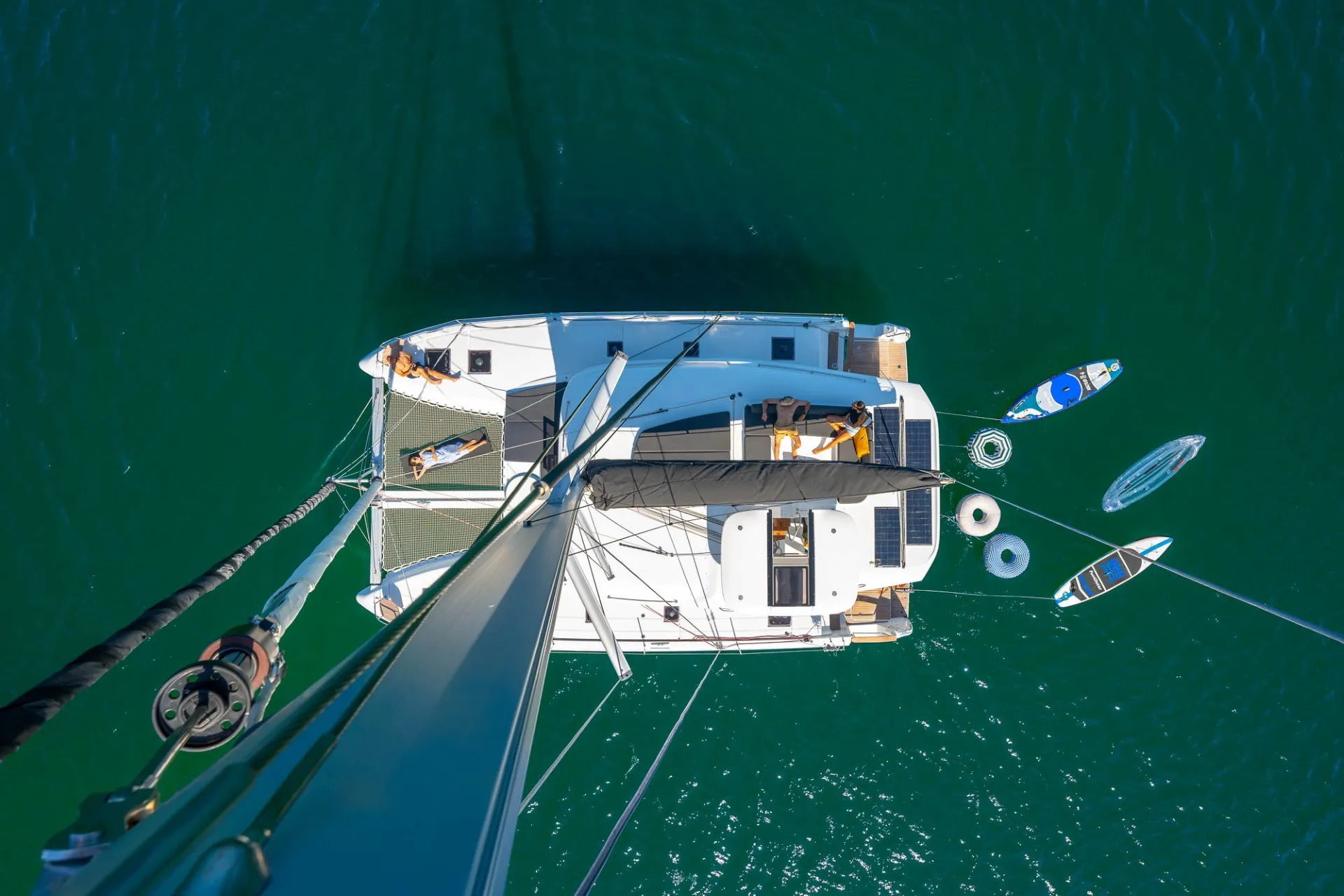
The three-cabin owner's version is where most private buyers should start. The owner's cabin gets a generous forward berth with an en suite head and the shower compartment aft — the split that makes much larger yachts livable — and Lagoon engineered the layout specifically to keep engine noise out of that space. Add a Pullman berth, or step up to the four-cabin versions, and the same hull carries up to thirteen berths for families who travel in numbers.
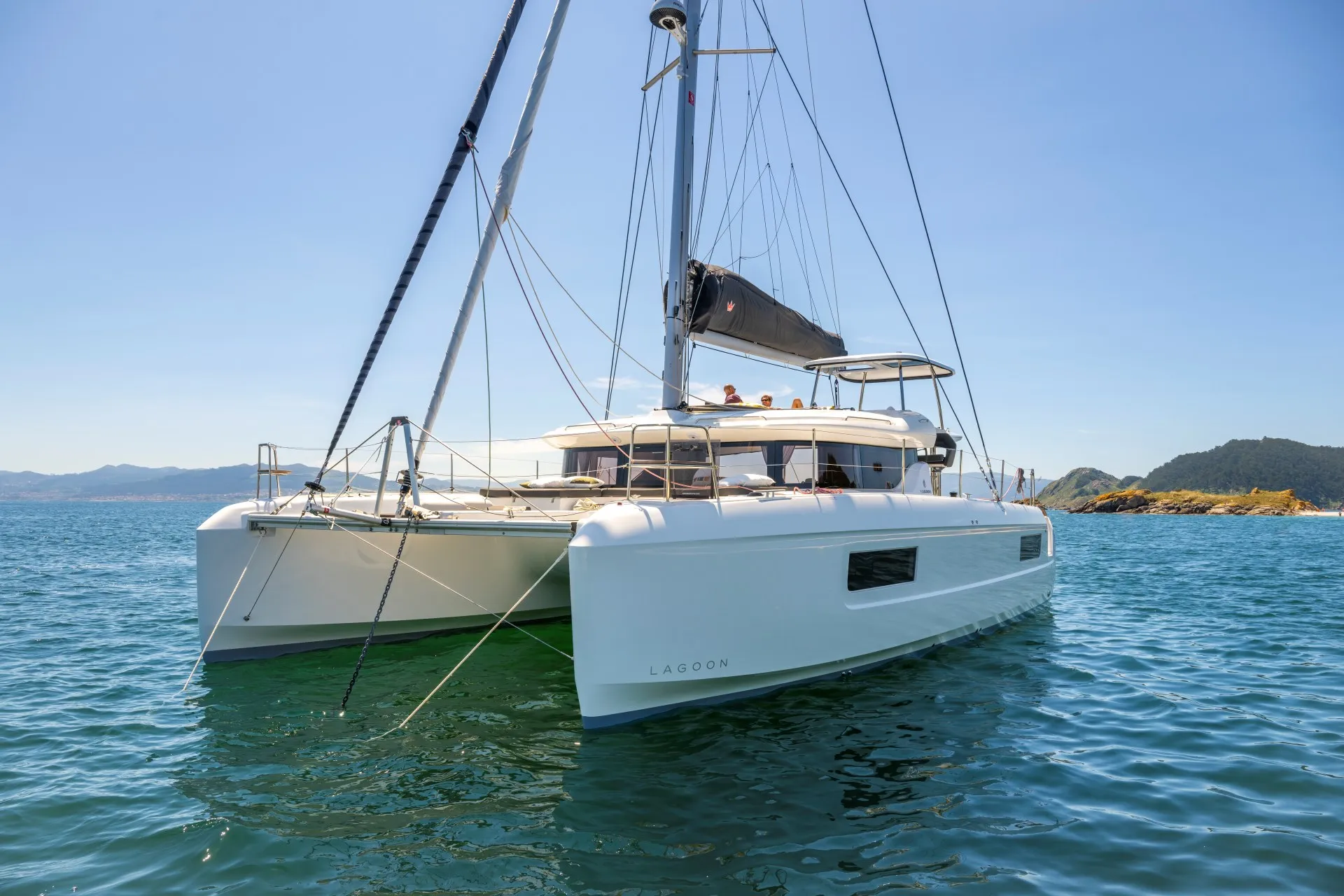
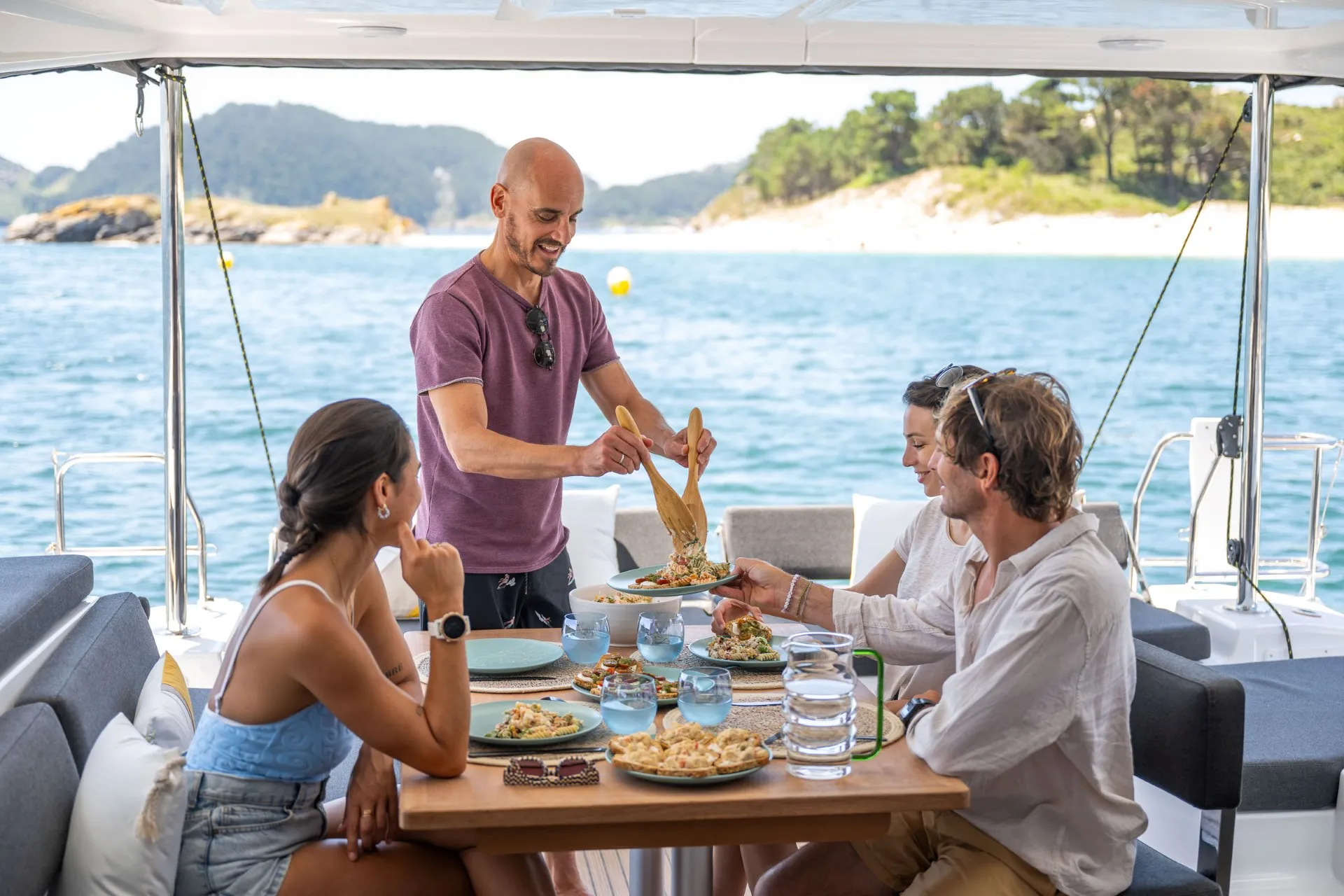
The saloon and cockpit are designed as modular space rather than as two rooms. Open them into one continuous living area with a dining arrangement that comfortably seats twelve, or configure her for six place settings and keep the rest as lounging space — the point is that you can change your mind. Above sits the flybridge, and the added aft entryway in each hull is integrated into Patrick le Quément's lines rather than cut into them, which is what makes boarding, line handling and loading markedly less athletic than on a conventional transom.
In Lagoon's sailing range the 43 sits directly above the four-cabin 42 Millenium and below the 47'7" 46 Iconic. Against the Millenium she offers what that edition deliberately does not — three- and four-cabin arrangements, a private owner's hull, and more than double the fresh water at 166 gal (630 L) — for about two feet more boat. Against the 46 Iconic she is the smaller, tighter-turning, easier-to-berth option that still needs no professional crew. Cross-brand she is measured against the Fountaine Pajot Elba 45, Bali 4.4 and Leopard 42, where her distinguishing features are the aft hull entryways and the tankage.
Buy the 43 if you plan to be away from a dock for real stretches with a full boat: 166 gal (630 L) of fresh water is roughly double what the smaller Lagoons carry, and it is the single spec that decides how far you go and how long you stay. Buy her too if you have ever spent a season stepping around a transom with an armful of groceries — the added aft entryways are the kind of design you only notice by living with the alternative. Buy the Lagoon 38 instead if shoal water is your reason for going multihull, because at 4'4" (1.31 m) the 43 draws the most of the small Lagoons and the 38's 3'10" (1.17 m) is the whole margin in some anchorages — and if one-handed tacking matters more to you than sail shape, the 38's self-tacking jib beats this boat's furling genoa every time.
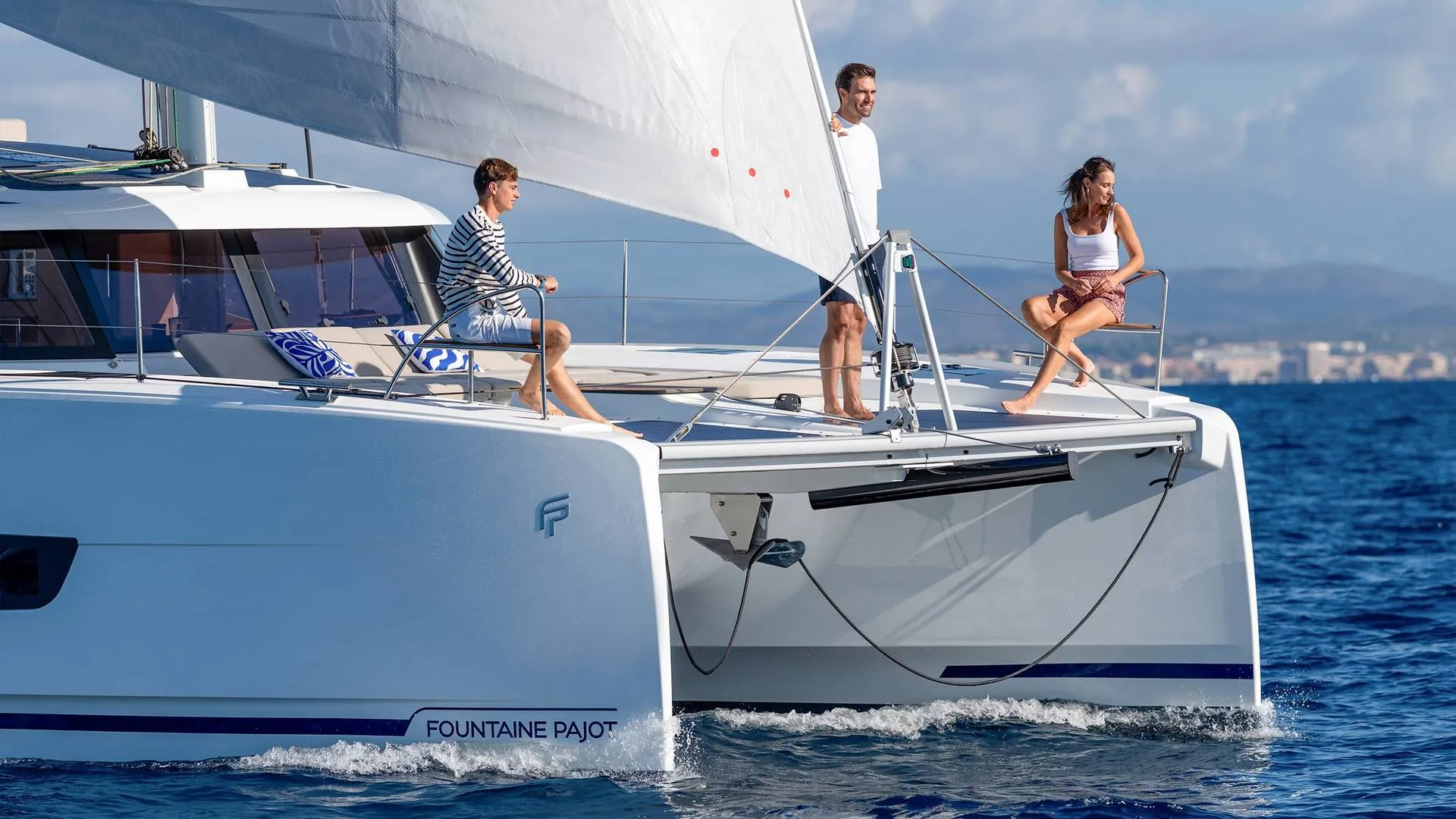
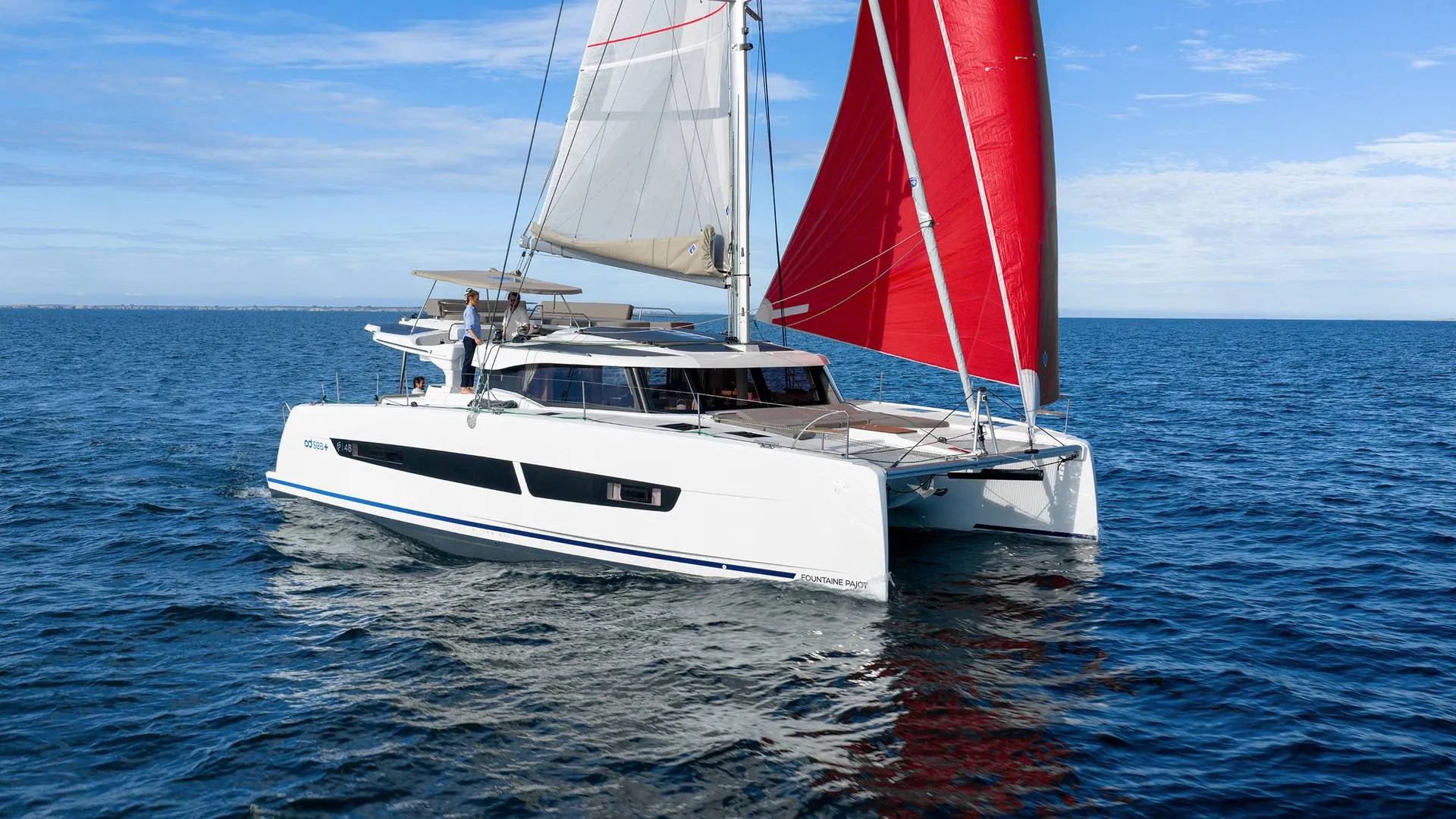
3-4 Cabins / 2-4 Heads, across four published arrangements — three cabins, three cabins plus a Pullman berth, four cabins, and four cabins plus a Pullman — giving berths for 6 to 13.
The three-cabin owner's version is where most private buyers should start: a generous forward berth with an en suite head and the shower compartment aft, in a layout Lagoon engineered specifically to keep engine noise out of that space. The four-cabin versions split both hulls evenly for families who travel in numbers, or for charter.
Saloon and cockpit are modular either way. Open them into one continuous living area with a dining arrangement that seats up to 12, or configure her for six place settings and keep the rest as lounging space.
A second boarding point in each hull — an aft entryway in addition to the usual transom access, integrated into the catamaran's lines rather than cut into them. Lagoon presents it as the model's headline innovation, and it is the clearest single thing separating the 43 from the 42 Millenium below her and the 46 Iconic above.
It sounds minor until you count how many times a day someone steps on or off a boat: guests arriving, groceries coming aboard, a line taken at a strange dock at dusk. In practice it makes boarding, line handling and loading markedly less athletic than on a conventional transom — the kind of design you only appreciate after a season of living with the alternative.
No — she carries a furling genoa at 37 m² (398 sq ft), where her smaller sisters the 38 and 42 Millenium carry self-tacking jibs. That is a real handling difference: the genoa gives more drive and better shape control, and it costs you a sheet to handle on every tack.
Upwind sail area is 105 m² (1,130 sq ft), on a high roach mainsail at 60 m² (646 sq ft), with a square top mainsail at 68 m² (732 sq ft) and a Code 0 at 73 m² (785 sq ft) as the light-air options.
On long reaches the genoa will never bother you. If your cruising ground has you tacking up a channel twice a day, factor it in before you order.