
The Riva 110’ Dolcevita: Where Italian Elegance Meets Superyacht Scale
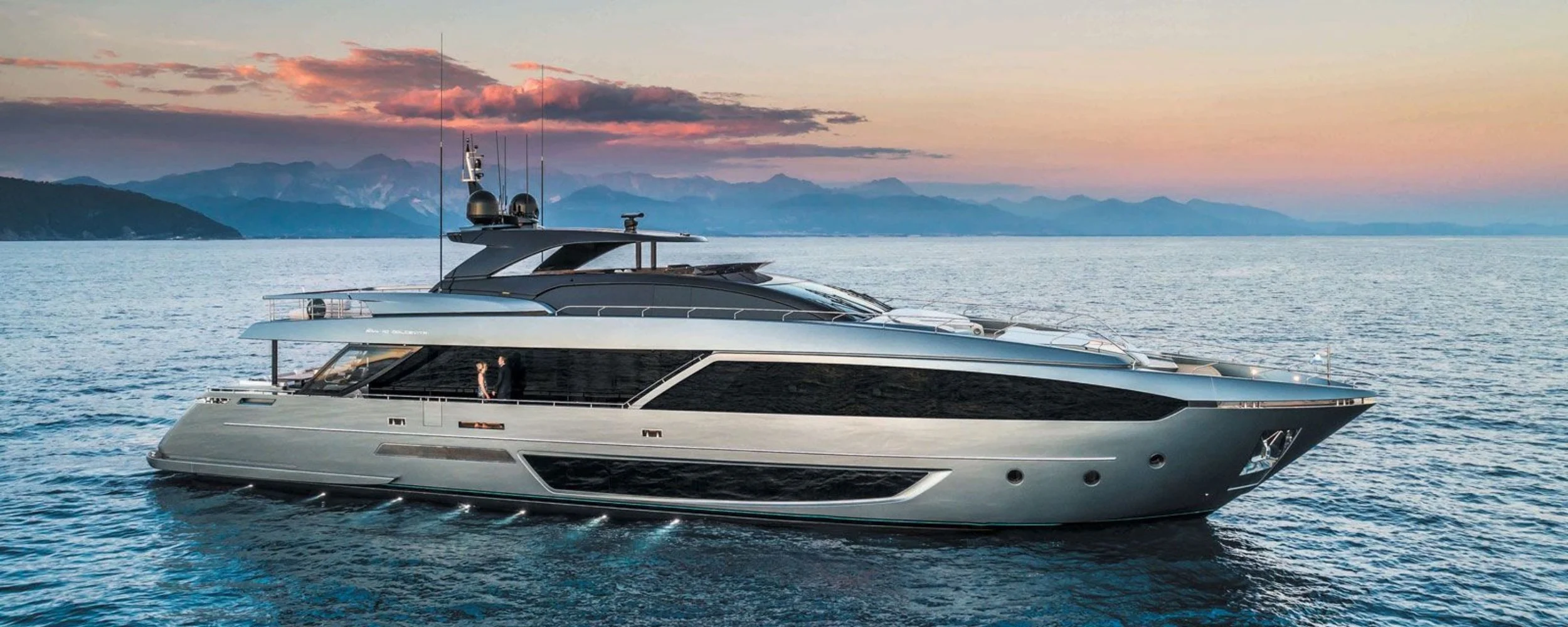
Photo Credit: Riva
Picture this: You're cruising at 23 knots through the Côte d'Azur, the sun warming the teak beneath your feet, floor-to-ceiling glass wrapping the main saloon in Mediterranean light. Your guests are scattered across three deck levels—some lounging on the foredeck's tiered sunpads, others at the flybridge bar under the sculpted carbon-fiber hardtop. The twin MTU diesels hum beneath you with 5,200 combined horsepower, and for the first time, you understand what Riva means when they talk about la dolce vita at superyacht scale.
The 110' Dolcevita isn't just another flybridge yacht. It's Riva's answer to a question the market has been asking for decades: Can the soul of a mahogany Aquarama—the kind Brigitte Bardot made famous in Saint-Tropez—translate to a 110-footer with five staterooms and a crew of seven? Since its 2018 debut, the Dolcevita has proven the answer is yes, and the market has responded. Nine hulls sold in the first year. Prices ranging from $11 million to over $15 million depending on specification. And a 2019 Design & Innovation Award for exterior styling that cemented its place as the flagship of Riva's flybridge range.
Who It's For
The 110' Dolcevita occupies a specific niche: owners who want superyacht capability without crossing into the full-crew, full-time captain territory of a 40-meter. You're looking at a yacht that can handle extended Mediterranean summers or Caribbean winters, accommodate ten guests across five cabins, and still feel intimate enough for a long weekend with close friends.
This is the yacht for the entrepreneur who already owns a smaller Riva—a 76' Perseo or 88' Domino—and wants to scale up without losing the brand's DNA. It's also the yacht for the first-time superyacht buyer who values design pedigree and doesn't want to compromise on performance. At 33.5 meters, the Dolcevita sits in that sweet spot where you can still find marina space in Portofino or Gustavia, but you're not making concessions on volume or layout.
The key differentiator here is the main-deck owner's suite. Unlike many competitors that push the master below, Riva places it forward on the main deck with full-beam width and a private entrance via the port-side corridor. That layout decision—paired with a dayhead just outside the saloon—signals this yacht was designed for owners who entertain frequently and want separation between private and social spaces.
Design & Layout
Officina Italiana Design spent twice the usual development time on the Dolcevita, and it shows. The exterior lines are clean and contemporary, but the details—mahogany accents, stainless steel railings, the signature metallic grey hull with dark glass banding—are pure Riva. The flybridge is integrated rather than tacked on, and the profile manages to look sporty despite the yacht's 23-foot, 10-inch beam.
The real engineering achievement is the main saloon. Riva's design team wanted floor-to-ceiling glass that wrapped 270 degrees around the space, creating what they call "the crystal palace." The problem: at this size, that much glass needs serious structural support. The solution was a "spider structure"—four transversal and four longitudinal stainless steel pieces that connect hull to superstructure while keeping mullions minimal. The result is a light-flooded interior where the boundaries between inside and outside dissolve.
Inside, the material palette is deliberate. Rosewood joinery—darker and denser than mahogany, with a high-gloss finish that catches the light—covers bulkheads and deckheads. Riva's craftsmen use real wood, not pre-engineered veneers, which means you see natural grain, knots, and variations. It's a more expensive approach, but it delivers the richness you expect from a brand with this heritage. Soft goods are matte grey, leather and stainless steel accents appear throughout, and the dining chairs combine both materials in a nod to Riva's runabout roots.
The five-cabin layout is flexible. The owner's suite occupies the forward section of the main deck, with a king berth facing aft, a full-beam ensuite forward, and a lounge area to starboard. Below deck, four guest cabins open off a central lobby—three VIPs and one convertible twin with a Pullman berth is a common configuration. Each cabin gets an ensuite finished in white marble, and the level of detail matches what you'd find in the master.
Deck spaces are where the Dolcevita truly shines. The foredeck is a three-tiered lounge with hidden storage and optional spa pool. The flybridge splits into two zones: an open aft section for sunbathing and a covered forward area with a bar, dining table, and helm station. The hardtop is a work of art—glass inserts, sculpted carbon fiber, and integrated lighting. The aft deck is practical rather than loungy, with a tender garage that swallows a Williams 445 and leaves room for toys.
Performance & Handling
Twin MTU 16V 2000 M96 diesels deliver 2,638 horsepower each, driving the Dolcevita to a 26-knot top speed and a 23-knot cruise. At cruise, you're looking at a 430-nautical-mile range from the 4,042-gallon fuel capacity. That's not transatlantic, but it's enough for Cannes to Sardinia or Nassau to the Exumas without refueling.
The hull is GRP with a planing design, and the 6-foot, 6-inch draft means you can tuck into shallower anchorages than displacement yachts of similar length. At speed, the Dolcevita feels planted—the beam and hull form deliver stability, and the raised pilothouse offers excellent visibility for longer passages. There's a second helm on the flybridge with a pop-up carbon fiber console and twin MFDs, which is where most owners drive when the weather's good.
Seakeeping is confident rather than aggressive. This isn't a Pershing GTX built to slice through chop at 50 knots. It's a fast cruiser that prioritizes comfort and range over outright speed. The ride is smooth at cruise, and the yacht settles quickly at anchor thanks to optional gyro stabilizers.
What the performance package really delivers is freedom. You can leave Monaco Friday afternoon, anchor off Corsica for the weekend, and be back in port Monday morning without feeling like you've spent the entire trip in the engine room or at the fuel dock. That's the kind of capability that turns a yacht from a showpiece into a tool you actually use.
The Ownership Conversation
Let's talk numbers. New Dolcevitas were priced between $11 million and $15 million depending on specification and customization. Used examples are now appearing on the brokerage market in the $9.8 million to $13.5 million range, which tells you two things: early owners are moving up to larger yachts, and the Dolcevita holds value better than most production superyachts.
Annual operating costs on a yacht this size typically run 10 to 12 percent of purchase price. Budget $1.2 million to $1.5 million per year for crew (captain, engineer, two deckhands, two stewardesses, chef), insurance, dockage, maintenance, and fuel. That's not small, but it's predictable. You're buying worry-free weekends and the ability to say yes when the weather's perfect and your calendar clears.
Crew is the big decision. At 110 feet, you're in the zone where a full-time captain and rotating crew make sense if you're using the yacht more than a few weeks per year. The crew quarters are forward on the lower deck with three cabins and five berths, plus a mess area. It's tight but functional. If you're planning to owner-operate part of the time, the pilothouse helm is professional-grade with four heads-up MFDs and centralized systems management.
The smart ownership play here is to charter the yacht when you're not using it. A well-maintained Dolcevita can command $150,000 to $200,000 per week in high season, which offsets a meaningful chunk of annual costs. Work with a reputable charter management company, set aside six to eight weeks for your own use, and let the yacht pay for itself the rest of the year.
One strategic note: Riva's brand equity matters. This isn't a generic flybridge yacht with a builder you've never heard of. It's a Riva, which means strong resale demand, access to the Ferretti Group's global service network, and a level of fit and finish that holds up over time. That brand premium you pay upfront comes back to you when it's time to sell or trade up.
Where to Start
If the 110' Dolcevita fits your profile, start by exploring full specifications at www.YachtSpecsDirect.com. Then browse available Riva inventory at www.mintedyachts.com/riva to see what's on the market and how pricing is trending.
The Dolcevita proves that Italian elegance scales beautifully when you're willing to invest in the details that matter.