
Pershing 9X: The 42-Knot Italian Statement
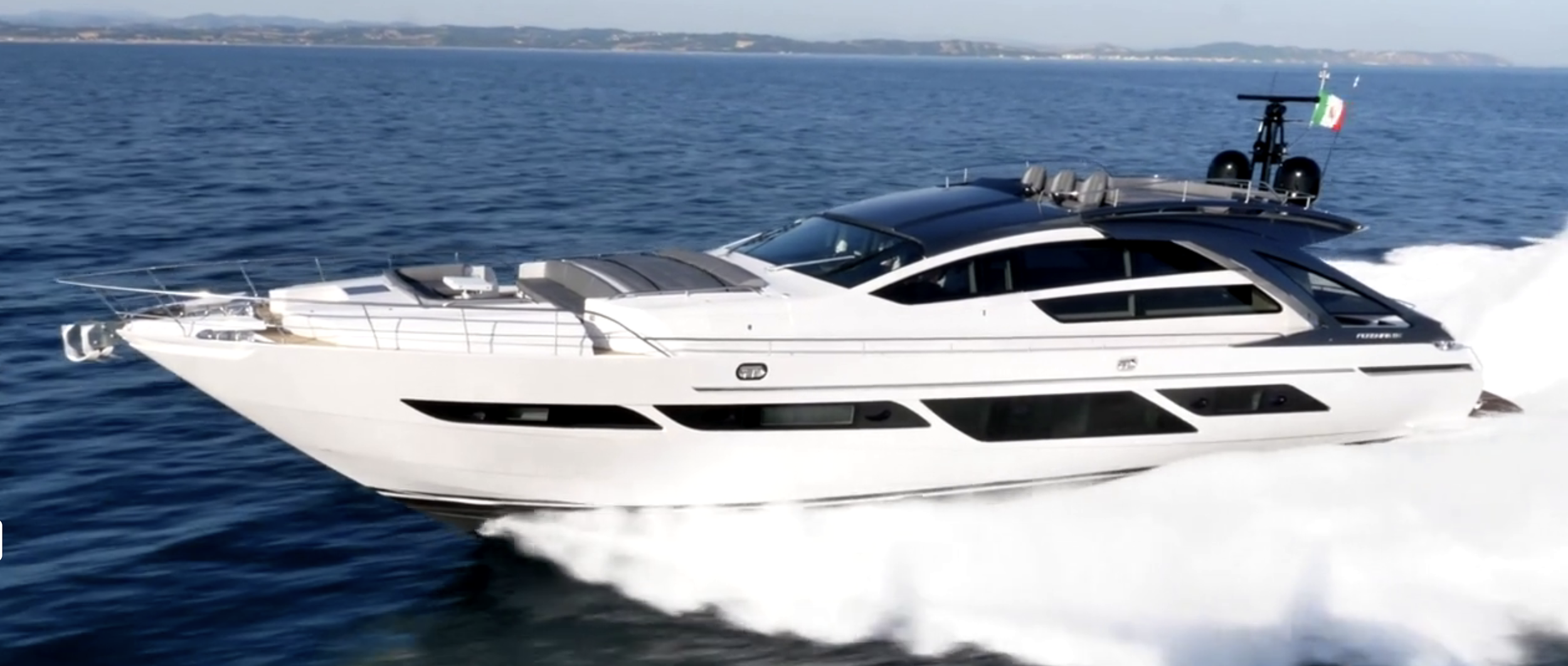
Photo Credit: Pershing Yachts
Picture this: you're clearing the harbor at dawn, throttles forward, and the Pershing 9X lifts onto plane with the kind of authority that makes other boats look like they're standing still. By the time you hit 38 knots, the twin MTU diesels are barely working, the surface drives are doing their thing, and you've got another 300 nautical miles ahead before you need to think about fuel. This is what 5,276 horsepower and Italian design obsession look like when they meet open water.
The Pershing 9X sits at the top of the brand's X Generation lineup, a 92-footer that delivers legitimate supercar performance in a package sophisticated enough for serious cruising. Since its debut, this carbon-fiber sportbridge has become the benchmark for buyers who refuse to choose between speed and substance.
Who It's For
The 9X is built for the owner who already knows what 40 knots feels like and wants more of it without sacrificing the ability to host eight guests in genuine comfort. This is a four-cabin yacht with crew quarters for four, which means you can run it with professional help or, if you've got the experience, handle it yourself for long weekends. The joystick controls and Arneson surface drives make close-quarters maneuvering surprisingly manageable for a boat this size.
You'll find 9X owners splitting time between the Mediterranean summer circuit and Caribbean winters, using that 380-nautical-mile range at cruise to island-hop without the constant fuel-dock calculus. The typical buyer has owned performance boats before, understands the operating costs that come with twin 2,638-hp engines, and values the time saved by traveling at speeds that turn a four-hour trip into two.
This is not a liveaboard yacht. It's a precision instrument for covering water quickly while maintaining the kind of Italian style that turns heads in every marina from Monaco to Miami.
Design & Layout
Fulvio De Simoni's exterior lines are pure Pershing: aggressive, low-slung, with those signature side wings that give the 9X its predatory stance. The carbon-fiber construction keeps displacement at 68 metric tons dry, which is remarkably light for a 92-footer and directly translates to that 42-knot top speed. The aerodynamic sundeck profile isn't just for show; it reduces wind resistance at speed and creates a surprisingly usable upper entertaining area.
The main deck is where the 9X makes its case as more than just a fast boat. Floor-to-ceiling glass panels retract completely, erasing the boundary between the salon and aft deck. The result is a 40-foot entertaining space that flows from the helm to the swim platform. The salon features the "Interior in Motion" helm station, a collaboration with Poltrona Frau that delivers leather-upholstered seating with integrated controls. It's functional art that happens to let you pilot a 42-knot yacht.
Below deck, the full-beam master sits amidships where motion is minimal, with a split ensuite that's accessible from both sides and enough wardrobe space for extended cruising. The forward VIP runs the width of the bow, while two guest cabins with Pullman berths handle additional guests or family. All four cabins get ensuites, and the finishes throughout are top-tier Italian brands with the kind of attention to detail that justifies the price tag.
The crew quarters are aft and below, with two cabins, dedicated heads, and a galley equipped with Miele appliances. It's tight compared to larger yachts, but functional for a professional crew of three to four who understand they're on a performance boat, not a displacement cruiser.
Performance & Handling
Here's what matters: twin MTU 16V 2000 M96L diesels producing 2,638 horsepower each, driving Arneson surface-piercing propellers. This setup delivers a verified 42-knot top speed and a comfortable 38-knot cruise. At that cruise speed, you're looking at roughly 380 nautical miles of range from the 2,378-gallon fuel capacity. Run it at 35 knots and you'll stretch that to around 400 miles.
The Arneson drives are the secret weapon here. Unlike traditional shaft drives, they keep the propellers partially out of the water at speed, reducing drag and improving efficiency. They also give you exceptional maneuverability at low speeds, which is why the 9X can be joystick-controlled in tight marina situations despite its size and power.
The carbon-fiber hull construction does more than save weight. It provides the rigidity needed for high-speed stability and reduces vibration throughout the yacht. Even at 40 knots, the 9X remains remarkably quiet inside, a testament to the engineering that went into isolating the accommodations from the mechanical spaces.
The integrated propulsion, navigation, and monitoring systems give you real-time data on everything from fuel consumption to sea state, letting you make informed decisions about speed versus range. The helm is set up for serious operation, with multi-function displays, engine management, and trim controls for both the Arneson drives and conventional trim tabs.
The Ownership Conversation
Let's talk numbers honestly. A new Pershing 9X starts around $8 million, and that's before you start customizing finishes or adding upgraded systems. Annual operating costs will run $150,000 to $200,000, depending on how much you use it and where you keep it. Fuel consumption at cruise is approximately 200 gallons per hour, which means a full-throttle weekend can easily burn through $5,000 in diesel.
But here's the value proposition: you're buying the ability to cover 300 nautical miles in under eight hours, in a yacht that sleeps eight guests and four crew, with the kind of Italian craftsmanship that holds its value better than most performance boats. The 9X depreciates more slowly than comparable sportbridges because Pershing builds relatively few of them and the brand commands premium pricing in the resale market.
Crew versus owner-operator is a real consideration. You can absolutely run this boat with just a captain if you're experienced, but most owners opt for a crew of three: captain, engineer, and steward. That's $200,000 to $250,000 annually in salaries, plus benefits. The trade-off is having professionals who know the systems, can handle maintenance, and ensure the boat is always ready when you are.
Insurance will run 1 to 1.5 percent of hull value annually, and you'll want to budget for a major service every 500 hours, which includes engine work, drive maintenance, and systems checks. The good news is that MTU engines are bulletproof when properly maintained, and Pershing's dealer network provides solid support in major yachting centers.
Strategic ownership means understanding that this is a tool for a specific job: getting you and your guests from point A to point B faster than almost anything else on the water, while maintaining the comfort and style expected at this price point. If that aligns with how you use boats, the 9X makes financial sense. If you're looking for a floating villa that rarely leaves the dock, there are better options.
Where to Start
Explore full specifications at www.YachtSpecsDirect.com.
Browse available Pershing inventory at www.mintedyachts.com/pershing.
The Pershing 9X represents the pinnacle of what happens when Italian design meets uncompromising performance engineering, and for the right owner, there's simply nothing else quite like it.