
Horizon PC68: The Floating Island That Rewrites Power Catamaran Ownership
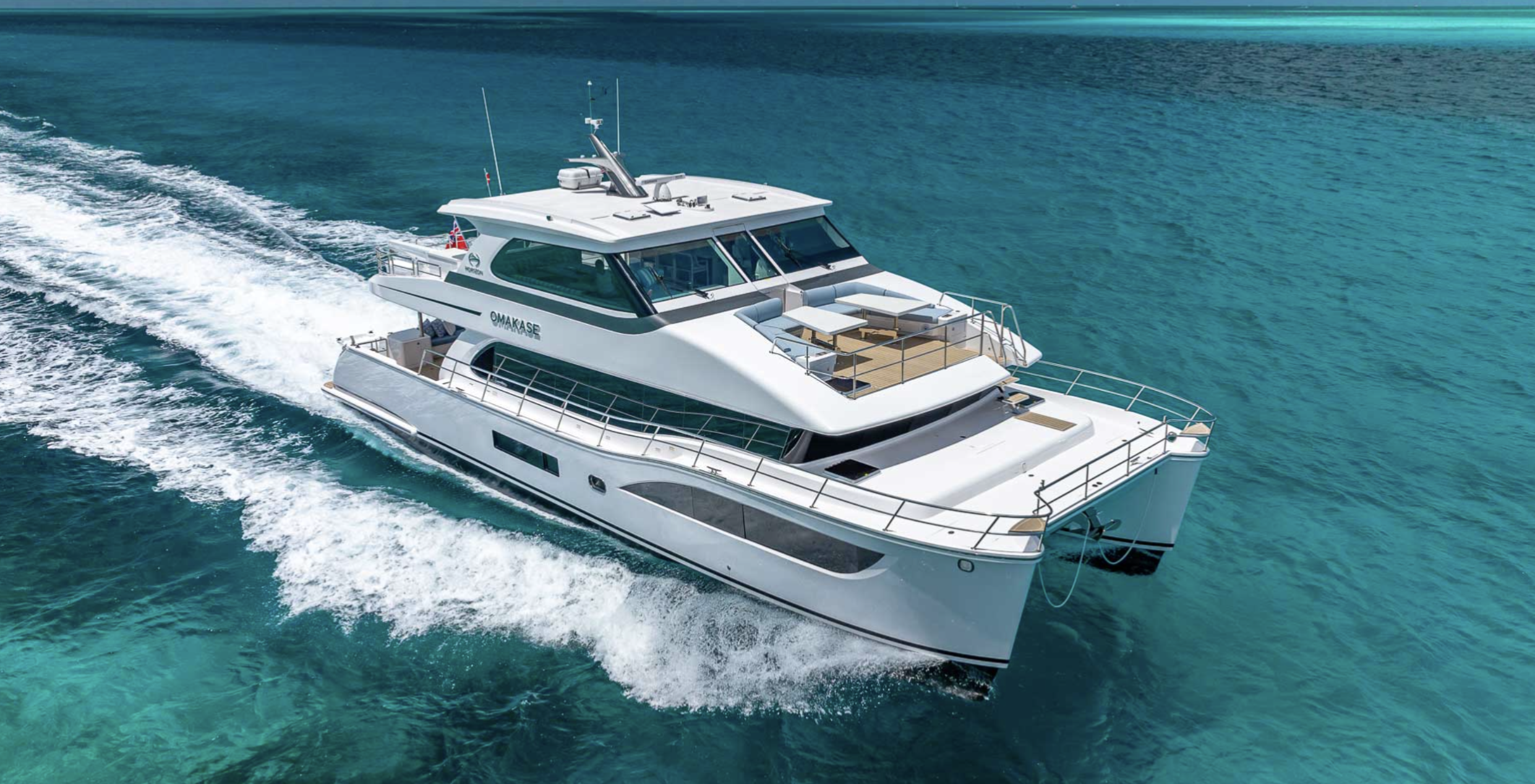
Photo Credit: Horizon Power Catamarans
Picture this: you're 20 miles offshore, running at 20 knots through a 3-foot chop. The coffee in your cup barely ripples. Your guests are lounging on the Portuguese deck, unaware you're pushing through conditions that would have a 70-foot monohull hobby-horsing. Welcome to the Horizon Power Catamarans PC68, where 24 feet 6 inches of beam and twin-hull physics deliver what most yacht owners spend years chasing—genuine offshore comfort without compromise.
At 68 feet overall, the PC68 sits in that strategic sweet spot where serious capability meets owner-operator reality. This isn't a yacht that demands professional crew or forces you to choose between range and speed. It's a purpose-built platform for the owner who understands that the best weekends happen when the boat works with you, not against you.
Who It's For
The PC68 speaks to a specific buyer: the experienced boater who has moved past the "bigger is better" phase and landed on "smarter is better." You've likely owned in the 50- to 65-foot range. You know what works on the water and what doesn't. You're done with the 8-knot slog or the fuel-guzzling sprint that cuts your range in half.
This is the yacht for the owner who wants to run the Bahamas for two weeks without constantly calculating fuel stops, who values the ability to anchor in 5 feet 4 inches of water, and who recognizes that a stable platform means your guests actually enjoy the passage—not just the destination. The PC68 delivers 111,112 pounds of displacement across two hulls, which translates to a ride that makes head seas feel gentle and beam seas manageable.
The four-stateroom, four-head layout accommodates eight guests comfortably, with the option for an on-deck master that transforms the main salon into a full-beam owner's suite. For the owner who splits time between family trips and entertaining clients, that flexibility matters.
Design & Layout
Horizon Power Catamarans has spent 37 years refining what works in a power cat, and the PC68 shows it. The twin-hull design isn't just about stability—it's about creating usable volume without the bulk. Step aboard through either hull platform or the side gates, and you're immediately on a cockpit that seats eight at a 9-foot high-gloss wood table. The wet bar here isn't an afterthought: Corian countertops, fridge, ice maker, and enough room to move without the shuffle-step dance common on smaller yachts.
The salon runs the full 24-foot 6-inch beam with 7-foot headroom and frameless windows on three sides. To port, a deep L-shaped sofa. To starboard, an open galley with Miele appliances—four-burner cooktop, convection oven, dishwasher, and Fisher & Paykel cooling drawer. Three stools at the center island make this a social space, not a service corridor.
Forward, the standard layout offers another gathering area with wraparound windows and dual ottomans tucked into a custom coffee table. Or, spec the on-deck master option: a centerline king berth, full-beam suite, and en suite head in the lower port hull. Either way, you're not sacrificing space—you're choosing how to deploy it.
Below, the four staterooms defy the "cramped catamaran cabin" stereotype. The master in the starboard hull features a walkaround king berth athwartships, frameless hullside windows, his-and-hers sinks, and full-height cedar-lined closets. The VIP in the port hull gets a queen berth. Two additional twin-berth staterooms, all en suite, round out the guest accommodations.
The flybridge is where the PC68 earns its "floating island" reputation. Twin Stidd helm seats, three 22-inch Garmin displays, and dedicated MAN diesel readouts keep the captain informed. But the real story is aft: a tiered bar with Corian counters, ice maker, and wet bar faces a C-shaped settee with fold-out table. The Portuguese deck forward—accessible through the flybridge door—adds two L-shaped settees with high-low tables that convert to sun pads. Teak steps lead to the foredeck with pulpit seating. Stainless railings up to 33 inches high keep everyone safe without blocking sightlines.
Performance & Handling
Twin MAN i6-850 diesels—850 hp each at 2,300 rpm—spin five-blade VEEM props and deliver the performance envelope most owners actually use. Top speed hits 24.8 to 26 knots depending on load and sea state. Fast cruise at 19.7 knots burns 52 gallons per hour, yielding 644 nautical miles on the 1,500-gallon fuel capacity. Pull back to 10 knots and you're looking at 12 gallons per hour and 1,417 nautical miles of range.
That range flexibility is the point. You can run hard when the weather window is tight, or throttle back and turn a weekend trip into a week-long exploration without fuel anxiety. The sharp hull entries and Humphree stabilization system with active blades reduce roll and make head seas feel like a non-event. SCRIMP construction ensures resin saturation and structural integrity at 111,112 pounds displacement.
The 5-foot 4-inch draft opens up anchorages that monohulls can't touch. Bahamas, Florida Keys, Caribbean—you're not limited to deep-water marinas. The twin-hull design also means redundancy: two engines, two fuel systems, two of everything that matters when you're offshore.
The Ownership Conversation
Base pricing for a new PC68 starts around $5.8 million, with options pushing that number higher depending on layout choices and systems upgrades. That's serious money, but context matters. You're buying a yacht that competes in volume and capability with 90-foot monohulls, without the crew requirements or the fuel burn.
Annual operating costs on a yacht this size typically run 10 to 15 percent of purchase price—call it $580,000 to $870,000 per year covering insurance, dockage, maintenance, fuel, and crew if you choose to carry them. The PC68 is genuinely owner-operable, which means you can run it with occasional day crew for provisioning and detailing, rather than full-time captain and mate. That flexibility saves $150,000 to $200,000 annually and keeps you in control of your schedule.
Horizon builds roughly 10 to 12 hulls per year across all models, which supports resale values. Founder Richard Ford gives each owner his personal cell number—a detail that speaks to the builder's confidence in quality and long-term relationships. The commitment to SCRIMP construction and aerospace-grade composites means you're not dealing with osmosis issues or structural concerns down the road.
For the buyer who values predictable ownership and genuine offshore capability, the PC68 delivers. You're not buying a yacht that forces compromises. You're buying the freedom to say yes when the weather's perfect and the calendar clears.
Where to Start
Explore full specifications at www.YachtSpecsDirect.com.
Browse available Horizon inventory at www.mintedyachts.com/horizon.
The PC68 isn't for everyone—but if you've been searching for a yacht that matches your experience level and your ambitions, this is the conversation worth having.