Azimut S7

Expert Review, Technical Specifications & Market Analysis

The Essentials

FeatureSpecifications
Overall Length71' 2"
Beam16' 11"
Draft5' 7"
Displacement46 t (101,412 lbs) Full Load
Engines3x Volvo Penta D13 IPS 1050 800 hp
Fuel Capacity3,800 L (1,004 US Gal)
Water Capacity1,000 L (264 US Gal)
Cabins / Heads4 Cabins + 1 Crew / 3 Heads + 1 Crew
Max SpeedUp to 35 kn
Cruise SpeedUp to 27 kn

Source: Spec & Photos courtesy of Azimut. Specs verified by Tony Smith, USCG 100 Ton Master, on August 8, 2026.

You want the low, fast profile without giving up real accommodation. The S7 pairs a 35-knot triple-pod drivetrain with four cabins and a sport fly on 71 feet.

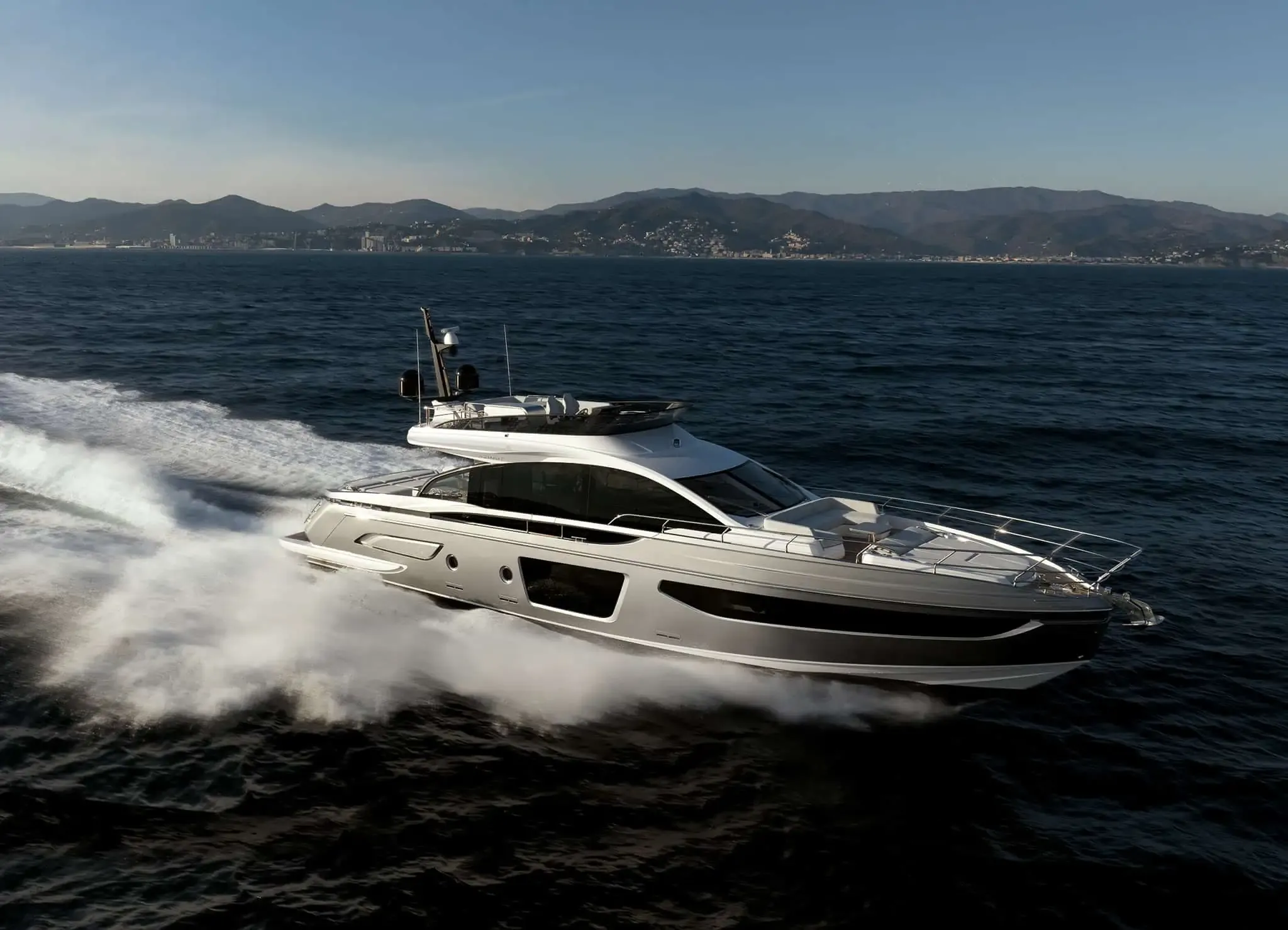
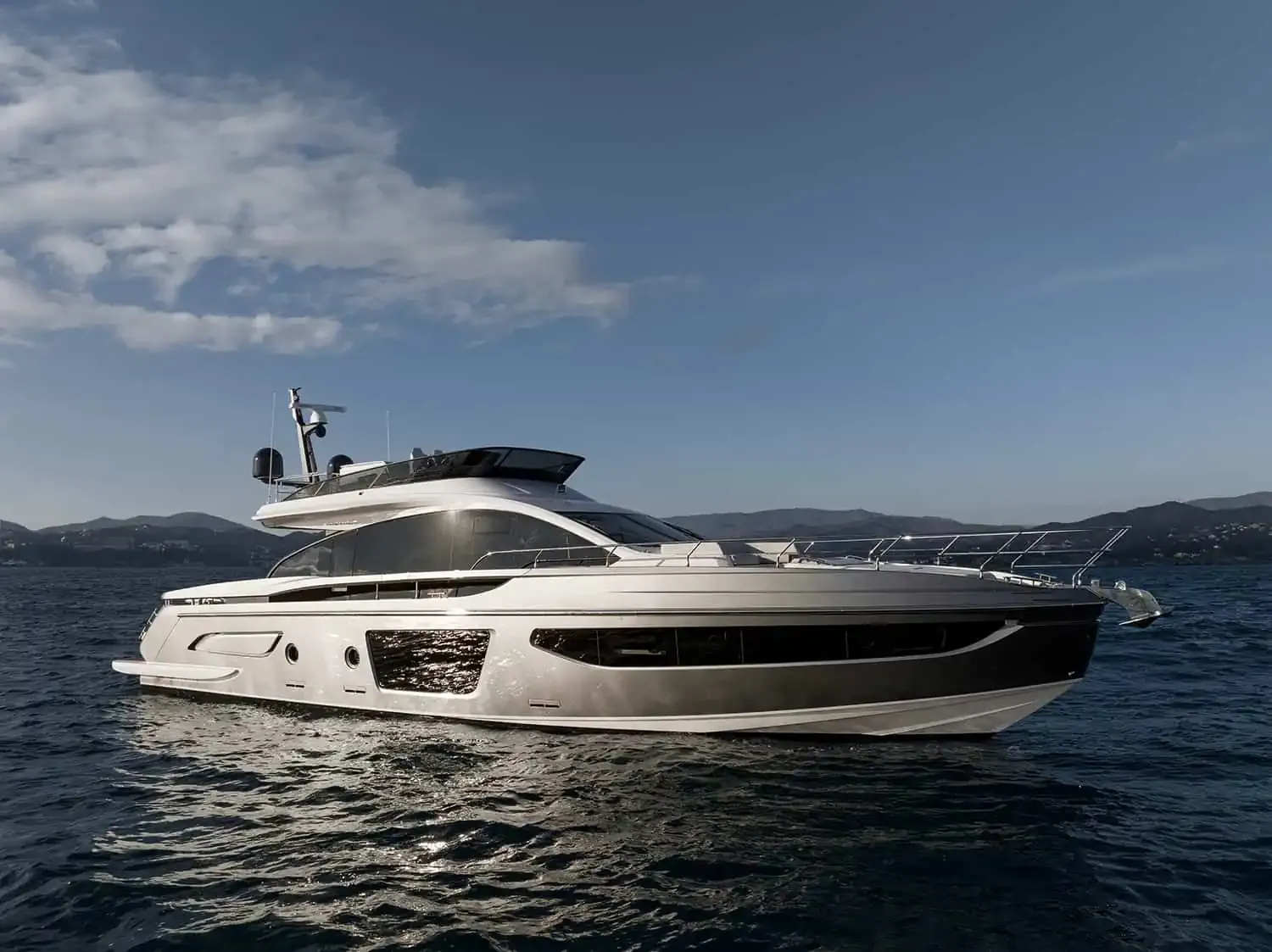
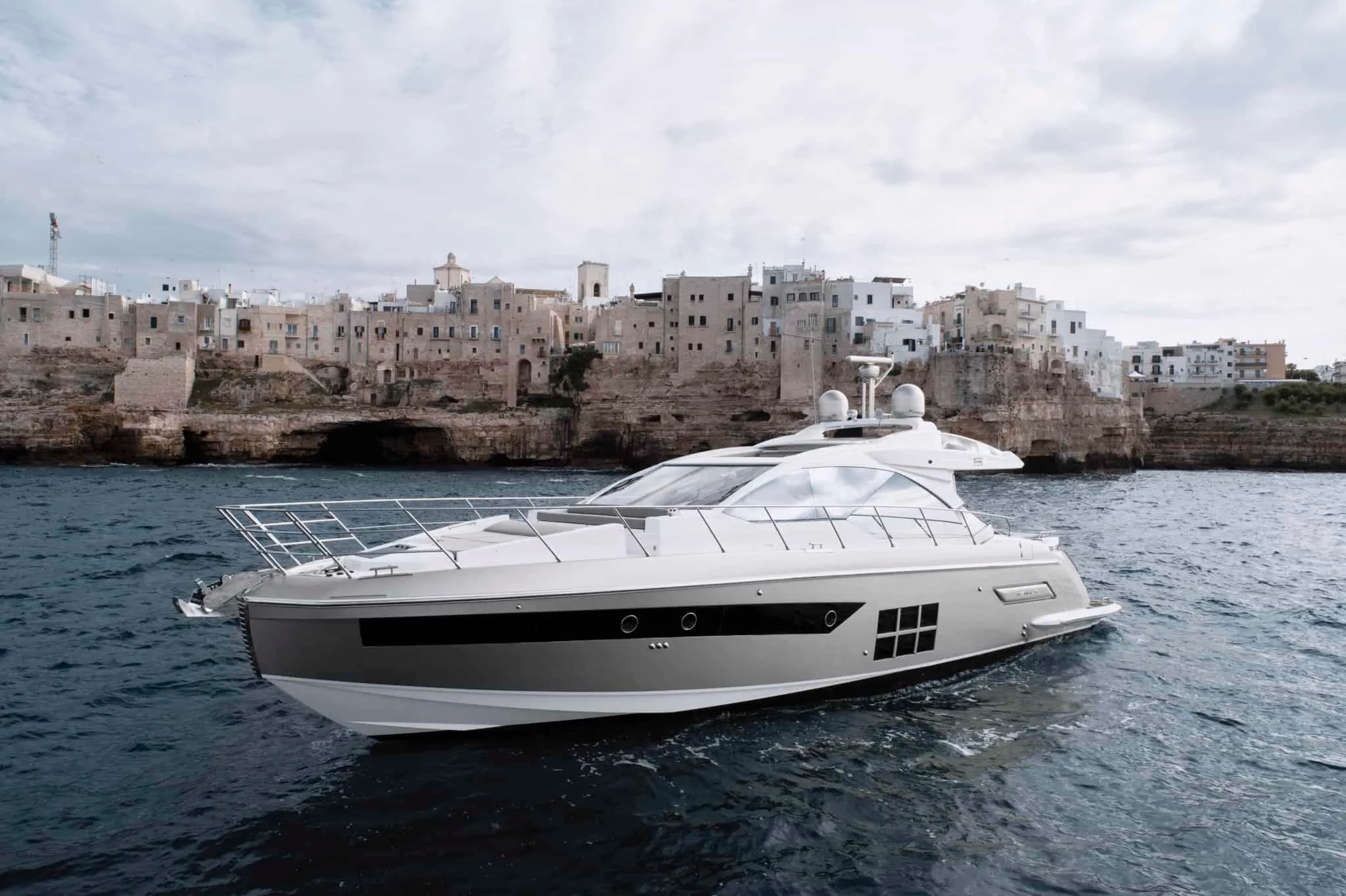
Azimut S7 exterior

Quick Verdict

  • Triple IPS 1050 propulsion delivers 225-nautical-mile range at 27 knots, enabling Miami-to-Abacos runs without refueling—a tangible advantage over comparable shaft-drive yachts in the 70-foot class
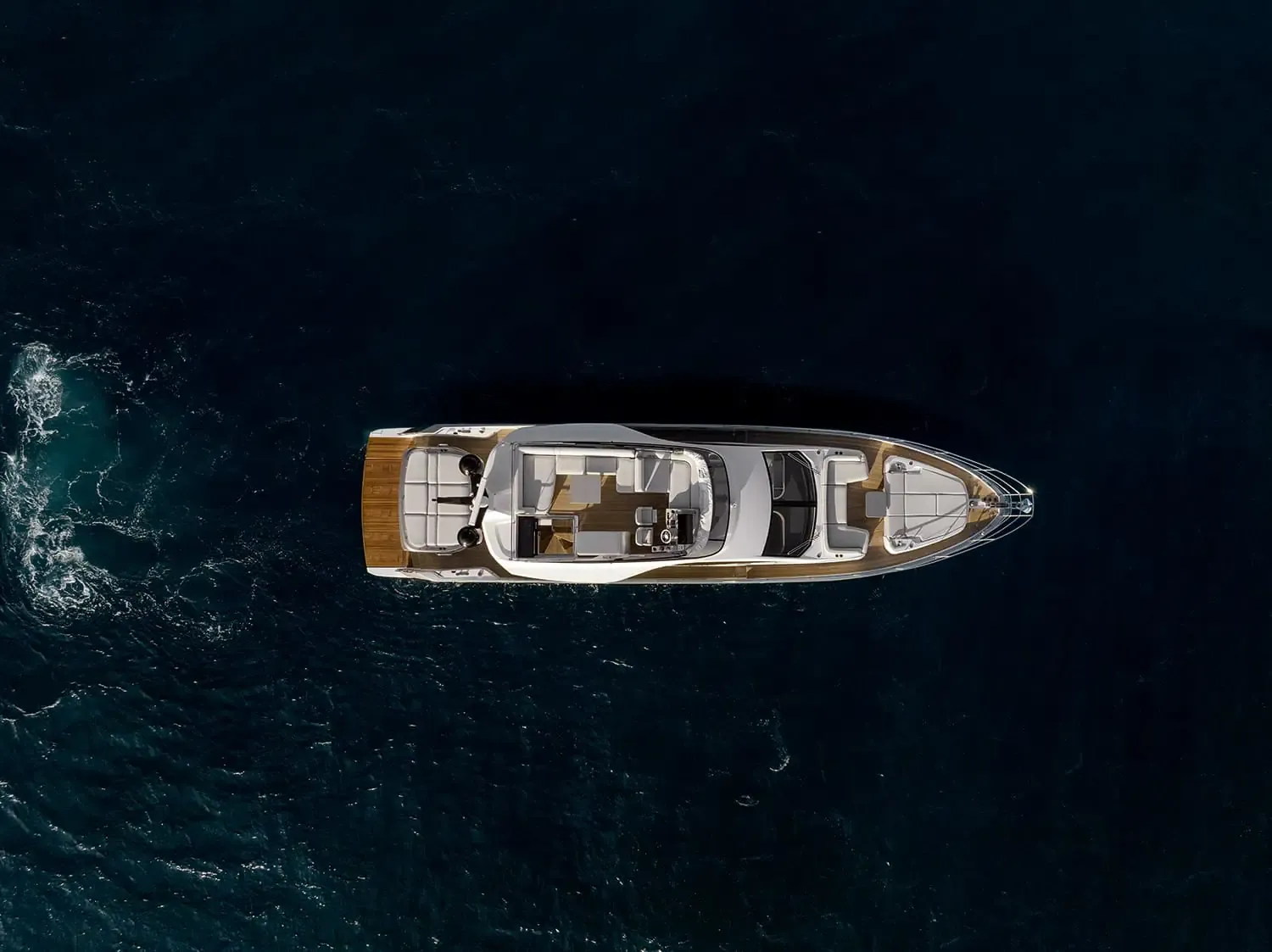
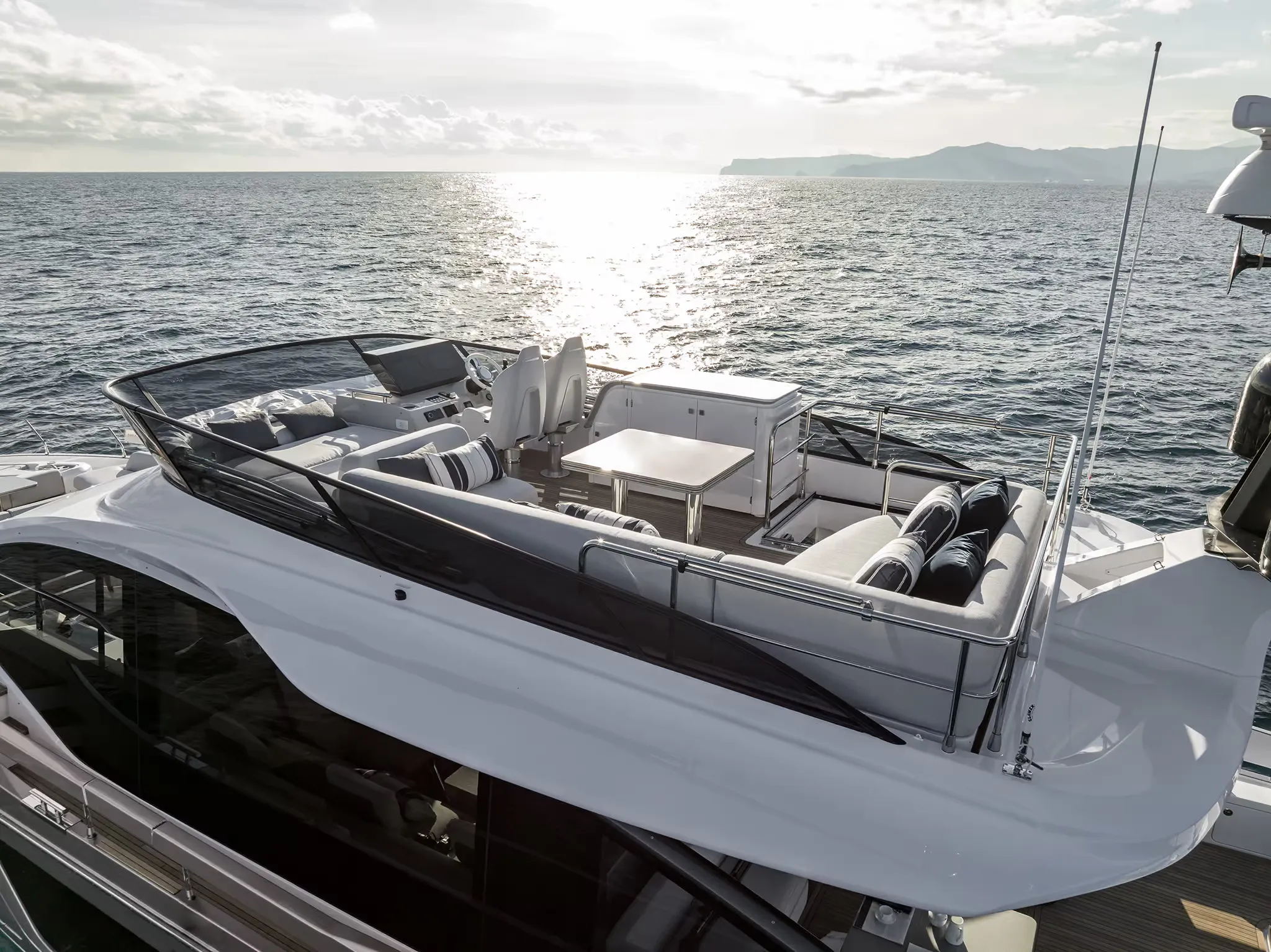
  • Flybridge-primary layout with full galley and dining for eight shifts living space outdoors, reducing reliance on formal interiors and making the boat viable for owner-operators without crew
  • Four-cabin layout with independent crew quarters provides charter-ready flexibility while maintaining single-level main deck flow that prioritizes helm access and usability underway
Tony Smith, Founder of Minted Yachts

Our Take

The S7 represents Azimut's most successful application of carbon fiber technology in the sport yacht segment. The triple IPS configuration is not just about speed. It is about redundancy, fuel efficiency, and the ability to dock this boat in tight spaces without a professional captain. The build quality is consistent with Azimut's recent push toward lower emissions and better engineering. The hull design is proven, the systems are reliable, and the carbon fiber work is structural, not cosmetic. This is a serious yacht for owners who plan to use it.

This boat is for the experienced owner who wants a 70-footer they can run themselves during the week and hand off to a day captain on weekends. It is not for first-time buyers or owners who want a traditional flybridge layout. The sportfly is optional, and many buyers skip it to keep the profile low and the weight down. If you are coming from a Pershing or a Sunseeker and want more interior space without sacrificing speed, the S7 is the right move. If you want a full flybridge with a second galley and crew quarters for two, look at the Azimut Fly 72 instead.

Resale on Azimut IPS models has been strong, particularly in Florida and the Mediterranean. The S7 is too new to have meaningful resale data, but the S6 and S8 have held value better than comparable Sunseeker and Princess models. Maintenance costs are predictable. Volvo IPS service is widely available, and the carbon fiber superstructure does not require special care beyond normal gelcoat maintenance. Budget $100,000 annually for regular use, plus fuel and dockage. This is a yacht that will cost you to run, but it will not surprise you with hidden expenses if you maintain it properly.

Watch Our Azimut S7 Reviews

Official Azimut Premiere: Inside the Azimut S7

Video courtesy of Azimut.

Azimut S7 Overview

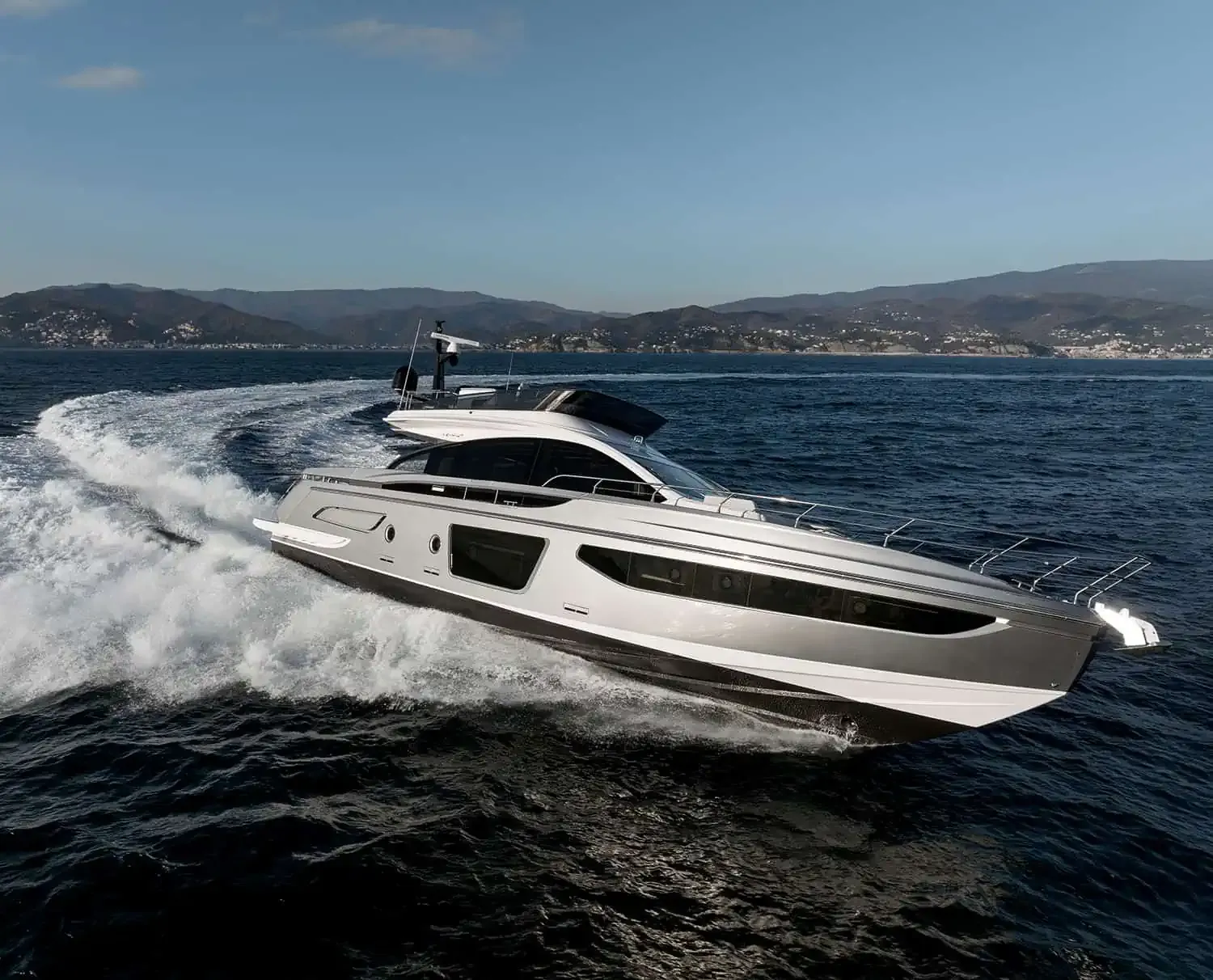
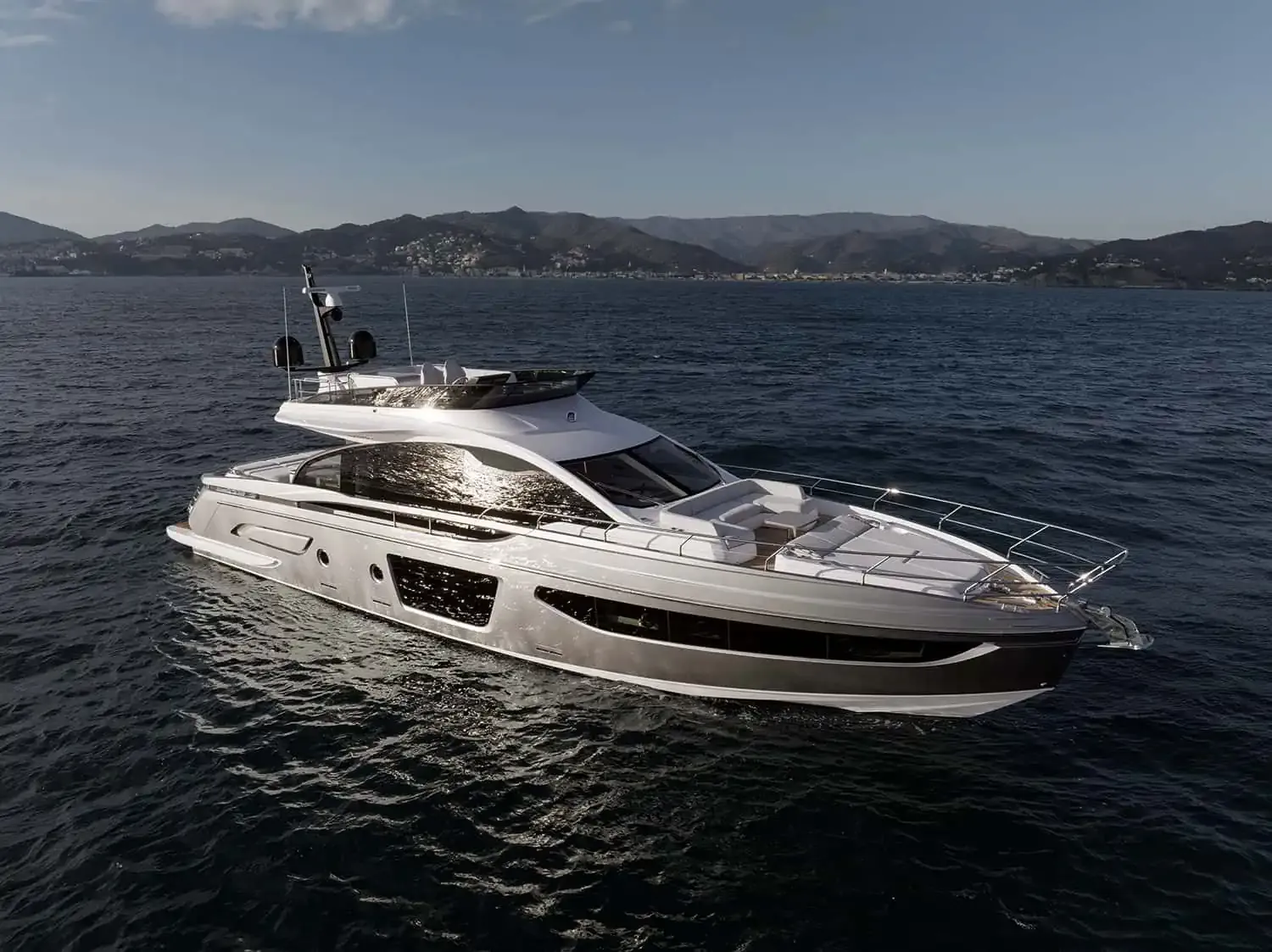
The S7 is the 71-foot member of Azimut's S series of sport yachts: 71'2" overall on a 16'11" beam, 101,412 lbs at full load, built in GRP with carbon fiber.

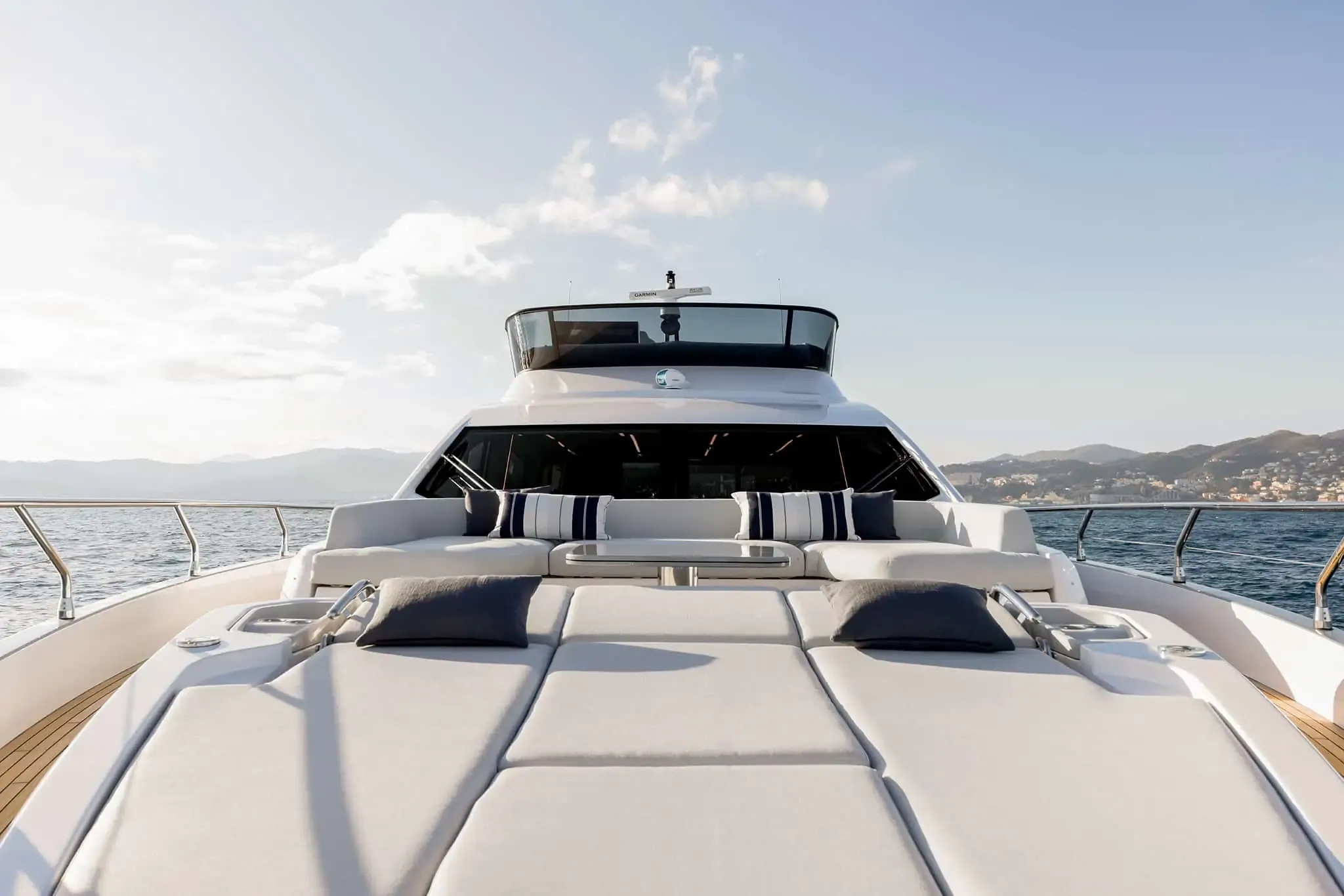
Alberto Mancini drew the low, athletic exterior; Yachtique styled the interior. The plan runs three decks — sport fly, main and lower — on a hull that reads like a coupe.

Performance & Handling

Three Volvo Penta D13 IPS 1050 pods, 800 hp each, take the S7 to a published 35-knot maximum and 27-knot cruise from 1,004 gallons of fuel.

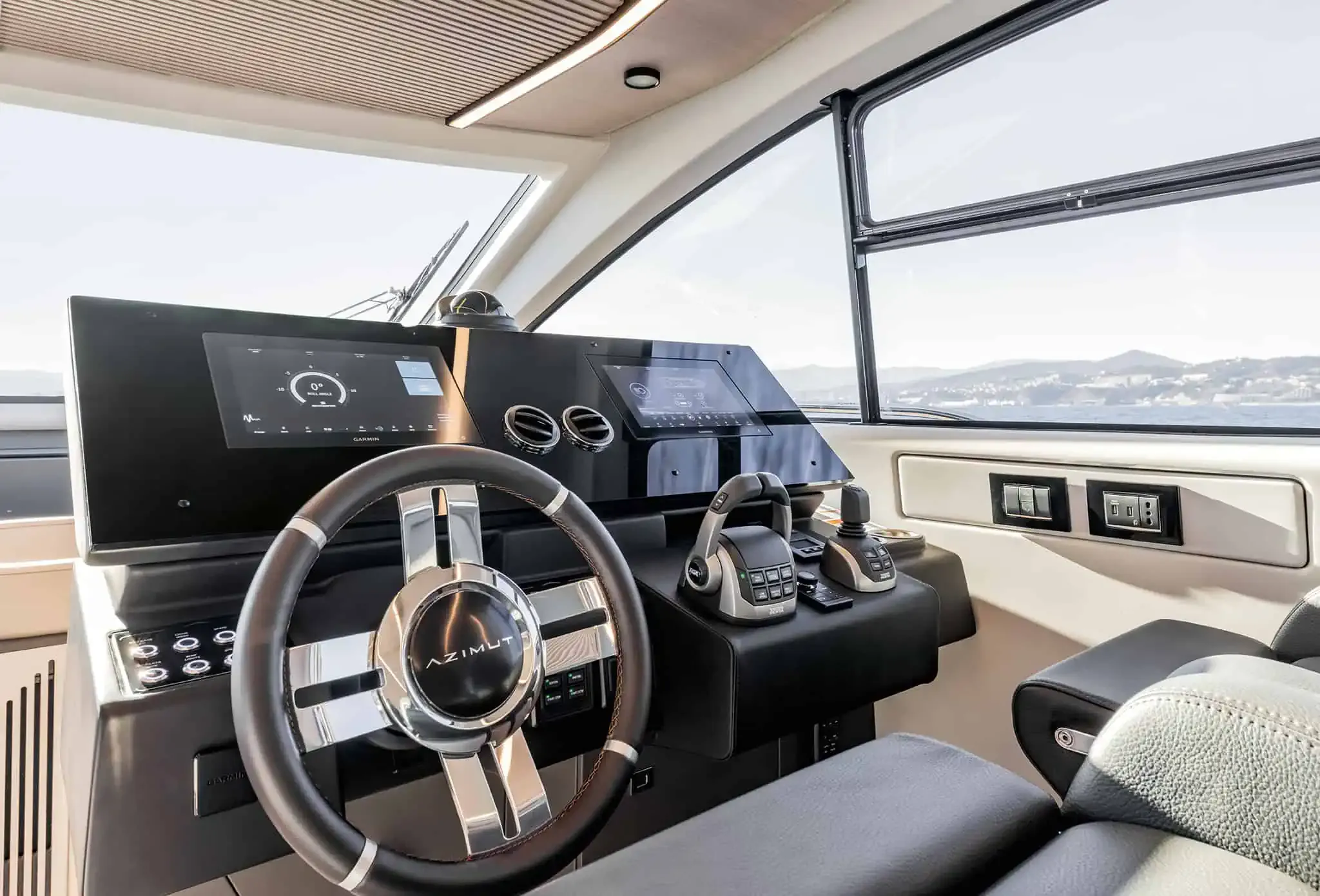
Triple pods keep the machinery spaces compact — part of how a sport yacht this shape finds room for four cabins — and give a 71-footer joystick precision around the dock.

Interior & Accommodations

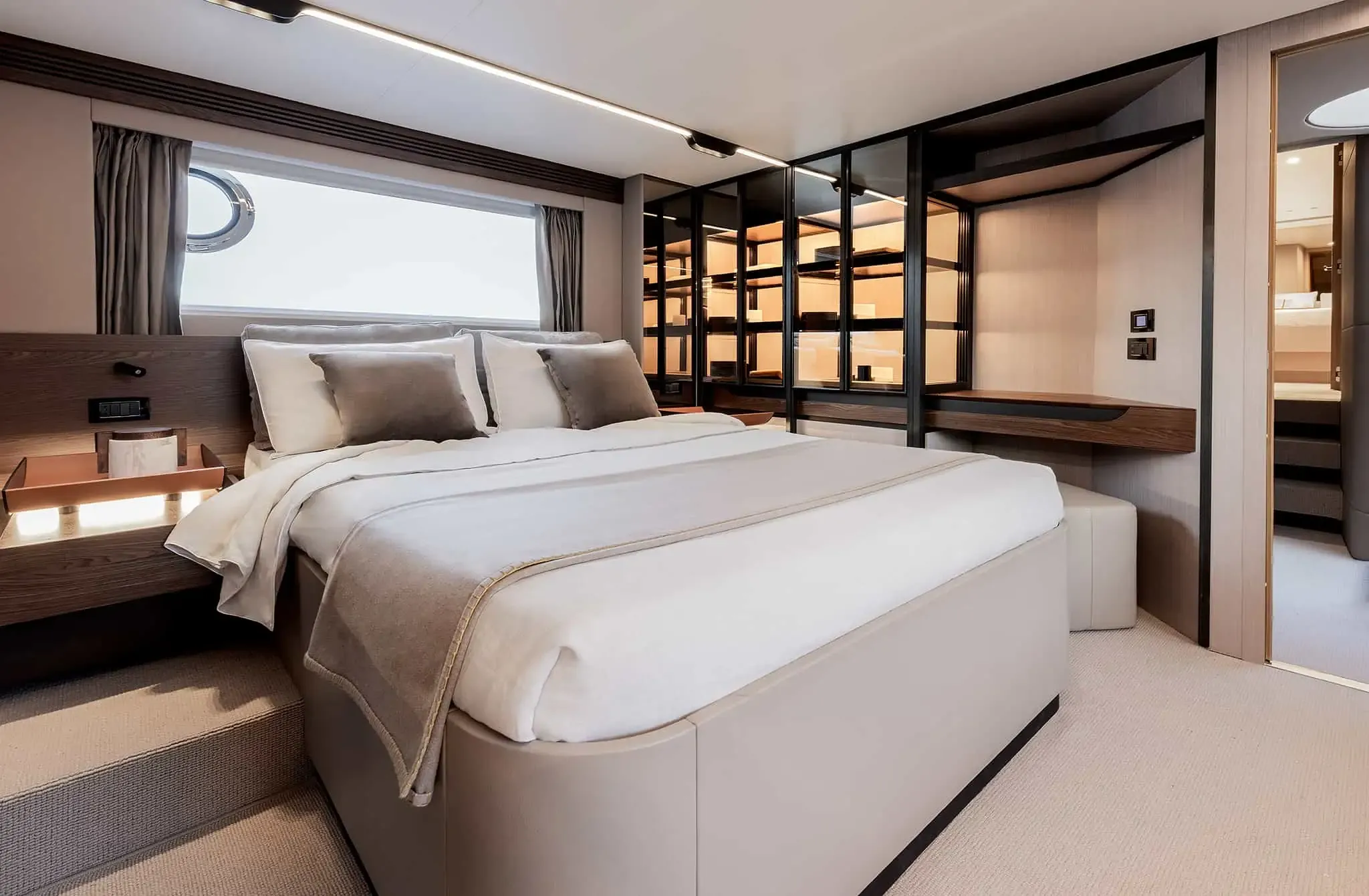
Four cabins, three heads and a crew cabin — sporting lines usually tax accommodation, and here they don't.

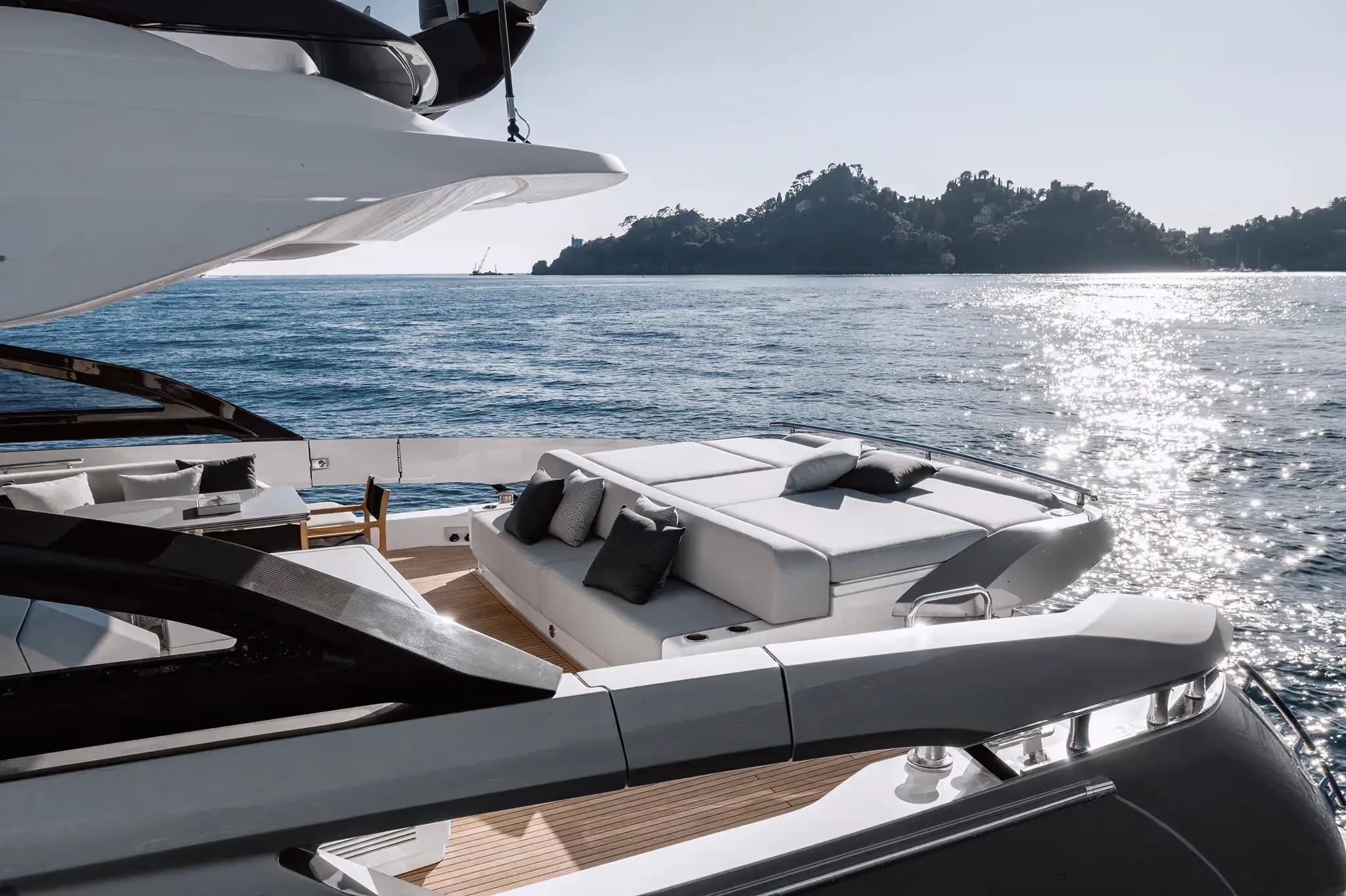
The sport fly adds an open-air helm and social deck above the main saloon, so the S7 keeps the alfresco living its silhouette seems to rule out.

Market Position

In Azimut's range the S series is the performance counterpoint to the Fly boats: on comparable length to the Fly 68, the S7 trades the full flybridge for a sport fly and a faster published top end.

Within the S series it sits beneath the 80-foot S8.

Who the S7 Is For

Buy the S7 if the way the boat looks and drives matters as much as the guest list it carries — four cabins' worth of family or friends at 35 knots.

Choose the Fly 68 for the full flybridge program; step up to the S8 for more beam, a double garage and two crew cabins.

Owning the Azimut S7: Operating Costs

The S7 is the sport option in the 70-foot class, and it runs leaner than its speed suggests:

  • Fuel: roughly 70 to 85 gallons per hour at the 27-knot cruise with the triple Volvo IPS 1050s. That buys the 225-nautical-mile legs the S7 is known for; slow to 20 knots and range stretches further.
  • Annual upkeep: plan on 5 to 10 percent of the yacht's value per year all-in for owner operation — service, insurance, dockage, detailing.
  • IPS pod service: three pods instead of two — three smaller service tickets on Volvo's schedule rather than two big ones, and redundancy on passage as the bonus.
  • Dockage: 75-foot slip territory. The sportbridge profile clears most covered slips that flybridge 70-footers cannot, which occasionally unlocks cheaper storage.
  • Crew: none required. The flybridge-primary layout with the galley up top is built for short-handed days; independent crew quarters wait for a captain if you add one.

What to Look For in an S7

  • Service records for all three IPS 1050s — on schedule, authorized centers, no gaps.
  • Sea-trial the top end. An S7 should still reach its numbers; a boat that falls well short is telling you about bottom condition, props, or engine health.
  • Carbon superstructure finish around the sport roofline — inspect paint quality; repairs are specialist work.
  • Flybridge galley equipment. It carries the daily load on this boat — test refrigeration, grill, and plumbing up top, not just in the lower galley.
  • Charter and delivery history. Fast 70-footers get moved and chartered; verify the hours story with the logbook.
  • Tender garage and platform hydraulics cycled under load at survey.

Cost figures are Minted Yachts editorial estimates for typical U.S. Southeast ownership; your marina, usage, insurance profile, and spec will move these numbers. Read how we source and verify, or ask us for numbers specific to your situation.

Azimut S7 Articles & Guides

Compare With

Frequently Asked Questions

How fast is the Azimut S7?

The Azimut S7 reaches up to 35 knots and cruises at up to 27 knots, driven by triple Volvo Penta IPS 1050 pods (800 hp each). It is one of the quickest boats in the 70-foot class while keeping joystick docking and pod-drive efficiency.

What is the range of the Azimut S7?

About 225 nautical miles at a 27-knot cruise — enough to run Miami to the Abacos without refueling, a tangible advantage over comparable shaft-drive 70-footers. Fuel capacity is 1,004 gallons.

What are the dimensions of the Azimut S7?

The S7 measures 71 feet 2 inches overall with a 16-foot 11-inch beam, a 5-foot 7-inch draft, and full-load displacement of about 101,400 pounds. Water capacity is 264 gallons alongside the 1,004-gallon fuel supply.

How many people can sleep aboard the Azimut S7?

Eight guests in four cabins with three heads, plus independent crew quarters with a crew head. The four-cabin layout keeps the S7 charter-ready and family-flexible while the main deck stays a single level from helm to cockpit.

What engines power the Azimut S7?

Triple Volvo Penta D13 IPS 1050 pod drives, 800 hp each. Three pods instead of two means more total thrust, redundancy on a long passage, and the joystick close-quarters control that makes an experienced owner comfortable docking a 71-footer short-handed.

Can an owner-operator run the Azimut S7?

Yes. The flybridge-primary layout — full galley and dining for eight up top — shifts daily living outdoors and keeps the boat manageable without crew. Triple IPS pods handle the docking; the crew cabin waits for the day you want a captain.