
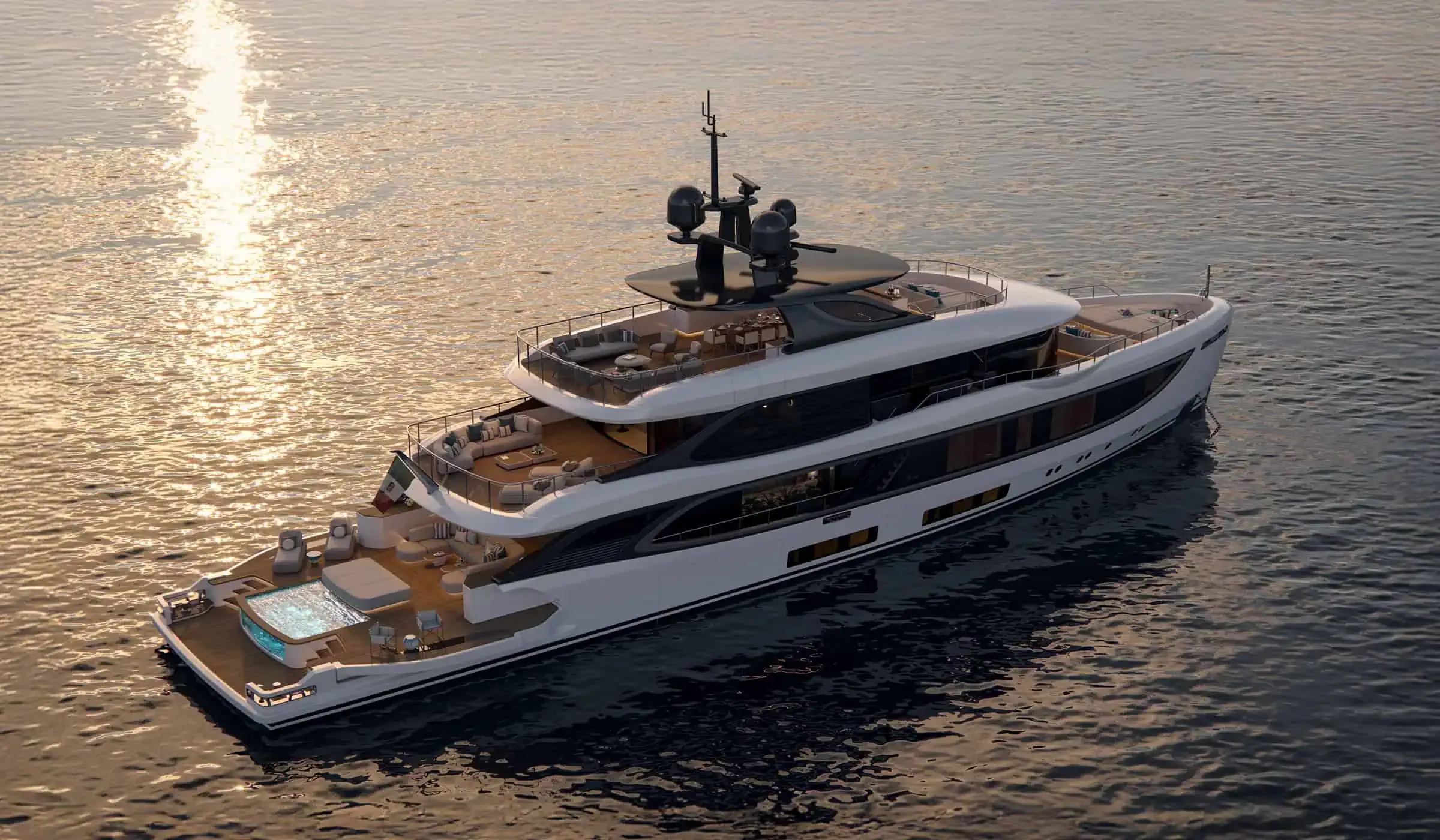
Benetti Oasis 42M139' 5"
View Specs & ReviewWhere the Glacier Bay permit is won, and the boat plugs back in
Yachting in Juneau
A Minted Location · Juneau, Alaska
If you are planning to take your own boat into Glacier Bay, the work starts in January, not in June. The National Park Service issues 25 private vessel permits a day in the quota season, 15 by advance lottery and 10 short-notice, and the first lottery opens at 00:01 Alaska time on 1 January and closes on the 31st. Miss both lotteries and your options are a three-day short-notice application or a September cruise, when there is no quota at all.
Juneau is where you stage for it, where you come back to, and where you can plug into 100 amp — the City's Intermediate Vessel Float has 30, 50 and 100 amp boxes across 800 feet of berthing, and the harbours run 480-volt three-phase priced by the month for winter liveaboards. A harbour that plumbs 480 V three-phase is set up for large vessels.
What Juneau cannot do is haul you out. NOAA states it flatly: "There are no drydocking or major repair facilities for large vessels in Juneau. The nearest facilities are in Ketchikan." The largest lift in town is a private 45-ton boatlift, and the nearest real capacity is Wrangell's 300-ton machine — limited to 26.5 feet of beam, which will not take a modern 120-foot displacement yacht. A 100 ft+ yacht cruising southeast Alaska cannot be hauled in southeast Alaska.
Where to keep a yacht in Juneau
Length in Juneau is the Harbormaster's call rather than a published cap. The City and Borough's stated policy is that "the Harbormaster will determine the maximum and minimum length and breadth of a vessel."
So read the rate card. CBJ brackets Other Vessels at under 65 ft at $3.66 per foot per day, 65 ft and over at $6.11, and 200 ft and over at $3.66. A municipal rate card carrying a 200-foot line item is not written for boats that never come.
The Intermediate Vessel Float is the downtown big-boat berth. CBJ describes "800 feet of mooring space with multiple power boxes — 30 amp, 50 amp, and 100 amp — utilized by small cruise ships, yachts, and fishermen," on a 400-foot float sitting between the two cruise ship berths, with 25 feet alongside. It is reservation only, seasonal rates 1 May to 30 September, on VHF 73.
Statter Harbor at Auke Bay, twelve road miles northwest, is the practical alternative: transient berths run from 17 to 100 feet with 80 to 120 feet alongside the floats, and CBJ takes reservations only for vessels over 65 feet. Everything else is first-come, with a ten-day tie-up limit May through September. Anchoring is prohibited within 400 feet of the breakwater.
The rest of the system is small-boat water and the depths say so. Aurora Harbor has 365 slips on a 12 to 14-foot project depth. Harris has 225 and a 450-foot public grid. ⚠️ Douglas Harbor has a 12-foot federal project depth but controlling depths measured at 5 to 12 feet in 2017 — check before you commit anything of draft.
Two private options: Seadrome Dock downtown offers 560 feet of moorage with potable water, 30 and 50 amp and fuel, and asks you to call ahead. Norway Point has 480 feet of transient dock but only 4 to 10 feet alongside.
There is no yacht club in Juneau. Visitor moorage is municipal, arranged with the harbour office on VHF 73.
Marinas
| Name | Where | Max yacht | Slips | Fuel |
|---|---|---|---|---|
| Intermediate Vessel Float (IVF)The one downtown big-boat berth. CBJ describes 800 feet of mooring space on a 400-foot float with multiple power boxes at 30, 50 and 100 amp, used by small cruise ships, yachts and fishermen, with 25 feet alongside. Length is the Harbormaster's call rather than a published cap, and CBJ's rate card carries a 200-foot-and-over bracket. | Downtown, between the two cruise ship floats | — | — | No |
| Statter Harbor (Auke Bay)The practical alternative to downtown. Transient berths run from 17 to 100 feet with 80 to 120 feet alongside the floats (2021), plus 70 permanent stalls and 200 to 450 transient spaces. Anchoring is prohibited within 400 feet of the breakwater. | Auke Bay, twelve road miles northwest | — | 70 | Yes, on site |
| Aurora HarborProject depth 14 ft in the southeast half and 12 ft in the northwest, with 2021 soundings of 6.5 to 12 ft north and 13 to 14 ft south. A small-boat basin. | One mile north of downtown | — | 365 | No |
| Harris HarborTwelve-foot project depth with a 450-foot public grid in the northwest part. Showers here and at Statter. | Immediately north of the Juneau-Douglas Bridge | — | 225 | No |
| Douglas HarborFederal project depth is 12 ft but controlling depths were measured at 5 to 12 ft in 2017 — check before you commit anything of draft. A 52-foot grid on site. | Douglas Island | — | 221 | No |
| Seadrome DockPrivate. 560 feet of moorage with potable water, 30 and 50 amp, fuel and shoreside services. | Downtown | — | — | Yes |
| Norway Point and the Port Field Office FloatNorway Point offers 480 feet of transient dock but only 4 to 10 feet alongside (2002); the Port Field Office float is a 200-foot floating berth. Useful for shallow-draft boats, not for anything of size. | North of Aurora Basin, and downtown | — | — | No |
Fuel docks
| Name | Where | Max yacht | Slips | Fuel |
|---|---|---|---|---|
| Petro Marine fuel docks907-586-4400 downtown, 907-790-3513 at Statter. | Across from Harris Harbor, plus a Statter Harbor location | — | — | Diesel 1 and 2, unleaded, lubricants |
| Delta Western fuel dock907-586-2800. | Auke Bay, between the ferry berth and the Four Seasons pier | — | — | Marine diesel, gasoline, lubricants |
| Crowley Fuels907-586-1276. For large vessels, diesel oil only. | South of downtown | — | — | Gas, diesel 1 and 2, lubricating oils |
Figures are as each facility publishes them on its own site; blank cells mean the facility doesn't state a number. Confirm slip availability and current rates directly — or ask us to make the calls.
Cruising from Juneau
Glacier Bay — the permit comes first
From the National Park Service's own boating pages:
- Permit season 1 June to 31 August. Outside it there is no quota at all — a September Glacier Bay cruise is unrestricted.
- Daily quota: 25 private vessel permits — 15 advance-notice and 10 short-notice.
- Two advance lotteries. The first opens 1 January at 00:01 Alaska time and closes 31 January at 23:59. The second opens 1 March at 00:01 and closes 15 March at 23:59.
- Short-notice permits are applied for three calendar days before entry, between 00:01 and 10:00 Alaska time.
- Maximum stay is 5 days and 4 nights. Vessels with a maximum attainable speed of 7 knots or less may apply for 7 days and 6 nights.
- No combination of permits may exceed 14 days in any 21-day period.
- No length limit applies to a private vessel. 36 CFR 13 subpart N caps charter vessels at 24 metres, about 79 feet; a private yacht above that enters under the private quota. Confirm it with the park before you build a season around it.
- The old allowance to lie at Blue Mouse Cove or Sandy Cove for up to seven additional days without motorised operation was removed with effect from 1 June 2014.
Operating rules inside the park are extensive and worth reading before you go. In Whale Waters, which includes the lower bay and Bartlett Cove, from 15 May to 30 September, motor vessels over 18 feet are limited to 20 knots through the water and must stay at least one nautical mile from shore, approaching only perpendicularly. Stay a quarter of a nautical mile from humpback whales and then make 10 knots or less. Johns Hopkins Inlet is closed to all vessel traffic from 1 May to 30 June, and from 1 July to 31 August carries a 10-knot limit and a quarter-mile standoff from any seal hauled out on ice. Motor vessels are prohibited in upper Muir Inlet 1 June to 15 July, Wachusett Inlet 16 July to 31 August, and the Adams, Rendu and Hugh Miller Inlets and the Beardslee Islands 1 May to 15 September. Generators and non-propulsive motors are banned from 22:00 to 06:00 in June, July and August at Reid Inlet, Blue Mouse Cove and North Sandy Cove.
At Bartlett Cove there is a public use dock and a separate fuel dock run by the lodge — diesel and unleaded, potable water and pump-out, roughly Memorial Day to Labor Day, on VHF 16. Shore power is prohibited without ranger authorisation, and there are no showers, no laundry and no groceries. There is no shore access from the fuel dock: it is for fuelling and waste pump-out only, and you go ashore at the separate public use dock.
Tracy Arm — no permit, no quota
No permit. No quota. No published length limit. That is the contrast with Glacier Bay, and it is worth planning around.
What Tracy Arm asks for instead is seamanship. From Coast Pilot 8: the arm runs north nine miles then east sixteen to the Sawyer and South Sawyer Glaciers, with water over 200 fathoms — 1,200 feet — in places. "Glaciers discharge ice into both Tracy Arm and Endicott Arm. It is always present in Holkham Bay, sometimes in large quantities," and the arm "is often clogged by small icebergs for several miles." Calving waves have been observed as high as 25 feet.
The entrance is the pinch point: the mouth is about 1.75 miles wide but the navigable channel is only 0.3 mile, marked by seasonal buoys that "may become submerged during periods of strong current." Currents at the entrances to both arms run an estimated 4 knots.
Anchorages are scarce. In Tracy Arm, Williams Cove about six miles in is deepwater with constricted swinging room. In Endicott Arm, Sanford Cove five miles in lies in 36 fathoms — 216 feet — and NOAA describes it as one of only two available anchorages in the arm. Fords Terror is effectively closed to yachts: the entrance is dangerous except at high water slack and has a controlling depth of a quarter of a fathom, about 18 inches.
The Forest Service guidance here is voluntary rather than regulatory — a 2019 wilderness best-practice agreement covering emissions, no announcements before 08:00, announcements capped at about five minutes, and deck volume kept to the safety minimum.
Getting there, and the bridge
⚠️ Two air drafts are published for the Juneau-Douglas Bridge, fifteen feet apart. CBJ's own brochure states 66.4 feet on a 0.0-foot tide. NOAA Coast Pilot 8 Ch.9 states the bridge "has a clearance of 51 feet," with an overhead power cable reported at 55 feet just northwest. Plan on the lower figure.
Big boats come and go via Stephens Passage to the southeast, which Coast Pilot describes as clear and deep. The northwest approach is effectively closed: Mendenhall Bar and the upper Gastineau Channel are "navigable only by small craft with local knowledge," and Coast Pilot's crossing rule is that the tide must be at least 10 feet above MLLW, plus the vessel's draft, plus a safety factor.
The Gastineau Channel current floods northwest and ebbs southeast past Juneau at 2.0 knots. The deepest vessel recorded calling at Juneau drew 30 feet. Pilotage is compulsory for vessels navigating Alaska inside waters, with certain exemptions.
Tide: NOAA station 9452210 publishes a Great Diurnal Range of 16.31 feet and a mean range of 13.74. That is the number to design shore-power slack and dock lines around.
Distances: Skagway 81 nm, Haines 90 nm, Sitka 132 nm by Alaska Marine Highway; Haines to Skagway 13 nm; Taku Harbor about 19 miles southeast; Bellingham 830 nm and Whittier 528 nm.
- Juneau harbour anchorage — Gastineau Channel, downtownTwelve to 19 fathoms — 72 to 114 feet — over soft bottom, northeast of the cable area. The waterfront is a designated safety zone under 33 CFR 165.1702, which is why permission is not a formality.
- Taku Harbor State Marine Park — About 19 miles southeast of JuneauA 700-acre natural bowl-shaped harbour with anchorage in about 13 fathoms — 78 feet — over soft bottom, favouring the east shore. The most reliable shelter within a short run of town.
- Bartlett Cove, Glacier Bay National Park — Glacier Bay, inside the permit areaDiesel, unleaded, potable water and pump-out. Shore power is prohibited without ranger authorisation, and there are no showers, laundry or groceries. There is no shore access from the fuel dock — it is for fuelling and pump-out only, and you land at the separate public use dock.
- Williams Cove, Tracy Arm — About six miles into Tracy ArmDeepwater with constricted swinging room. One of very few options in an arm that is often clogged by small icebergs for several miles, where calving waves have been observed as high as 25 feet.
- Sanford Cove, Endicott Arm — Five miles into Endicott ArmThirty-six fathoms, about 216 feet, and NOAA describes it as one of only two available anchorages in the arm. Note that Fords Terror nearby is effectively closed to yachts: the entrance is dangerous except at high water slack and carries a controlling depth of a quarter of a fathom.
Service, refit & supplies
Shipyards & refit
| Name | Where | Max yacht | Dockage |
|---|---|---|---|
| Auke Bay Loading Facility and adjacent private boatliftA 180 by 60-foot drive-down float with two 2-ton cranes. Coast Pilot separately records a private 45-ton boatlift here — the largest lift in Juneau. | Auke Bay, north of the ferry terminal | — | Reservation only, two-hour limit — 907-789-0819 |
| Juneau haul-out clusterCBJ lists six firms under Boat Haul-Out Facilities on one shared telephone number, and tonnage is agreed on that call. Coast Pilot records two private 50-ton cranes and craft up to 5 ft draft at high water. NOAA's summary is the one to plan around: there are no drydocking or major repair facilities for large vessels in Juneau, and the nearest are in Ketchikan. | Waterfront | — | — |
On the Juneau calendar
Juneau stays open in winter. Harbour offices run year-round Monday to Friday 08:00–16:30, potable water is available all year, pump-out is free at four harbours, there are showers at Harris and Statter, and 100 amp / 480 V three-phase is priced by the month for winter liveaboards.
The seasonal markers that matter: the Glacier Bay quota runs 1 June to 31 August · Statter's ten-day tie-up limit applies May through September · Intermediate Vessel Float and Statter breakwater reservations run 1 May to 30 September, with a plain daily per-foot rate from 1 October to 30 April · the Bartlett Cove fuel dock runs roughly Memorial Day to Labor Day.
Juneau Maritime Festival — 9 May 2026, with the Salute to Sea Service Dinner on 7 May.
Golden North Salmon Derby, 80th annual — 7–9 August 2026. No fishing until 07:30 on the Friday, weigh-in at Auke Nu Cove, awards on 13 August. The 81st runs 6–8 August 2027.
Yachts we'd shortlist for Juneau
Reviewed the same way as everything on this site — specifications verified against the builder's own numbers.
Frequently Asked Questions
What is the air draft under the Juneau-Douglas Bridge?
Two figures are published, fifteen feet apart, and both are current. The City and Borough of Juneau's own harbours brochure states 66.4 feet on a 0.0-foot tide. NOAA Coast Pilot 8 states that the bridge has a clearance of 51 feet, and notes an overhead power cable reported at 55 feet just to the northwest. Plan on the lower figure. In practice large vessels come and go via Stephens Passage to the southeast, which Coast Pilot describes as clear and deep — the northwest approach across Mendenhall Bar is navigable only by small craft with local knowledge, and needs a tide at least 10 feet above MLLW plus the vessel's draft plus a safety factor.
How do you get a private boat permit for Glacier Bay?
Through one of two lotteries, or by short notice. The National Park Service issues 25 private vessel permits a day during the quota season of 1 June to 31 August — 15 advance-notice and 10 short-notice. The first advance lottery opens at 00:01 Alaska time on 1 January and closes 31 January at 23:59; the second opens 1 March and closes 15 March. Short-notice permits are applied for three calendar days before entry, between 00:01 and 10:00 Alaska time. Maximum stay is 5 days and 4 nights, extended to 7 days and 6 nights for vessels whose maximum attainable speed is 7 knots or less, and no combination of permits may exceed 14 days in any 21-day period. Outside 1 June to 31 August there is no quota at all.
What is the largest yacht that can berth in Juneau?
Length is set by the Harbormaster rather than by a published cap — the City and Borough's policy is that the Harbormaster determines maximum and minimum length and breadth. The rate card is the best guide to what the town handles: CBJ brackets Other Vessels at under 65 ft, 65 ft and over, and 200 ft and over. The Intermediate Vessel Float downtown offers 800 feet of berthing with 30, 50 and 100 amp power and 25 feet alongside, and Statter Harbor takes transient berths from 17 to 100 feet with 80 to 120 feet alongside the floats.
Do you need a permit for Tracy Arm?
No. No permit, no quota and no published length limit — the opposite of Glacier Bay, and worth planning around. What Tracy Arm asks for instead is seamanship. NOAA records water over 1,200 feet deep in places, ice always present in Holkham Bay and sometimes in large quantities, calving waves observed as high as 25 feet, and a navigable entrance channel only 0.3 mile wide inside a mouth 1.75 miles across, with currents estimated at 4 knots. Anchorages are scarce: Williams Cove has constricted swinging room and Sanford Cove in Endicott Arm lies in 216 feet.
Can a large yacht be hauled out in Juneau?
No, and not anywhere nearby either. NOAA states it flatly: there are no drydocking or major repair facilities for large vessels in Juneau, and the nearest facilities are in Ketchikan. The largest lift published anywhere in Juneau is a private 45-ton boatlift. Region-wide the biggest is Wrangell's 300-ton lift, and it is limited to 26.5 feet of beam, which will not take a modern 120-foot displacement yacht. A 100 ft-plus yacht cruising southeast Alaska cannot be hauled in southeast Alaska.