
November 26, 2026
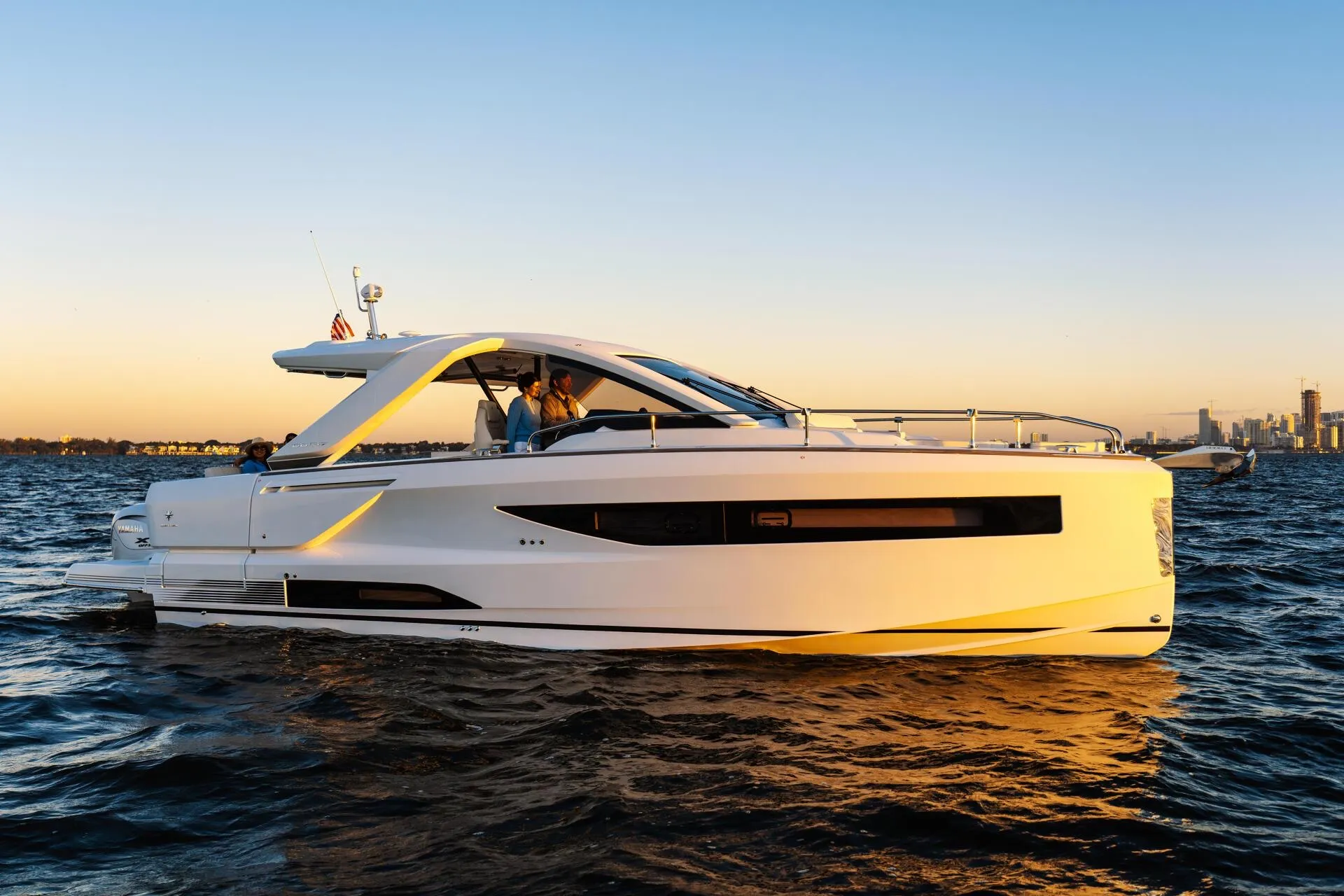
Jeanneau DB/37 OB: The Case for Outboards on the DB/37
Jeanneau builds the DB/37 with inboards or outboards. Here is who should pick the outboard version, and what its twin 450 HP motors and larg…
Read the articleExpert Review, Technical Specifications & Market Analysis
| Feature | Specifications |
|---|---|
| Overall Length | 12.22 m |
| Beam | 3.56 m |
| Draft | 1.17 m |
| Displacement | 6437 kg |
| Engines | 2 x 450 HP outboard |
| Fuel Capacity | 2 x 480 L |
| Water Capacity | 250 L |
| Cabins / Heads | 2 Cabins |
| Max Speed | To Confirm |
| Cruise Speed | To Confirm |
Source: Spec & Photos courtesy of Jeanneau. Specs verified by Tony Smith, USCG 100 Ton Master, on November 26, 2026.
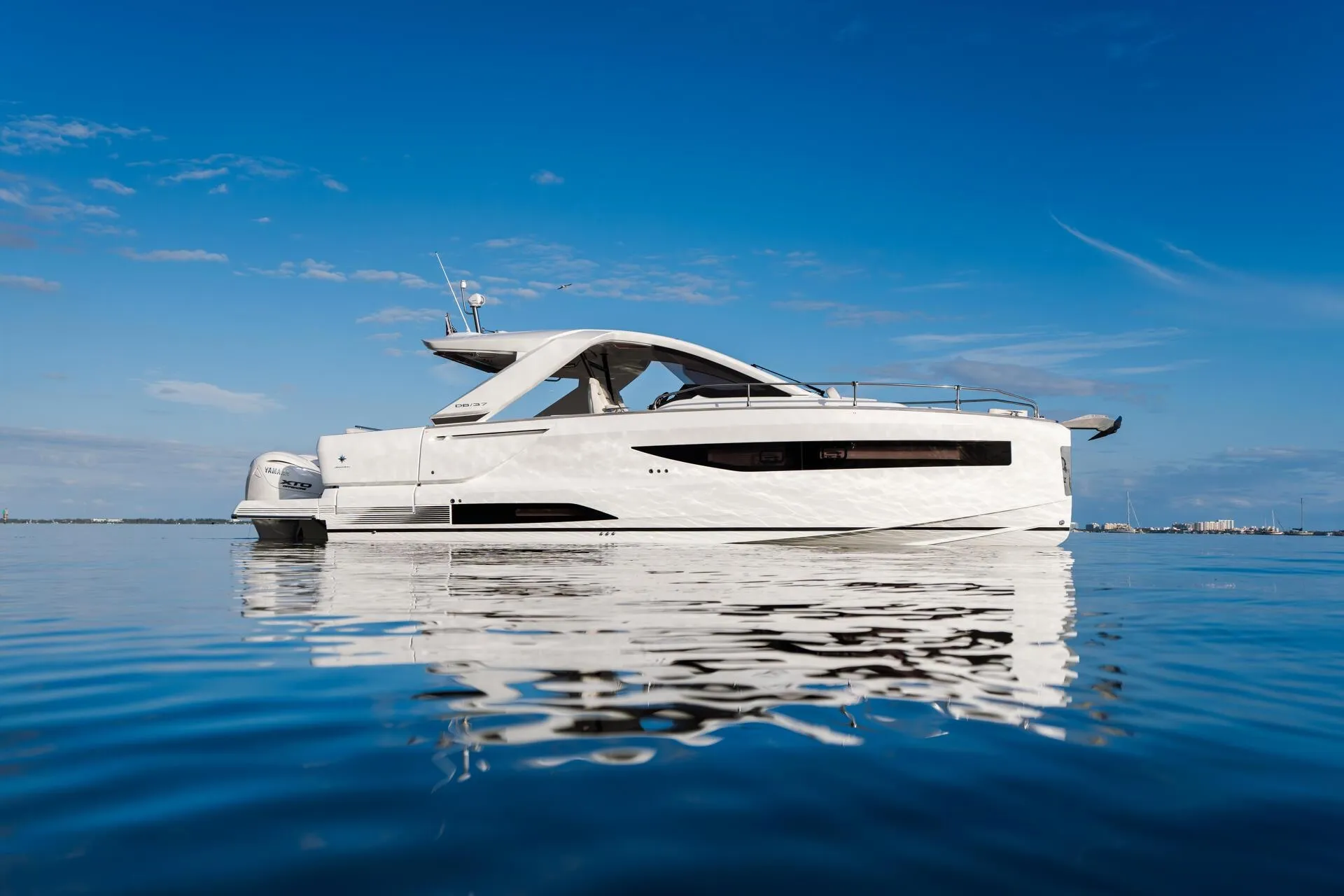
You want the DB/37's lines and layout, and you want your engines on the transom where you can see them. The OB pairs twin 450 HP outboards with two 480-litre fuel tanks.
Part of the Jeanneau DB Yachts series — see how owners step up through the lineup.

"If you would rather keep your engines where you can see them, the OB is the DB/37 to buy."
I like this boat for the buyer who already knows they are an outboard person. Jeanneau gives it a stated package, a pair of 450 HP outboards, and backs it with two 480-litre tanks, more fuel than the inboard version carries. On a day boat that means more hours between fuel docks, and that matters more to me than a promise of impressive top speeds with no number attached.
The thing I would tell a buyer to check is length. The OB runs 12.22 m overall against 11.84 m for the IB, so measure your slip before you fall for it. The hull itself is the longer of the two as well, 10.65 m against 9.97 m, and the draft does not change. If your marina has the room, I would take the OB and not look back.
Video courtesy of Jeanneau.
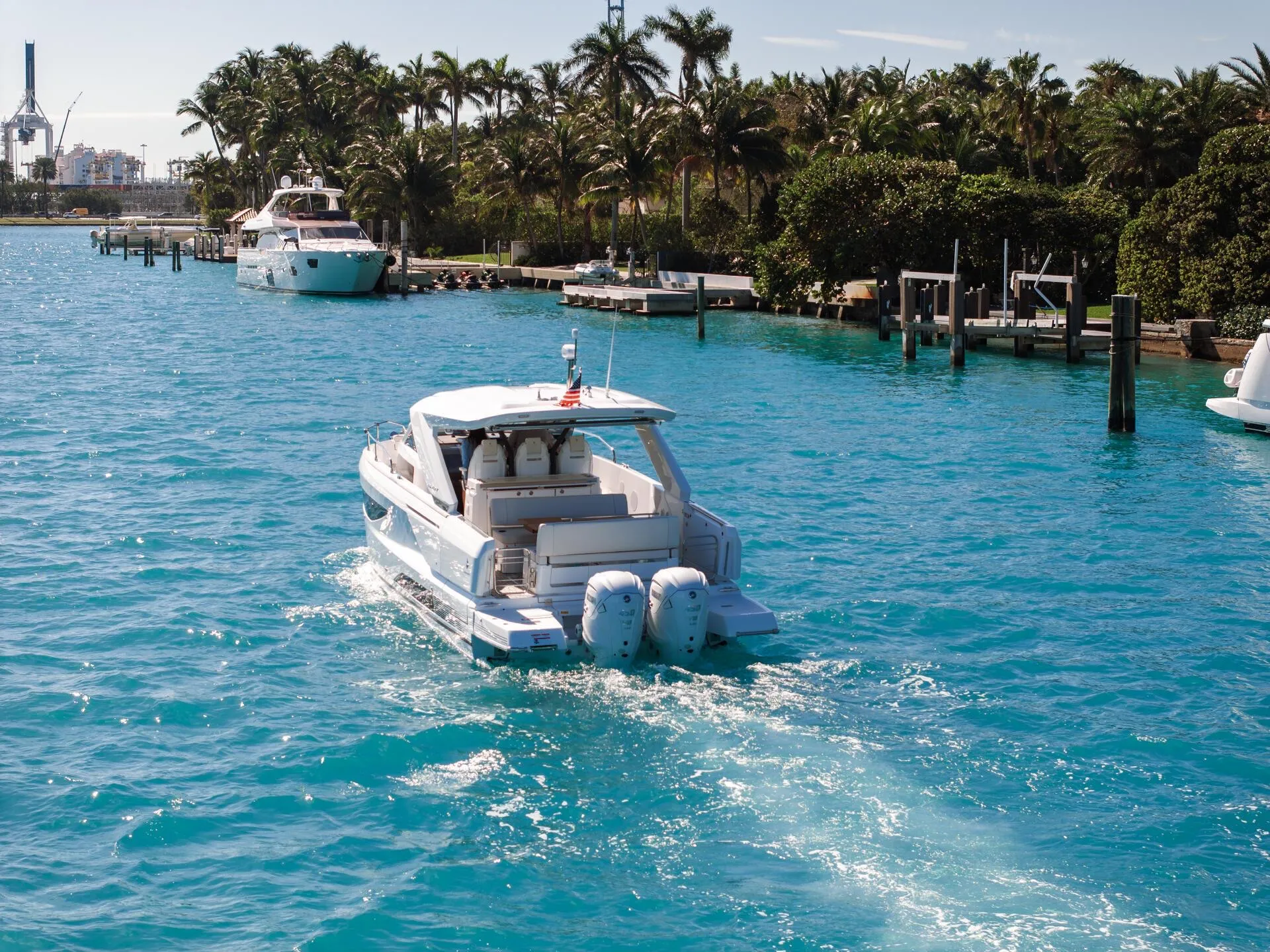
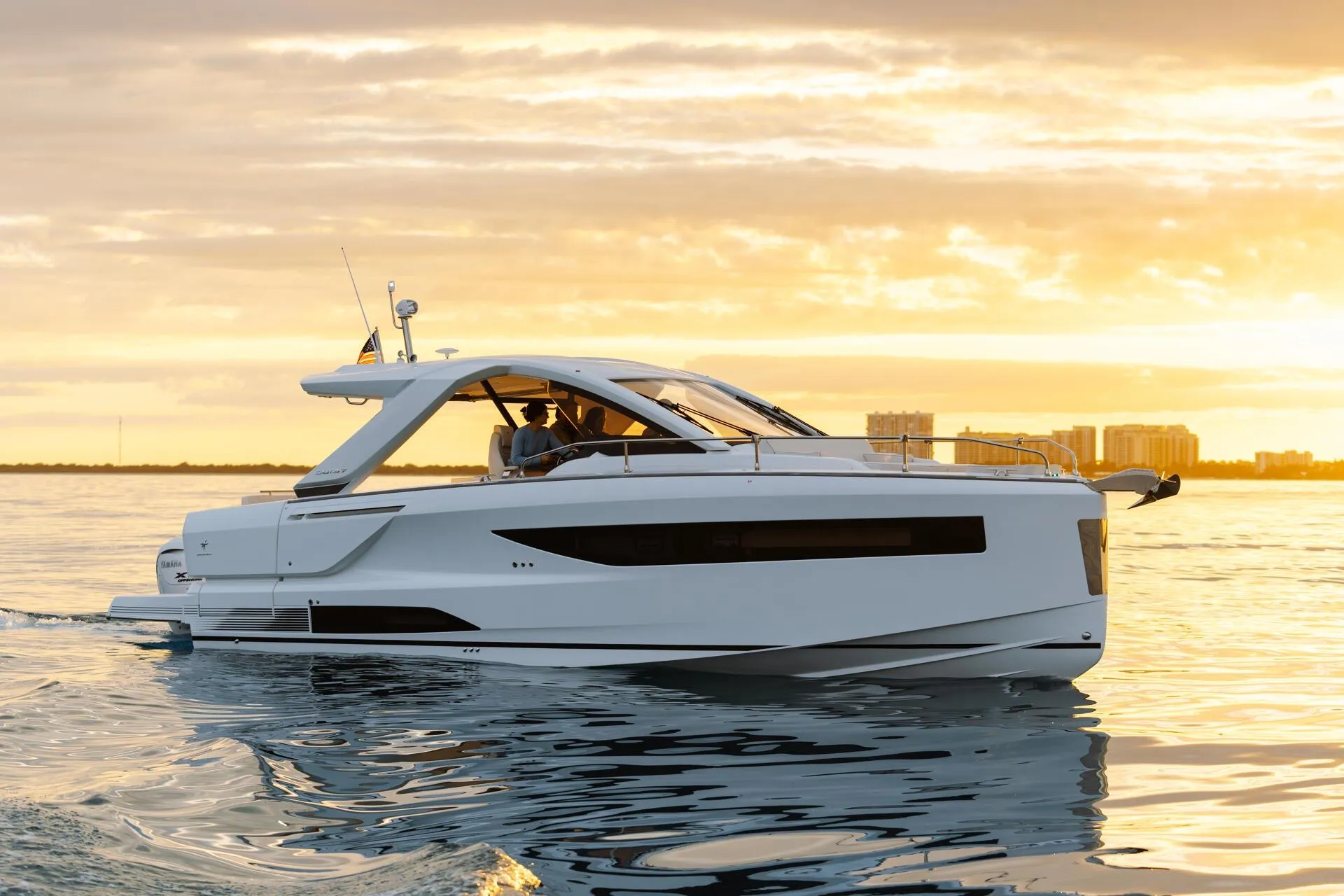
Photos courtesy of Jeanneau.
Anyone shopping a premium day boat at this size faces one decision before the rest: inboard or outboard. Jeanneau builds the DB/37 both ways, and the OB is the outboard answer, twin 450 HP outboards on a hull with a 3.56 m beam.
The silhouette, which the builder describes as if sculpted, is by Camillo Garroni, and the hull is by Michael Peters. Garroni Design and Michael Peters Yacht Design are credited on the IB too, so the two versions share their design; what moves is the power, the tankage and the length.
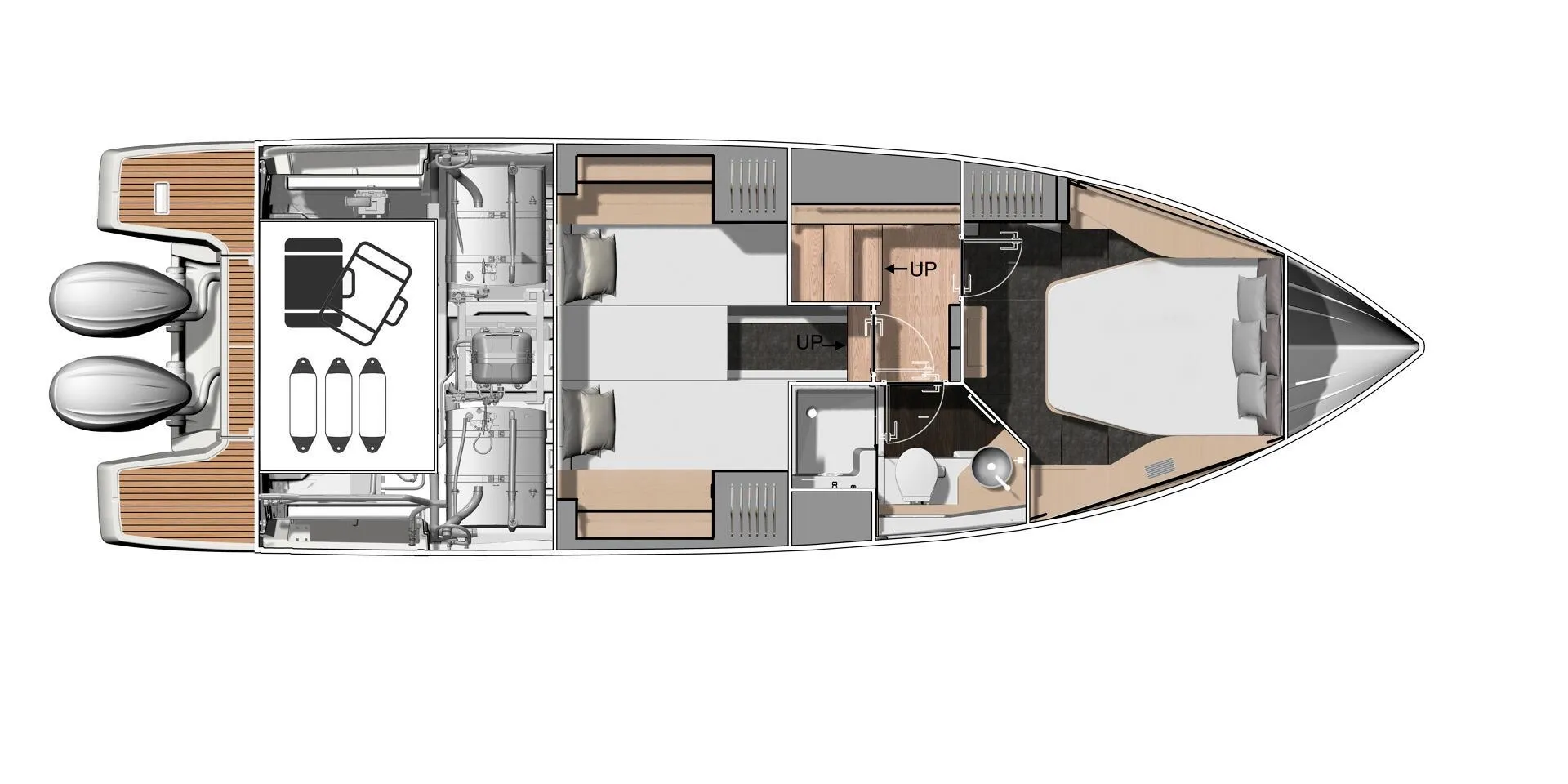
Jeanneau calls it a premium day boat, and the deck plan follows that brief, built around the cockpit saloon, the sundeck and a large swim platform, with two cabins below for when the day turns into a night.
If you like knowing exactly what hangs off the back, this version tells you: twin outboards rated at 450 HP each, mounted on a Michael Peters hull. Jeanneau promises impressive top speeds from the package.
Range planning starts with the tanks. The OB has two 480-litre fuel tanks, a deeper reserve than the DB/37 IB with its two of 345 litres. Fresh water is 250 litres on both versions.
On draft the two are level at 1.17 m. Jeanneau lists the OB at a dry weight without engines of 6437 kg, against 8042 kg for the IB without its engines; the OB figure leaves out the two outboards, so read it as a hull-to-hull number rather than the weight of the finished boat.
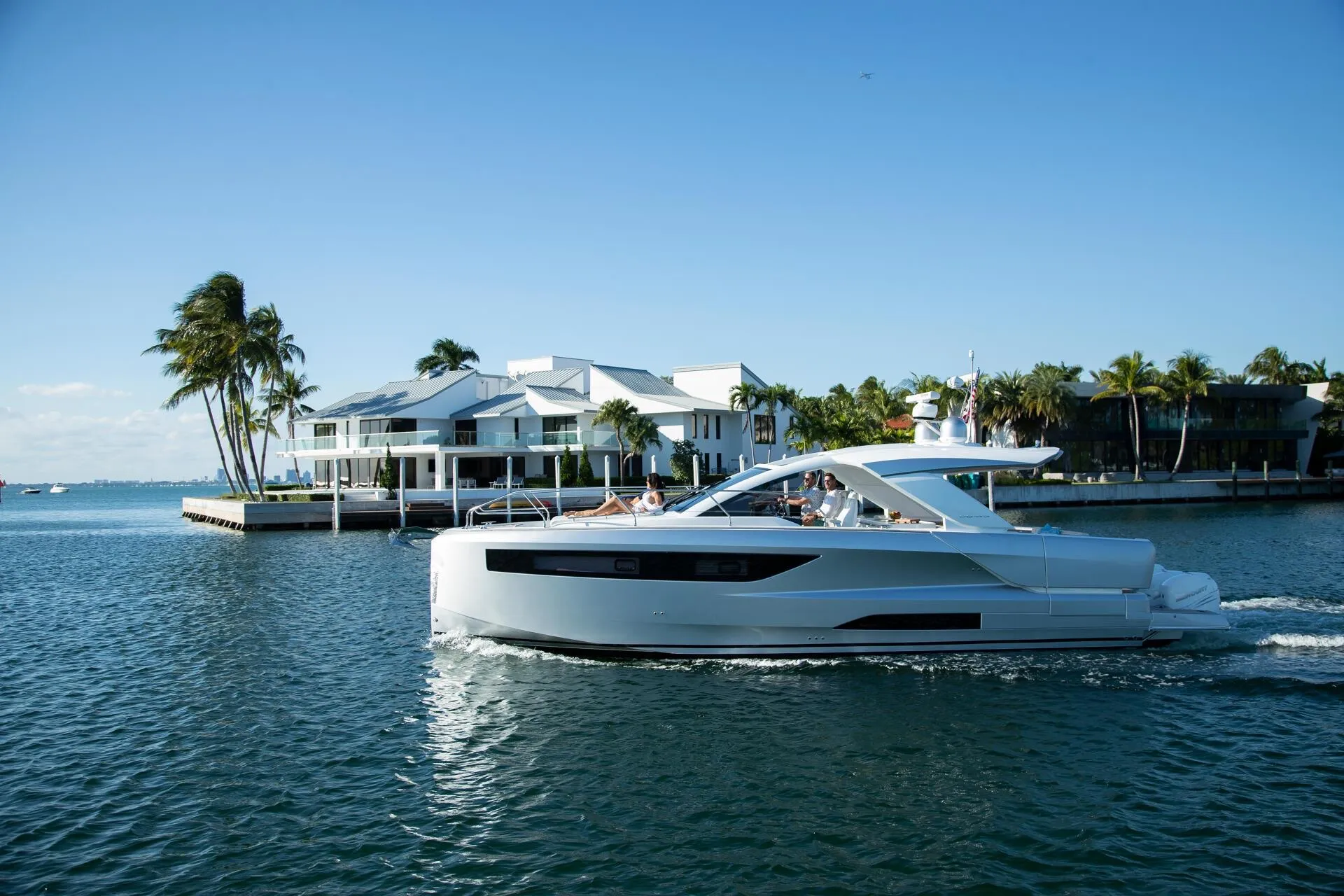
Most days aboard a boat like this are spent in the cockpit, and the OB is laid out for exactly that. Two seats sit beside the pilot behind a wide integrated windscreen, and two modular benches face each other around the cockpit table. When you want open deck instead, the benches come out.
Two recessed sidedecks lead forward to a sundeck in the forward cockpit, a secure route for anyone heading up with a towel. At anchor the side terraces deploy for more room, and the vast aft swim platform is where swimmers come and go.
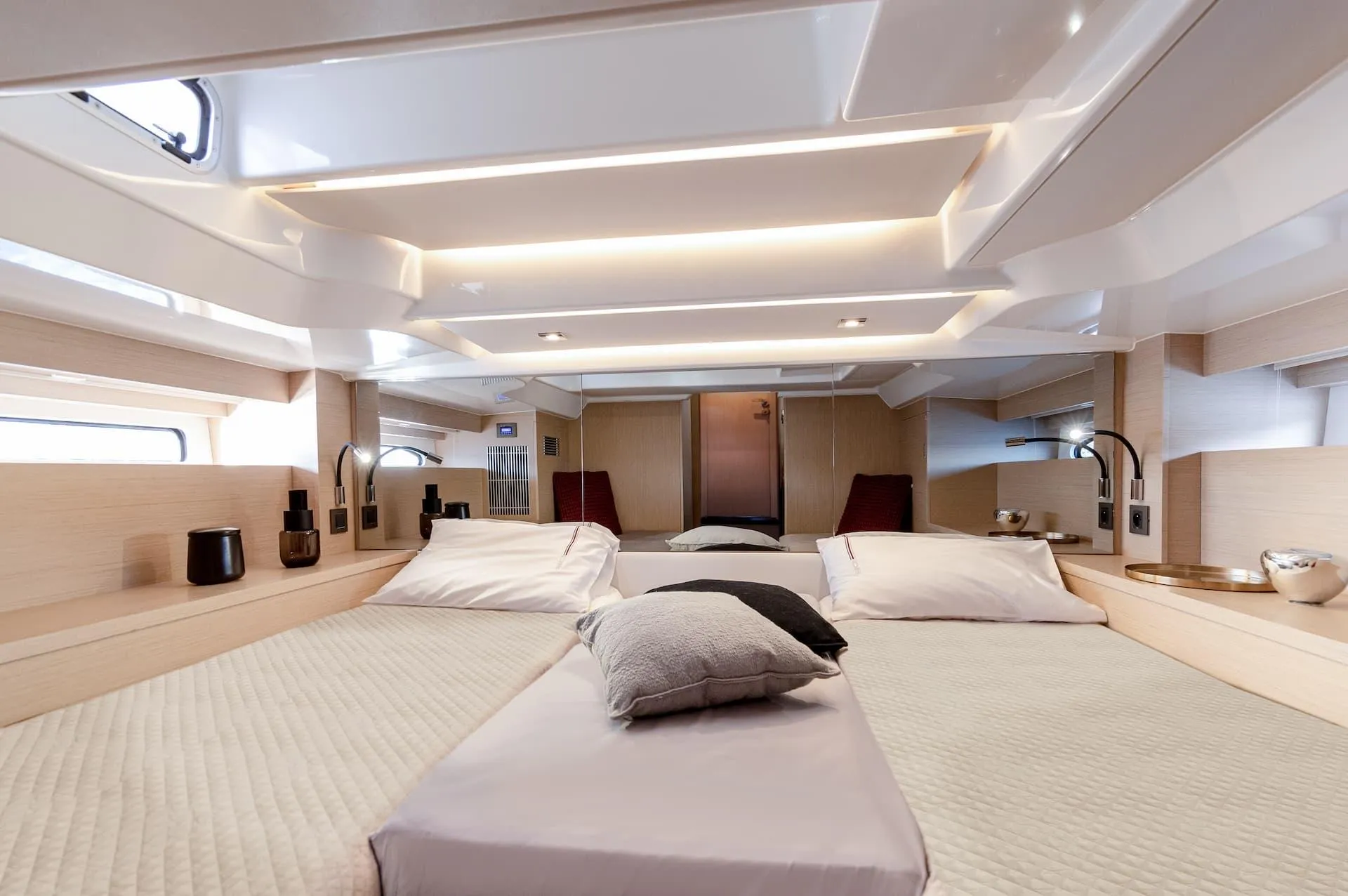
Below are two cabins, which the builder describes as bright and spacious, for an owner and guests who want to stay out overnight. Seanapps keeps the boat on your smartphone through an app and an on-board unit.
For a buyer looking at the DB Yachts line, there are four boats in two sizes: the DB/37 IB and OB, and the DB/43 IB and OB. The DB/37 OB is the smaller of the two outboard versions, 12.22 m overall against 13.94 m for the DB/43 OB, and 3.56 m in beam against 3.82 m.
Next to its inboard twin it is longer overall and on the hull, and it carries more fuel. Draft, water capacity and the cabin count are the same, so the choice between them comes down to the engines and how much boat your berth will take.
Choose the OB if you want outboards, more fuel aboard and a stated twin 450 HP package, and your slip takes 12.22 m. It suits an owner who drives the boat on long days out, with the odd night in one of the two cabins.
Look at the DB/37 IB if the shorter boat matters, at 11.84 m overall, or if you simply prefer an inboard installation. If you want more length and beam with outboards still on the transom, the DB/43 OB is the step up.
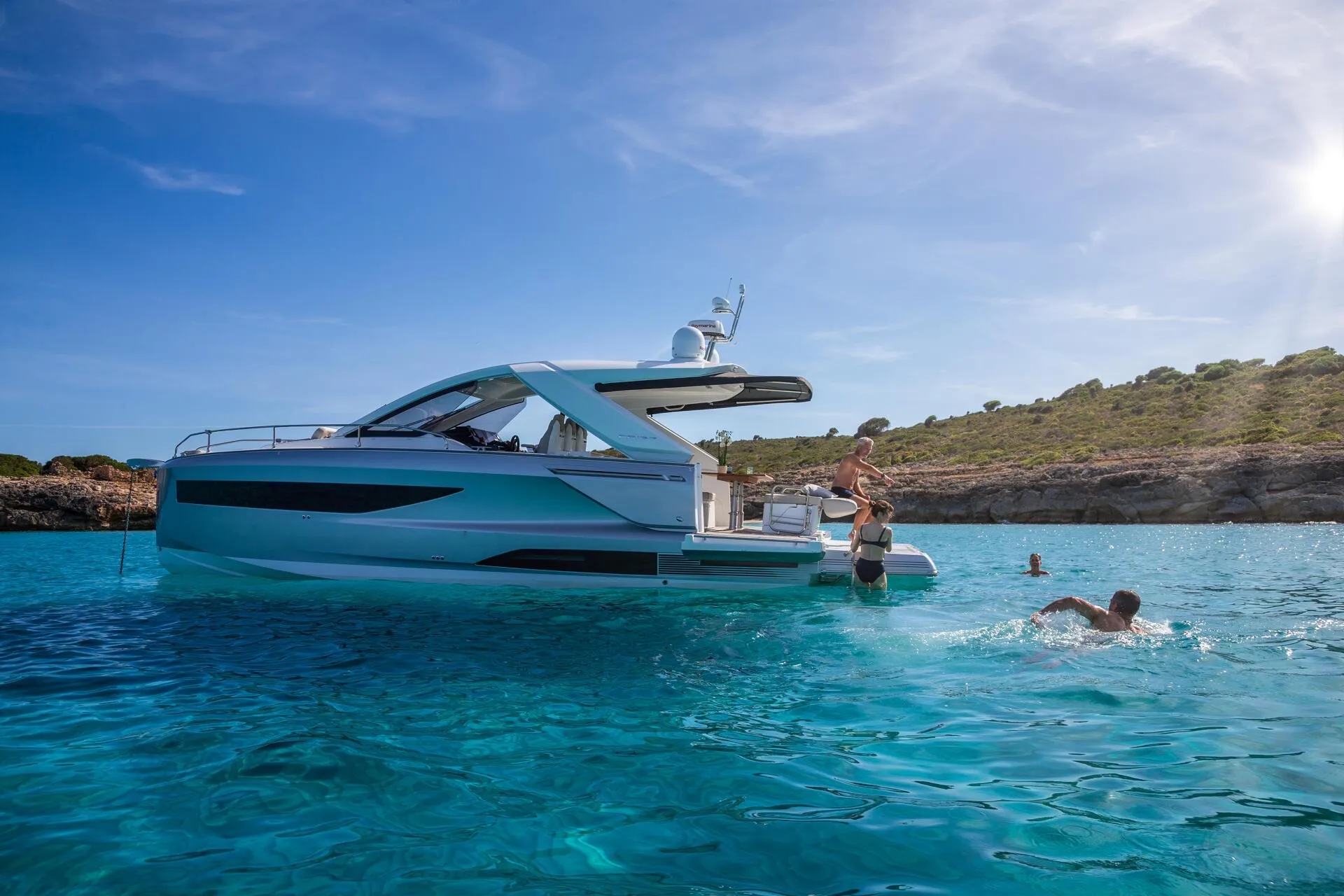
The DB/37 OB has a standard draft of 1.17 m, the same as the inboard DB/37 IB, so choosing outboards does not change which anchorages you can reach. Its beam is 3.56 m and its length overall is 12.22 m, which is the figure to check against your slip.
The Jeanneau DB/37 OB is powered by twin outboard engines rated at 450 HP each. The outboards sit on the transom of a hull designed by Michael Peters, and Jeanneau promises impressive top speeds from the package. It is the outboard version of the DB/37; the DB/37 IB is the inboard version of the same model.
The DB/37 OB's silhouette is by Camillo Garroni of Garroni Design, and its hull was designed by Michael Peters of Michael Peters Yacht Design. The same two design offices are credited on the inboard DB/37 IB, so both versions share their styling and hull design and differ in power, tankage and length.
The DB/37 OB has two cabins, which Jeanneau describes as bright and spacious. They give an owner and guests a place to stay aboard overnight on what the builder calls a premium day boat, while most of the living happens in the cockpit saloon, on the forward sundeck and on the aft swim platform.
The OB uses twin 450 HP outboards and the IB uses inboard power. The OB is longer, 12.22 m overall against 11.84 m, with a 10.65 m hull against 9.97 m, and it carries two 480-litre fuel tanks against two of 345 litres. Both have two cabins, 250 litres of water and a 1.17 m draft.
The DB/37 OB carries fuel in two 480-litre tanks, along with 250 litres of fresh water. That is more fuel than the inboard DB/37 IB, which has two tanks of 345 litres, so the outboard version gives a deeper reserve for long days running between anchorages.