
The Azimut Fly 60: A Floating Boutique Hotel With 26-Knot Performance
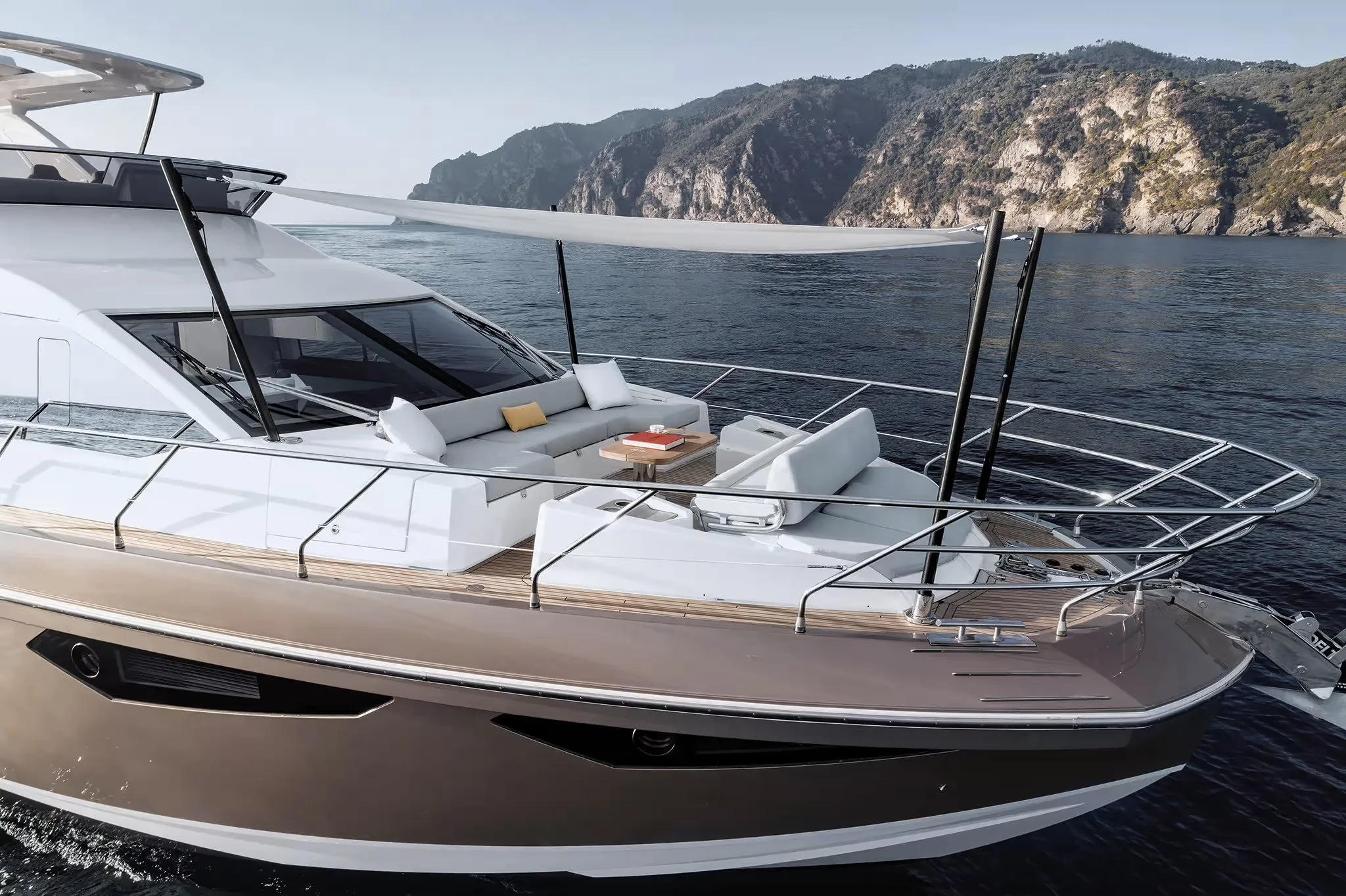
Photo Credit: Azimut
Picture this: Saturday morning, 7 a.m., Fort Lauderdale. You're standing on the flybridge of your Azimut Fly 60, twin Volvo Penta D13s warming up below, coffee in hand. The forecast shows three days of perfect weather ahead. Your family's already claimed their spots—kids on the bow lounge, your partner setting up the cockpit table. By 8 a.m., you're clearing the inlet at 26 knots, Bimini-bound, with 740 gallons of fuel giving you the range to get there and back without a fuel stop.
This is what the Azimut Fly 60 delivers: a 60-footer that balances Italian design sophistication with the practical reality of owner-operated weekends. Since its 2017 debut, this flybridge has carved out a distinct position in the competitive 55-to-65-foot segment by prioritizing livable space, intuitive layouts, and the kind of performance that makes spontaneous trips possible.
Who It's For
The Fly 60 targets experienced boaters stepping up from the 45-to-55-foot range or lateral buyers trading complexity for refinement. This is a yacht for the owner who wants to run their own boat without crew, host family weekends in the Bahamas or Mediterranean, and arrive looking composed rather than exhausted.
At 59'10" with a 16'7" beam, the Fly 60 sits in that sweet spot where you gain genuine volume without crossing into the operational burden of larger yachts. Three guest cabins plus crew quarters accommodate six guests and two crew, though most owners run this boat themselves and use the crew cabin for storage or a fourth guest berth. The 36-ton full-load displacement keeps it manageable at the dock while the Carbon-Tech construction in the superstructure reduces weight where it matters most—up high—improving stability and handling.
What sets this yacht apart is Azimut's focus on wellness-inspired design. Architect Achille Salvagni developed interiors that emphasize natural light, organic materials, and spatial flow. The result feels less like a boat and more like a floating boutique hotel, which matters when you're spending long weekends aboard with family.
Design & Layout
The exterior lines come from Stefano Righini, who gave the Fly 60 a contemporary profile without the aggressive angles that date quickly. The superstructure features floor-to-ceiling windows on the main deck, and Azimut cut away a section of the bulwark to create a direct connection between the salon and the water. When that window opens, the main deck transforms into an indoor-outdoor space that feels twice its actual size.
The bow lounge deserves attention. Triple sunpads incorporate a flip-up mechanism that converts the headrests into a counter-facing sofa, creating a proper conversation area rather than just a place to lie down. An optional Bimini provides shade without blocking sightlines. This is where guests naturally congregate during the day, and the layout supports that instead of fighting it.
Up on the flybridge, Azimut divided the space into three zones: forward sunpad, midship hardtop with bar and dining table, and aft freestanding seating. The helm sits to starboard with excellent visibility and Optimus Electronic Power Steering that feels more like driving a luxury car than piloting a 60-footer. The hardtop covers enough area to keep the dining zone comfortable even in midday sun, while the open aft section lets you enjoy evenings under the stars.
Below deck, the master cabin sits amidships with a centerline queen berth and ensuite head. The VIP forward offers another queen, and the third cabin features twin berths. All three guest cabins include dedicated heads, which matters when you're hosting other couples. The galley offers two layout options: forward on the lower deck for a more traditional separation, or aft on the main deck for an open-plan arrangement that keeps the cook connected to guests. The aft galley sacrifices some privacy but gains social integration—choose based on how you actually use your boat.
Interior materials lean toward light oak, bronze accents, and organic textures. Salvagni avoided the heavy gloss and dark woods that dominated yacht interiors a decade ago. The aesthetic reads contemporary without being trendy, which should age well.
Performance & Handling
Twin Volvo Penta D13-900 engines deliver 1,800 hp total, pushing the Fly 60 to a top speed around 31 knots and a comfortable cruise of 26 knots. At 8 knots, you're looking at approximately 779 nautical miles of range from the 2,800-liter fuel capacity—enough for extended coastal cruising or island-hopping without constant fuel planning.
The hull design features a 15.6-degree deadrise aft and 22 degrees amidship, a moderate V that balances efficiency with seakeeping. This isn't a deep-V offshore fishing boat, but it handles typical coastal conditions with composure. The planing hull gets on plane quickly and settles into a comfortable attitude at cruise speeds.
Azimut's Carbon-Tech Generation construction reduces weight in the superstructure by up to 30 percent compared to traditional fiberglass, which lowers the center of gravity and reduces roll momentum by up to 15 percent. In practice, this means the boat feels more stable at rest and tracks better underway. The Active Trim Control system uses automated interceptors to optimize trim at every speed, compensating for weight distribution and sidewinds without constant helm input.
The Electronic Power Steering eliminates hydraulic lines between helm and rudder compartment, offering variable resistance that increases with speed. At slow speeds in tight marinas, the helm feels light and responsive. At cruise speeds, it firms up for better feedback. The system takes about an hour to adjust to if you're used to traditional hydraulic steering, but most owners report preferring it after the learning curve.
One owner in Fort Myers reported comfortable 26-knot cruising with cockpit noise levels around 86 dB(A)—loud enough to require raised voices but not uncomfortable for extended runs. The flybridge remains quieter, making it the preferred helm position for longer passages.
The Ownership Conversation
New pricing for the Fly 60 starts around $1.8 million to $2 million depending on options and engine choice. Pre-owned examples from 2017-2020 trade in the $1.2 million to $1.5 million range, offering meaningful savings for buyers willing to accept someone else's spec choices.
Annual operating costs on a 60-footer typically run $80,000 to $120,000 depending on usage. That includes insurance, dockage, maintenance, fuel, and seasonal service. Budget toward the higher end if you're keeping the boat in a premium marina or running 100-plus hours per year. The twin Volvo D13s are proven commercial-grade engines with strong dealer support, which helps control maintenance costs compared to more exotic powerplants.
Most Fly 60 owners run the boat themselves, using the crew cabin for guests or storage. If you do hire crew for longer trips or seasonal support, expect $3,000 to $5,000 per month for a professional captain who can also handle basic maintenance. That investment buys you flexibility—the freedom to take longer trips without the fatigue of solo operation, plus someone who can manage systems and keep the boat ready between your visits.
The strategic ownership play here is recognizing what you're actually buying: 200 hours per year of premium family time on the water, the ability to say yes when the weather's perfect, and a floating second home that goes where you want it. Spread that $100,000 annual cost across 25 weekends, and you're looking at $4,000 per weekend for a turnkey experience that doesn't involve rental paperwork, unfamiliar systems, or someone else's maintenance schedule.
Resale values on Azimut flybridges hold reasonably well in the 55-to-65-foot range, particularly for well-maintained examples with desirable options. The key is keeping service records current and avoiding overly personalized modifications that limit your buyer pool.
Where to Start
Explore full specifications at www.YachtSpecsDirect.com.
Browse available Azimut inventory at www.mintedyachts.com/azimut.
The Fly 60 represents Azimut's clearest answer to the question every 60-foot buyer eventually asks: can I have Italian design, owner-operator simplicity, and genuine offshore capability in one package? The answer, backed by seven years of production and strong owner feedback, is yes.