
August 17, 2026
Azimut Seadeck 7: The Hybrid Weekender That Rewrites the Rules
The Azimut Seadeck 7 redefines the weekender: a 71-ft carbon-fiber hybrid with true electric hotel mode, 450 sq ft aft Fun Island, reverse s…
Read the articleExpert Review, Technical Specifications & Market Analysis
| Feature | Specifications |
|---|---|
| Overall Length | 71' 2" |
| Beam | 18' 0" |
| Draft | 5' 1" |
| Displacement | 46.3 t (102,074 lbs) Full Load |
| Engines | 2x Volvo Penta IPS 1200 (900 hp) | Opt: 2x IPS 1350 (1000 hp) |
| Fuel Capacity | 3,700 L (978 US Gal) |
| Water Capacity | 1,000 L (264 US Gal) |
| Cabins / Heads | 4 Cabins + 1 Crew / 3 Heads + 1 Crew |
| Max Speed | Up to 31 kn |
| Cruise Speed | Up to 23 kn |
Source: Spec & Photos courtesy of Azimut. Specs verified by Tony Smith, USCG 100 Ton Master, on August 8, 2026.
You want to anchor out for the weekend and never hear a generator. The Seadeck 7 scales Azimut's hybrid formula to 71 feet — four cabins, an 80kWh battery bank and a cockpit at the water's edge.
Part of the Azimut Seadeck series — see how owners step up through the lineup.
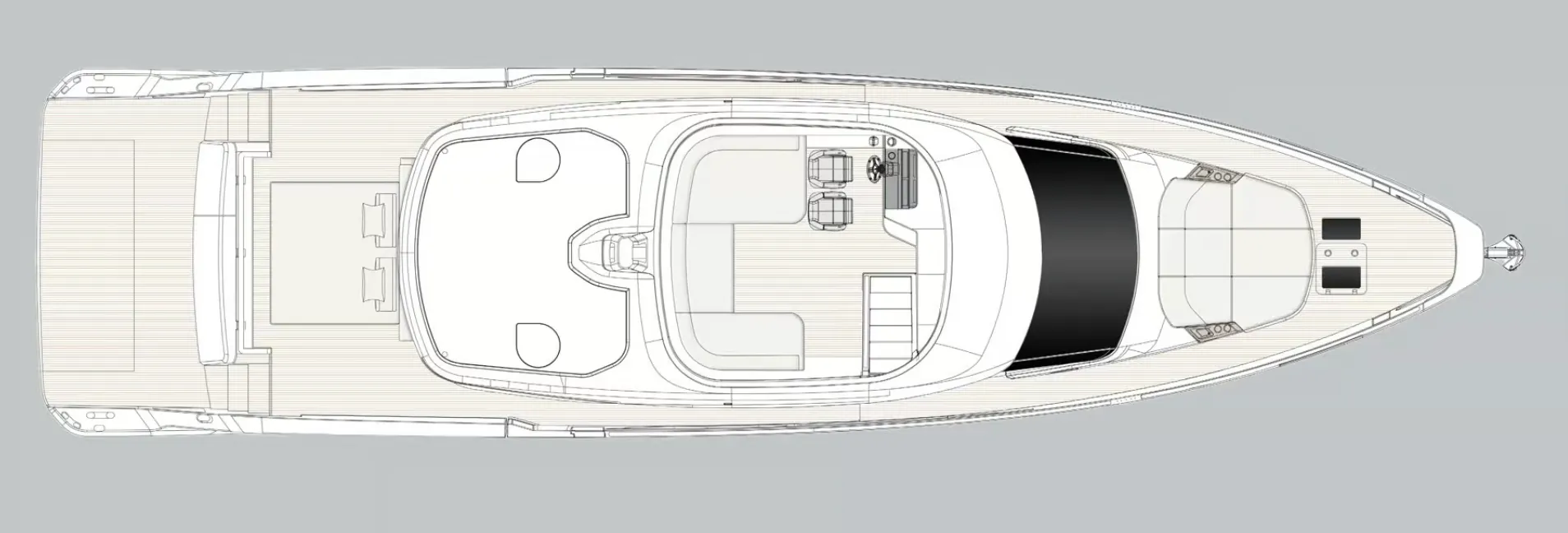
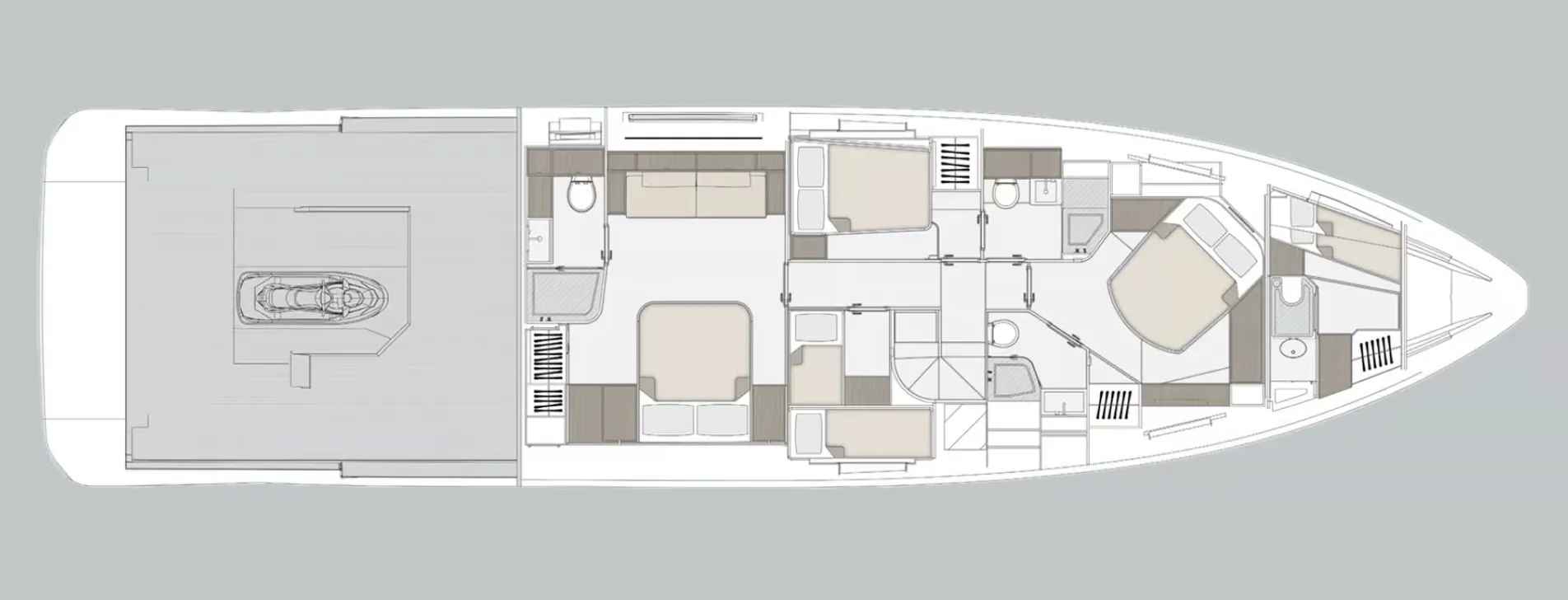
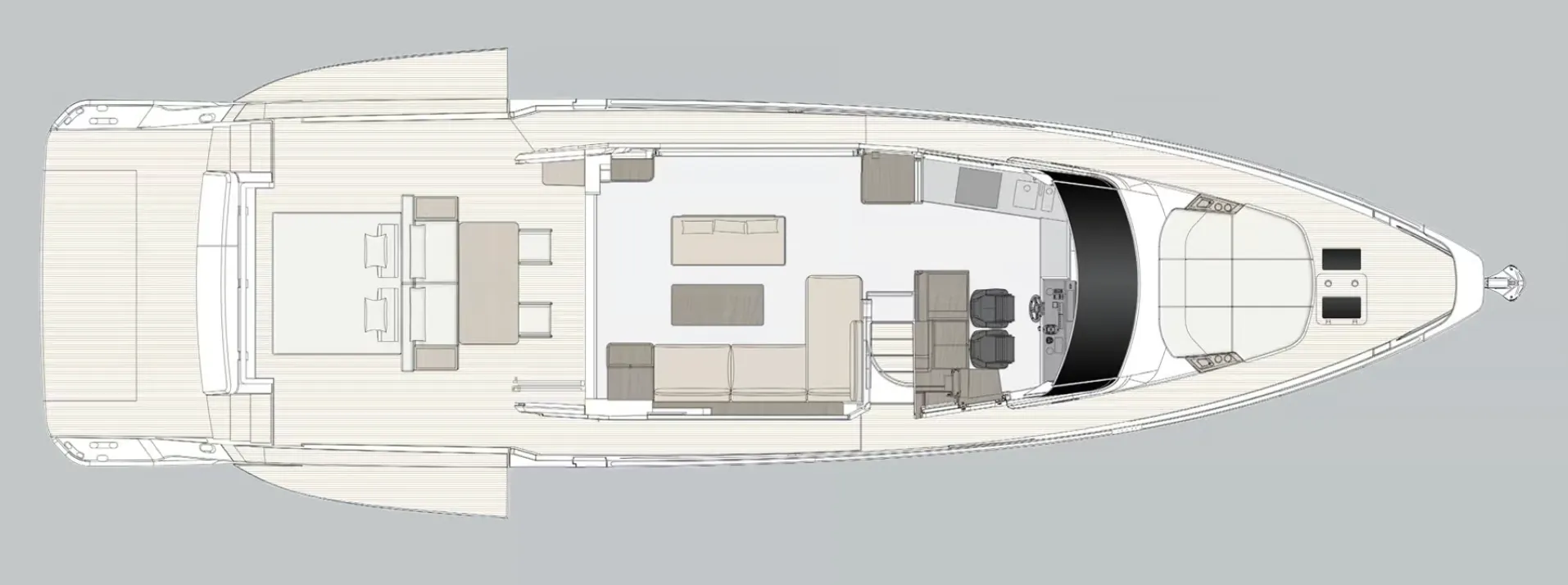

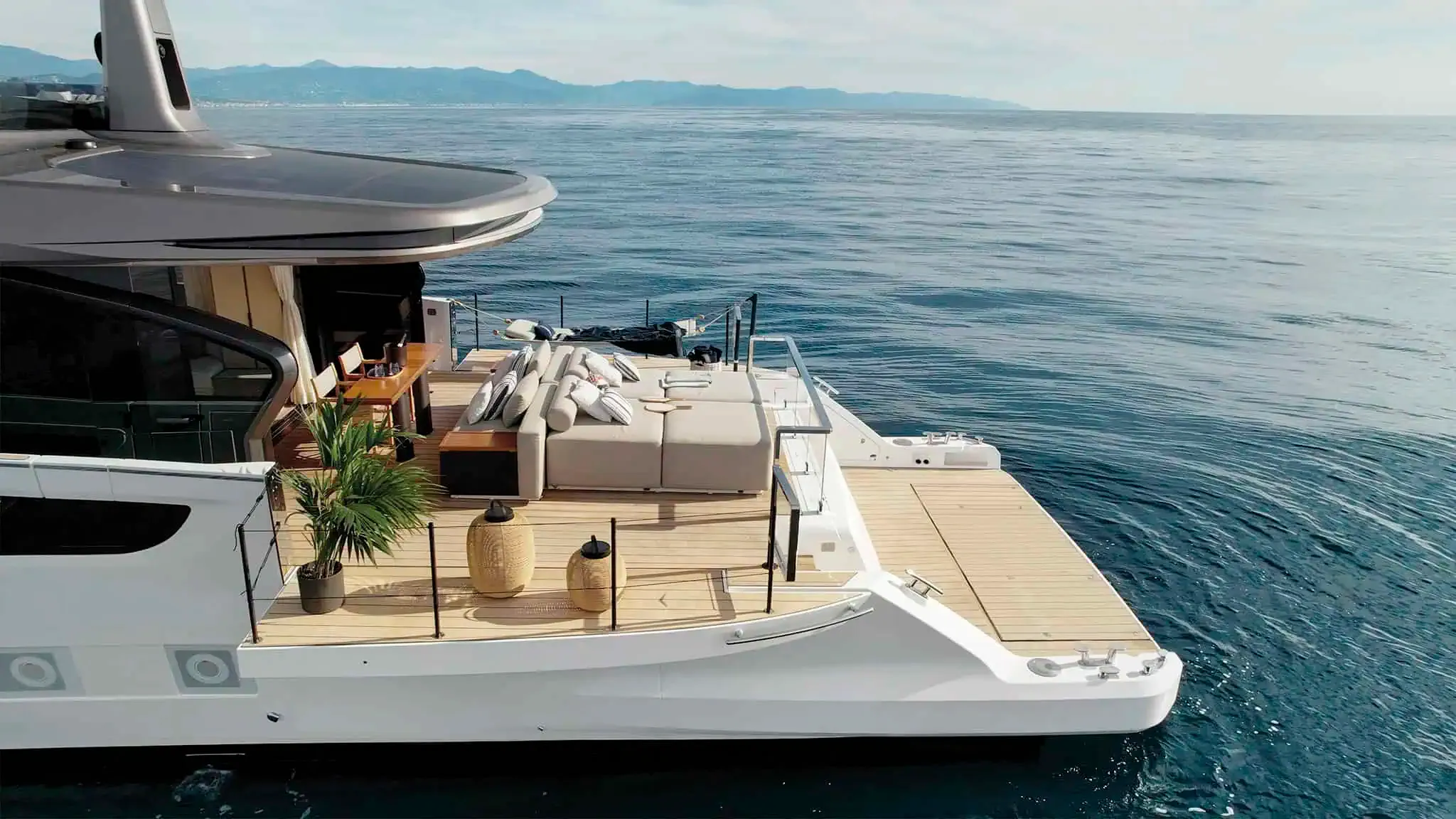
The Seadeck 7 is where Azimut's hybrid experiment matures into a serious long-range family cruiser. By stretching the Seadeck 6's footprint, they've added a proper four-cabin layout and a flybridge, making this a true "full-on plunge" into the eco-luxury sector. The standout feature remains the "Fun Island" — a massive sea-level social hub with folding balconies that add 450 square feet of real estate, effectively blurring the lines between a 70-foot yacht and a superyacht beach club. Inside, the Matteo Thun design feels more like a high-end Milanese apartment than a boat, utilizing sustainable materials like cork decking and carpets made from recycled fishing nets.
However, the pursuit of style and sustainability does come with trade-offs. The engine room is notoriously cramped due to the complex hybrid systems and IPS drives. Additionally, while the flybridge adds vital outdoor space, it is relatively compact compared to traditional flybridge yachts in this size class, as a portion of its surface is dedicated to solar panels. The galley has also been moved forward and enclosed to separate the crew, which may not appeal to those who prefer an open, social galley-aft configuration.
The Strategic View
The ideal buyer is a tech-savvy family looking to transition into more sustainable yachting without losing the speed and style Azimut is known for. It's a "boater's boat" that manages to be both luxurious and rugged enough for kids and wet bathing suits, while the RINA Green Plus certification provides a strong narrative for the environmentally conscious owner.
Video courtesy of Azimut.
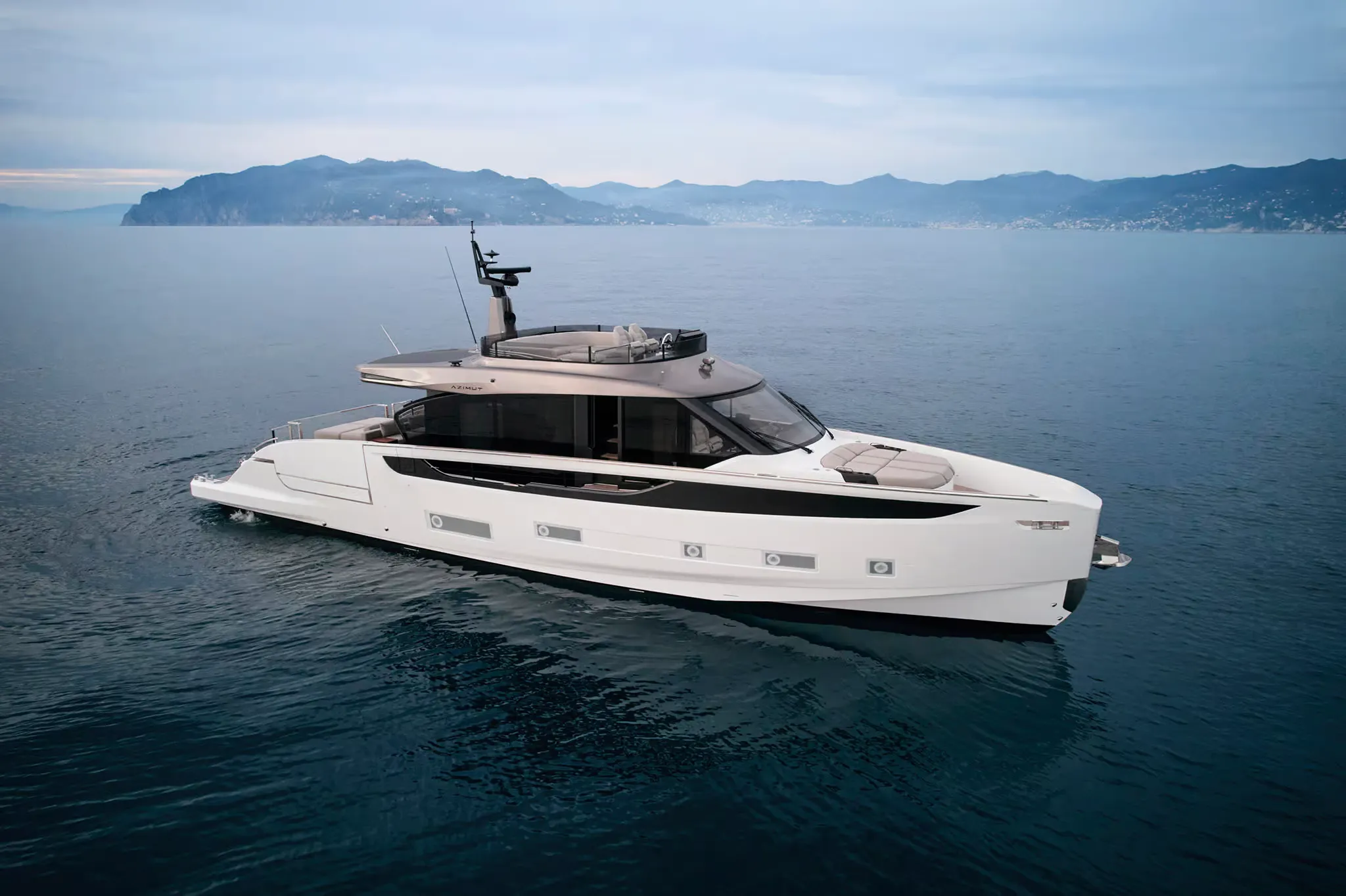
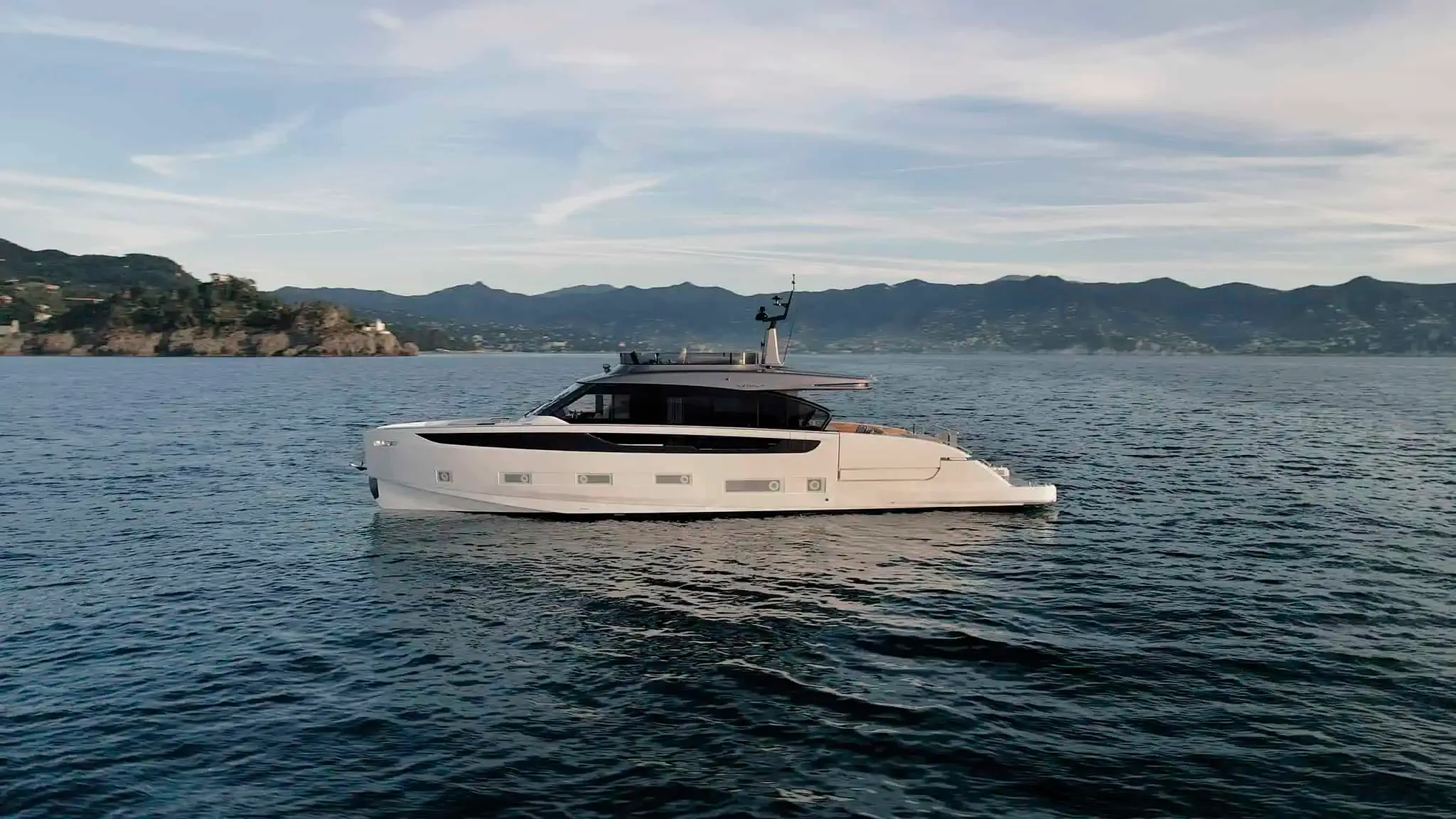
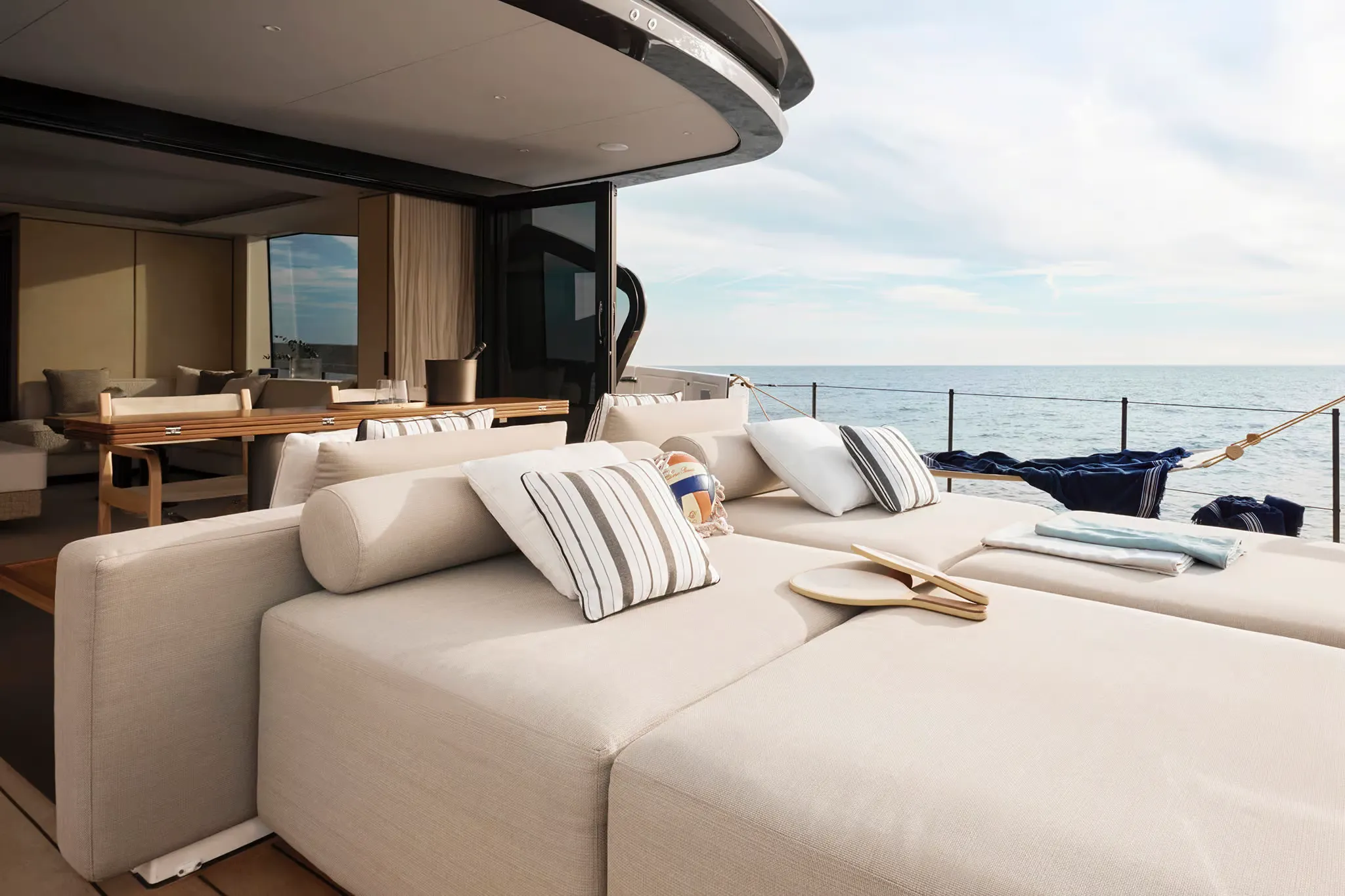
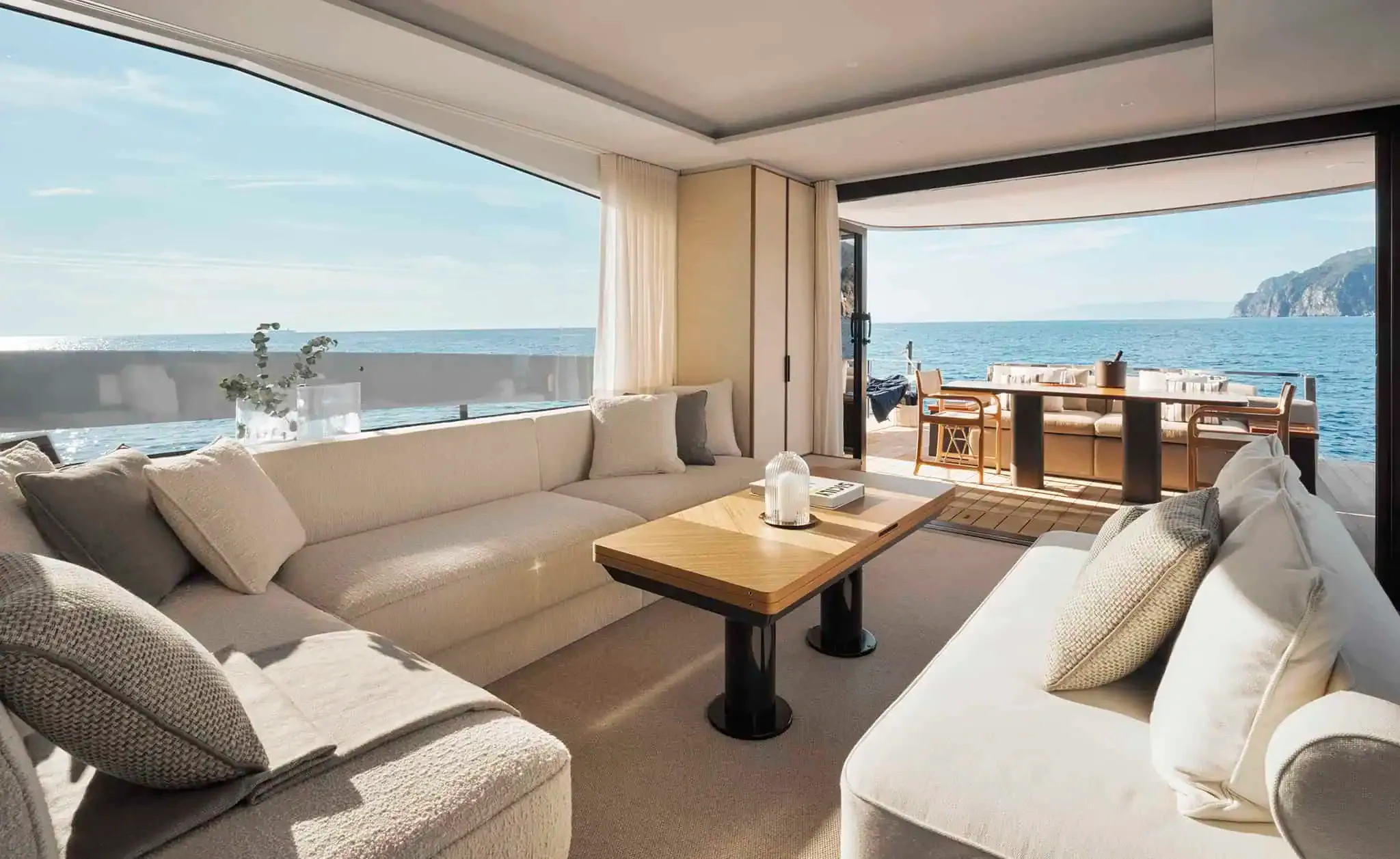
Photos courtesy of Azimut.
The Seadeck 7 is the 71-foot member of Azimut's efficiency-first Seadeck series: 71'2" overall, 18'0" beam, 102,074 lbs at full load, in carbon fiber and GRP.
The design team repeats from the Seadeck 6 — Alberto Mancini outside, Matteo Thun & Antonio Rodriguez inside — and so does the philosophy: the Fun Island cockpit near sea level, materials chosen by subtraction, and a stated target of up to 40% lower emissions.
Twin Volvo Penta IPS 1200 pods at 900 hp are standard, with 1,000 hp IPS 1350s optional; Azimut publishes up to 31 knots maximum and 23 knots at cruise from 978 gallons of fuel.
At anchor, Mild Hybrid Zero Emission Hotel Mode pairs an 80 kWh lithium bank — nearly double the Seadeck 6's — with an engine-driven alternator, covering hotel loads for up to four hours by day or eight overnight without a generator.
Four cabins, three heads and a crew cabin. Matteo Thun & Antonio Rodriguez's interior keeps to the series' quiet, natural-materials language.
Aft, the beach area is a transformer: it extends and partly submerges, turning the swim platform into a gradual, walk-in entry to the sea beside the Fun Island cockpit.
The Seadeck 7 shares its 71-foot bracket with Azimut's own S7 and sits near the Fly 68 — the same accommodation count, a completely different brief: hybrid hotel power and anchor-out living instead of a flybridge or a 35-knot top end.
It is the middle path for buyers who find the Seadeck 6 one cabin short.
Buy the Seadeck 7 if you cruise with four cabins' worth of family, anchor out more than you dock, and want the battery-bank nights the Seadeck 6 introduced with more room to spread out.
Choose the Fly 68 for the classic flybridge program on the same accommodation, or the S7 if speed leads your list.
The Seadeck 7's pitch is that hybrid ownership costs less over time, and the math mostly holds. Plan around these lines:
Cost figures are Minted Yachts editorial estimates for typical U.S. Southeast ownership; your marina, usage, insurance profile, and spec will move these numbers. Read how we source and verify, or ask us for numbers specific to your situation.
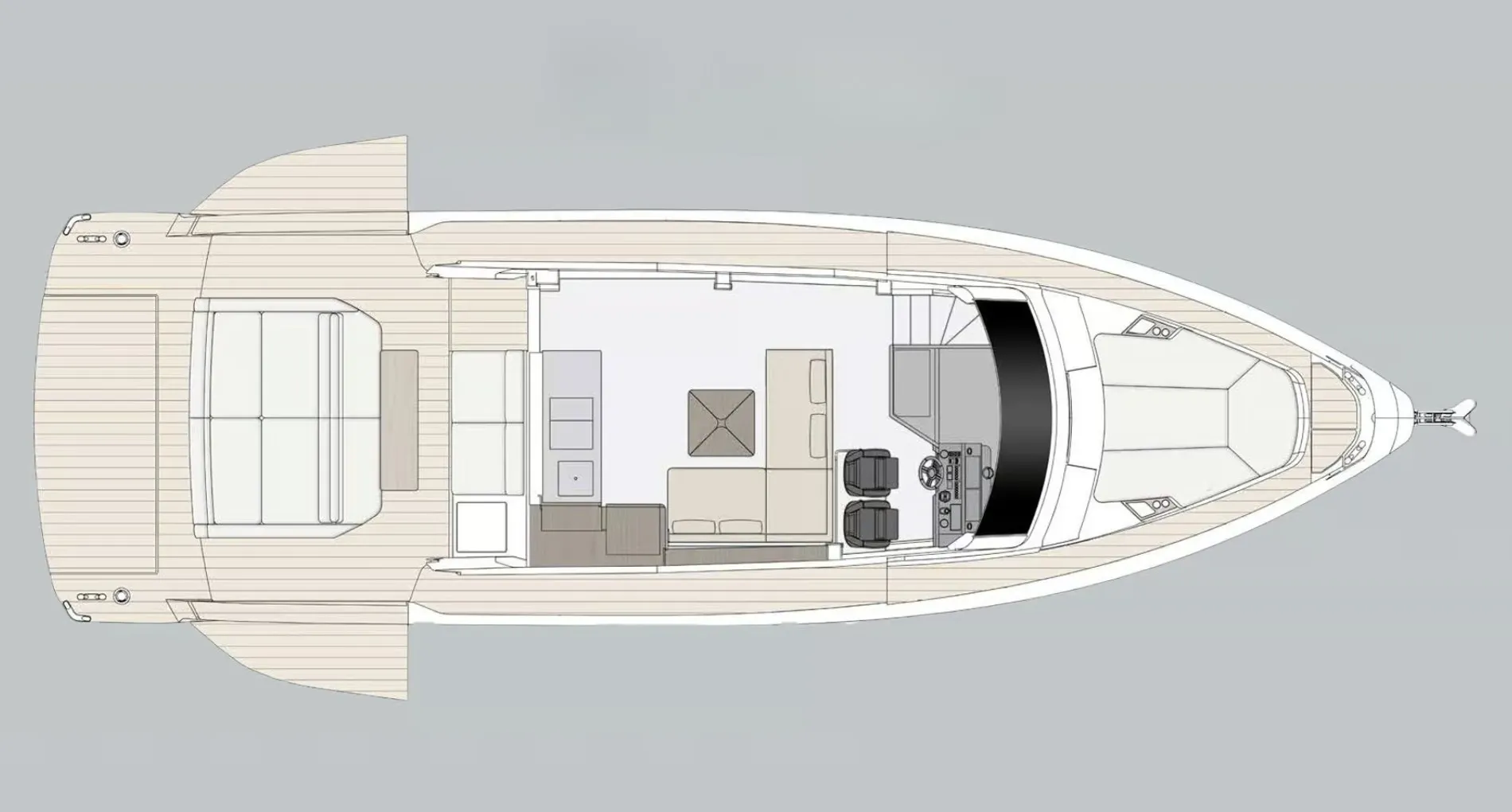
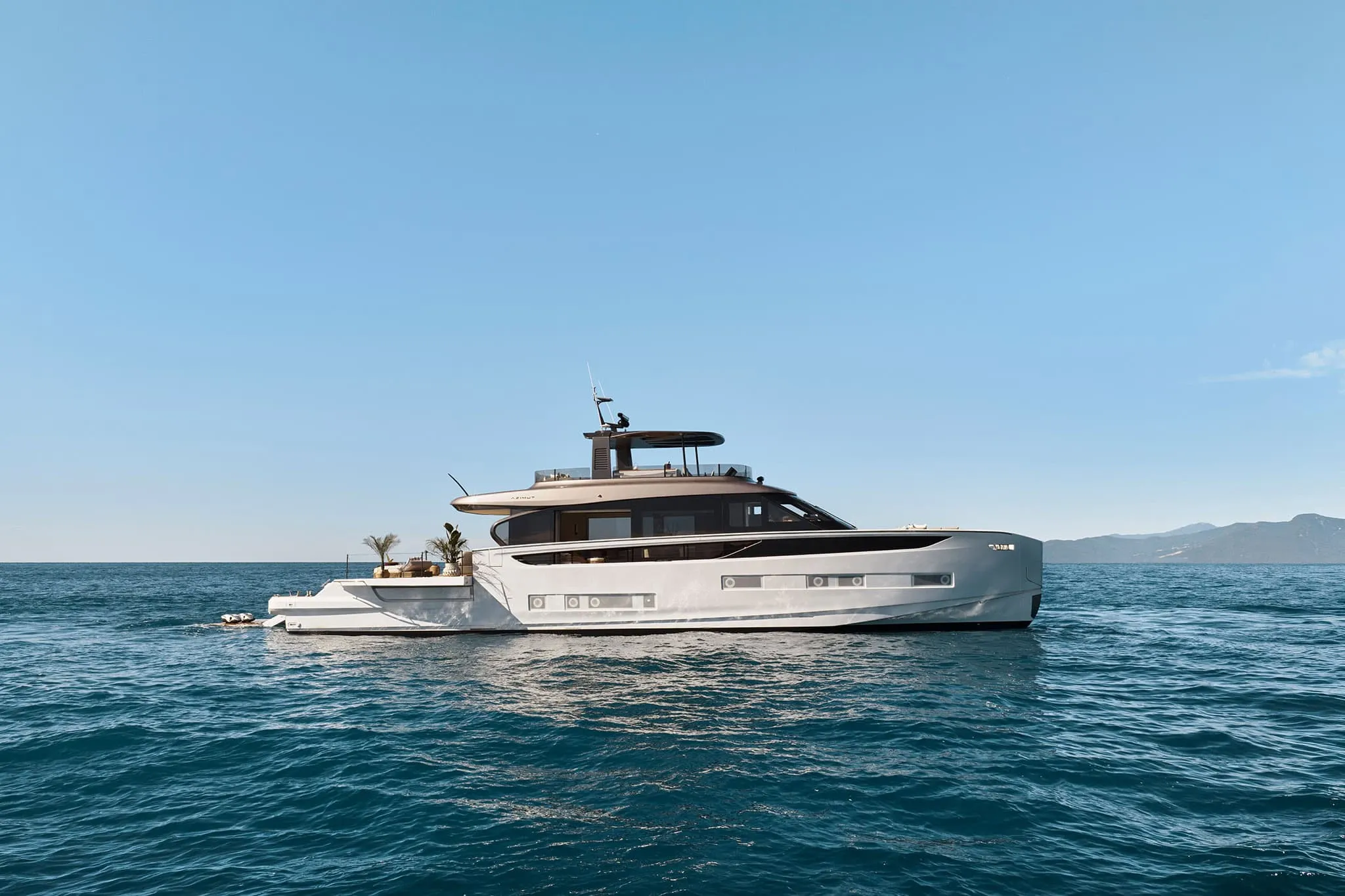
The Seadeck 7 sleeps eight guests in four cabins, served by three heads, plus a separate crew cabin and crew head. The four-cabin layout lets owner-operators run it themselves today and add a captain later without giving up a guest stateroom.
The Fun Island is the Seadeck 7's signature aft deck: roughly 450 square feet of usable water-level space created by the reverse salon layout. Traditional cockpits lose about 30 percent of their area to circulation; the Fun Island turns that area into a family beach platform.
The Seadeck 7 measures 71 feet 2 inches overall with an 18-foot beam, a draft of 5 feet 1 inch, and a full-load displacement of about 102,000 pounds. Fuel capacity is 978 gallons and water capacity is 264 gallons.
The Azimut Seadeck 7 reaches up to 31 knots with twin Volvo Penta IPS 1200 (900 hp) or optional IPS 1350 (1,000 hp) pods, cruising at up to 23 knots. On battery power alone it holds about 11 knots for up to four hours of silent, zero-emission running.
Yes. Volvo Penta IPS pods give the Seadeck 7 joystick docking and predictable close-quarters handling, and the single-level main deck keeps sightlines clean from the helm. The dedicated crew cabin is there when you want help, not because the boat requires it.
Yes. The Seadeck 7 is the first production hybrid in the 70-foot class with genuine electric capability: up to four hours of propulsion at 11 knots or eight hours of zero-emission hotel mode at anchor, so the air conditioning and galley run without a generator burning diesel.