
April 11, 2026
The Azimut Fly 60: When Italian Design Meets Real-World Utility
The Azimut Fly 60 marries Italian Carbon‑Tech elegance with owner‑operator practicality: twin 900hp Volvo D13s for 31‑knot performance, genu…
Read the articleExpert Review, Technical Specifications & Market Analysis
| Feature | Specifications |
|---|---|
| Overall Length | 59' 10" |
| Beam | 16' 7" |
| Draft | 4' 9" |
| Displacement | 36 t (79,378 lbs) Full Load. |
| Engines | 2x Volvo Penta D13 900 hp |
| Fuel Capacity | 2,800 L (740 US Gal) |
| Water Capacity | 750 L (198 US Gal) |
| Cabins / Heads | 3 Cabins + 1 Crew / 3 Heads + 1 Crew |
| Max Speed | Up to 31 kn |
| Cruise Speed | Up to 26 kn |
Source: Spec & Photos courtesy of Azimut. Specs verified by Tony Smith, USCG 100 Ton Master, on August 8, 2026.
You've outgrown the weekend boat but not the pleasure of running your own. The Fly 60 packs three en-suite cabins, crew quarters and a three-zone flybridge into just under 60 feet.
Part of the Azimut Fly series — see how owners step up through the lineup.

The Fly 60 represents Azimut's most successful execution of their Carbon-Tech philosophy in the 60-foot segment. The weight savings in the superstructure translate to real-world benefits in stability and fuel efficiency. The Volvo D13 package is proven and well-supported throughout Florida and the Caribbean. Build quality has improved significantly from earlier Azimut generations, though you still need to inspect gelcoat work and interior joinery carefully on any used example. The automated systems like electronic steering and trim tabs work as advertised and reduce operator workload meaningfully.
This boat makes sense for experienced owners stepping up from 45 to 50-foot boats who want more range and space but aren't ready to hire permanent crew. The layout genuinely works for owner-operation on weekend trips while still accommodating hired crew for longer passages. The flybridge is properly designed for actual helm use, not just entertaining. If you're the type who wants to run your own boat to the Bahamas on Friday afternoon, this is one of the better platforms in the size class. It's not for first-time buyers or anyone expecting a Sunseeker level of fit and finish.
The used market for Fly 60s shows reasonable value retention, typically depreciating 8 to 12 percent annually in the first five years. Maintenance costs run predictably if you follow the service schedule. The Volvo engines are the right choice for this application, more reliable and better supported than MAN alternatives in the US market. Budget $50,000 annually for maintenance, $20,000 for insurance, and $40,000 to $60,000 for dockage depending on location. Fuel costs are what they are at this size, but the efficient cruise speed helps. This is a boat that rewards owners who actually use it, not those looking for a floating condo..
Video courtesy of Azimut.
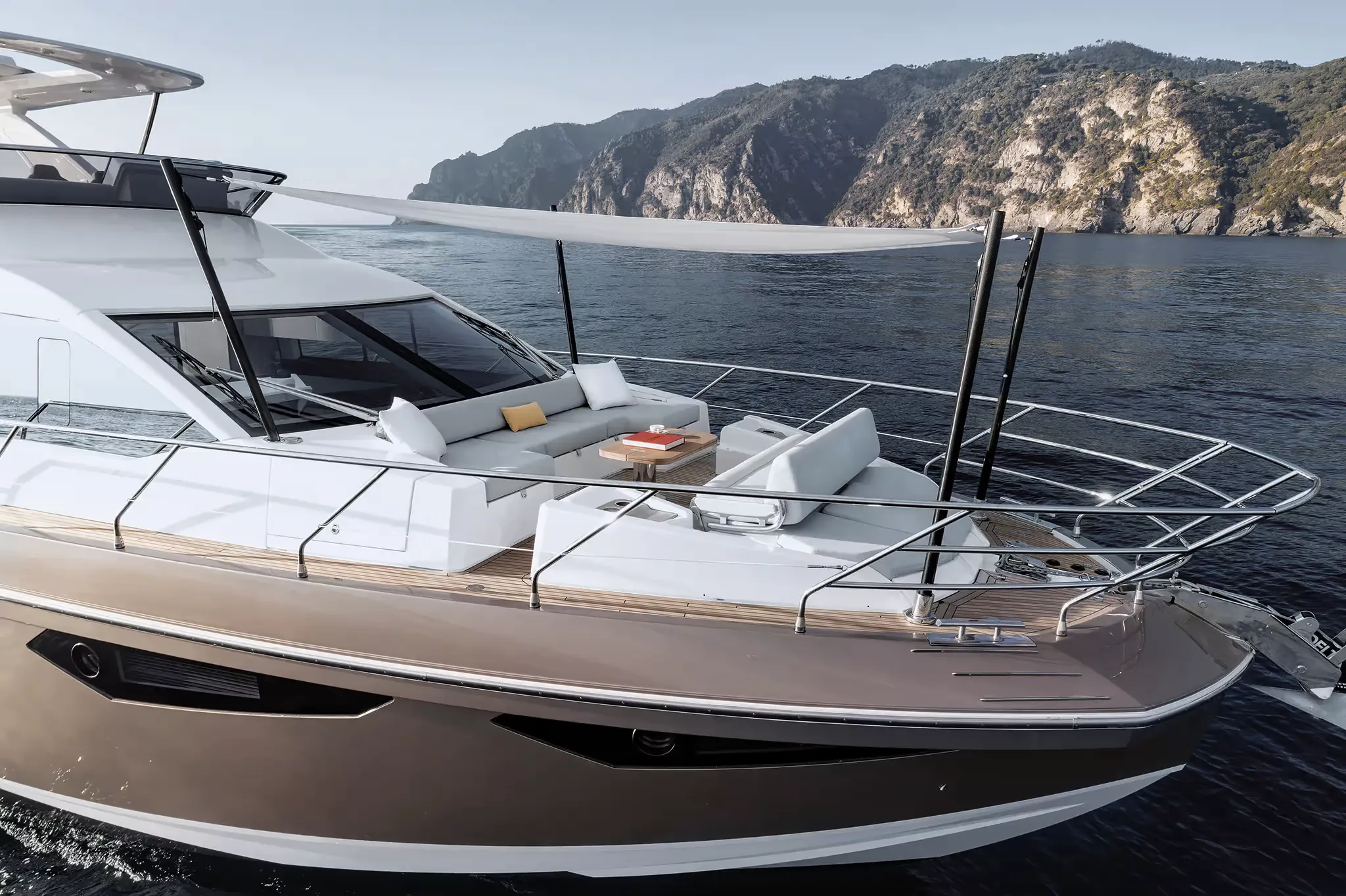
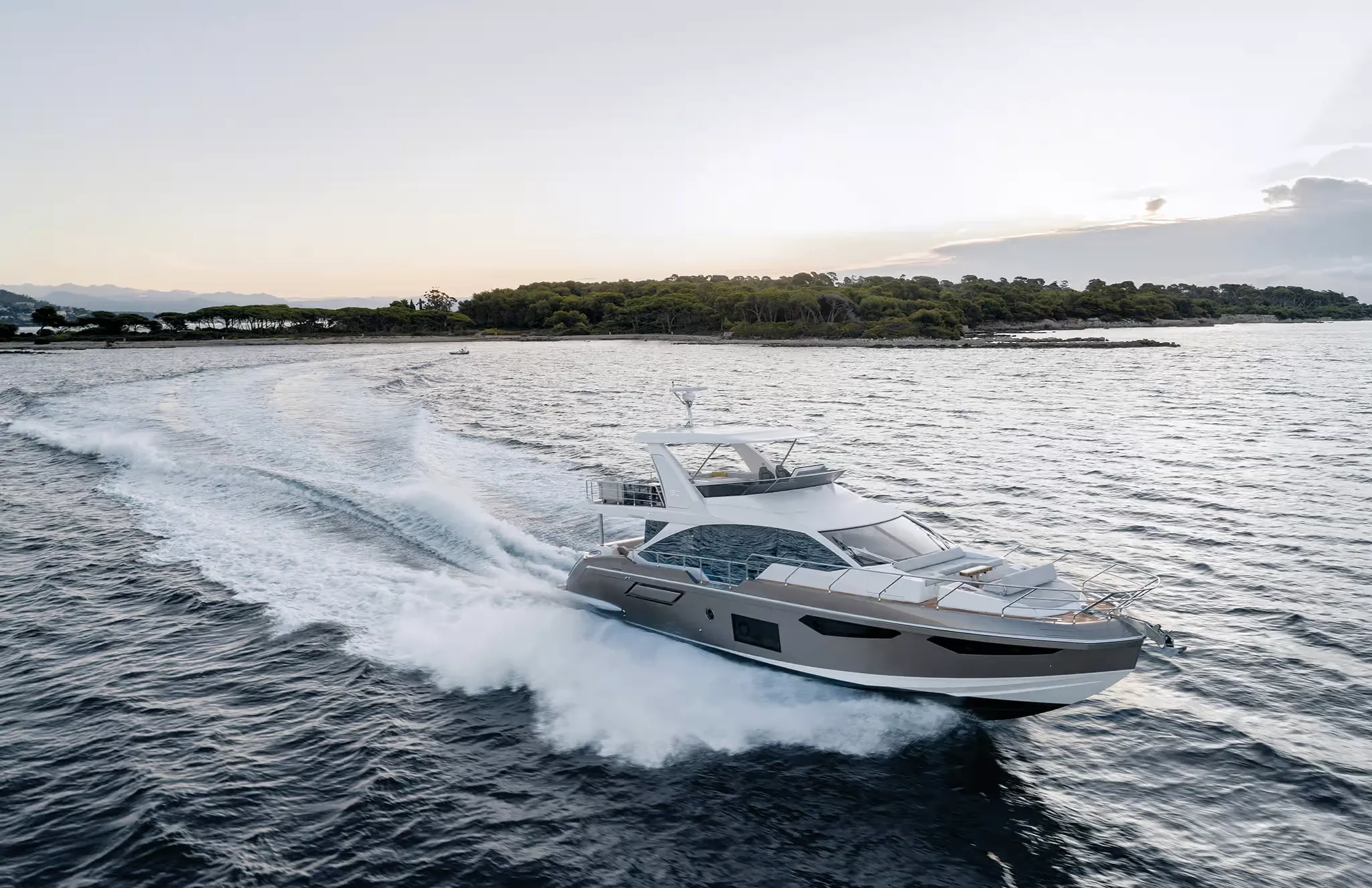
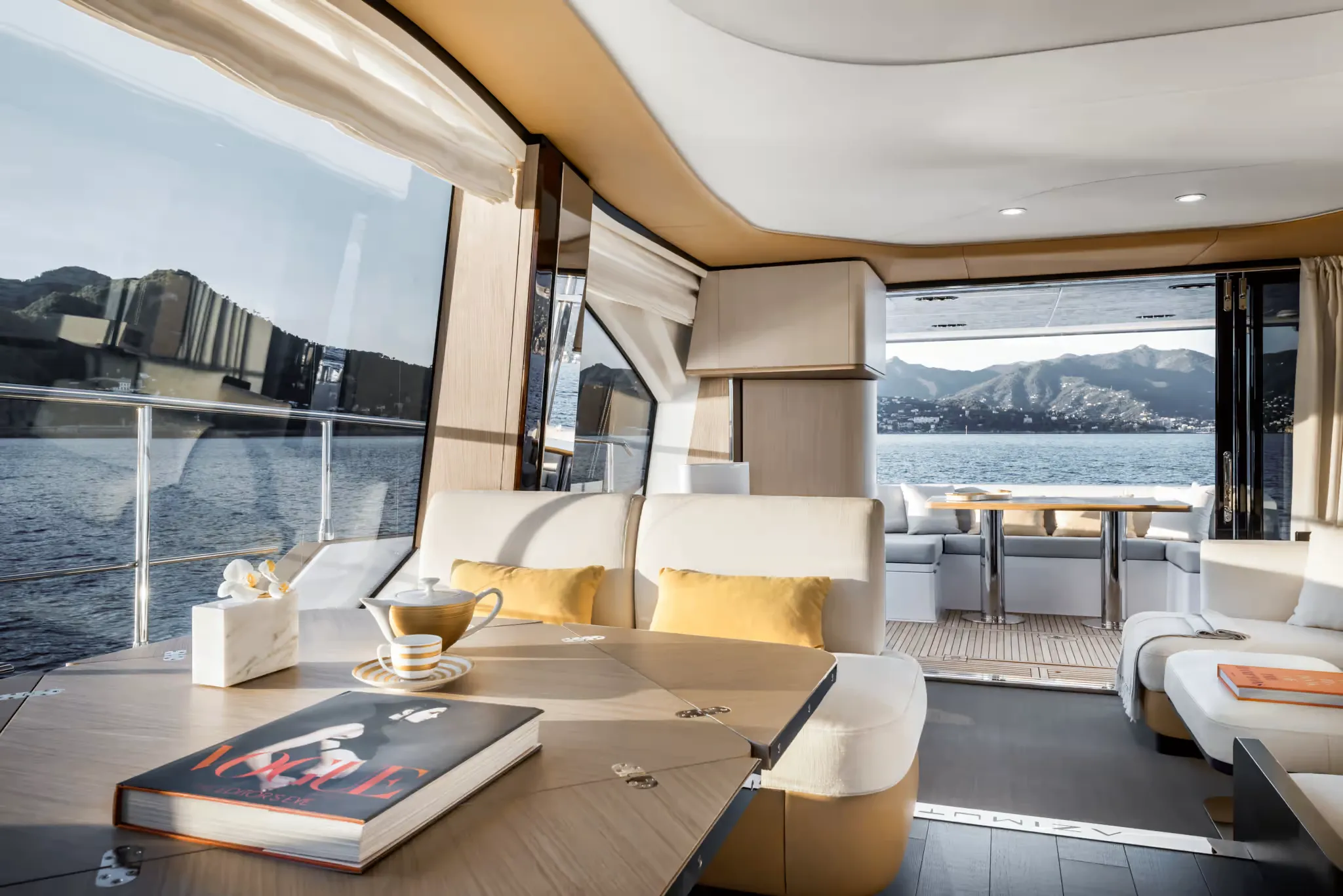
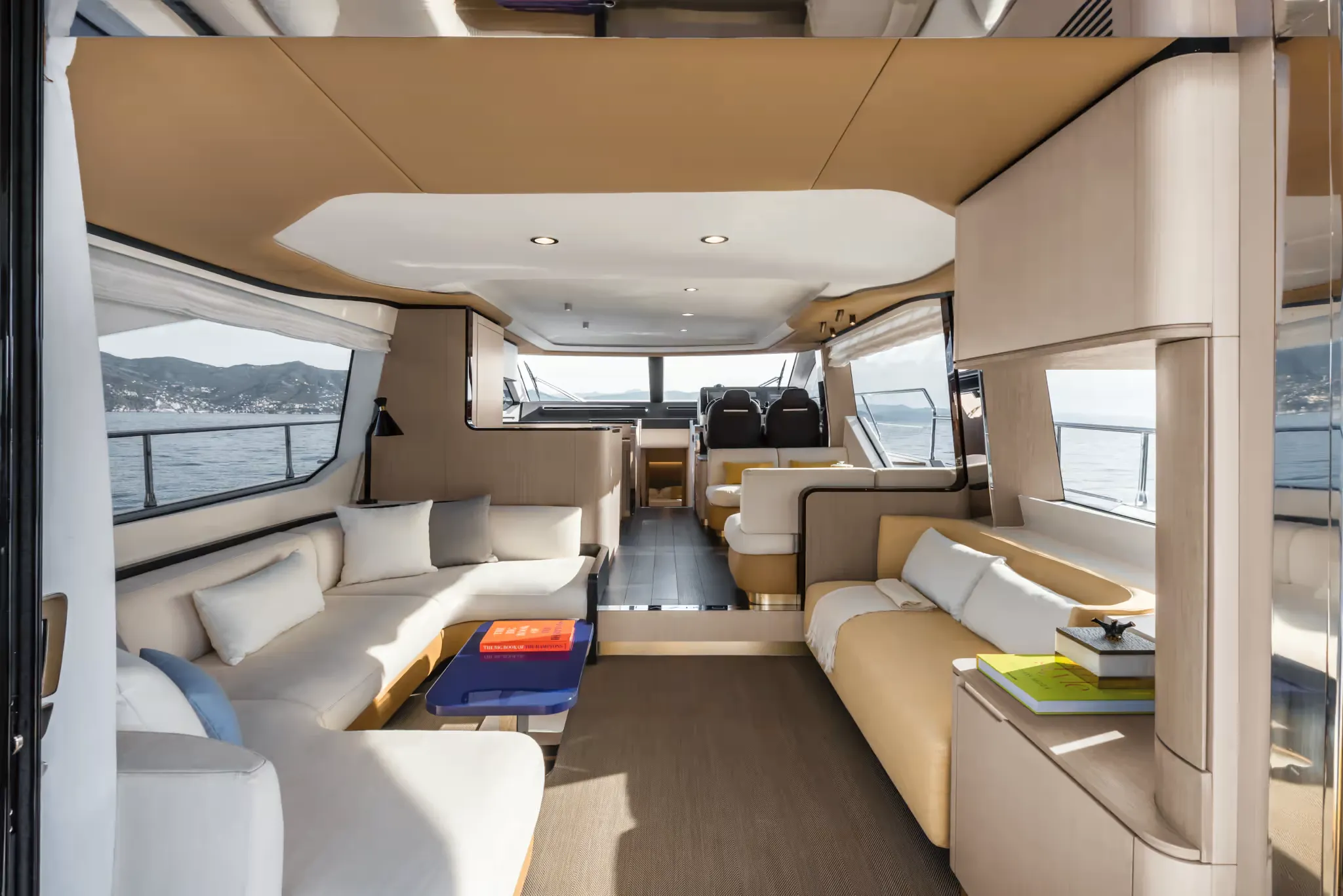
Photos courtesy of Azimut.
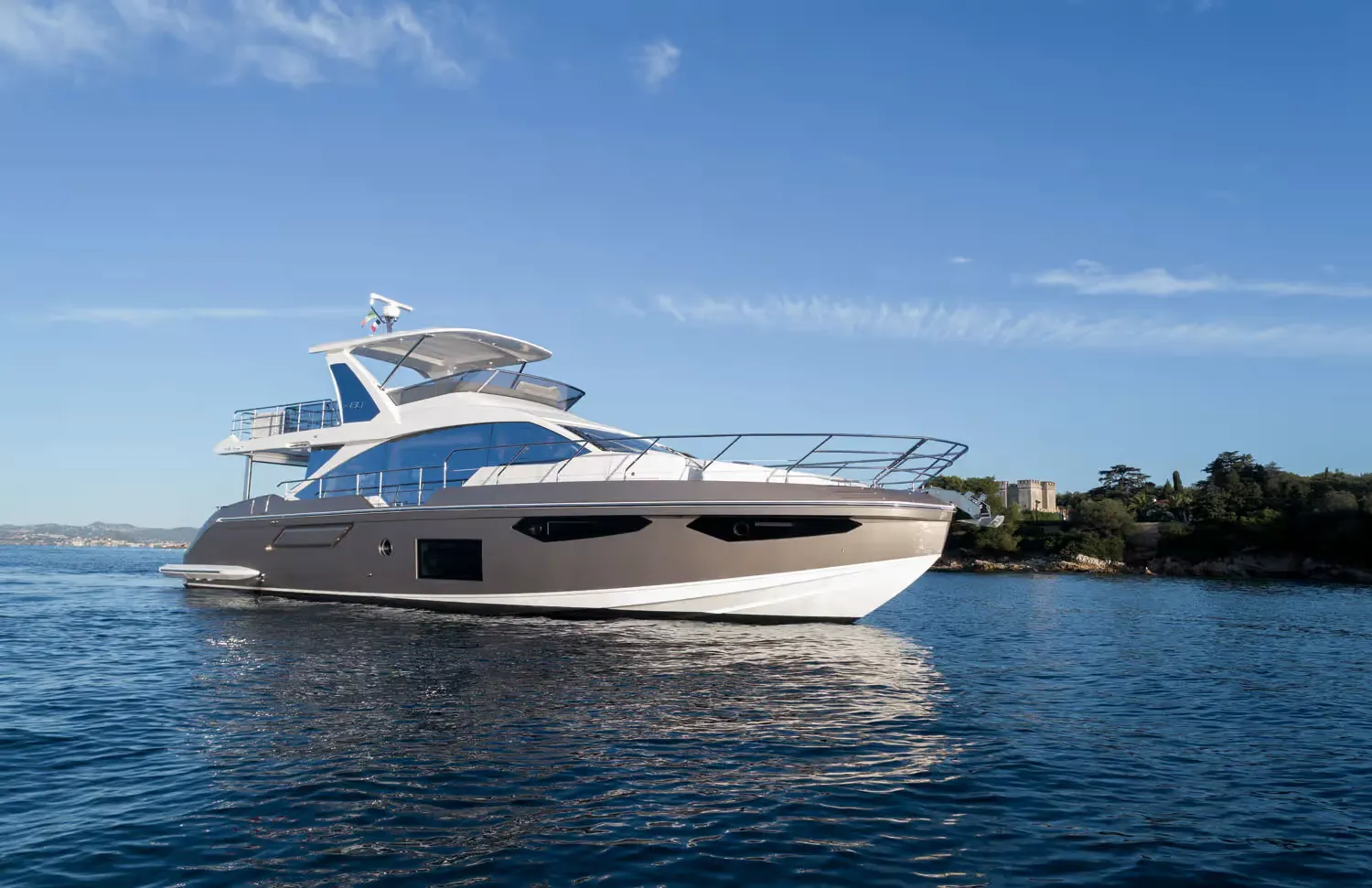
The Fly 60 is the second step in Azimut's Fly series: 59'10" overall on a 16'7" beam, 79,378 lbs at full load, built in GRP with carbon fiber under Azimut's Carbon-Tech approach — lighter structure up high, more volume and stability below.
The design credits are serious for a sub-60-footer: Stefano Righini on the exterior, Achille Salvagni Architetti inside.
Twin 900 hp Volvo Penta D13 diesels give the Fly 60 a published 31-knot maximum and up to 26 knots at cruise, from 740 gallons of fuel.
Those are the same headline speeds as the smaller Fly 53 — the extra 15,000-odd lbs of boat comes with no performance penalty on paper.
Three cabins, three heads and a crew cabin — every guest cabin gets its own bathroom, which is the Fly 60's clearest advantage over the 53.
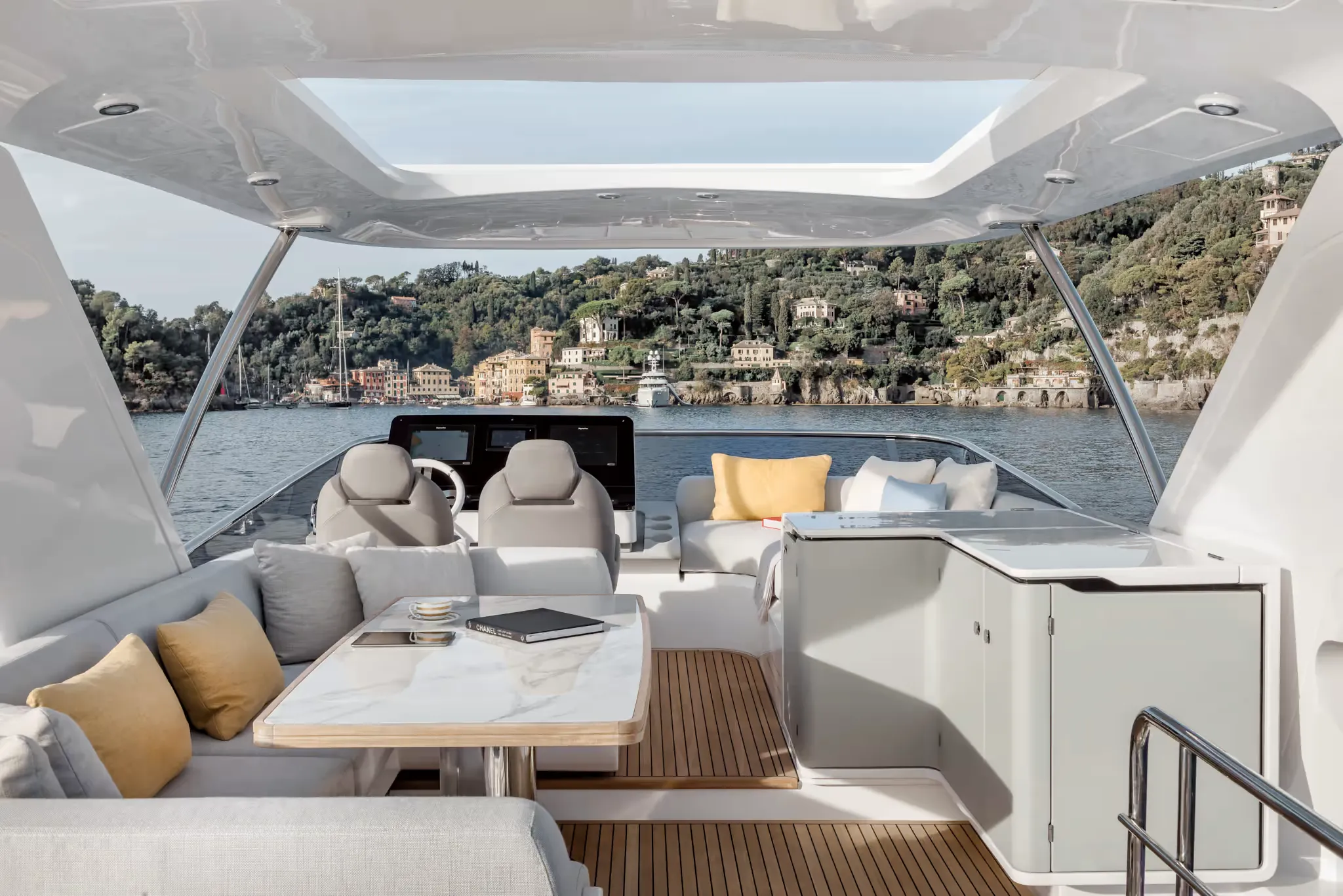
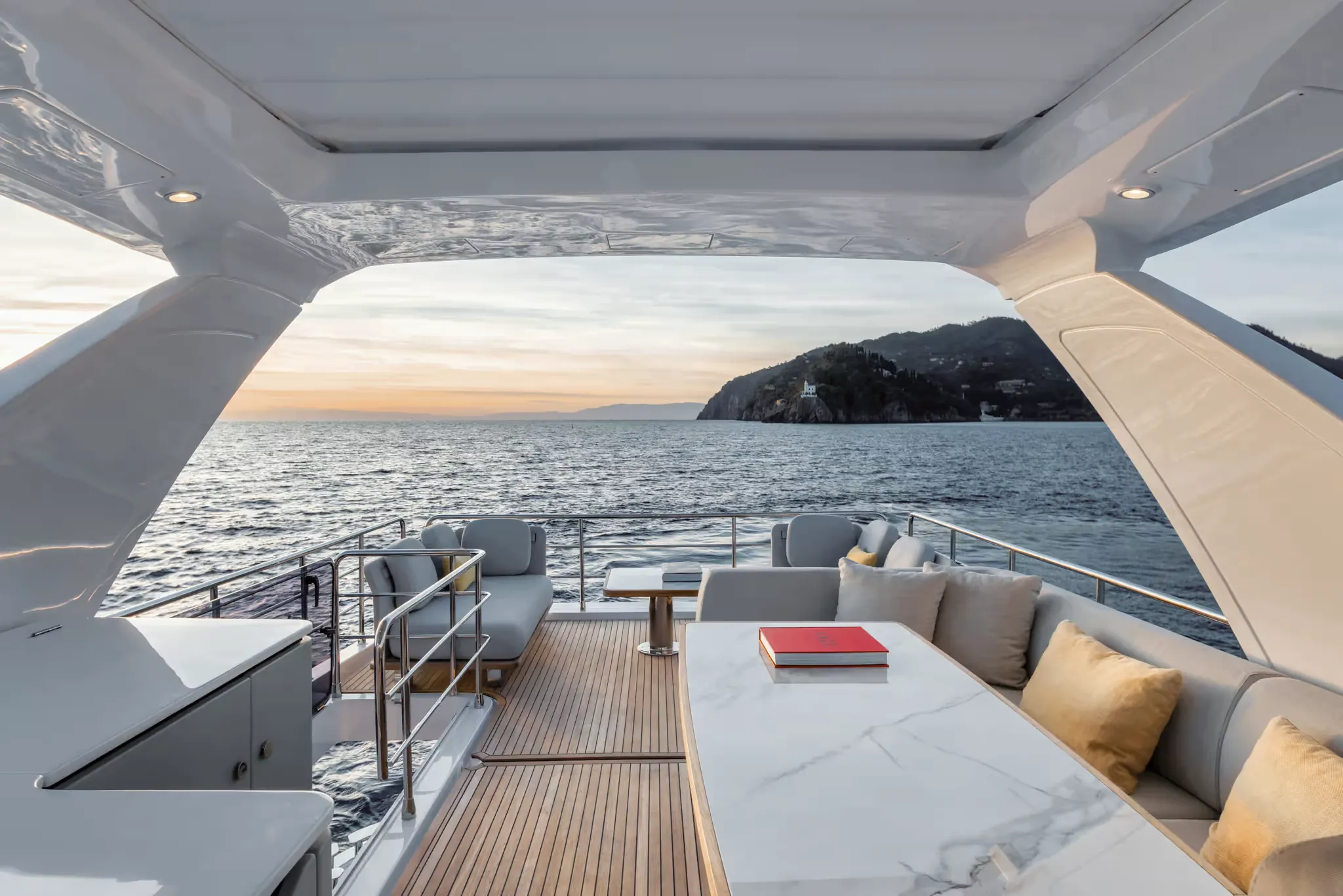
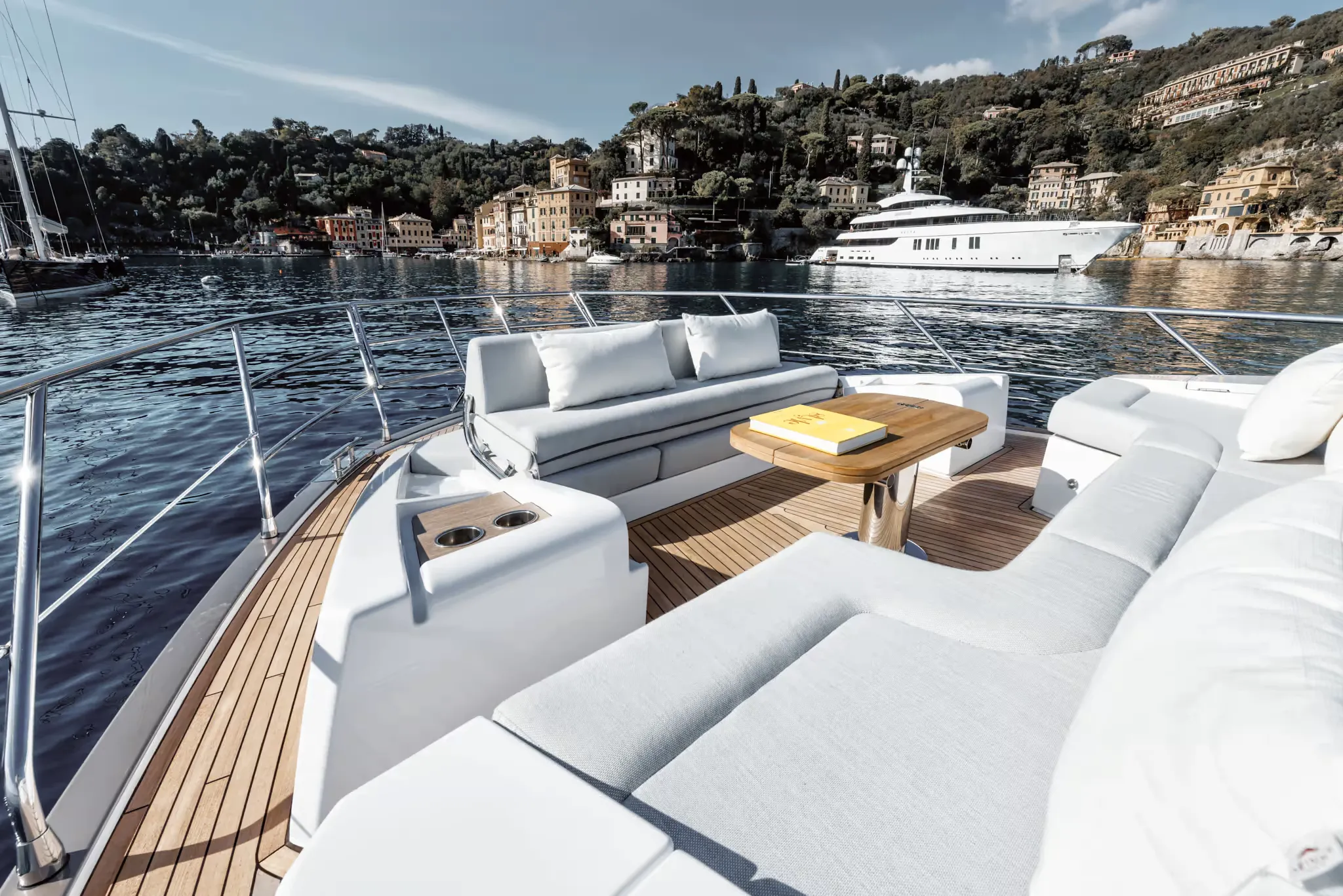
Salvagni's interior draws on organic natural materials with bronze accents, and the flybridge splits into three zones: sunbathing forward, a hardtop-shaded bar and dining area, and an aft lounge for the evening.
Within the Fly series the 60 is the sweet spot between the owner-operator 53 and the crew-assumed 68 and 82 — still a manageable size, now with en-suite guest cabins and named-designer interiors.
Unlike the all-GRP Fly 53, it also brings Azimut's Carbon-Tech lamination into the series.
Buy the Fly 60 if your guest list expects en-suite cabins and you want them under 60 feet — three cabins, three heads, plus quarters for a hand.
Step down to the Fly 53 to save length and draft; step up to the Fly 68 when the requirement becomes four cabins and 32 knots.
The Fly 60 trades pod-drive convenience for shaft-drive simplicity, and its cost profile reflects that choice:
Cost figures are Minted Yachts editorial estimates for typical U.S. Southeast ownership; your marina, usage, insurance profile, and spec will move these numbers. Read how we source and verify, or ask us for numbers specific to your situation.
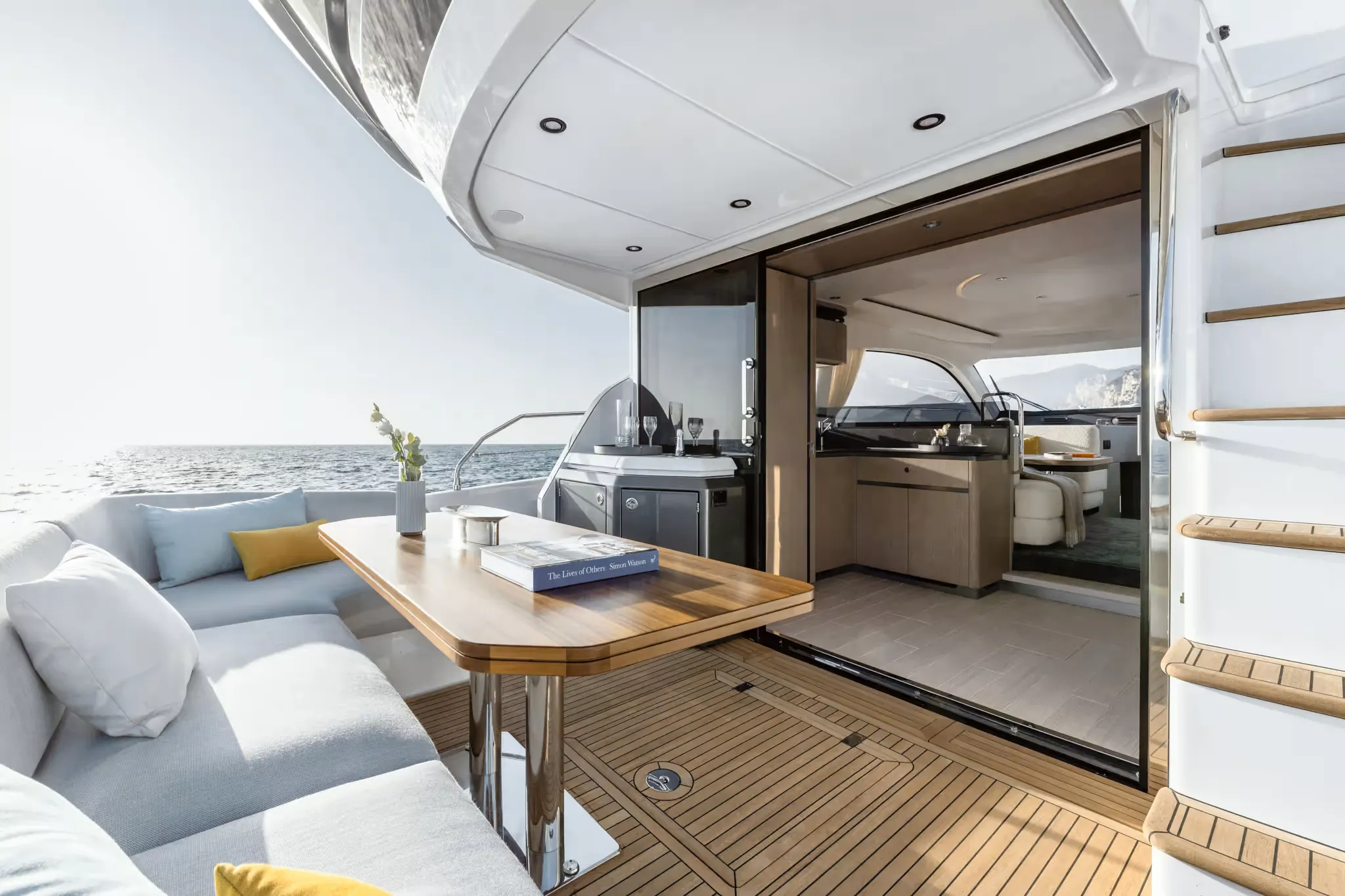
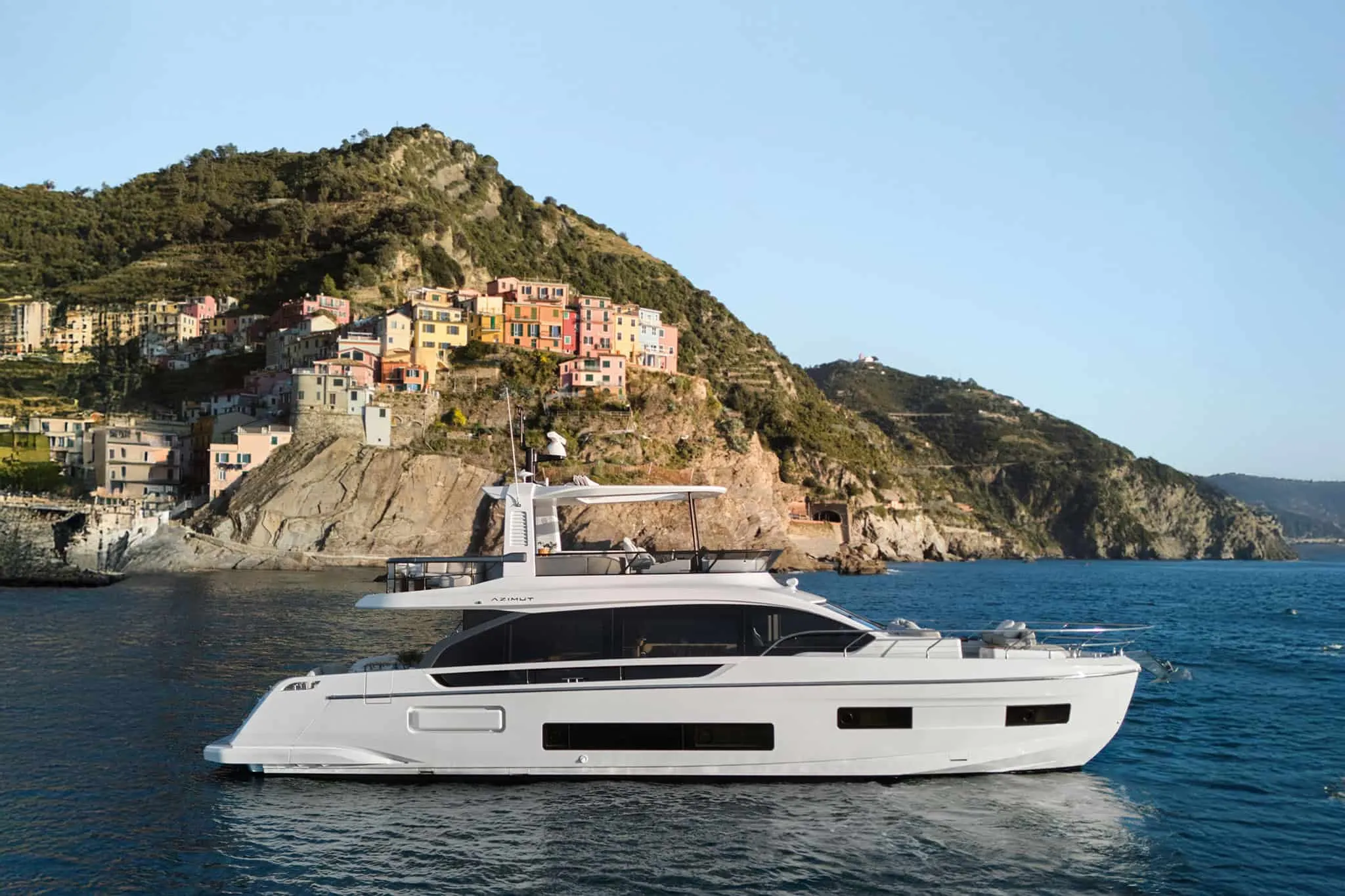
The Azimut Fly 60 reaches up to 31 knots and cruises at up to 26 knots, powered by twin Volvo Penta D13 diesels producing 900 hp each. The D13 is a proven commercial-grade engine with a global service network — reliability that matters more than headline speed.
The Fly 60 measures 59 feet 10 inches overall with a 16-foot 7-inch beam, a 4-foot 9-inch draft, and full-load displacement of about 79,400 pounds. Fuel capacity is 740 gallons and water capacity is 198 gallons.
Three legitimate guest cabins with three heads, plus a crew cabin with its own head. The convertible salon layout doubles as dining and lounge space, so six guests sleep aboard comfortably without the layout compromises common in this class.
Carbon-Tech is Azimut's carbon fiber superstructure construction. On the Fly 60 it reduces topside weight by about 30 percent versus traditional fiberglass, which lowers the center of gravity and cuts roll by roughly 15 percent — a steadier boat at anchor and underway.
Yes, with a caveat: the Fly 60 runs conventional shaft drives rather than pods, so docking rewards experience. In exchange you get the simplicity and serviceability of twin Volvo D13s. Owners stepping up from a 50-footer with shaft drives will feel at home immediately.
The Fly 60 carries 740 gallons (2,800 liters) of fuel and 198 gallons of water. At a 26-knot cruise that supports a solid day of coastal passagemaking; throttle back and Florida-to-Bahamas routes are well within its comfort zone.