
November 28, 2026
Bluegame BGM75: Two Hulls, and Three Cabins or Four
Bluegame says its BGM75 cannot be compared to any traditional catamaran. This is what that claim means for a buyer, and how to choose betwee…
Read the articleExpert Review, Technical Specifications & Market Analysis
| Feature | Specifications |
|---|---|
| Overall Length | 74'8" (22.75 m) |
| Beam | 26'9" (8.15 m) |
| Draft | 5'7" (1.70 m) |
| Displacement | 69 t +/- 5% (138,000 lb) at half load - 72 t +/- 5% at full load |
| Engines | STD: 2 x IPS Volvo Penta D13 1050 (800 hp); OPT: 2 x IPS Volvo Penta D13 1200 (900 hp) |
| Fuel Capacity | 1321 gal (5,000 L) |
| Water Capacity | 528 gal (2,000 L) |
| Cabins / Heads | 3-4 Cabins |
| Max Speed | 20 kn +/- 5% |
| Cruise Speed | 16 kn +/- 5% |
Source: Spec & Photos courtesy of Bluegame. Specs verified by Tony Smith, USCG 100 Ton Master, on November 29, 2026.
You want the volume of a much larger yacht on a hull you can still bring into a normal berth. The BGM75 puts two hulls under a monohull's profile and lets you choose three cabins or four.

"Pick the BGM75 for the layout you will live in, not for the top speed."
I have toured the BGM75 with Bluegame's founder, and what I take from this boat is that it is honest about what it is for. A listed cruise of 16 knots, give or take 5%, is a cruising yacht's pace. An owner coming off a fast open boat should go in knowing that. What the two hulls buy in return is room: a 26'9" beam, a full-beam owner's cabin, and berths for three crew kept apart from the owner and guests.
The decision I would spend time on with a buyer is three cabins or four. The Lissoni version suits a couple who host now and then and want more space in each cabin. The Zuccon four-cabin plan is the one for a family that travels together, or an owner who always has guests aboard. I also like that Bluegame fitted two synchronised Smartgyro stabilisers. On a multihull, comfort at anchor is a large part of why you bought her, and the builder has put its money into that.
Video courtesy of Bluegame.
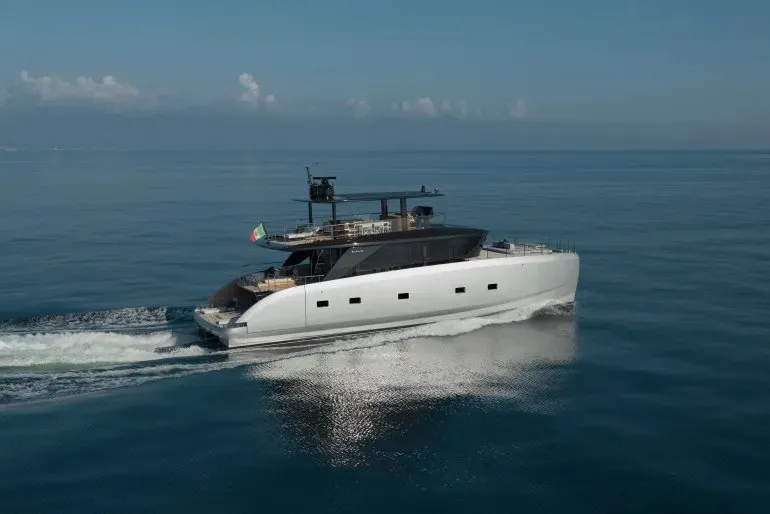
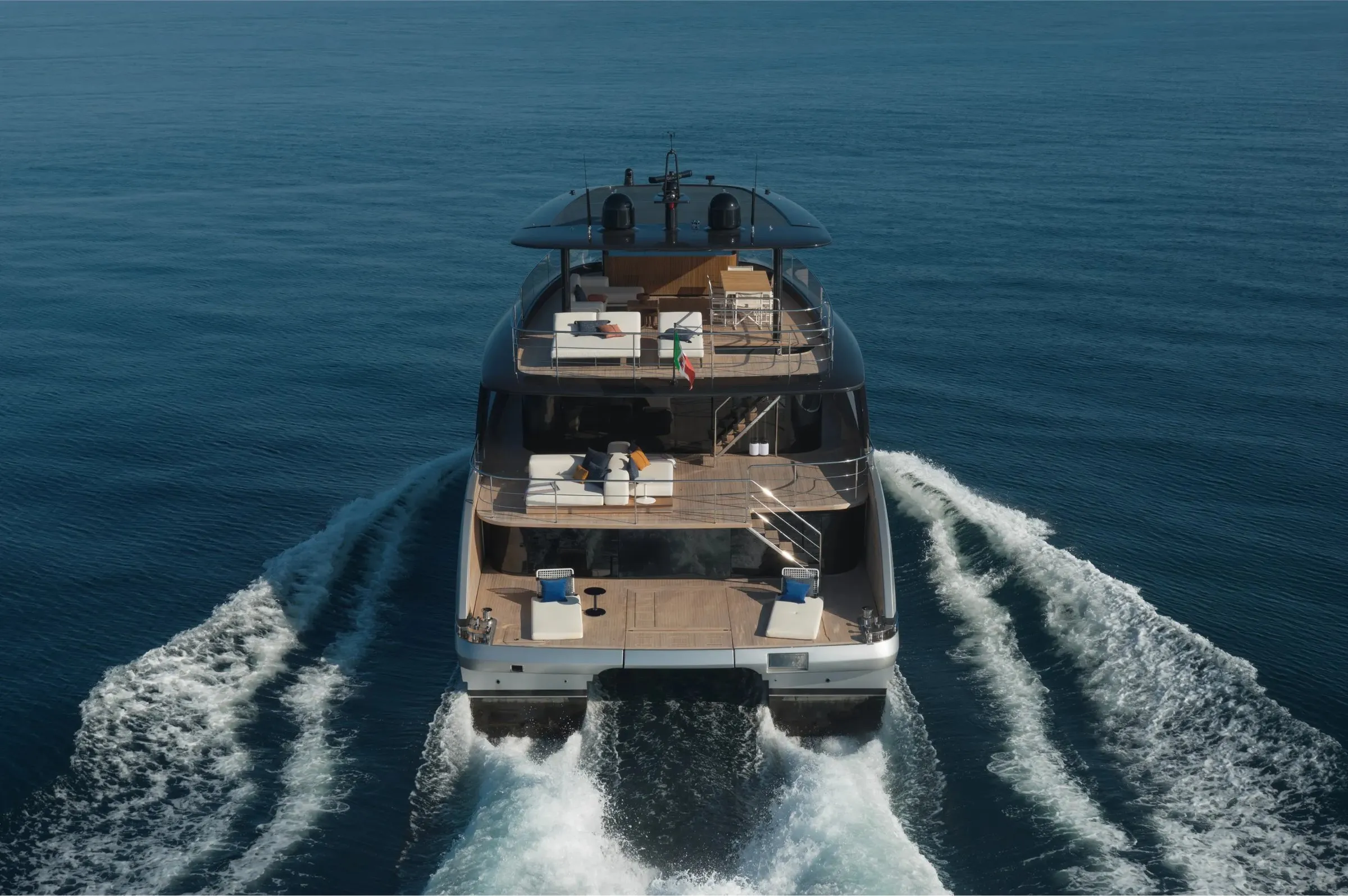
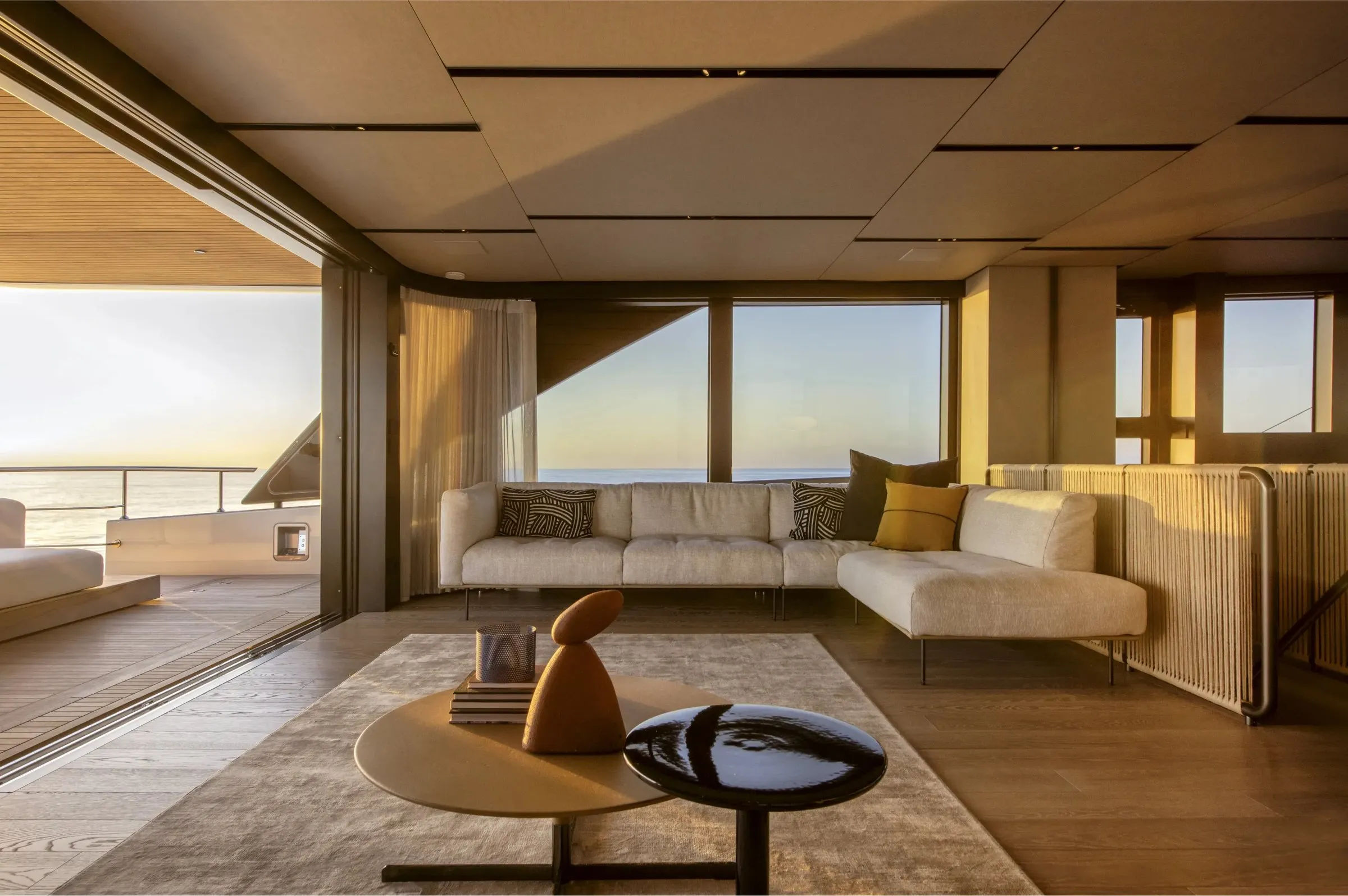
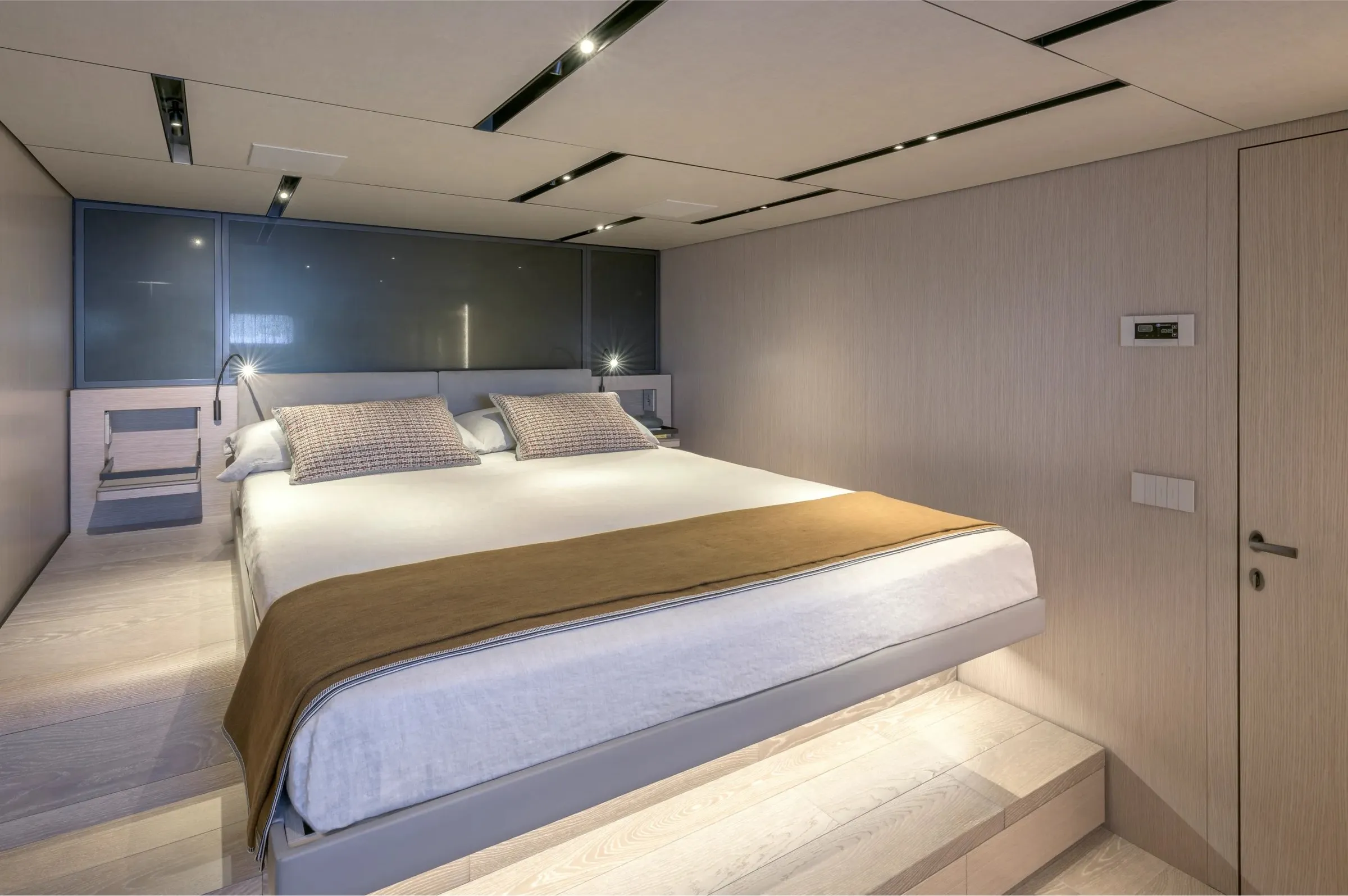
Photos courtesy of Bluegame.
Buyers who look at power catamarans for the space often find the boxy profile is the price of it. Bluegame set out to avoid that trade. The BGM75 is the firstborn of its BGM range, which the builder launched in 2023 as a new, parallel multihull segment beside its BG and BGX monohulls. Its pitch is direct: the space of a 100-ft yacht, the efficiency of a 60-ft and the dockability of a 50-ft.
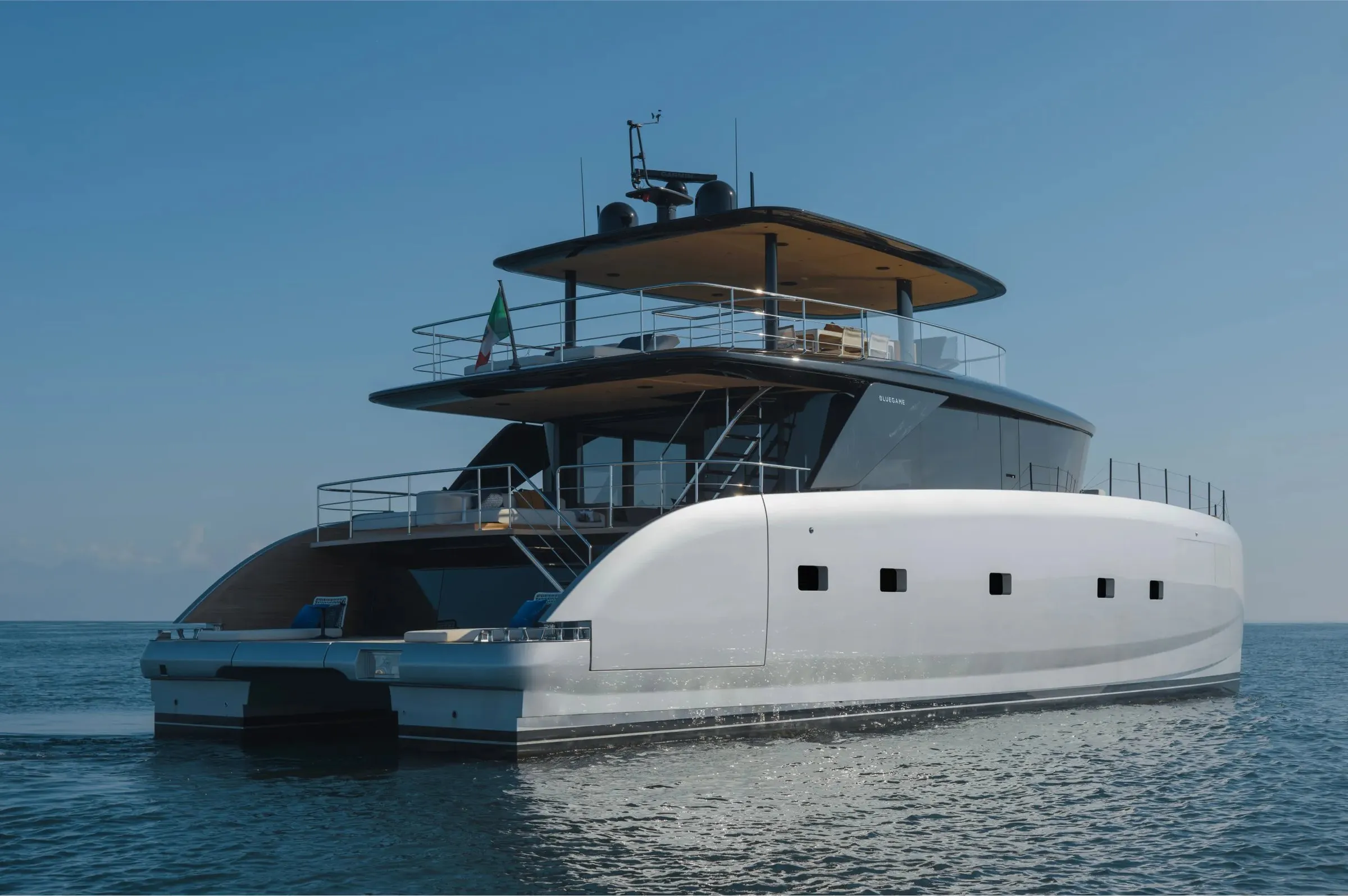
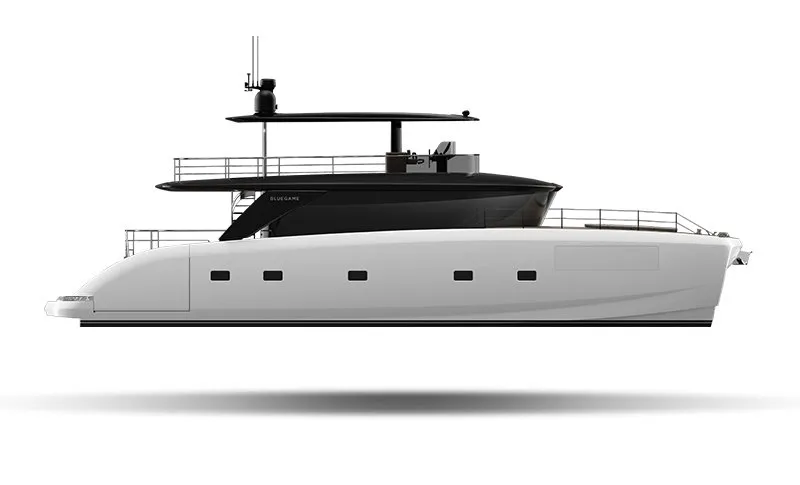
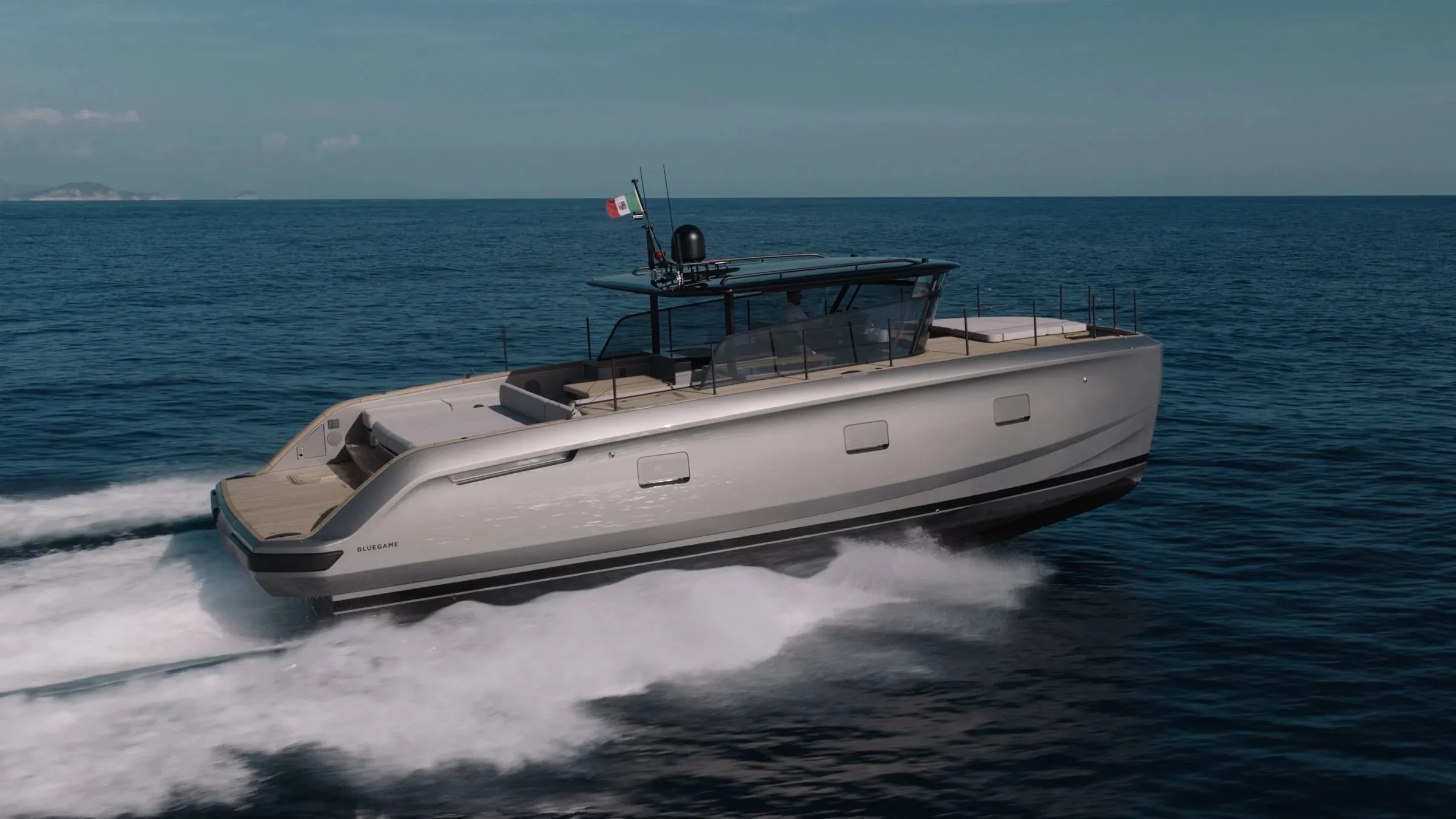
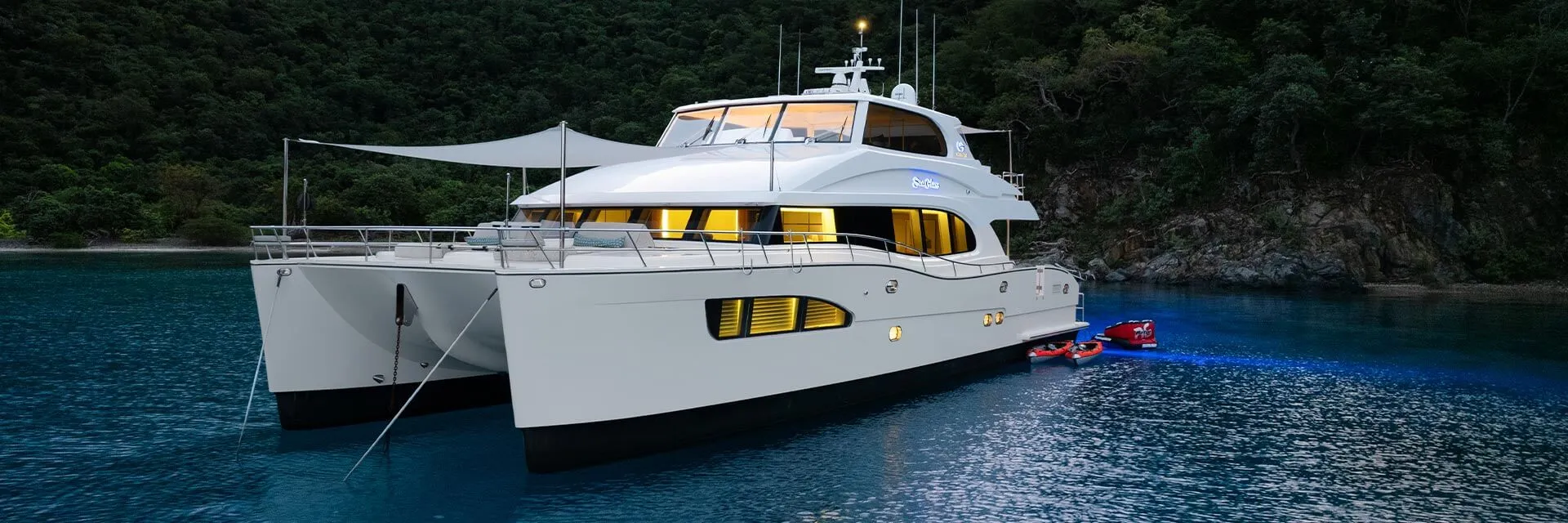
The builder goes further and says she cannot be compared to any traditional catamaran in proportions, spaciousness and sustainability. Read that as Bluegame's claim. She has two hulls, and this site files her with the power catamarans. The difference is in the shape: a reduced length-to-beam ratio that gives, at first glance, the lines of a monohull with a multihull's volume.
The team behind her is a long one. Luca Santella drew the concept, the hull was designed by Bluegame with hydrodynamics specialists Caponnetto Hueber, and Bernardo Zuccon and Piero Lissoni contributed to the exterior and interior lines.
If you are planning longer passages at a steady pace, the BGM75 is set up for it. Standard power is a pair of Volvo Penta IPS D13 1050s at 800 hp each, with D13 1200s at 900 hp each as the option. Bluegame lists a cruise of 16 kn and a top speed of 20 kn, both +/- 5%, and claims fuel savings at cruising speed.
Weight is given two ways: 69 t +/- 5% (138,000 lb) at half load and 72 t +/- 5% at full load. Tankage is 5,000 litres (1,321 gal) of fuel in two tanks and 2,000 litres (528 gal) of fresh water, with 660 litres (174 gal) of gray water.
Comfort under way and at anchor is where Bluegame has spent its effort. Working with Smartgyro, it installed two synchronised stabilisers, which it calls a first on a multihull, to keep the motion smooth in all sea conditions. A 5'7" draft and a beam of 26'9" complete the picture of a stable, steady platform.
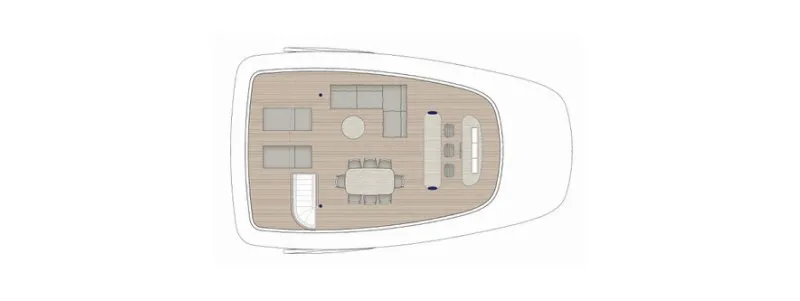
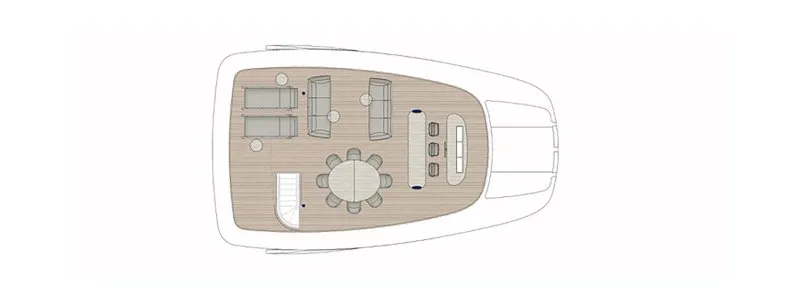
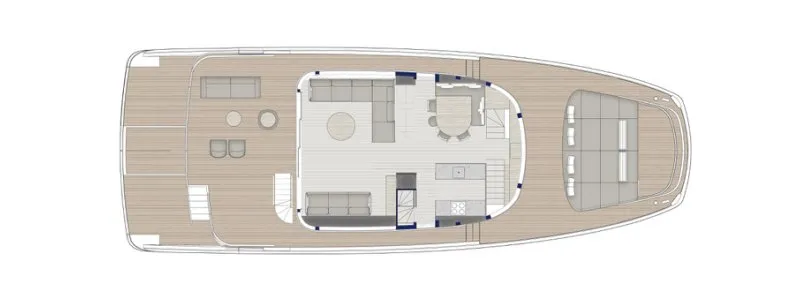
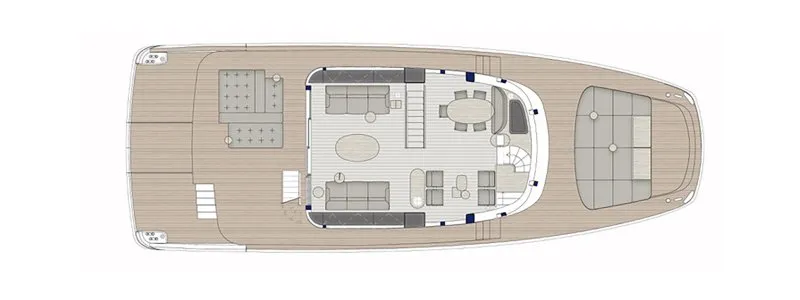
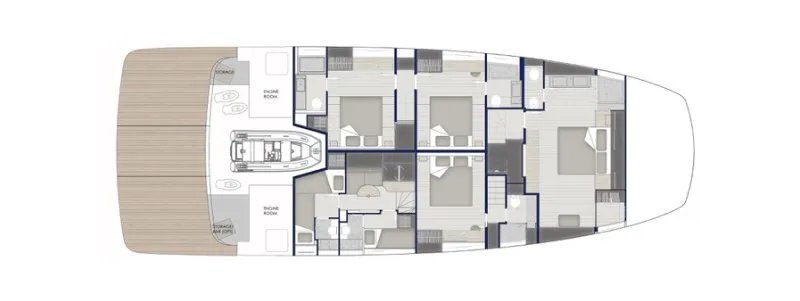
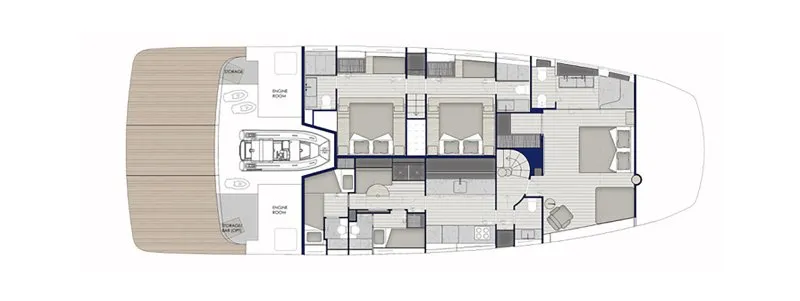
For an owner who wants a real suite aboard, the reduced length-to-beam ratio pays off below: the owner's cabin runs the full beam. From there the layout is a choice between two designers. The three-cabin version is signed by Lissoni & Partners; the four-cabin version has its interior layout by Zuccon International Project. The builder describes the cabins as of extraordinary dimensions, and the deck plans for both versions are on this page.
Owner and guests have six to eight berths, depending on the version chosen. Crew have their own accommodation, with berths for three. For a day out, the builder rates her for up to 16 passengers.
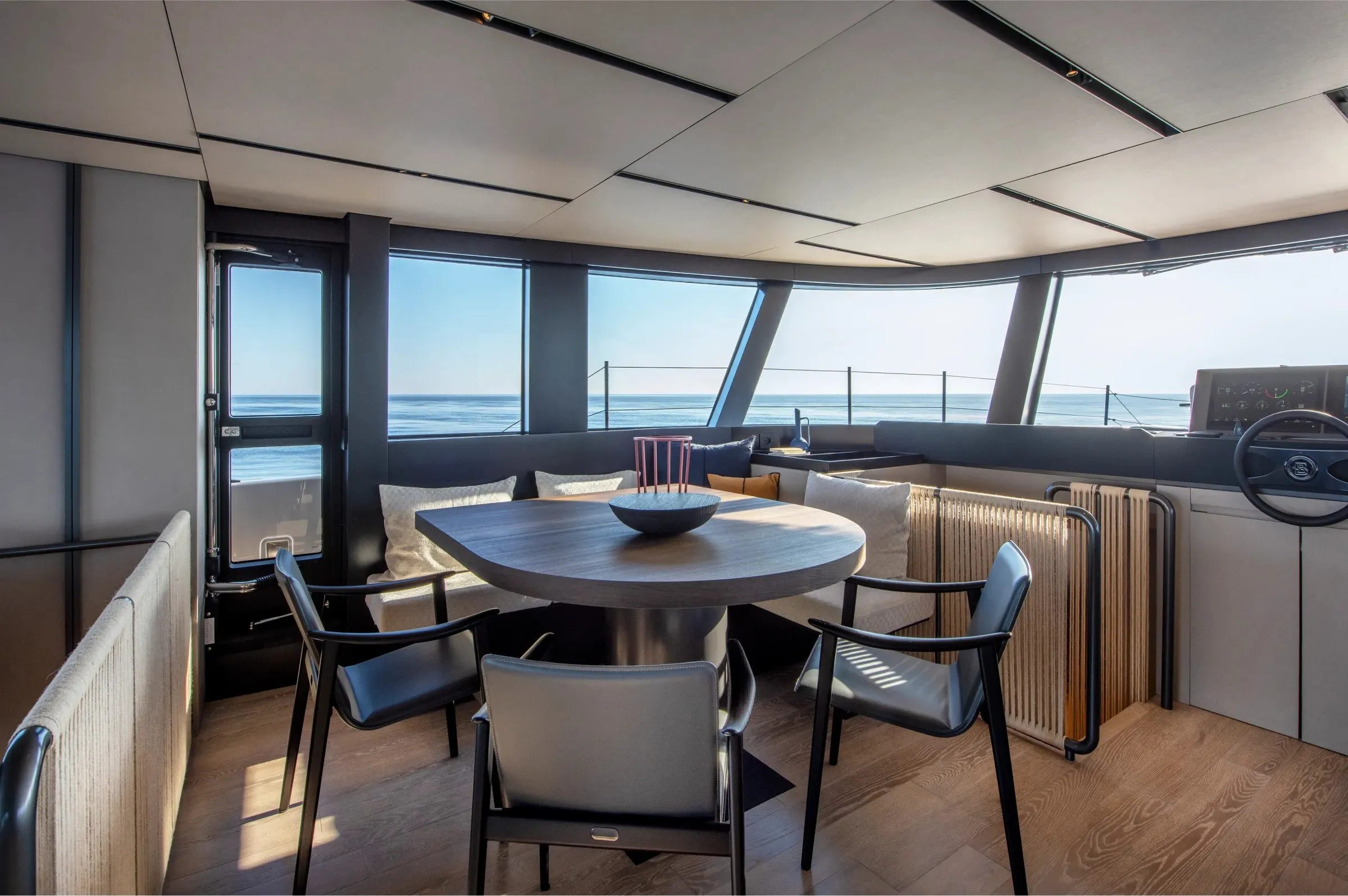
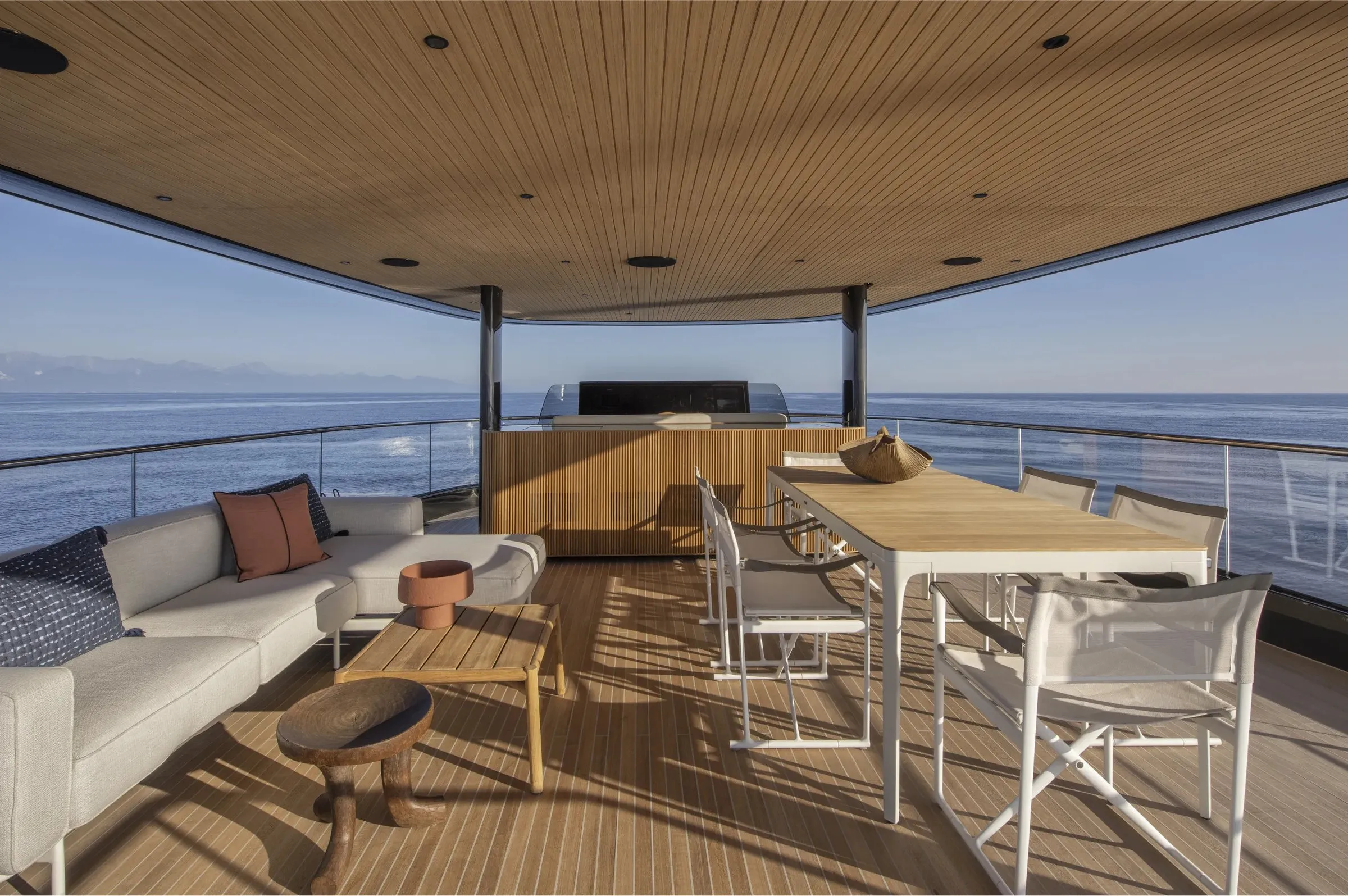
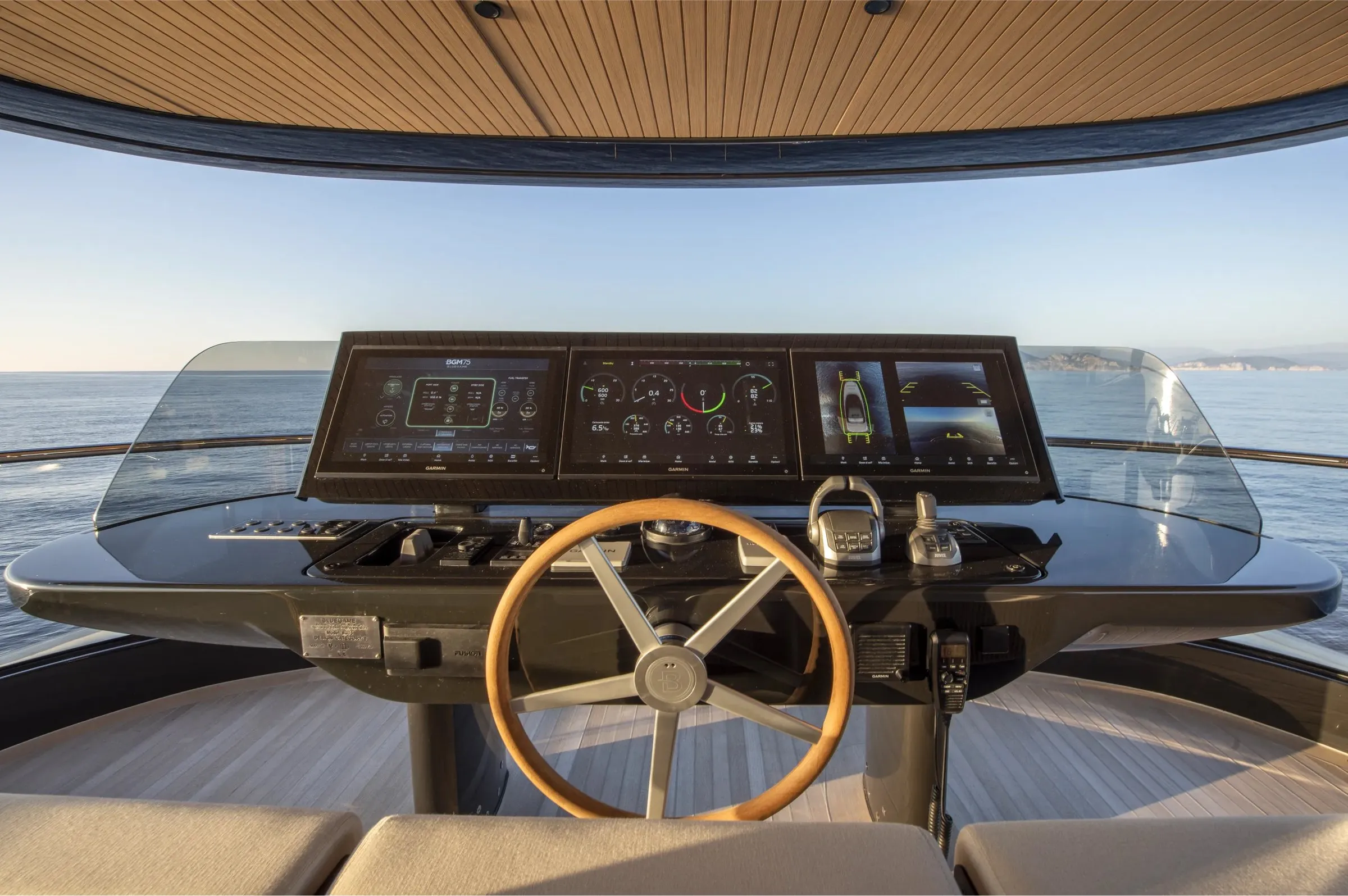
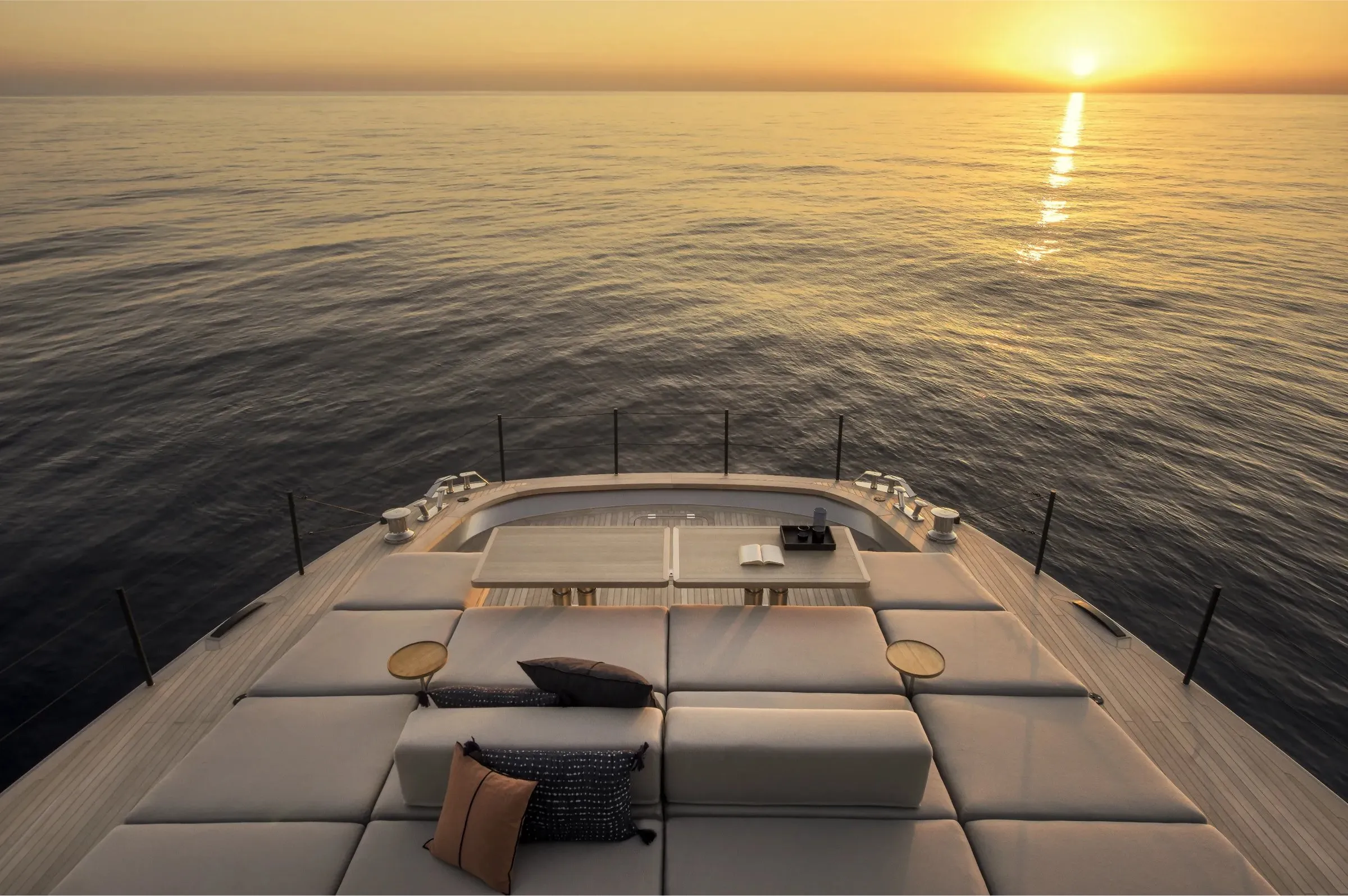
The photographs show the spaces outside the cabins: a saloon with a sofa and a dining table beside the helm, a covered flybridge with its own helm station and lounge, and a lounge on the bow.
Bluegame now builds four ranges. The BG and BGX ranges are monohulls; the BGM range, with the BGM75 as its firstborn, and the BGF range are its multihulls. The builder calls the BGF the second range of multihulls after the BGM.
The closest relation is the BGF45, a 46'5" foil-assisted catamaran. The two answer different questions. The BGF45 is the quicker boat, with a listed 28 kn +/- 5% cruise and 2 + 1 cabins; the BGM75 trades that pace for a 26'9" beam, a full-beam owner's cabin, crew berths and a choice of three or four cabins.
The BGM75 suits an owner who cruises with family or guests for days at a time, wants a catamaran's room and stability without its look, and is content at a listed 16 kn cruise. The choice between the Lissoni and Zuccon layouts lets the same hull serve a couple or a full house.
An owner who wants to cover ground fast on a smaller multihull should look at the BGF45. One who is after the sporty open-boat experience Bluegame is known for will be happier in the builder's monohull ranges.
The BGM75 carries 5,000 litres (1,321 US gallons) of fuel in two tanks and 2,000 litres (528 US gallons) of fresh water. Gray water capacity is 660 litres (174 US gallons). Bluegame gives her displacement as 69 tonnes, plus or minus 5%, at half load and 72 tonnes, plus or minus 5%, at full load.
The BGM75 has two synchronised Smartgyro stabilisers. Bluegame says this collaboration with Smartgyro is the first time two synchronised stabilisers have been installed on a multihull, and that they are there to keep the ride smooth in all sea conditions, which matters most to owners who spend long periods at anchor.
Bluegame lists a top speed of 20 knots and a cruising speed of 16 knots, both with a tolerance of plus or minus 5%. Power comes from twin Volvo Penta IPS D13 1050 engines at 800 hp each as standard, with D13 1200 engines at 900 hp each as an option. She is built as a cruising yacht.
The concept is by Luca Santella, and the hull was designed by Bluegame with the hydrodynamics specialists Caponnetto Hueber. Bernardo Zuccon and Piero Lissoni contributed to the exterior and interior lines, and the two interior versions come from Lissoni & Partners and Zuccon International Project respectively.
The BGM75 has three or four cabins, depending on the version. The three-cabin version is signed by Lissoni & Partners, and the four-cabin version has its interior layout by Zuccon International Project. Both give the owner a full-beam cabin. The builder lists six to eight berths for owner and guests, plus berths for three crew.
Yes, in the sense that matters to a buyer: the BGM75 has two hulls and is filed here as a power catamaran. Bluegame calls her a multihull and says she cannot be compared to any traditional catamaran, because her reduced length-to-beam ratio gives her the profile of a monohull with a multihull's volume.