
The Azimut S7: Triple-Engine Sport Yacht With an Eco Conscience
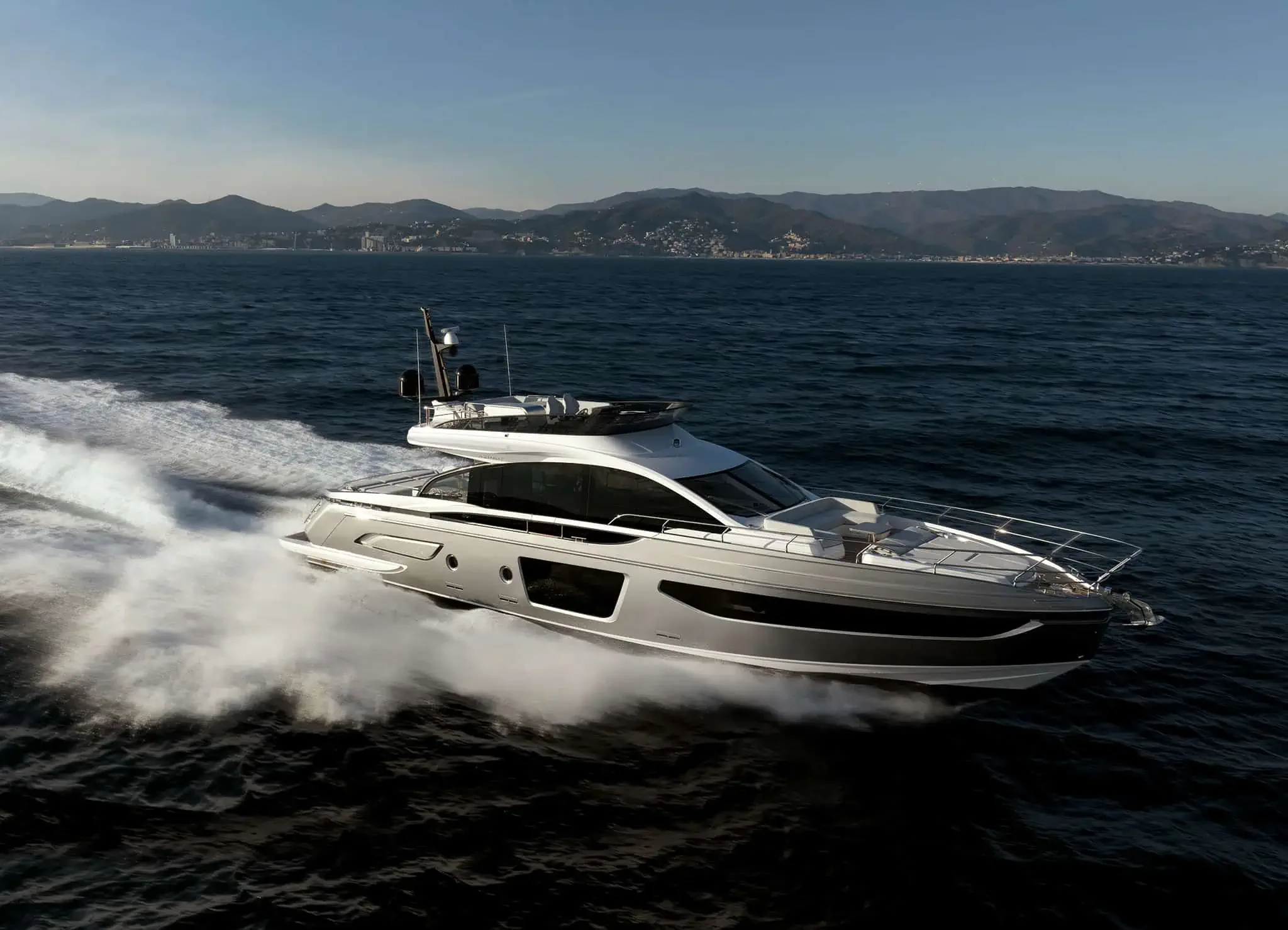
There is something deeply satisfying about a yacht that goes fast and feels good about it. The Azimut S7 does not ask you to choose between 35-knot performance and a 20-to-30 percent reduction in fuel consumption and emissions. It delivers both, wrapped in Alberto Mancini’s automotive-inspired exterior lines and a Carbon Tech construction that keeps the weight where it belongs: low.
At 71 feet with triple Volvo Penta IPS1050 engines and four proper cabins, the Azimut S7 occupies a space in the market that very few production sport yachts can reach. It is fast enough to satisfy the owner who cares about speed, efficient enough to satisfy the owner who cares about the planet, and finished well enough to satisfy the owner who cares about neither of those things and simply wants a beautiful boat.
Who It’s For
The S7 targets the owner who has outgrown a 55-to-60-foot sport cruiser and wants genuine sportsbridge presence without crossing into the crew-intensive world of 80-footers. It is built for the hands-on driver who values joystick docking, pod-drive maneuverability, and the ability to pull into a marina without a full crew aboard. If the Pershing GTX70, the Princess S72, or the Sunseeker 75 Sport Yacht are on your list, the S7 offers a compelling counter-argument — particularly on sustainability credentials and running efficiency.
Azimut S7 — Key Specifications
| Specification | Detail |
|---|---|
| Overall Length | 71' 2" (21.68 m) |
| Beam | 16' 11" (5.15 m) |
| Draft | 5' 7" (1.70 m) |
| Displacement (Full Load) | ~101,412 lbs (46 t) |
| Engines | 3 x Volvo Penta D13 IPS 1050, 800 HP each |
| Max Speed | 35-36 knots |
| Cruise Speed | 27-29 knots |
| Range | ~300-347 nm at cruise |
| Fuel Capacity | 1,004 US gal (3,800 L) |
| Water Capacity | 264 US gal (1,000 L) |
| Guest Cabins | 4 + 1 crew |
| Heads | 3 + 1 crew |
| Construction | Carbon Tech (carbon fiber) |
| Emissions | Tier III / Low Emission Yacht |
Design and Layout
Mancini’s exterior is all sharp angles and flowing surfaces, with the sportsbridge adding a second outdoor entertaining level without compromising the coupe-like profile below. The main deck flows from a generous cockpit through an open saloon to the forward helm, with floor-to-ceiling glass creating visual continuity between interior and exterior spaces. Interiors by Yachtique deliver what Yachting Magazine called superyacht-caliber finishes in a production yacht package.
Below deck, the owner’s suite sits amidships — a full-beam cabin with the kind of headroom and wardrobe space that would satisfy an 80-foot flybridge. Forward, a VIP cabin with a double berth and ensuite leads the guest accommodation, joined by two additional cabins: one with twin beds and another with an L-shaped berth configuration. A dedicated crew cabin rounds out the lower deck.
The sportsbridge is the S7’s party piece. Rather than treating it as an afterthought helm position with some cushions, Azimut designed it as a genuine second living space — somewhere to drive from, dine at, and spend an entire afternoon without heading below.
Performance
Triple Volvo Penta D13 IPS1050 engines produce 800 horsepower each — 2,400 horsepower total — driving through pod drives that deliver both speed and efficiency. Yachting Magazine’s sea trial recorded a top speed of 36.3 knots, with a cruise at 28.9 knots consuming 86.1 gallons per hour and delivering approximately 304 nautical miles of range. Pull back to 24.8 knots, and range climbs to 347 nautical miles while fuel consumption drops to 64.7 gallons per hour.
The engines carry Tier III certification, and Azimut classifies the S7 as a Low Emission Yacht — part of the brand’s broader commitment to reducing fuel consumption and emissions by 20 to 30 percent compared to shaft-line boats of the same weight and size. Carbon Tech construction, which uses extensive carbon fiber to reduce structural weight, plays a direct role in achieving those numbers.
The triple-pod configuration also means joystick docking is remarkably precise. The S7 can rotate on its own axis, slide sideways, and hold position in a crosswind — capabilities that make marina approaches stress-free for owner-operators and a genuine selling point over shaft-drive competitors.
The Ownership Equation
The S7 sits in a competitive segment where pricing reflects the sophistication of the engineering underneath. Azimut’s triple-IPS platform costs more to service than a twin-engine setup, but the efficiency gains at cruise partially offset that premium through lower fuel bills over a season of use. The Volvo Penta IPS system is globally supported and well-understood by marinas from Fort Lauderdale to the French Riviera.
Carbon Tech construction also provides a structural advantage that pays dividends over time: lighter weight means less stress on running gear, better fuel efficiency, and a hull that ages well. For the owner who plans to keep the yacht for five-plus years, these are not abstract benefits — they are measurable savings in survey results and maintenance costs.
A Buyer’s Story
A tech entrepreneur in his late forties had spent two years shopping for what he called "the right 70-footer." He had driven a Princess, toured an Absolute, and seriously considered a Sunseeker Predator. But each time he returned to the same frustration: the boats that were fast enough did not feel efficient enough, and the ones that felt modern enough did not have the cabin count his family of five needed.
The Azimut S7 resolved every conflict. Triple IPS gave him the 35-knot performance and the joystick control he wanted. Four cabins meant his three teenagers each had their own space. And the Carbon Tech construction — combined with Tier III engines — let him explain to his environmentally conscious eldest daughter exactly why this particular yacht was different from the diesel-heavy alternatives. After their first season cruising the Dalmatian Coast, he described the S7 as "the first yacht that made everyone in the family happy at the same time."
Setting a Course
The Azimut S7 represents a new breed of sport yacht — one that refuses to treat speed and sustainability as opposing forces. For the owner who demands both, wrapped in Italian design and backed by one of the largest yacht-building groups in the world, the S7 makes a case that is increasingly difficult to ignore.
Explore full specifications at YachtSpecsDirect.com. Browse available Azimut inventory at mintedyachts.com/azimut.